
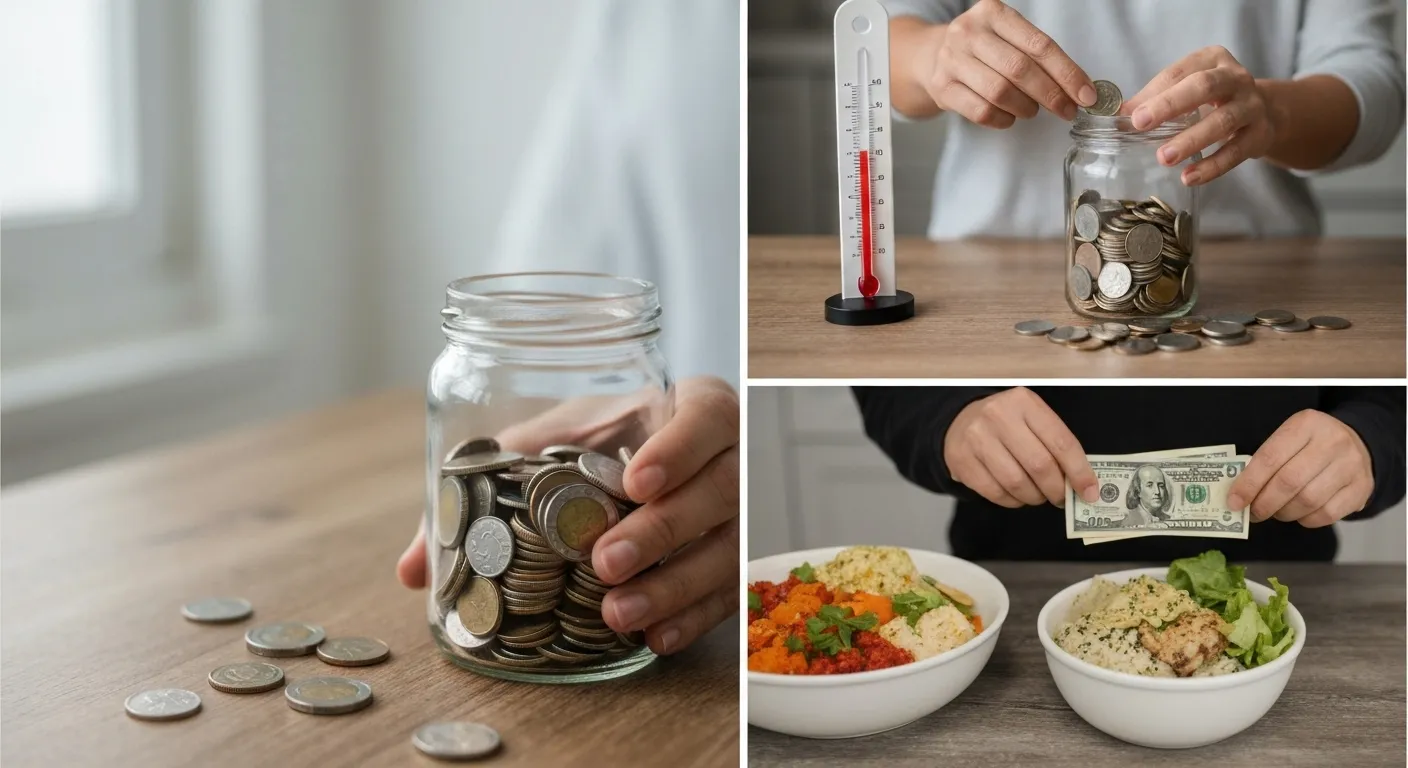
Many of us understand the importance of saving money. Whether it’s for a planned expense like a home improvement, a special trip to visit family, building up an emergency fund, or simply wanting a bit more financial breathing room, having clear financial goals is a great motivator. Sometimes, though, getting started or staying consistent with saving can feel a bit routine. That’s where fun and engaging savings challenges can come in! These challenges can provide a fresh burst of money motivation and make the process of saving feel more like an enjoyable game rather than a chore.
You might think savings challenges are just for younger folks, but the truth is, they can be a wonderful tool for anyone looking to boost their savings, regardless of age or income. Many of us have years of experience managing budgets and saving for big life events. These challenges can tap into that wisdom and discipline, offering a new way to approach a familiar goal. They can be adapted to fit any budget and timeline, making them a flexible and empowering way to kickstart or re-energize your savings efforts. Let’s explore some popular and effective challenges you might enjoy!
1. The “Spare Change” or “Loose Coin” Challenge
This is a classic for a reason – it’s simple and surprisingly effective! At the end of each day, empty all the loose change from your wallet, purse, or pockets into a designated jar or container. Don’t count it, just collect it.
How it works for you: Many of us still use cash for small purchases, and those coins can really add up without you noticing. It’s a painless way to save because you’re unlikely to miss a few quarters or dimes. Once the jar is full, or at the end of a set period (like a month or a quarter), take it to the bank or a coin-counting machine and deposit it into your savings account. You might be amazed at how much you’ve accumulated! This can be a fun visual way to see your savings grow, perhaps involving grandchildren in the “jar filling” too.
2. The “No-Spend Day/Weekend/Week” Challenge
For this challenge, you designate a specific period – a day, a weekend, or even a whole week – where you commit to spending money only on absolute essentials (like pre-paid bills or urgent medical needs). All discretionary spending (eating out, entertainment, shopping for non-necessities) is off-limits.
How it works for you: This challenge is excellent for raising awareness about your spending habits and identifying where your money often goes on impulse. It encourages you to find free ways to enjoy your time, like reading a book from the library, going for a walk in a park, having a potluck with friends, or working on a hobby you already have supplies for. The money you would have spent during that period can then be transferred directly to your savings.
3. The “$5 Bill” Challenge
Every time you receive a $5 bill in change, you set it aside instead of spending it. Keep these $5 bills in a separate envelope or container.
How it works for you: This is another relatively painless way to save because $5 bills, while not as small as coins, often come and go without much thought. It feels less impactful than saving a $20 or $50 bill each time. Over several months, these $5 bills can accumulate into a significant sum. This can be a fun, almost “accidental” way to build up funds for a specific treat or a smaller savings goal.
4. The “Round-Up” Challenge (Manual or App-Assisted)
When you make a purchase, round the amount up to the nearest dollar (or even $5 or $10 if you’re ambitious) and transfer that “rounded up” difference into your savings account. For example, if you spend $12.30 on groceries, you’d round up to $13.00 and save $0.70.
How it works for you: This method makes saving small, consistent amounts very easy. If you do it manually, you can keep a small notebook and tally up your round-ups at the end of the day or week, then make a single transfer. Alternatively, many banking apps or dedicated savings apps (like Acorns or Chime) offer an automatic round-up feature, making it completely effortless. This challenge taps into the power of small, regular contributions adding up over time.
5. The “Pantry/Freezer” Eat-Down Challenge
For a set period, perhaps one or two weeks, commit to making meals primarily from items you already have in your pantry, refrigerator, and freezer. The goal is to minimize grocery spending during this time.
How it works for you: Many of us have well-stocked pantries and freezers. This challenge helps reduce food waste and can lead to significant savings on your grocery bill for that period. It encourages creativity in the kitchen and can be a fun way to rediscover forgotten ingredients. The money you save on groceries can then be put directly into your savings. It’s a practical challenge that many seniors, with their experience in resourceful cooking, can excel at.
6. The “Specific Goal” Savings Thermometer
If you have a particular savings goal in mind – perhaps a new piece of furniture, a contribution to a grandchild’s education fund, or a special anniversary celebration – create a visual savings “thermometer.” Draw a large thermometer shape, mark your total goal at the top, and fill it in as you contribute funds.
How it works for you: Visual progress can be a powerful motivator. Seeing the “mercury” rise as you get closer to your goal provides a tangible sense of accomplishment and encourages you to keep going. This is particularly effective for medium-term financial goals. You can even get family members involved in coloring in the thermometer for shared goals.
7. The “Weather Wednesday” (or Any Day) Challenge
Pick one day of the week. On that day, look up the high temperature (in Fahrenheit or Celsius) in your city. Save that amount in dollars (or a smaller increment, like dimes, if the temperature is very high). For example, if it’s 72°F, you save $7.20 (or $72 if you’re ambitious and it fits your budget!).
How it works for you: This adds an element of unpredictability and fun to saving. The amount changes each week, making it less monotonous. It’s a lighthearted way to make small, regular contributions. You can adjust the “currency” (dollars, dimes, quarters) to suit your budget.
8. The “Cut One Expense” Monthly Challenge
Each month, identify one non-essential expense you can cut out or significantly reduce. This could be anything from one less takeout meal, cancelling an unused subscription, brewing your coffee at home instead of buying it, or finding a cheaper alternative for a household product.
How it works for you: This challenge encourages mindful spending and helps you re-evaluate your regular outgoings. Over a year, you’ll have identified and saved money from twelve different areas. The cumulative effect can be quite substantial. Many seniors are adept at finding thrifty alternatives, and this challenge formalizes that skill.
9. The “52-Week Money Challenge” (Classic or Modified)
In the classic version, you save $1 in week one, $2 in week two, $3 in week three, and so on, up to $52 in week 52. By the end of the year, you’ll have saved $1,378.
How it works for you: This challenge starts small and gradually increases, making it manageable initially. However, the amounts can get quite large towards the end of the year. A popular modification is to do it in reverse (start with $52 and decrease each week) or to pick random amounts from the list each week as your budget allows, checking them off as you go. This flexibility makes it adaptable. It provides a clear structure and a significant reward at the end.
10. The “Found Money” Challenge
Any unexpected money that comes your way – a small rebate, a birthday gift of cash, money from selling an unneeded item, a refund, or even finding a $10 bill in an old coat pocket – goes directly into your savings account.
How it works for you: This challenge trains you to see windfalls, no matter how small, as opportunities to boost your savings rather than just absorb them into general spending. It’s about capturing those “extra” bits of income before they disappear. Many of us receive small, unexpected sums occasionally, and this puts them to good use.
11. The “Bad Habit Jar” Challenge
If there’s a small, not-so-healthy habit you’re trying to curb (like buying too many sugary snacks, or perhaps a minor vice you’d like to reduce), every time you resist the urge or would have normally indulged, put the money you would have spent into a jar. Or, if you do indulge, you “penalize” yourself by putting a set amount into the jar.
How it works for you: This challenge links saving money with improving another aspect of your well-being. It provides a double incentive. The focus isn’t on deprivation, but on making a positive switch and rewarding that choice by saving.
12. The “Match Your Spending” Challenge (for a Specific Category)
Choose one category of discretionary spending where you tend to spend a bit more than you’d like (e.g., hobbies, dining out, books/magazines). For a set period, every time you spend money in that category, you “match” that amount by putting an equal sum into your savings.
How it works for you: This challenge makes you very conscious of your spending in that particular area. It might encourage you to spend less in that category, or it simply doubles the impact by boosting your savings simultaneously. It’s a way to directly link your spending choices to your savings progress.
Remember, the best savings challenges are the ones that you find enjoyable and sustainable. The goal is to build positive habits and gain money motivation, not to create stress. Feel free to adapt any of these ideas to better suit your lifestyle, income, and financial goals. You can do them solo, or even involve a spouse, friend, or family member for mutual support and a bit of friendly competition. Here’s to kickstarting those savings and watching them grow!









Leave a Reply