

You do not need a massive bank balance to explore the world. By replacing standard commercial tourism with strategic travel habits, you can eliminate your two largest expenses: flights and lodging.
Traditional vacations drain personal savings because retail travel relies on marked-up convenience. Shifting toward creative housing trades, skill exchanges, and credit rewards lets you unlock global adventures on an everyday American budget.
These five proven strategies demonstrate how resourcefulness easily beats wealth when crossing international borders. Here is how you can begin planning your next low-cost global getaway right now.
1. Strategic House Sitting: Live Rent-Free Across the Globe
Lodging typically consumes the largest share of any vacation budget. House sitting travel turns this expense upside down by offering free accommodation in exchange for pet care and home maintenance.
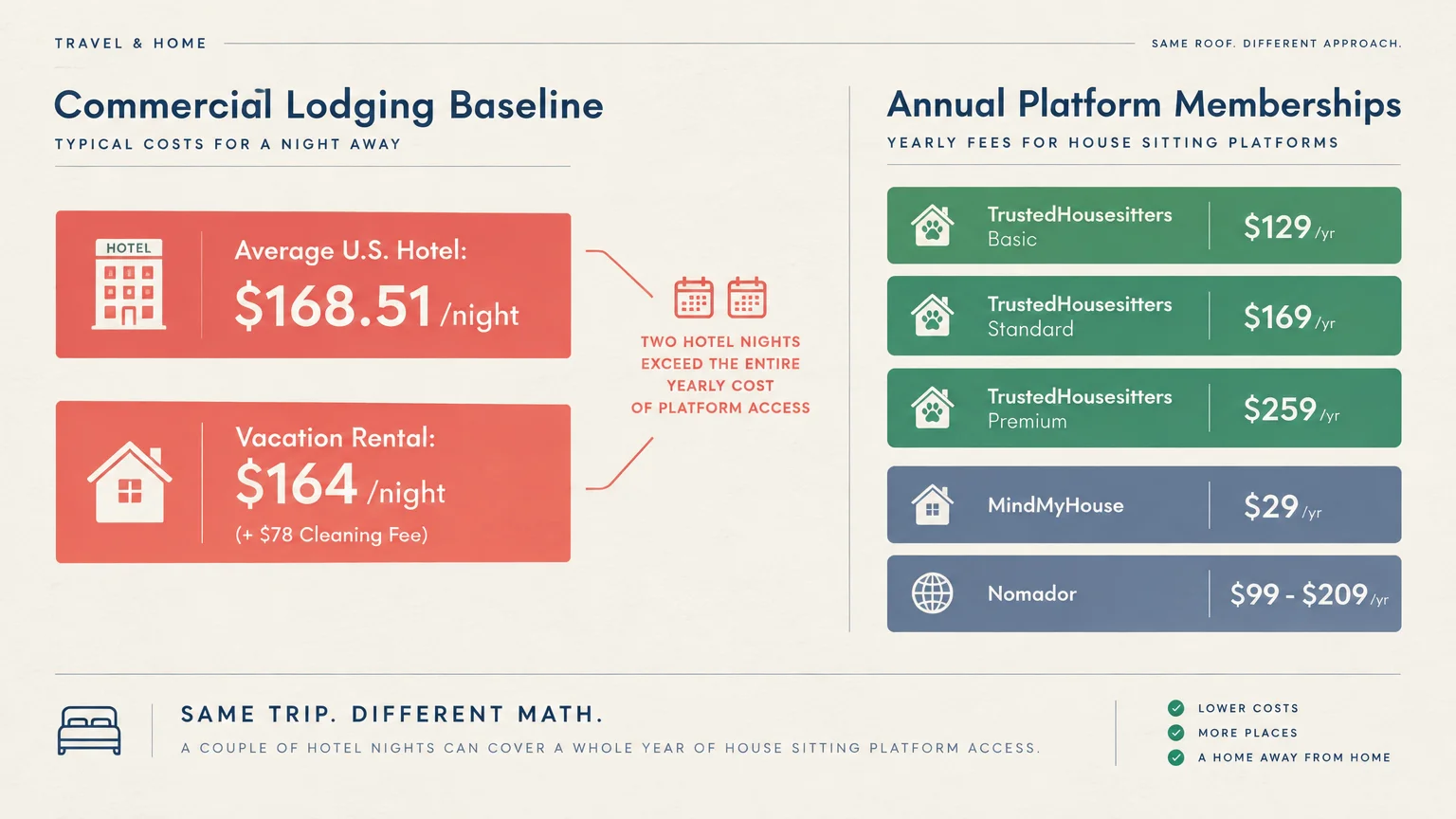
According to CoStar STR benchmark data, an average U.S. hotel room costs $168.51 per night. Meanwhile, a one-bedroom vacation rental averages $164 nightly, accompanied by a median cleaning fee of $78.
Paying commercial lodging rates for a multi-week trip quickly drains thousands of dollars. House sitting completely removes that accommodation baseline, allowing you to reside in comfortable suburban villas, city lofts, and rural cottages.
Platform Breakdowns and Annual Costs
To secure verified sits, you must register through reputable vetting platforms that connect homeowners with sitters. Each platform maintains its own pricing structure and regional strengths.
TrustedHousesitters represents the largest global platform, offering annual memberships at $129 for Basic, $169 for Standard, and $259 for Premium. Basic and Standard members pay an added $12 booking fee per confirmed sit.
Premium members on TrustedHousesitters bypass all booking fees and receive dedicated cancellation insurance safeguards. That coverage provides vital financial peace of mind if a homeowner unexpectedly cancels your reservation.
If you prefer a budget alternative, MindMyHouse charges a flat $29 per year with no booking fees. For European travel, Nomador provides extensive listings with annual plans ranging from $99 to $209.
An annual membership on any platform costs less than two nights in an average hotel room. That modest upfront investment unlocks free accommodation across dozens of countries for an entire year.
How to Land Your First International Sit
Homeowners want trustworthy individuals who will treat their properties and pets with utmost care. Securing your first sit requires building credibility before you possess on-platform reviews.
Begin by completing local weekend sits for neighbors, friends, or family members. Ask them to write detailed character references that you can upload directly to your public sitter profile.
Record a warm, professional introductory video demonstrating your personality and comfort around animals. Highlighting experience with dog walking, medication administration, or home upkeep immediately builds trust with prospective hosts.
When applying for sits, write personalized introductory notes addressing the pets by name. Explain why the homeowner’s location fits your itinerary and confirm your availability for a video interview.
2. Work Exchanges and Cultural Volunteering: Trade Skills for Room and Board
If you want to travel for free while immersing yourself in local culture, consider structured work exchanges. You provide roughly twenty hours of weekly assistance in return for free room and board.
Work exchanges eliminate both accommodation costs and grocery bills, which represent the bulk of travel overhead. They also grant you authentic access to communities that standard tourists rarely experience.
Top Work Exchange Platforms
Three established international organizations connect travelers with hosts seeking help across diverse projects. Each network caters to specific travel preferences, geographic regions, and technical skill sets.
Workaway provides access to over 50,000 host opportunities across 170 countries. An annual membership costs $69 for solo travelers or $79 for couples and friends traveling together.
Worldpackers offers a comparable international network, charging $59 annually for solo memberships and $69 for couples. Their standard plan includes emergency accommodation safeguards that cover up to $59 if an issue arises.
For agricultural work, Worldwide Opportunities on Organic Farms (WWOOF) connects volunteers with eco-friendly properties. Instead of a single international pass, you join national chapters with annual dues ranging between $0 and $72.
WWOOF chapters charge varying rates based on location, such as approximately $40 in the United States, £25 in the United Kingdom, and €35 in Germany.
Typical Exchange Roles and Time Commitments
Work exchange positions vary from managing hostel reception desks to assisting on sustainable permaculture farms. In most cases, hosts require four to six hours of daily assistance five days per week.
In exchange for your labor, hosts provide private or shared lodging alongside daily meals. This setup allows you to live comfortably abroad while spending virtually zero money on everyday necessities.
Your remaining time belongs entirely to you. You can spend afternoons exploring ancient ruins, practicing a foreign language with locals, or working remotely on personal projects.
Vetting Hosts and Protecting Your Safety
Transparent communication prevents misunderstandings regarding your daily responsibilities and living conditions. Always read past volunteer reviews thoroughly before accepting any placement.
Request a video conversation with your host to tour your sleeping quarters and clarify schedule expectations. Confirm whether weekend meals are covered and verify the availability of reliable internet access.

3. Home Swapping: Unlock Entire Houses for the Price of a Dinner
Home swapping allows you to exchange your primary residence with another traveler living in your dream destination. You gain access to a fully furnished house or apartment without paying commercial nightly rates.
This arrangement works exceptionally well for remote workers, retirees, and families who need multi-bedroom spaces. You retain all the comforts of home, including fully equipped kitchens, laundry facilities, and residential neighborhoods.
How Modern Home Swapping Works
HomeExchange remains the dominant platform in this space, charging an annual membership fee of $235 for unlimited exchanges. For luxury properties, their exclusive Collection tier costs $1,500 annually.
You do not always need to coordinate a simultaneous, direct trade with the same person. The platform uses a flexible system called GuestPoints, allowing you to host one traveler and redeem points elsewhere later.
Compare that $235 annual fee to commercial lodging benchmarks. A two-night stay in a typical U.S. hotel room costs more than an entire year of unlimited home exchanges worldwide.
Swapping as a Renter
You do not need to own real estate to participate in home exchange networks. Many urban apartment renters successfully swap units during scheduled holidays and extended remote-work trips.
Review your rental agreement carefully to verify policies regarding non-paying house guests. Communicating openly with landlords ensures your swap remains compliant with local lease rules and building guidelines.
Treat your swap partner’s home with the same consideration you expect for your own. Clear out closet space, leave clear appliance instructions, and prepare clean linens before their arrival.
4. Credit Card Travel Rewards: Turn Daily Expenses into Flights
Learning how to travel with points allows you to convert regular household spending into free flights and hotel stays. Strategic point accumulation eliminates the expensive burden of long-haul international airfare.
Banks offer lucrative welcome bonuses to attract reliable consumers who manage credit cards responsibly. By routing everyday purchases through travel cards, you earn points that transfer directly to global airlines and hotels.
Understanding the Chase Sapphire Preferred Benchmark
The Chase Sapphire Preferred Card serves as a standard entry benchmark for American travel rewards. It carries an accessible $95 annual fee while offering outsized redemption value on everyday purchases.
New cardholders can earn a welcome bonus of 75,000 points after spending $5,000 in the first three months. According to valuations from The Points Guy, that bonus is worth roughly $1,538 in travel.
Cardholders also receive a $100 annual Chase Travel hotel credit and up to $120 every four years for Global Entry, TSA PreCheck, or NEXUS. You also earn triple points on vacation rentals, gas, and EV charging.
Essential Rules for Credit Rewards Success
Maximizing travel rewards requires strict financial discipline. According to the Consumer Financial Protection Bureau, carrying a balance incurs interest charges that rapidly wipe out any rewards value.
Pay your credit card balance in full every single month without exception. If you pay a single dollar in interest, you lose the budget travel advantage that points provide.
Be mindful of bank application rules before requesting new cards. Chase enforces a strict 5/24 rule, denying applications if you have opened five or more personal credit cards across all banks in twenty-four months.
Chase also enforces a once-per-lifetime welcome bonus restriction for each specific Sapphire card. Plan your applications carefully around large, planned household expenses to hit spending thresholds naturally.
Core Rules for Points Accumulation
- Route fixed bills like car insurance, groceries, and internet service through your rewards card.
- Transfer flexible bank points directly to airline partner programs for high-value redemption seats.
- Avoid opening new accounts right before applying for major consumer financing like mortgages.
- Always settle the statement balance before the due date to prevent interest accrual.

5. Repositioning Cruises and Vehicle Relocations: Ultra-Cheap Long-Distance Transit
Crossing oceans or vast landmasses often drains a modest travel budget before you even arrive. Relocation travel solves this problem by turning corporate transit logistics into ultra-affordable consumer trips.
Companies regularly move cruise ships, rental cars, and recreational vehicles between seasons and markets. To cut their operational expenses, operators offer steep discounts to travelers willing to deliver their equipment.
Repositioning Cruises: Luxury Transit for Pennies
Cruise lines relocate their ships twice a year to follow global tourist demand. In the spring, vessels sail from the Caribbean to Europe; in autumn, they make the return journey across the Atlantic.
Because repositioning voyages feature extended days at sea, cruise operators price cabins far below standard rates. Your fare covers stateroom lodging, daily meals, and onboard entertainment across the ocean.
A transatlantic repositioning cruise often costs less per night than staying in a domestic hotel. You cross entire oceans without paying airline baggage fees while enjoying continuous room and board.
Vehicle and RV Relocations
Car and campervan rental companies frequently face vehicle imbalances when travelers take one-way road trips. Fleet managers use driveaway programs to return vehicles to major urban branches quickly.
Specialized relocation websites list campervans and passenger vehicles across North America, Europe, and Australia for as little as one dollar per day. Some rental companies even provide fuel allowances to sweeten the deal.
You must adhere to the rental agency’s delivery timeline and mileage allowances. For travelers who love scenic road trips and maintain flexible itineraries, vehicle driveaways offer unmatched overland savings.
Comparing Low-Cost Global Travel Strategies
Choosing the right ultra-budget travel strategy depends on your lifestyle, schedule flexibility, and comfort requirements. Review the breakdown below to identify the most suitable strategy for your next adventure.
| Travel Strategy | Upfront Platform Cost | Primary Living Benefit | Time Commitment | Best Suited For |
|---|---|---|---|---|
| House Sitting | $29 to $259 annually | Free private home lodging | Daily pet and home care | Pet lovers, remote workers, and slow travelers |
| Work Exchanges | $0 to $79 annually | Free room and daily meals | 20 to 30 hours per week | Solo backpackers, students, and cultural seekers |
| Home Swapping | $235 annually | Free whole-home access | Pre-swap home preparation | Homeowners, families, and apartment renters |
| Travel Rewards Points | $95 annual card fee | Free flights and hotel stays | Monthly expense management | Disciplined spenders with strong credit history |
| Vehicle Relocations | $1 to $10 per day | Ultra-cheap overland transit | Strict daily driving schedules | Road trip fans with flexible seasonal calendars |
Combining multiple strategies creates compound financial savings on long journeys. For example, you can cover transoceanic flights using credit points and eliminate lodging costs through house sitting.
The true cost of retail travel is not the destination; it is the commercial convenience markup. Trading modest flexibility for everyday services turns once-in-a-lifetime journeys into accessible, ongoing realities.

Navigating Mandatory Travel Costs: Passports and Border Rules
Even when your housing and long-distance transport cost zero dollars, government fees remain unavoidable. Failing to budget for official travel documents and border permits can stop your trip before it begins.
U.S. Passport Application and Renewal Fees
A first-time adult passport book costs $165 total, according to the U.S. Department of State. That total includes a $130 application fee and a $35 acceptance facility fee.
Adult renewals submitted online or through Form DS-82 cost $130. If you require expedited processing within two to three weeks, you must pay an added $60 fee.
Fast 1–3 day return delivery adds $26.87 to your total passport costs. Planning your renewal several months ahead saves you nearly ninety dollars in optional rush fees.
Upcoming European Travel Requirements (ETIAS)
American travelers heading to thirty European countries must budget for the European Travel Information and Authorisation System. The European Union ETIAS portal confirms the application fee stands at €20.
The digital permit remains valid for three years, with travelers under eighteen and over seventy exempt from payment. While previously scheduled for late 2026, the European Union has delayed operational launch until 2027.
What Can Go Wrong: Avoiding Costly Budget Travel Pitfalls
Traveling on a shoestring budget requires realistic preparation for unexpected setbacks. Identifying common vulnerabilities helps you build safety nets before minor issues become major financial liabilities.
1. Last-Minute Sitter Cancellations
Homeowners occasionally cancel scheduled sits due to emergency illness, bereavement, or sudden travel disruptions. Without a backup plan, you may face expensive emergency hotel rates in high-cost cities.
Protect your wallet by keeping an emergency cash reserve in a high-yield savings account. You can also purchase travel tiers that provide cancellation insurance to reimburse emergency lodging costs.
2. Border Violations from Unpaid Labor
Many foreign border officials treat informal volunteering and work exchanges as illegal employment under standard tourist visas. Being caught violating local immigration laws can lead to immediate entry denial or deportation.
Always verify the exact visa conditions for your host country before agreeing to exchange labor. Ensure your hosts operate legitimate cultural exchange arrangements that comply fully with local labor regulations.
3. Accidental Credit Card Debt
Pursuing lucrative welcome bonuses can lead to unmanageable spending if you fail to track your budget closely. High credit card interest rates will quickly wipe out any travel rewards you earn.
Never buy goods or services you cannot afford simply to meet credit card minimum spending requirements. Always maintain emergency cash savings to cover your card balance if income fluctuates unexpectedly.
4. Unsafe or Exploitative Host Environments
Some work exchange hosts take unfair advantage of travelers by demanding long hours of grueling physical labor. Others provide inadequate food, broken facilities, or completely unsafe living quarters.
Always conduct an extensive video interview with your prospective host before booking non-refundable transit. Ask for direct contact details of past volunteers to confirm that working conditions match the platform description.

Where Outside Advice Pays Off
While independent budget travel builds self-reliance, navigating legal, medical, and tax frameworks requires professional support. Consulting qualified experts safeguards your financial stability and personal well-being overseas.
Expatriate Tax Planning
If you fund your travels by working remotely as a freelancer or employee, you introduce foreign tax complications. Extended stays abroad can trigger unexpected domestic state tax liabilities or overseas residency obligations.
A certified public accountant specializing in international taxation helps you structure your income legally. They ensure you claim relevant exclusions while staying fully compliant with state and federal filing requirements.
Credit Planning Before Real Estate Purchases
Opening multiple rewards credit cards in a short window causes temporary fluctuations in your personal credit score. If you plan to apply for a mortgage soon, lenders may scrutinize recent credit inquiries.
Consult a licensed mortgage broker or financial advisor before embarking on a credit card points strategy. They will advise you on the optimal timing for card applications relative to major borrowing goals.
Emergency Medical and Evacuation Coverage
Domestic health insurance plans, including standard Medicare and employer policies, rarely cover medical care received overseas. An unexpected injury or surgical emergency abroad can cause devastating personal debt.
Work with an independent travel insurance specialist to choose a policy with comprehensive medical evacuation coverage. Adequate medical transport coverage ensures you receive proper hospital care without draining your retirement assets.
Immigration and Residency Counsel
Planning extended stays in multiple foreign countries requires careful tracking of passport stamps and visa regulations. Exceeding allowed tourist days can result in heavy fines, passport flags, or future entry bans.
An immigration attorney or accredited visa specialist can clarify regional rules, such as Schengen zone limitations. Their guidance ensures your global travels remain completely legal and worry-free.
Frequently Asked Questions About Ultra-Budget Travel
How can I travel for free without working a full-time job abroad?
You can eliminate your largest expenses through house sitting, home swaps, and credit card rewards points. These methods cover your housing and flights, allowing you to travel without taking a traditional job.
Is house sitting safe for solo travelers?
Yes, house sitting is safe when you use vetted platforms that verify homeowner identities and background checks. Always read past sitter reviews and complete a live video call before accepting any sitting assignment.
Can I travel with points if I have an average credit score?
Most premium travel rewards cards require a good to excellent credit score, typically 670 or higher. If your score is lower, focus on building payment history before applying for travel rewards cards.
Do work exchanges require special working holiday visas?
Visa regulations depend on the host country and the nature of the volunteer arrangement. Some countries permit informal cultural exchanges on tourist visas, while others strictly require working holiday or volunteer permits.
Smart Financial Takeaways for Your Next Journey
Seeing the world does not require a luxury budget or years of aggressive savings. By substituting conventional tourist splurges with house sitting, work exchanges, and travel points, you can explore the globe sustainably.
Choose one strategy that fits your current lifestyle, set up your platform profile, and start planning your itinerary. With careful preparation and open-minded flexibility, affordable global travel is entirely within your reach.
This article provides general information only. Every reader’s situation is different—what works for others may not be the right fit for you. For personalized guidance on health, legal, or financial matters, consult a qualified professional.
Last updated: November 2026. Rules, prices, and details change—verify current information with official sources before acting on it.









Leave a Reply