

A single percentage point in retirement account fees can quietly siphon off tens or hundreds of thousands of dollars from your nest egg over a full career. According to research from the U.S. Government Accountability Office (GAO), roughly 40% of 401(k) participants do not realize they pay investment fees at all, leaving their savings vulnerable to high administrative costs and overpriced mutual funds. You can reclaim control of your financial future by uncovering hidden 401k fees and shifting your money into low-cost investments right now. Understanding how small percentages erode compound growth gives you the power to keep your hard-earned money in your own pocket.
The Exponential Math Behind Small Investment Fees
Investment fees operate like compound growth in reverse. When you invest money, your returns generate their own returns over time. When a recordkeeper or fund manager deducts fees from your principal and investment gains, you do not just lose that cash today; you forfeit every dollar of future growth that money would have generated for the next twenty or thirty years.
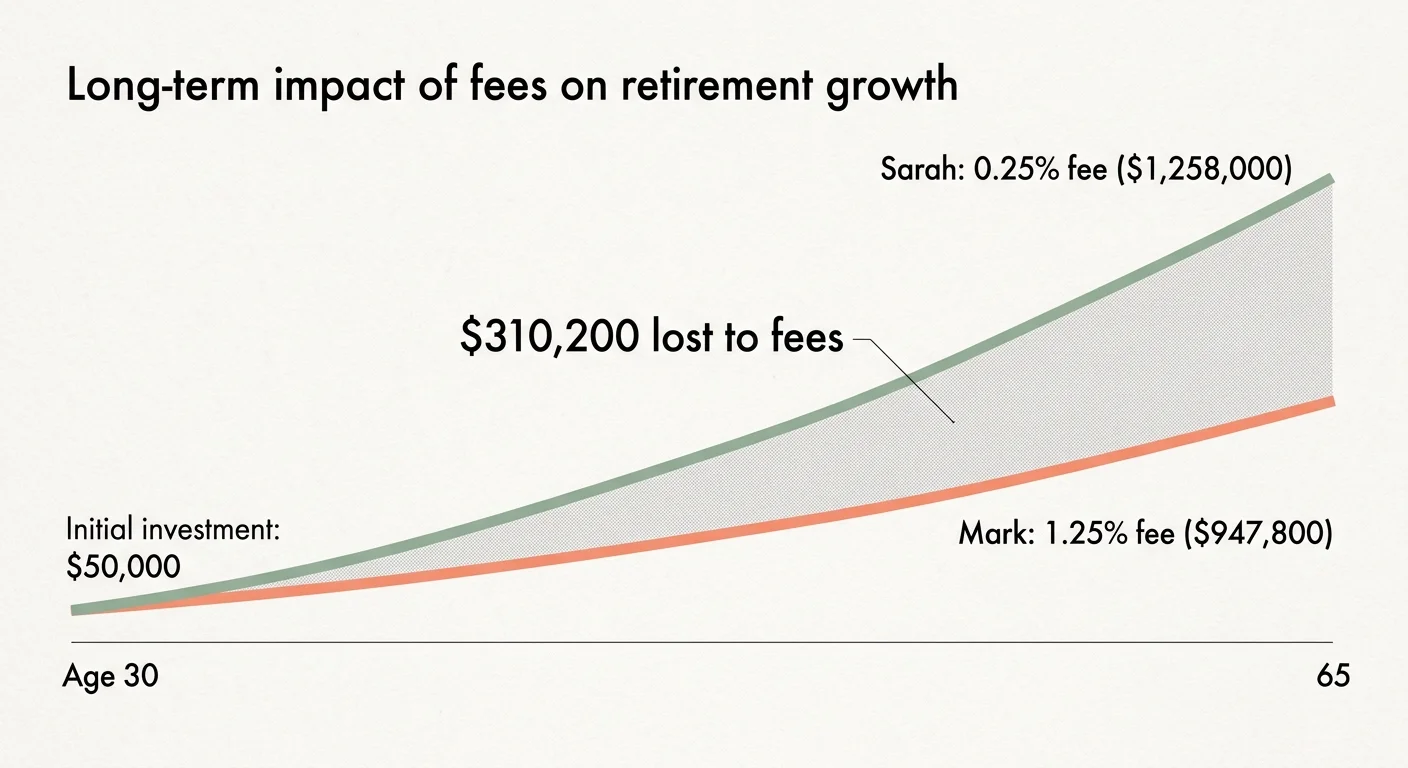
Consider two colleagues, Sarah and Mark, who both start with a $50,000 balance in their workplace 401(k) plans at age 30 and contribute $500 every month until they retire at age 65. Both invest in portfolios that generate an average gross annual market return of 7%. However, Sarah chooses broad-market index funds with an effective annual total fee of 0.25%, while Mark holds actively managed mutual funds carrying total fees of 1.25% across administrative costs and management ratios.
At age 65, Sarah’s portfolio grows to approximately $1,258,000. Mark’s portfolio, burdened by that extra 1.00% annual fee, reaches approximately $947,800. Mark forfeits more than $310,000—over 24% of his ultimate potential wealth—to financial intermediaries. His investment strategy remained identical to Sarah’s, yet hidden fee structures siphoned off nearly a quarter-million dollars of pure purchasing power.
Estimates published by the U.S. Department of Labor (DOL) highlight this exact structural dynamic: a 1% increase in annual retirement account fees reduces an employee’s total accumulated account balance by approximately 28% over a 35-year working career. Because financial institutions state fee rates as tiny percentages like 0.85% or 1.10%, plan participants regularly dismiss them as negligible. In reality, a 1% fee on an account returning 7% gross means you give away over 14% of your annual gains to fund managers every year.
The 5 Hidden Costs Draining Your 401(k) and IRA
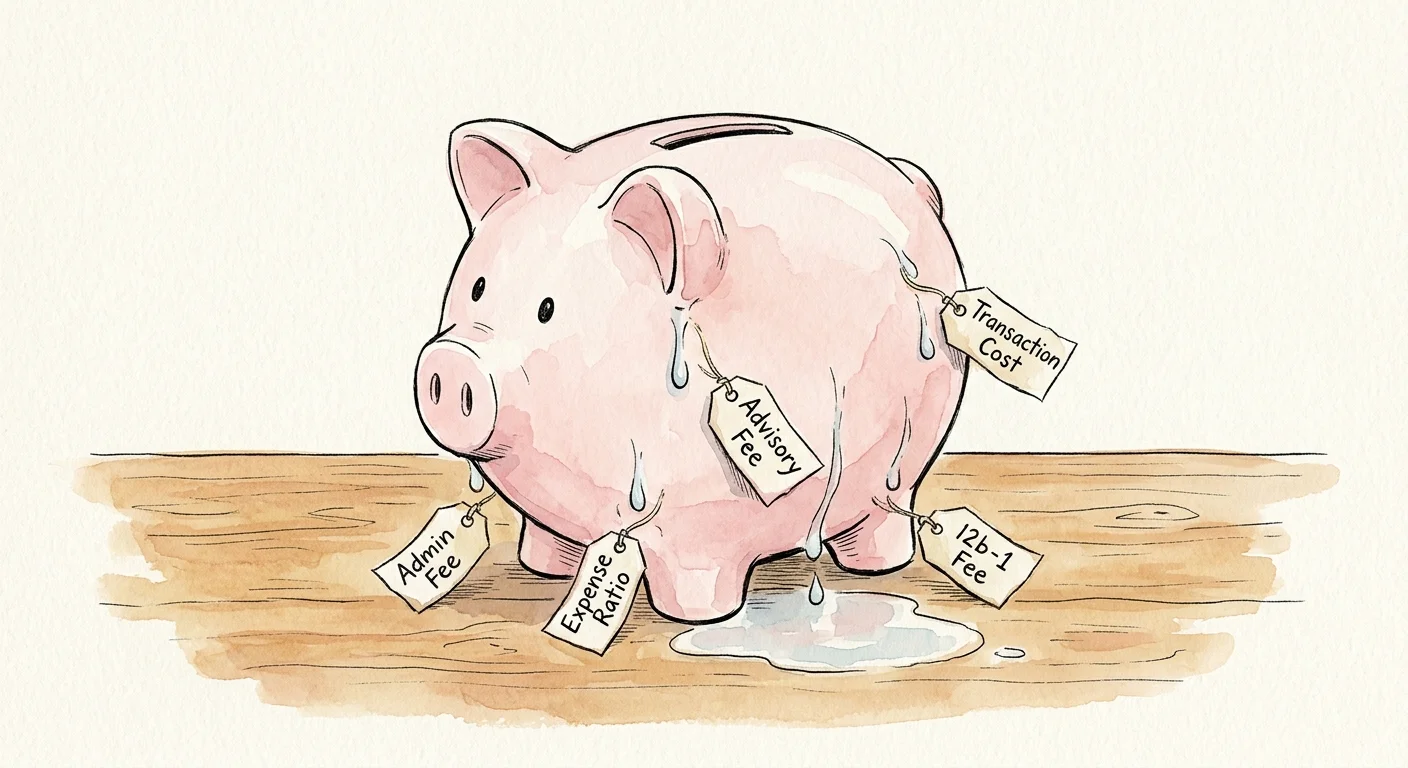
Retirement account fees rarely arrive as an itemized monthly bill in your mailbox. Instead, financial institutions automatically deduct these expenses directly from your underlying account balance or fund assets. To spot where your savings evaporate, you must recognize the five major fee categories embedded in modern workplace plans and personal retirement accounts.
1. Plan Administrative and Recordkeeping Fees
Administrative costs cover the operational logistics of maintaining a retirement plan. Recordkeepers charge these fees to handle accounting, legal compliance, participant website maintenance, customer support hotlines, and trustee services. Plan sponsors bill these costs in two distinct ways:
- Flat-headcount fees: The plan charges every participant an equal dollar amount, such as $15 per quarter ($60 annually). Flat fees favor workers with high account balances but hit lower balances proportionally harder.
- Asset-based percentage fees: The recordkeeper charges a proportional percentage on total assets, such as 0.30% per year. On a $200,000 balance, an asset-based admin fee takes $600 annually regardless of how simple your portfolio structure is.
2. Investment Expense Ratios and 12b-1 Distribution Fees
An expense ratio represents the annual operational fee charged by mutual funds or exchange-traded funds (ETFs) to pay portfolio managers, analysts, and administrative staff. The fund manager deducts this fee continuously from the fund’s net asset value (NAV) before reporting daily investment performance.
Embedded inside many high-cost active mutual funds are 12b-1 fees. Named after a specific SEC rule section, 12b-1 fees permit mutual fund companies to take up to 1.00% of fund assets annually to pay for marketing, broker commissions, and intermediary distribution channels. You effectively pay the fund company to market its financial products to other investors, adding zero value to your investment performance.
3. Sales Loads and Transaction Commissions
Brokerage accounts and individual retirement accounts sometimes hold load mutual funds. A front-end load charges an upfront sales commission—frequently between 3% and 5.75%—the moment you invest cash into the fund. If you deposit $10,000 into a fund with a 5% front-end load, only $9,500 actually goes to work in the market.
Back-end loads, formally known as Contingent Deferred Sales Charges (CDSC), deduct a sliding percentage fee if you sell or transfer fund shares within a designated multi-year window. Furthermore, some brokerage platforms levy manual trading commissions or transaction costs whenever you trade non-partner funds or rebalance individual holdings.
4. Portfolio Turnover and Hidden Trading Costs
A mutual fund’s published expense ratio does not tell the complete story of its underlying operating overhead. When active fund managers frequently buy and sell stocks inside a portfolio, they trigger substantial brokerage commissions, bid-ask spread friction, and market impact costs. Financial industry disclosures exclude these trading fees from the official expense ratio, burying them deep inside the fund’s annual financial statements.
A fund with a 100% annual turnover rate replaces its entire investment portfolio once a year. Academic research demonstrates that high turnover rates can add between 0.50% and 1.00% in unseen annual trading friction, eroding actual returns well beyond the published expense ratio.
5. Cash Sweep Yield Spreads and Wrap Fees
When you hold uninvested cash or contributions inside an IRA or 401(k), brokerages route those funds into money market or bank deposit sweep accounts. Many financial firms set interest payouts on default cash sweeps to near-zero levels while reinvesting those deposits into short-term Treasury bills yields yielding significantly higher interest. The broker keeps the margin spread as pure profit, depriving you of yield on your liquid reserves.
Additionally, managed accounts or robo-advisor options charge an overlay or wrap fee—often 0.25% to 1.00% of total assets—on top of the expense ratios of the underlying funds in your portfolio. If a robo-advisor picks underlying mutual funds averaging 0.40% and adds a 0.35% account management fee, your baseline drag quickly reaches 0.75% annually.
Decoding Your 401(k) Fee Disclosure Document
Federal regulations protect your right to examine every fee charged against your retirement savings. Under Department of Labor regulations, specifically ERISA Rule 404(a)(5), employers must distribute an annual participant fee disclosure notice to every employee enrolled in a 401(k) or 403(b) plan. This disclosure gives you direct visibility into exact operational costs.
Log into your employer’s plan portal or request a physical copy of the Annual Plan Fee Disclosure Notice from your Human Resources department. To review your document effectively, focus on three primary sections:
- General Plan Administrative Expenses: Scan for explicit line items showing recordkeeping, accounting, legal, or auditing charges. Check whether your plan bills these costs as a fixed dollar fee or an asset-based percentage.
- Individual Expense Disclosures: Look at transaction-specific fees that apply when you take specific actions, such as taking out a 401(k) loan ($50 to $100 setup fee), initiating a Qualified Domestic Relations Order (QDRO), or requesting an expedited paper check payout.
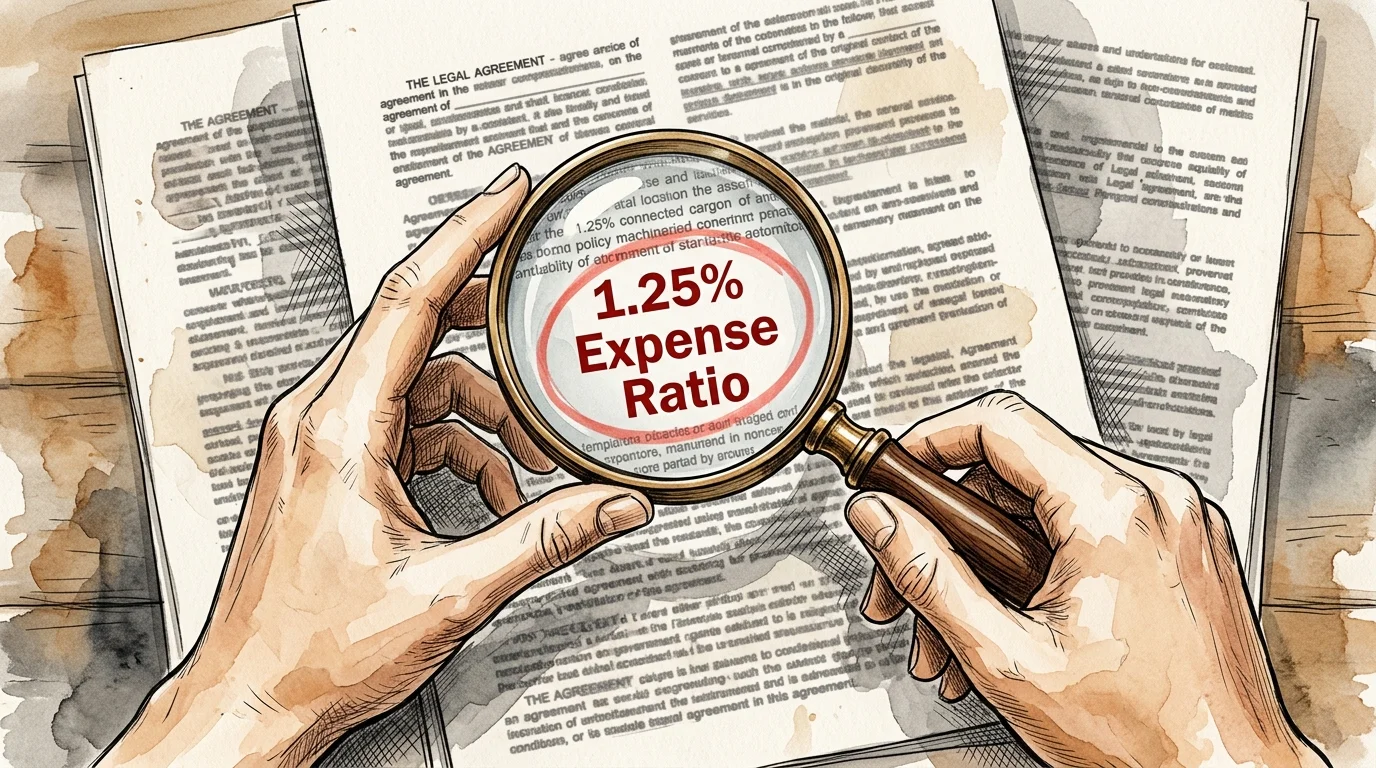
- Investment-Related Information Comparative Chart: This standardized table details every available fund option in your plan. Examine the column labeled Total Annual Operating Expenses, expressed both as a percentage (e.g., 0.68%) and as a dollar cost per $1,000 invested (e.g., $6.80). Compare these numbers directly against the benchmark returns listed beside them.
“Plan fiduciaries must act solely in the interest of plan participants and beneficiaries, ensuring that administrative costs and investment options remain reasonable for all workers.” — U.S. Department of Labor, Employee Benefits Security Administration Guidelines
Fee Benchmarks: How Your Plan Measures Up
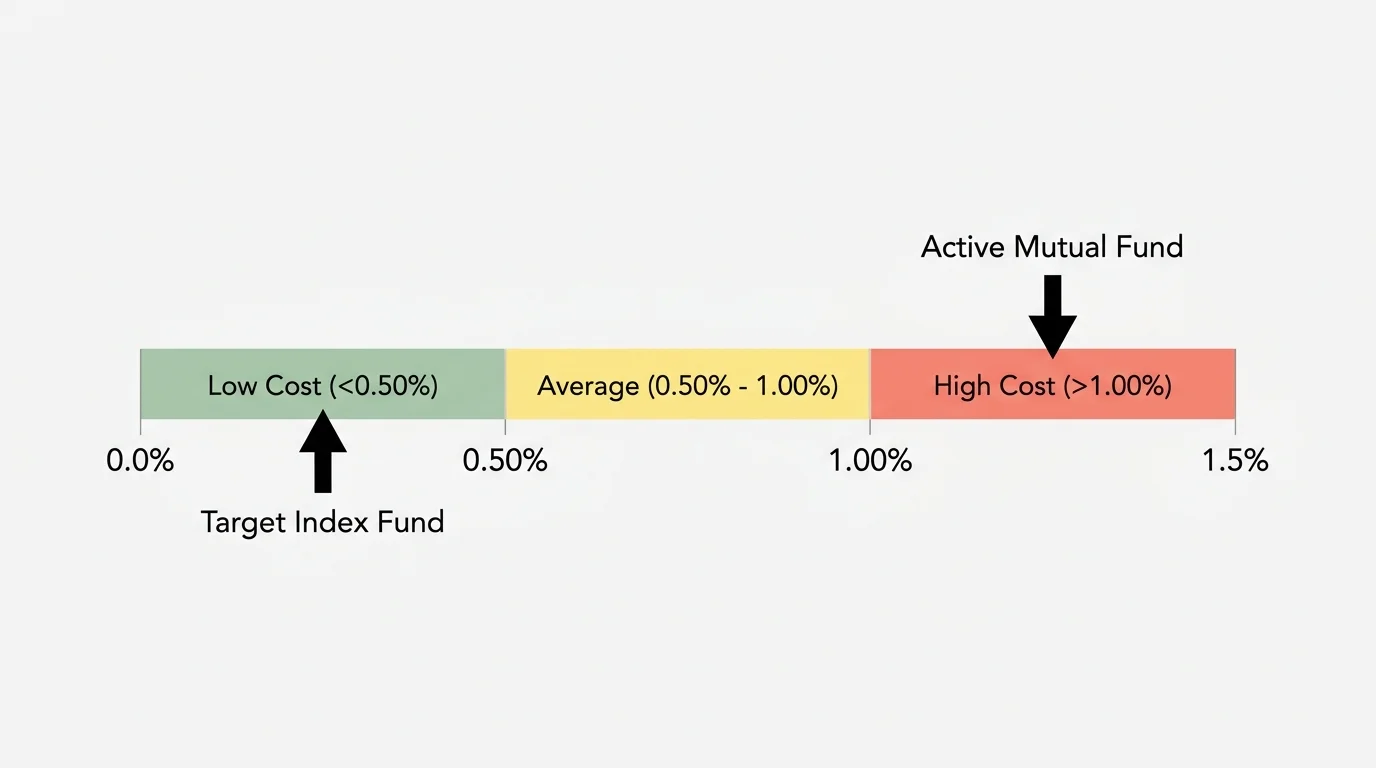
Determining whether your retirement plan fees are reasonable requires comparing your costs against national industry benchmarks. According to retirement market data published by the Investment Company Institute (ICI), average equity mutual fund expense ratios paid by 401(k) participants dropped to roughly 0.27%, down from 0.76% decades earlier. However, fee variance across different employer plan sizes remains substantial.
Large corporate employers with billions in assets leverage their scale to secure institutional share classes with ultra-low costs. Small businesses with under $5 million in total assets frequently pay elevated administrative overhead and higher retail fund expense ratios. The comparative breakdown below highlights where individual investment fee tiers fall:
| Fee Category | High Cost (Action Needed) | Average Industry Cost | Low-Cost Target Benchmark | Long-Term Impact Level |
|---|---|---|---|---|
| Passive Index Fund Expense Ratio | Above 0.25% | 0.05% – 0.12% | 0.00% – 0.04% | Moderate |
| Active Equity Fund Expense Ratio | Above 0.85% | 0.45% – 0.65% | Under 0.35% | Severe |
| Target-Date Fund (TDF) Expense Ratio | Above 0.65% | 0.32% – 0.48% | Under 0.12% | High |
| Plan Administrative/Recordkeeping Fee | Above 0.50% asset fee | 0.15% – 0.25% | Under $50/yr or 0.08% | High |
| 12b-1 Distribution Fee | 0.25% – 1.00% | 0.10% | 0.00% (Zero) | Severe |

Step-by-Step Blueprint to Reduce Your Retirement Costs
Lowering your retirement account hidden costs requires active portfolio management and strategic account selection. Take these five immediate steps to audit your holdings and lower your cost structure.
Step 1: Conduct a Comprehensive Fee Audit
Log into all your active and legacy retirement accounts—including 401(k)s, 403(b)s, Roth IRAs, and traditional IRAs. List every fund you hold along with its current balance and published expense ratio. Multiply each fund’s expense ratio by its balance to calculate your total annual fee outlay in actual dollars. Identifying your baseline cost reveals instantly where your money leaks.
Step 2: Replace Active Funds with Low-Cost Index Funds
Review the investment menu inside your workplace plan for low-cost broad-market index funds. Index funds track market benchmarks like the S&P 500 or the Total Stock Market Index passively, requiring no expensive research teams or high-frequency trading. If your plan offers an active large-cap growth fund charging 0.75% and an S&P 500 index fund charging 0.03%, swap your future contributions and existing balances into the low-cost index fund.
Step 3: Evaluate Target-Date Fund Structures
Target-date funds automatically adjust your asset allocation from stocks to bonds as you near retirement. While convenient, target-date funds vary wildly in fee structures. Some managers build target-date funds using low-cost underlying index funds, keeping total fees under 0.10%. Others build them with expensive actively managed underlying funds, pushing fees above 0.70%.
If your plan’s target-date options charge high fees, build your own simple three-fund portfolio using core index funds:
- A broad U.S. stock market index fund
- An international stock market index fund
- A total U.S. bond market index fund
Rebalancing this simple three-fund structure once a year takes less than fifteen minutes and often slashes your annual investment costs by 70% or more.
Step 4: Roll Over Legacy 401(k) Accounts Wisely
When you leave an employer, keeping your funds in a former employer’s 401(k) can expose you to high former-employee recordkeeping fees. Move legacy funds into a low-cost rollover IRA at an online brokerage platform that offers zero-commission trades, zero account maintenance fees, and access to ultra-low-cost index ETFs.
Check the fee structure of your current employer’s plan before executing a rollover. If your current employer operates an institutional-scale plan with negotiated fund fees under 0.02%, consolidating old accounts into your current workplace 401(k) may prove cheaper than a personal IRA.
Step 5: Leverage HR and Plan Committees
Employers operate as fiduciaries under ERISA law, meaning they must act in your best financial interest. If your company’s retirement plan offers only high-cost active funds with expense ratios above 0.80%, write a formal letter or email to your HR benefits department. Request the addition of low-cost broad-market index funds or low-fee institutional share classes. Employers routinely update investment menus when employees highlight fee disparities.

What Can Go Wrong
Navigating retirement fees without understanding regulatory nuances can lead to costly operational mistakes. Pay close attention to these four specific potential pitfalls:
- Unintentional Taxable Distributions During Rollovers: Requesting a direct trustee-to-trustee rollover when transferring 401(k) balances prevents tax errors. If the recordkeeper issues a check payable directly to you rather than your new custodian, they must withhold 20% for federal taxes. Failing to deposit the full original balance into your new retirement account within 60 days converts the transfer into a taxable distribution subject to early withdrawal penalties.
- Overlooking Net Unrealized Appreciation (NUA) Opportunities: If your 401(k) holds highly appreciated employer stock, blindly rolling those shares into a standard IRA destroys valuable tax options. Under NUA rules, distributing physical company stock into a taxable brokerage account allows you to pay long-term capital gains tax rates on appreciation rather than higher ordinary income tax rates upon withdrawal.
- Rolling Out of Low-Cost Institutional 401(k) Plans: Workers sometimes automatically move money into a personal IRA managed by a local commission-based advisor after leaving a job. If your former employer managed a $500 million plan offering institutional index funds at 0.01% expense ratios, moving into an advisor-managed IRA charging a 1.00% asset management fee plus retail mutual fund fees vastly increases your annual costs.
- Ignoring Short-Term Redemption Fees: Certain mutual funds impose short-term trading or redemption fees (typically 1.00% to 2.00%) if you sell shares within 30, 60, or 90 days of purchase. Frequent portfolio rebalancing across these funds incurs unnecessary transaction friction.

Where Outside Advice Pays Off
While self-managing low-cost index portfolios works exceptionally well for building wealth, complex life events and regulatory environments justify paying for specialized fiduciary expertise. Engaging a fee-only, fiduciary Certified Financial Planner (CFP) or CPA pays off in these specific situations:
- Evaluating Complex Pension Payout Options: Deciding between a lifetime monthly annuity payout and a lump-sum IRA rollover requires analyzing interest rate environments, inflation risks, survivor benefits, and personal health expectations. A fee-only financial planner can run stress-test modeling without pushing high-commission financial products.
- Navigating Multi-Account Retirement Drawdown Strategies: Coordinating withdrawals across taxable brokerage accounts, traditional tax-deferred IRAs, and tax-free Roth IRAs during retirement requires precise tax planning. Specialized guidance ensures you minimize lifetime income taxes while managing Medicare IRMAA premium brackets and Social Security taxation.
- Handling Large Employer Stock and Executive Compensation Holdings: Managing high concentrations of employer stock, restricted stock units (RSUs), or incentive stock options (ISOs) requires balancing tax efficiency against risk mitigation. Professionals can structure systematic liquidation plans while leveraging tax strategies like NUA.
- Resolving Multi-State Tax and Inheritance Structuring: Moving across state lines in retirement or leaving significant assets to non-spouse beneficiaries under SECURE Act 2.0 regulations demands professional legal and financial coordination. Estate planning specialists ensure inherited tax-deferred accounts adhere to required 10-year distribution rules without triggering tax spikes for heirs.
Frequently Asked Questions
How do I find out how much my 401(k) charges in annual fees?
Check your plan’s annual fee disclosure document, mandated under ERISA Rule 404(a)(5). Log into your online retirement account portal, navigate to the documents or disclosures section, and open the participant fee disclosure notice. Look specifically for total operating expense ratios for each fund and administrative asset-based or flat fees.
What is considered a good expense ratio for a retirement index fund?
A good expense ratio for a broad-market index fund (such as an S&P 500 or total stock market index fund) ranges between 0.02% and 0.08%. Anything above 0.20% for a passive index fund is expensive, while active management mutual funds often charge 0.50% to 1.25% or more.
Are IRA fees lower than workplace 401(k) fees?
Individual Retirement Accounts (IRAs) often offer lower investment fees because you can choose low-cost brokers and select zero-commission index funds or ETFs. However, large employer 401(k) plans sometimes negotiate institutional share classes with lower expense ratios than retail IRAs can access.
Can I request lower fee investment options in my employer 401(k)?
Yes. You can contact your human resources department or retirement plan committee to request low-cost index funds or lower-cost institutional share classes. Employers operate as fiduciaries under ERISA and have a legal obligation to provide reasonable investment costs for plan participants.
Taking Charge of Your Retirement Nest Egg
Uncovering and slashing hidden retirement account fees offers one of the highest-return actions available in personal finance. Every dollar saved on administrative charges, sales loads, and inflated expense ratios remains in your account to compound for your future. Start by downloading your plan’s fee disclosure document today, auditing your current investments, and shifting capital into broad-market index funds that put your wealth building first.
For more research and consumer resources on evaluating account disclosures, review official educational tools on the SEC’s Investor.gov platform.
The information here is meant for educational purposes. Specific circumstances—including health conditions, finances, location, and goals—may require different approaches. When in doubt, consult a licensed professional or check official sources directly.
Last updated: May 2026. Rules, prices, and details change—verify current information with official sources before acting on it.









Leave a Reply