

You may have seen headlines advertising a hidden $23,760 Social Security bonus waiting to be unlocked. While the government does not send special bonus checks, you can legally increase your lifetime benefits by this amount or more.
This boost comes from timing strategies built into the Social Security system. By optimizing when and how you claim, you can permanently raise your guaranteed monthly income.
Understanding how these claiming rules interact will help you secure thousands in additional retirement cash. Here is how the strategy works and how to apply it.
At a Glance
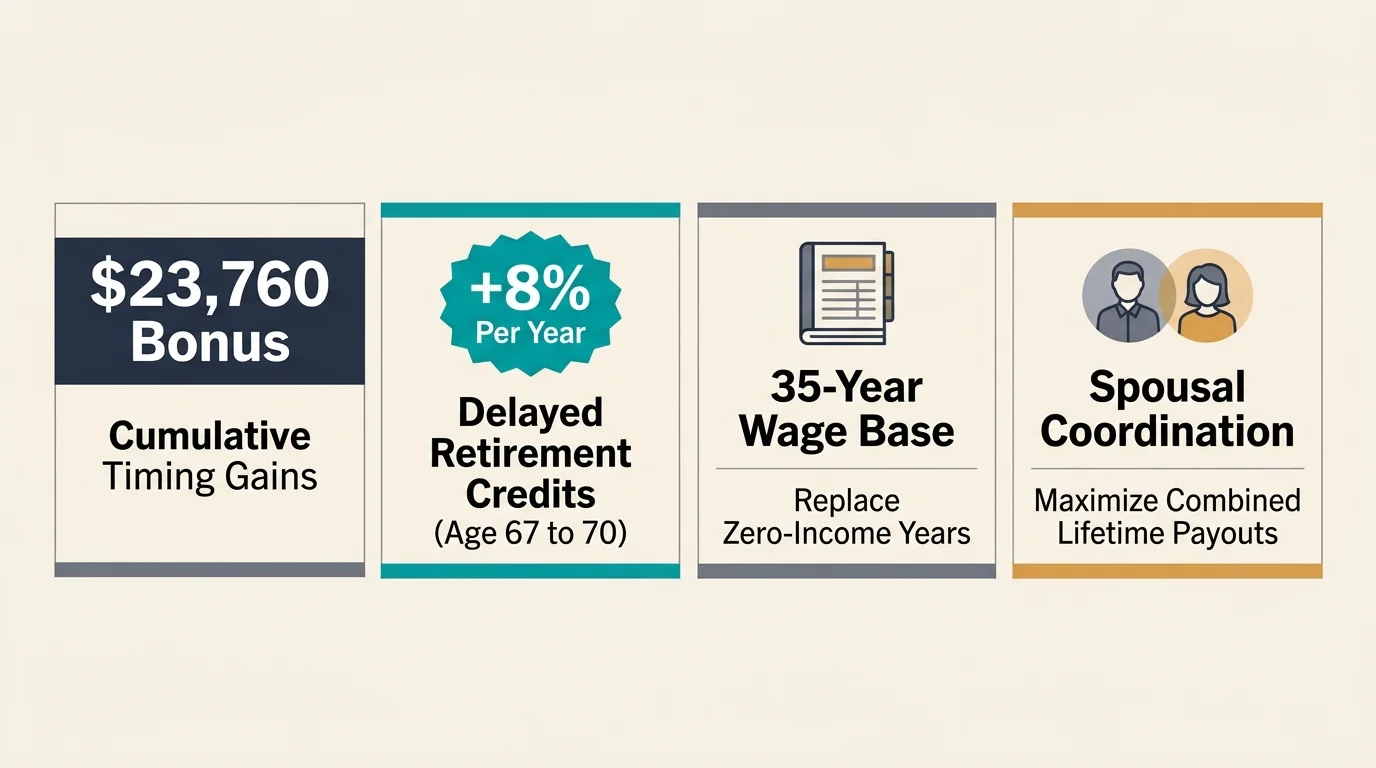
- The “$23,760 bonus” represents cumulative gains from strategic claiming rather than a direct government payout.
- Delaying benefits past Full Retirement Age earns you an 8% annual boost through delayed retirement credits until age 70.
- Replacing low-earning years in your 35-year wage baseline permanently raises your primary benefit amount.
- Coordinating spousal and survivor benefits maximizes total lifetime income for married couples.
Debunking the Myth: What the “$23,760 Bonus” Really Means
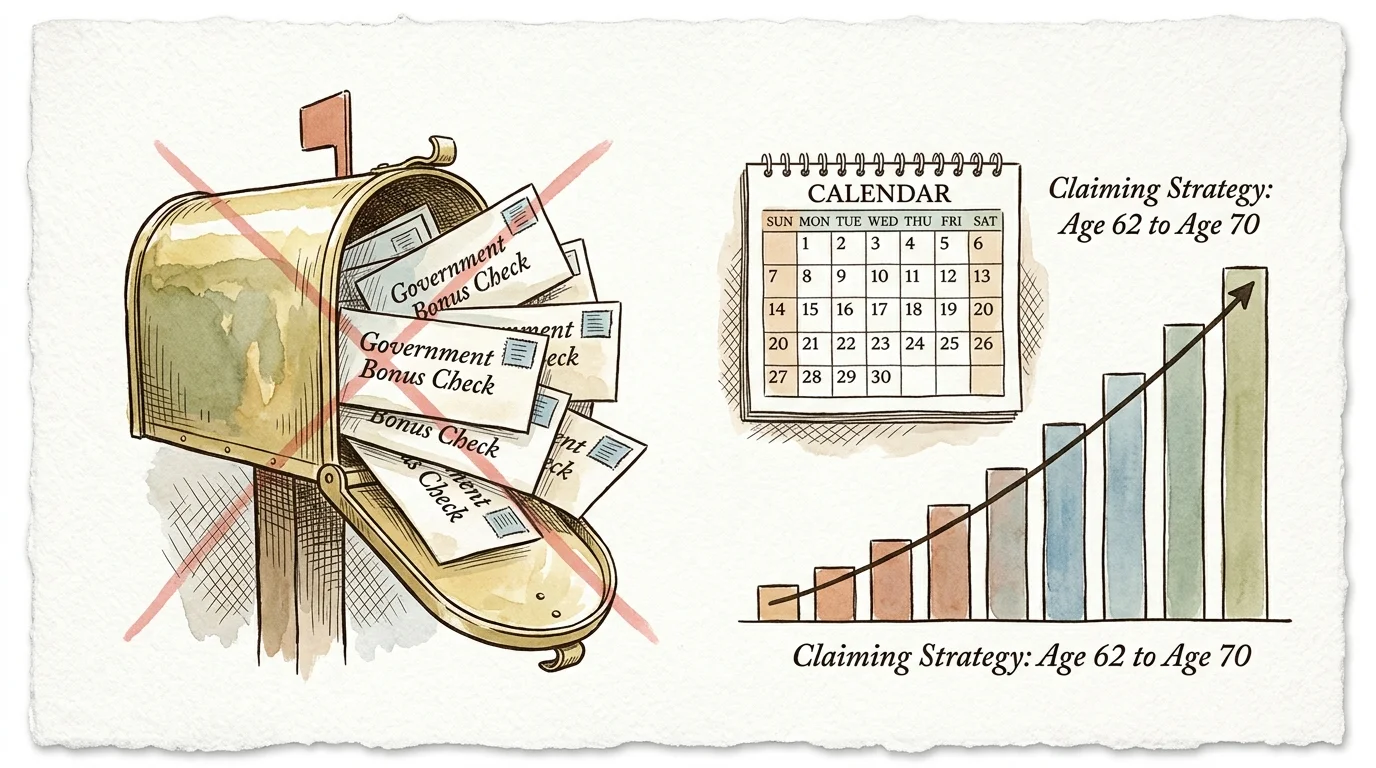
Financial advertisements often promise a secret loophole that delivers a lump-sum windfall. In reality, the Social Security Administration does not issue unannounced bonus checks to retirees.
The figure represents the cumulative extra cash you generate by optimizing your claiming timeline. Over a standard retirement, choosing the right filing date easily creates tens of thousands in extra income.
According to the Social Security Administration, claiming before Full Retirement Age permanently cuts your check. Conversely, delaying your claim unlocks substantial percentage increases.
The Core Engine: How Delayed Retirement Credits Work
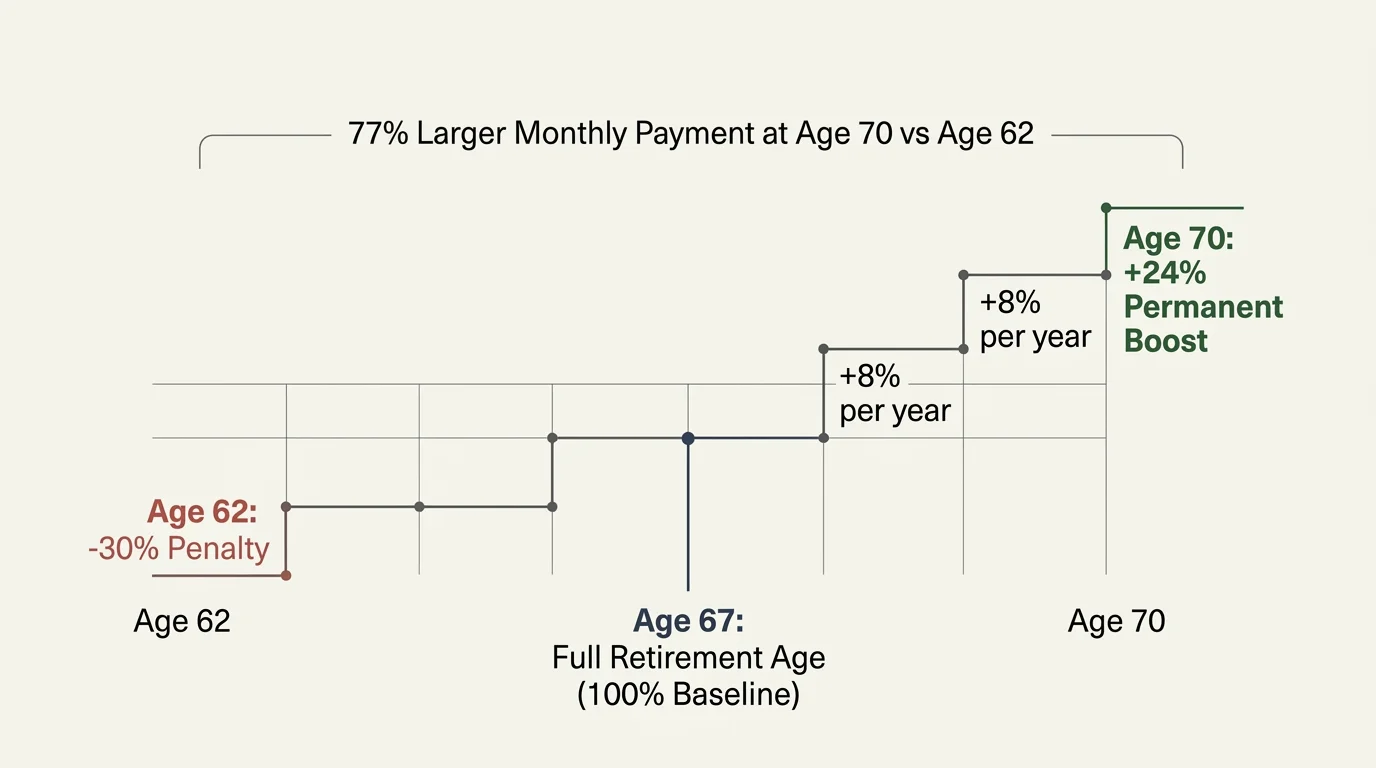
For workers born in 1960 or later, Full Retirement Age is 67. Filing at the earliest eligibility age of 62 permanently slashes your monthly benefit by 30%.
Every year you delay claiming past age 67 adds an 8% increase to your payment. This guaranteed growth accrues monthly as delayed retirement credits until you reach age 70.
Waiting until age 70 locks in a permanent 24% increase above your baseline benefit. When compared to claiming at age 62, your age-70 monthly check is roughly 77% larger.
This wide payment spread generates the massive payout marketed as a bonus strategy. That higher starting amount also compounds through annual cost-of-living adjustments for the rest of your life.

The 35-Year Career Calculation: Eliminating Zero-Income Years
The Social Security formula calculates your baseline benefit using your highest 35 years of indexed earnings. If you work fewer than 35 years, the agency enters zeros for the missing periods.
Even one or two zero-income years can drag down your lifetime monthly average. Working an extra year or two in your 60s replaces lower-earning early career years with higher wages.
Research from Investopedia indicates that strengthening your earnings baseline directly magnifies delayed retirement credits. A higher Primary Insurance Amount makes every percentage boost worth significantly more.

Strategic Timing: Comparing Claiming Ages and Benefits
To see how claiming ages impact real cash flow, consider a worker entitled to a $2,000 monthly benefit at Full Retirement Age (age 67).
| Claiming Age | Benefit % of Baseline | Monthly Payment | Annual Income | Cumulative Payout by Age 85 |
|---|---|---|---|---|
| Age 62 | 70% | $1,400 | $16,800 | $386,400 |
| Age 67 (FRA) | 100% | $2,000 | $24,000 | $432,000 |
| Age 70 | 124% | $2,480 | $29,760 | $446,400 |
Waiting until age 70 delivers $12,960 more per year than claiming at age 62. In just two years of collecting benefits at age 70, you earn over $25,920 in extra cash.
Most individuals break even on delayed claiming around age 78 to 80. If family history or current health suggests average longevity, delaying provides far greater lifetime wealth.

Spousal and Survivor Coordination Tactics
Married couples have unique tools to maximize Social Security benefits. A lower-earning spouse can claim up to 50% of the higher earner’s Full Retirement Age benefit.
Spousal benefits do not earn delayed retirement credits past age 67. The lower-earning partner should generally file upon reaching Full Retirement Age.
Meanwhile, the higher-earning spouse should delay claiming until age 70. This delay maximizes the future survivor benefit for the remaining partner.
According to the Consumer Financial Protection Bureau, a surviving spouse inherits 100% of the deceased worker’s higher benefit. Delaying claims functions as an enduring insurance policy for your spouse.
The 12-Month “Do-Over” and Claim-and-Suspend Safety Nets
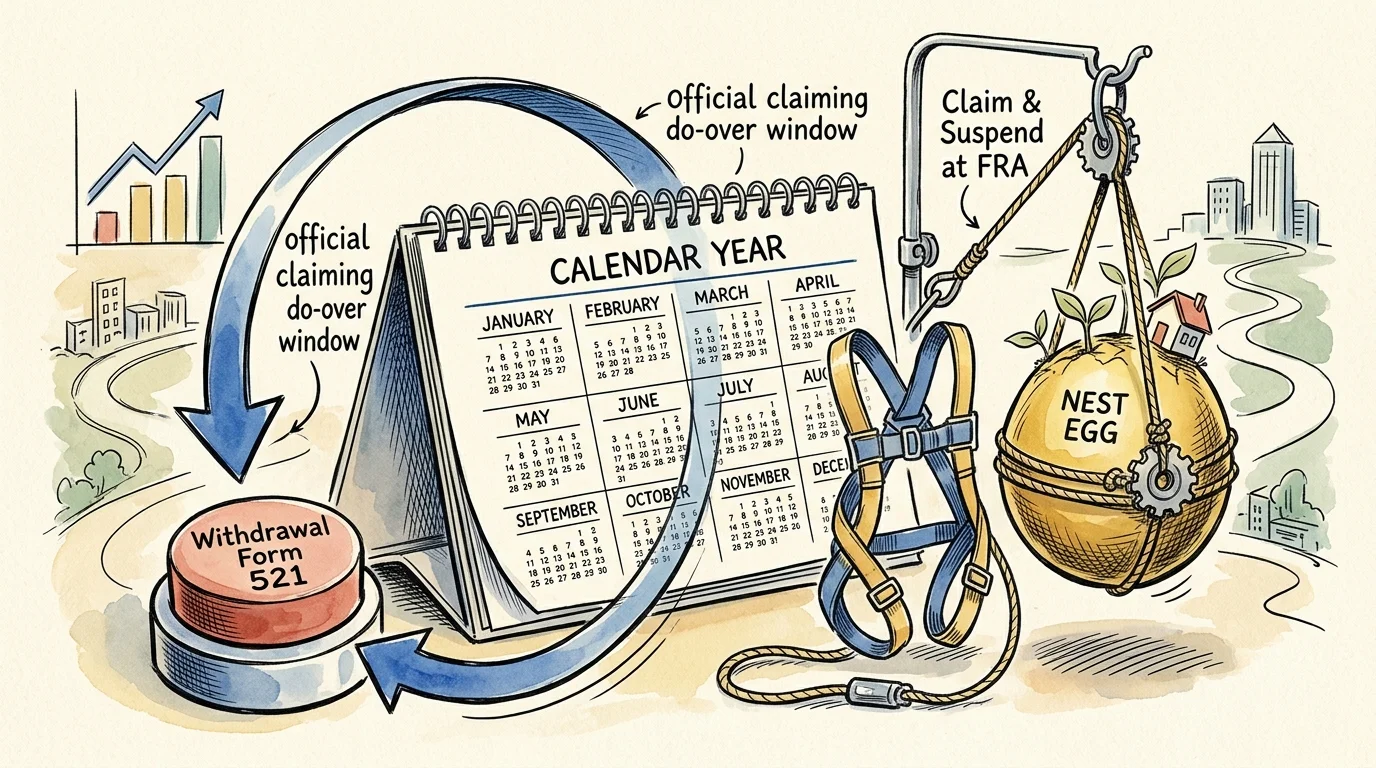
If you claimed early and regret the decision, Social Security rules offer two potential remedies. The first option is a one-time withdrawal of your application within 12 months of filing.
You must file Form SSA-521 and repay all benefits received to date. This action wipes your claiming slate clean, allowing your benefit to resume earning growth credits.
If more than 12 months have passed, you can use the claim-and-suspend rule once you reach Full Retirement Age. You simply request that the agency pause your monthly payments.
While suspended, your benefit earns 8% annual delayed retirement credits until age 70. This provides a partial reset that permanently raises your check later in retirement.
Common Mistakes to Avoid
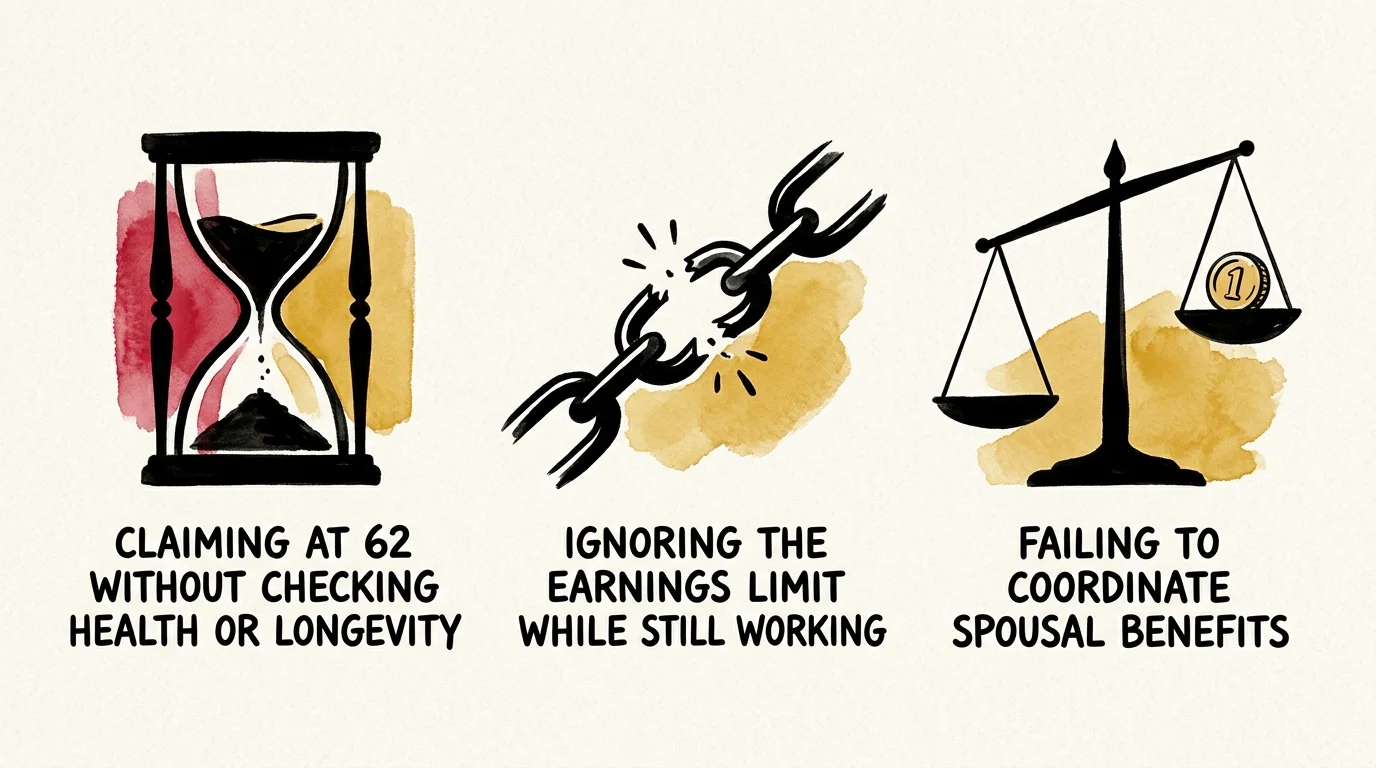
Many workers leave substantial money behind due to common filing errors. Avoid these missteps when developing your Social Security claiming strategy:
- Triggering the Earnings Limit: Filing before Full Retirement Age while working can cause Social Security to withhold $1 for every $2 earned above annual limits.
- Waiting Past Age 70: Delayed retirement credits stop accumulating at age 70. Delaying past your 70th birthday surrenders income without increasing your monthly benefit.
- Overlooking Survivor Protection: Claiming early as the primary household earner locks in a permanently reduced survivor check for your spouse.
- Ignoring Tax Brackets: Up to 85% of Social Security benefits become taxable if your provisional income exceeds federal thresholds.

Getting Expert Input
Because claiming decisions are permanent, outside professional guidance can prevent costly oversights. Consider consulting a fee-only financial planner or tax advisor in these scenarios:
- Bridging Income Gaps: A planner can structure withdrawals from traditional savings or brokerage accounts to cover living costs between age 62 and 70.
- Navigating Divorced Benefits: An expert helps you confirm eligibility for benefits based on an ex-spouse’s earnings record without affecting their payout.
- Evaluating Chronic Health Conditions: A professional can model customized break-even points if health challenges alter your longevity expectations.
- Coordinating Account Withdrawals: A tax specialist helps balance Social Security timing alongside Required Minimum Distributions to reduce your overall tax burden.
Frequently Asked Questions
Is the $23,760 Social Security bonus a real government program?
No, there is no official program or separate check with this name. It describes the cumulative financial advantage of using delayed retirement credits and strategic claiming rules.
Can I collect spousal benefits while delaying my own?
Under current deemed filing rules, you cannot restrict your application to spousal benefits alone if born after January 1, 1954. Filing triggers an application for all eligible benefits simultaneously.
What happens if I delay Social Security but pass away early?
If you pass away before claiming, your estate does not recover unpaid benefits. However, your surviving spouse receives your higher earned benefit amount for life.
Do cost-of-living adjustments apply while delaying benefits?
Yes, all annual cost-of-living adjustments apply to your benefit calculation even before you file. You receive these increases alongside your 8% delayed retirement credits.
Maximizing your Social Security payout requires deliberate timing and patience. By utilizing delayed credits and coordinating household claims, you build a stronger foundation for long-term retirement security.
This is general informational content based on widely accepted guidance. Individual results vary. Verify current details—rules, prices, eligibility, regulations—with official sources before making important decisions.
Last updated: May 2026. Rules, prices, and details change—verify current information with official sources before acting on it.









Leave a Reply