

Tracking your retirement income feels fundamentally different from monitoring a steady biweekly paycheck. A reliable retirement cash flow spreadsheet gives you immediate visibility into your monthly spending, taxes, and portfolio distributions.
When balancing multiple sources like Social Security, pensions, and investment withdrawals, manual tracking prevents costly annual oversights. Simple templates also protect your privacy and eliminate the monthly subscription fees demanded by automated budgeting apps.
Here are ten practical spreadsheet models retirees use to organize monthly cash flow, manage spending guardrails, and preserve peace of mind.

The Essentials: Why Spreadsheets Outperform Budget Apps in Retirement
Most commercial budgeting applications cater to working professionals with regular paychecks and straightforward savings goals. They often fail to capture the nuanced realities of retirement decumulation.
Retirees must juggle fluctuating taxable withdrawals, required minimum distributions, and uneven healthcare expenses. Commercial apps frequently misclassify portfolio transfers as income or double-count savings distributions.
A personalized monthly budget template gives you complete control over your financial architecture. You decide how to categorize income streams, calculate tax withholdings, and schedule irregular annual expenses.
Spreadsheets also provide unparalleled data security; your private account credentials and net-worth figures remain stored locally on your device rather than on third-party cloud servers.
1. The Paycheck Replacement Spreadsheet
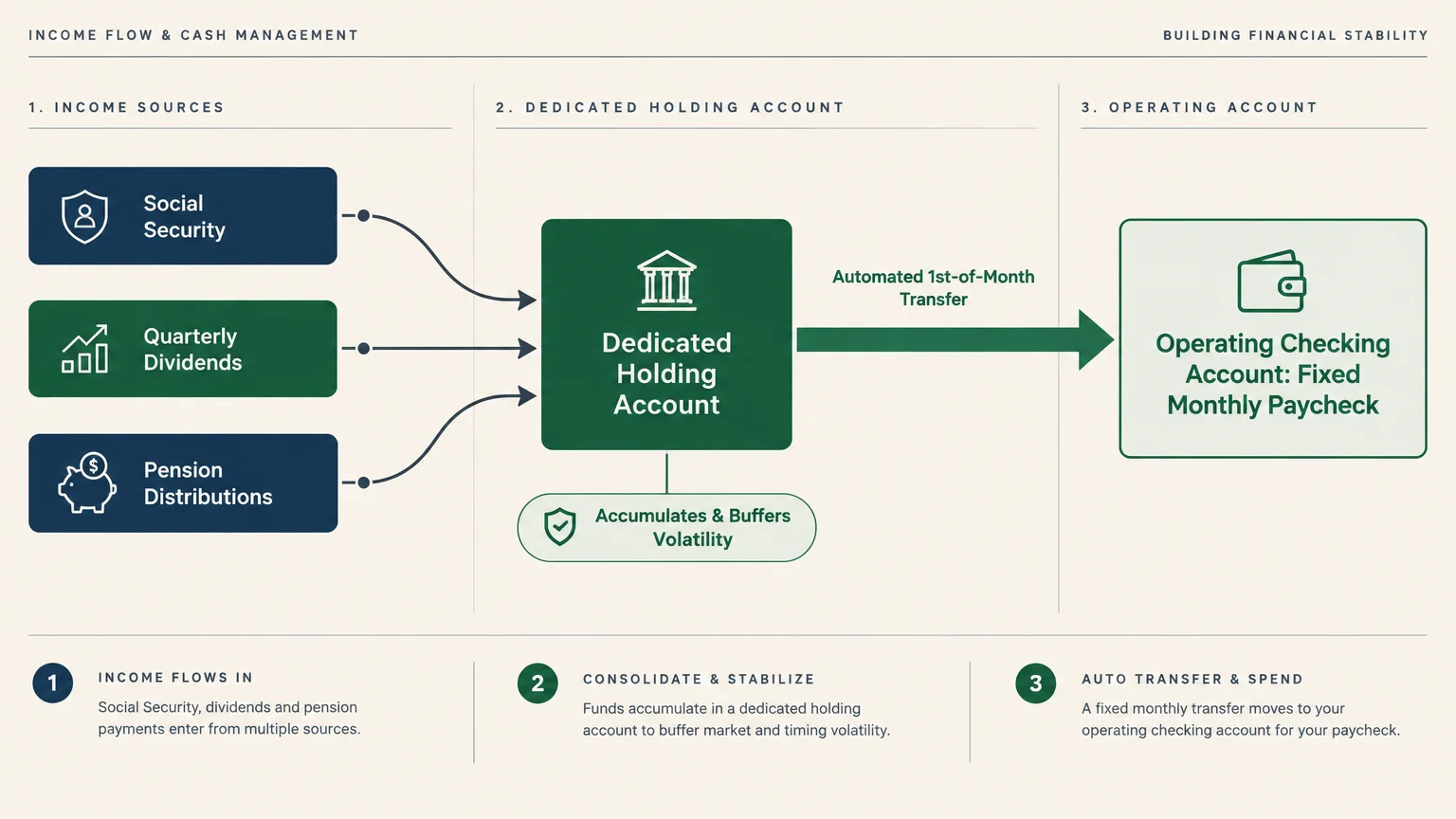
Leaving the workforce eliminates the psychological comfort of a predictable direct deposit. The paycheck replacement spreadsheet restores that stability by turning volatile portfolio distributions into an orderly monthly salary.
To use this model, you route all income sources—including Social Security, pensions, and quarterly dividends—into a dedicated central holding account. The spreadsheet schedules an automated transfer of a fixed sum to your checking account on the first of each month.
This separation prevents you from overspending during dividend-heavy months. It also protects your day-to-day lifestyle when distribution dates fluctuate across financial institutions.

2. The Essential vs. Discretionary Floor Tracker
This expense tracking spreadsheet divides your living expenses into two explicit tiers: baseline survival costs and lifestyle spending. Your essential floor covers non-negotiable obligations like property taxes, groceries, utilities, and Medicare premiums.
Discretionary categories include travel, dining out, golf memberships, and gifts for grandchildren. If market fluctuations trim your portfolio balance, this spreadsheet highlights exactly which line items you can pause without disrupting your core lifestyle.
According to data from the U.S. Bureau of Labor Statistics, housing, transportation, and healthcare constitute more than two-thirds of total expenditures for older American households.
Tracking your fixed floor ensures your non-discretionary commitments never exceed your guaranteed lifetime income sources.
3. The Three-Bucket Cash Management Sheet
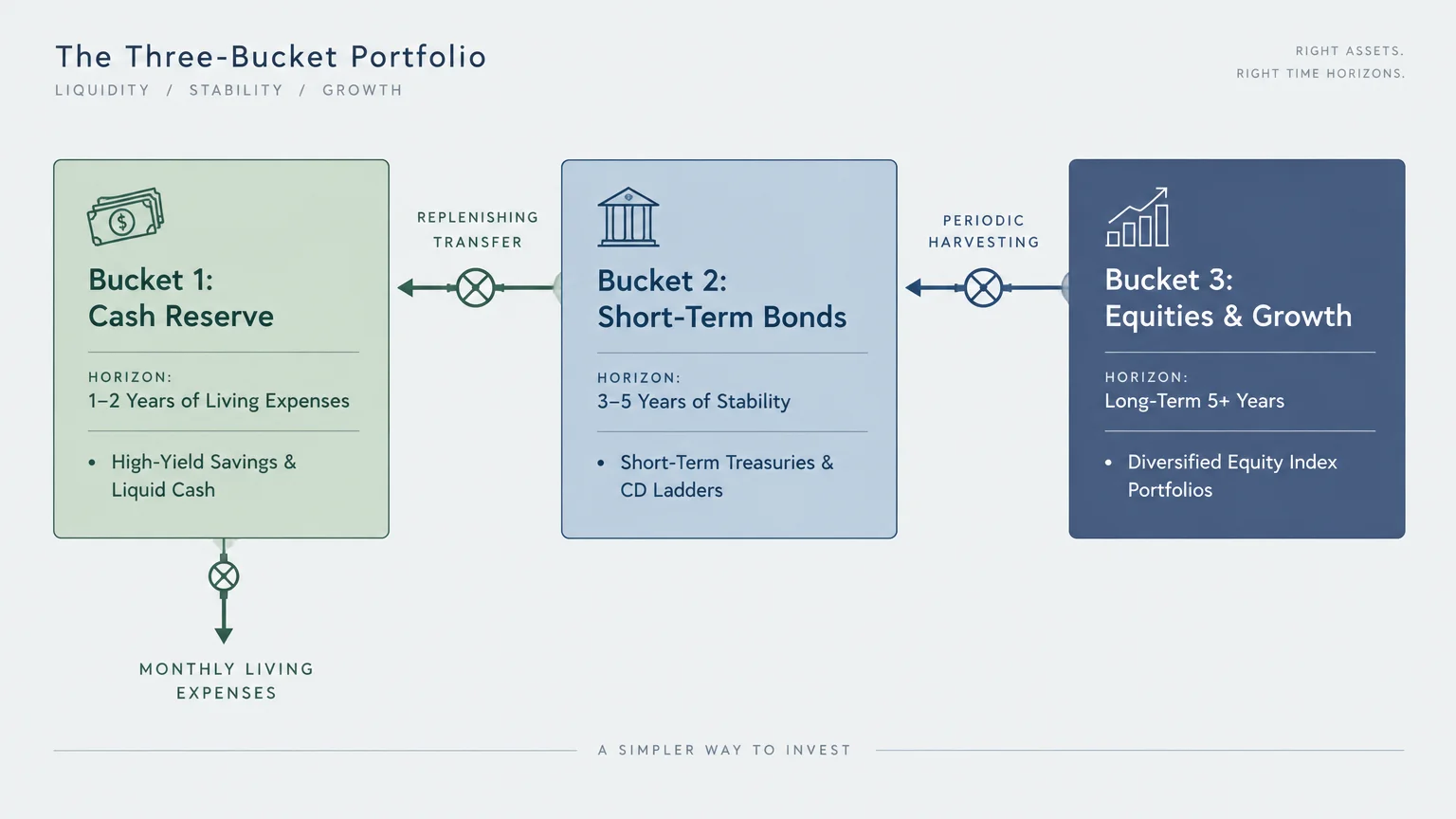
The bucket strategy shields retirees from sequence-of-returns risk by organizing assets into distinct time horizons. This accompanying budget spreadsheet retirees use tracks the flow of capital between those buckets.
Bucket one holds one to two years of living expenses in liquid cash and high-yield savings. Bucket two maintains three to five years of expenses in short-term bonds, while bucket three remains invested in equities for growth.
Your spreadsheet tracks monthly outflows solely from bucket one. When the liquid reserve drops below a predetermined minimum, the sheet signals that it is time to harvest gains from buckets two or three.
4. The RMD and Tax Withholding Planner
Traditional retirement accounts come with mandatory withdrawal rules that can create significant tax burdens if handled carelessly. Failing to properly calculate and withdraw these funds can trigger steep penalties.
According to the Internal Revenue Service, individuals must begin taking annual Required Minimum Distributions once they reach age 73 under the SECURE 2.0 Act.
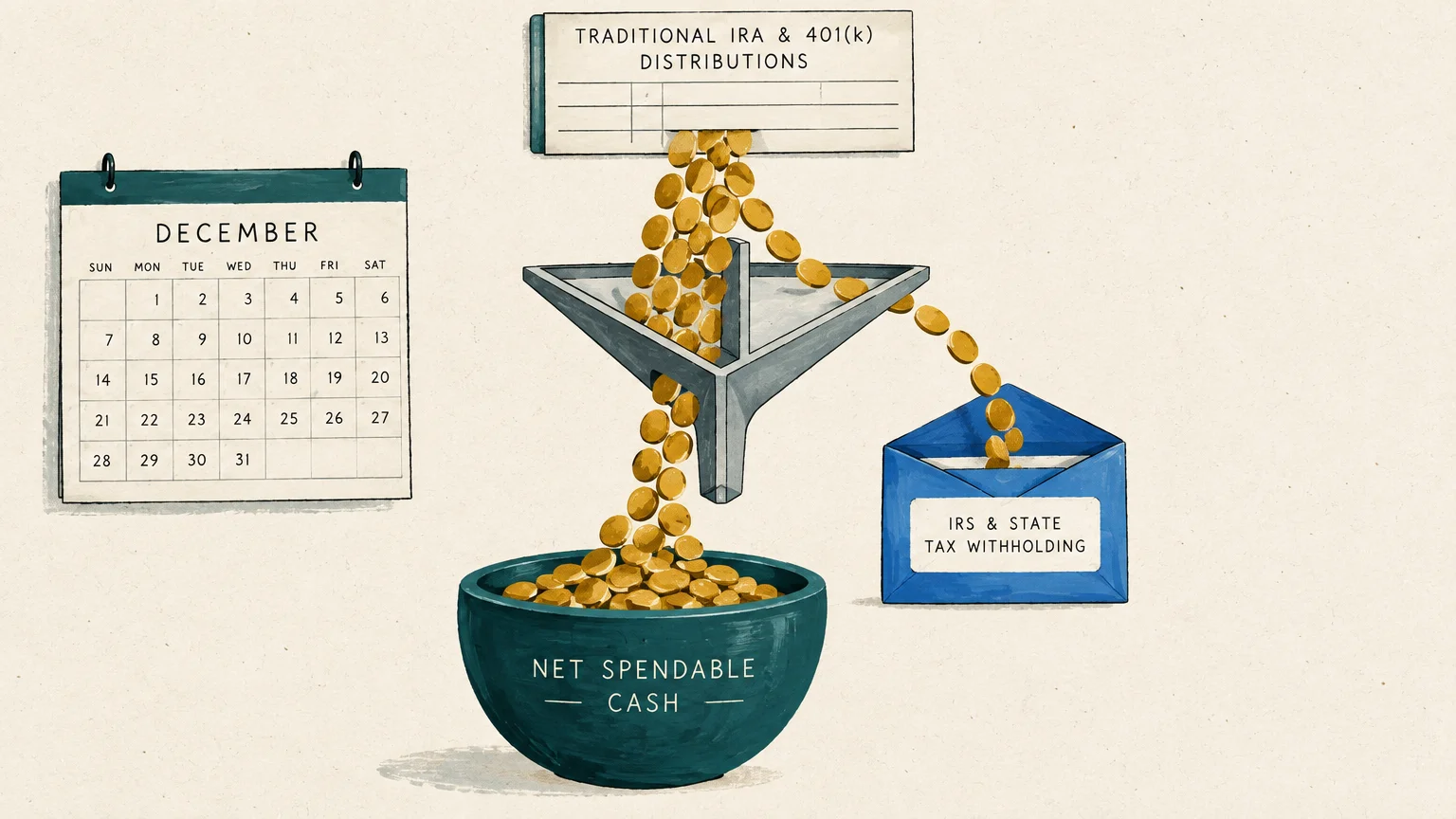
This specialized template calculates your annual distribution requirements based on your account balances from December 31 of the prior year. It divides the mandated amount into twelve level monthly disbursements.
The sheet also factors in federal and state tax withholding percentages. Proactively tracking these deductions ensures you avoid underpayment penalties without experiencing sudden cash shortages in December.

5. The Healthcare and Out-of-Pocket Expense Tracker
Healthcare expenses represent one of the largest and most unpredictable budget categories in retirement. Medicare does not cover all medical costs, leaving retirees responsible for substantial copayments, deductibles, and supplemental premiums.
Guidance from the Consumer Financial Protection Bureau underscores the importance of planning for out-of-pocket medical bills to protect long-term financial security.
This spreadsheet tracks monthly premiums for Medicare Part B, Part D prescription coverage, and private Medigap or Medicare Advantage policies. It also logs dental visits, optical expenses, hearing aid maintenance, and prescription copays.
Documenting these expenditures month after month allows you to spot cost trends early and make informed adjustments during annual Medicare open enrollment.
6. The Sinking Fund and Lumpy Expense Tracker
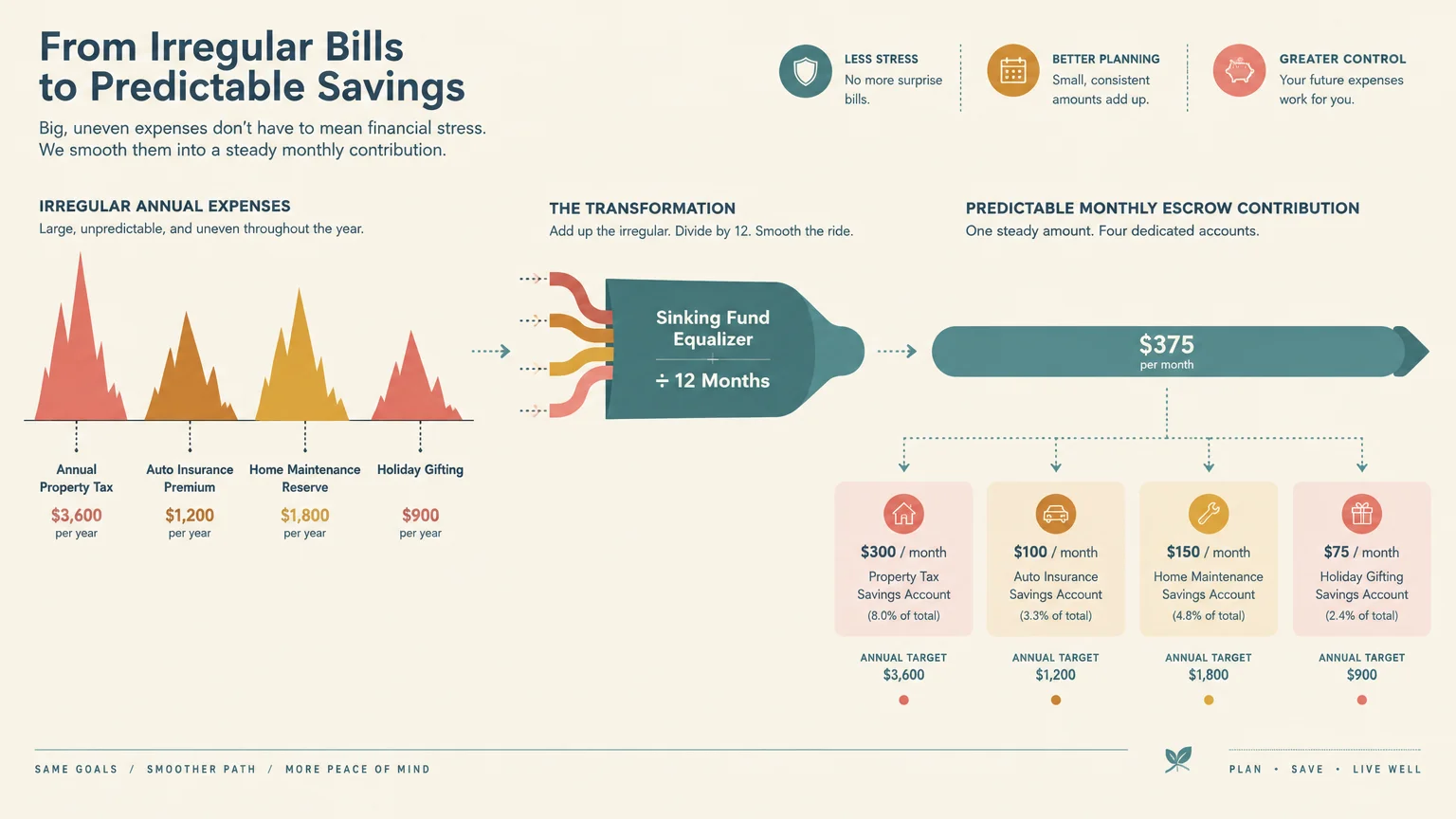
Irregular bills represent the primary reason balanced retirement budgets collapse. Expenses such as semi-annual vehicle insurance, annual real estate taxes, and periodic home maintenance rarely arrive on a clean monthly schedule.
A sinking fund template converts these lumpy expenses into predictable monthly liabilities. You list all anticipated annual bills, sum their totals, and divide by twelve.
Each month, your cash flow plan routes that exact fractional amount into a dedicated high-yield savings reserve. When your $3,000 property tax bill arrives, the money is already set aside, leaving your standard monthly cash flow completely intact.

7. The Zero-Sum Monthly Budget Template
Zero-sum budgeting assigns a specific financial destination to every incoming dollar before the month starts. Your total monthly cash receipts minus your categorized expenditures and transfers always equals zero.
In retirement, this model prevents surplus cash from drifting into unmonitored retail spending. Unassigned money gets deliberately routed toward emergency funds, travel reserves, or charitable giving.
Retirees who prefer complete accountability find this template exceptionally helpful. It eliminates guesswork and ensures that every distribution from your investment portfolio serves a clear, predefined objective.
8. The Dynamic Guardrails Cash Flow Tracker
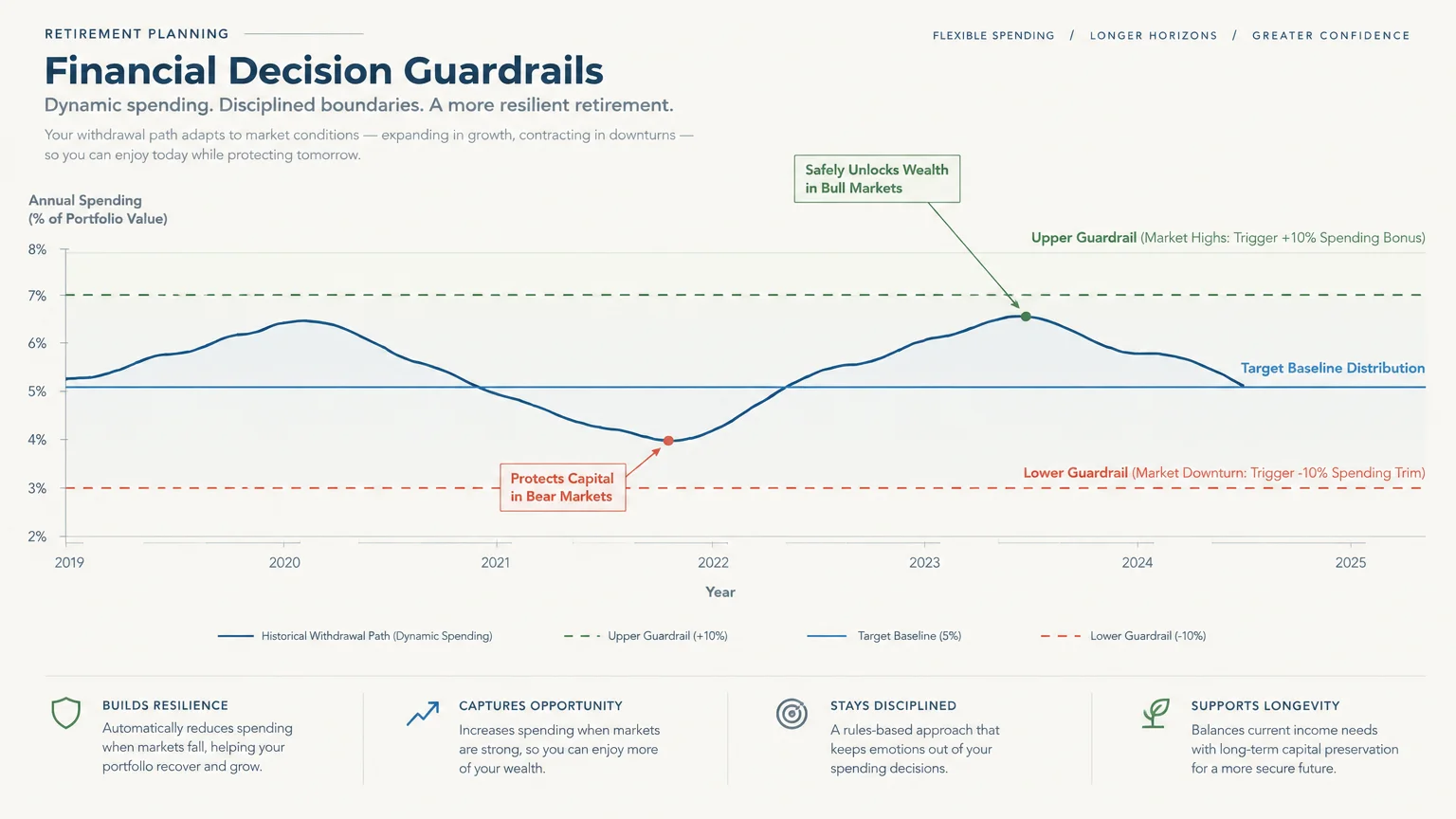
Static withdrawal plans fail to accommodate market volatility and shifting macroeconomic conditions. A dynamic guardrails spreadsheet implements systematic adjustments based on the proven research of financial planner Guyton and Klinger.
You establish a target withdrawal rate alongside upper and lower spending boundaries—typically 20% above and below your baseline. If strong market performance causes your withdrawal rate to drop below the lower guardrail, the spreadsheet prompts a spending increase.
If market drops push your withdrawal rate above the ceiling, the template flags an automatic 10% reduction in discretionary spending. This mechanism protects your portfolio longevity while maximizing income during bull markets.

9. The Guaranteed Income Gap Analyzer
Your guaranteed income floor consists of predictable, lifetime cash flows that arrive regardless of broader market conditions. These typically include Social Security retirement benefits, defined-benefit corporate pensions, and lifetime annuities.
Data from the Social Security Administration indicates that Social Security benefits represent a major share of total household income for most American retirees.
This spreadsheet calculates your guaranteed income and subtracts it directly from your essential monthly living costs. The resulting figure represents your net income gap.
Knowing this exact dollar amount clarifies how much cash your liquid investments must reliably deliver each month. It also removes emotional anxiety by showing how much of your lifestyle is insulated from market fluctuations.

10. The Safe Withdrawal Rate Monitor
Monitoring your annualized distribution rate is vital for preserving capital across a multi-decade retirement. This analytical spreadsheet tracks your trailing twelve-month withdrawals as a percentage of your total current investment portfolio.
Traditional retirement planning often relies on the standard 4% guideline as a initial benchmark. If your trailing distributions creep up toward 5% or 6% due to portfolio declines, the spreadsheet alerts you immediately.
Reviewing this metric monthly allows you to implement timely spending trims. Proactive adjustments prevent you from locking in portfolio losses during extended market pullbacks.
Comparing the 10 Retirement Cash Flow Spreadsheets
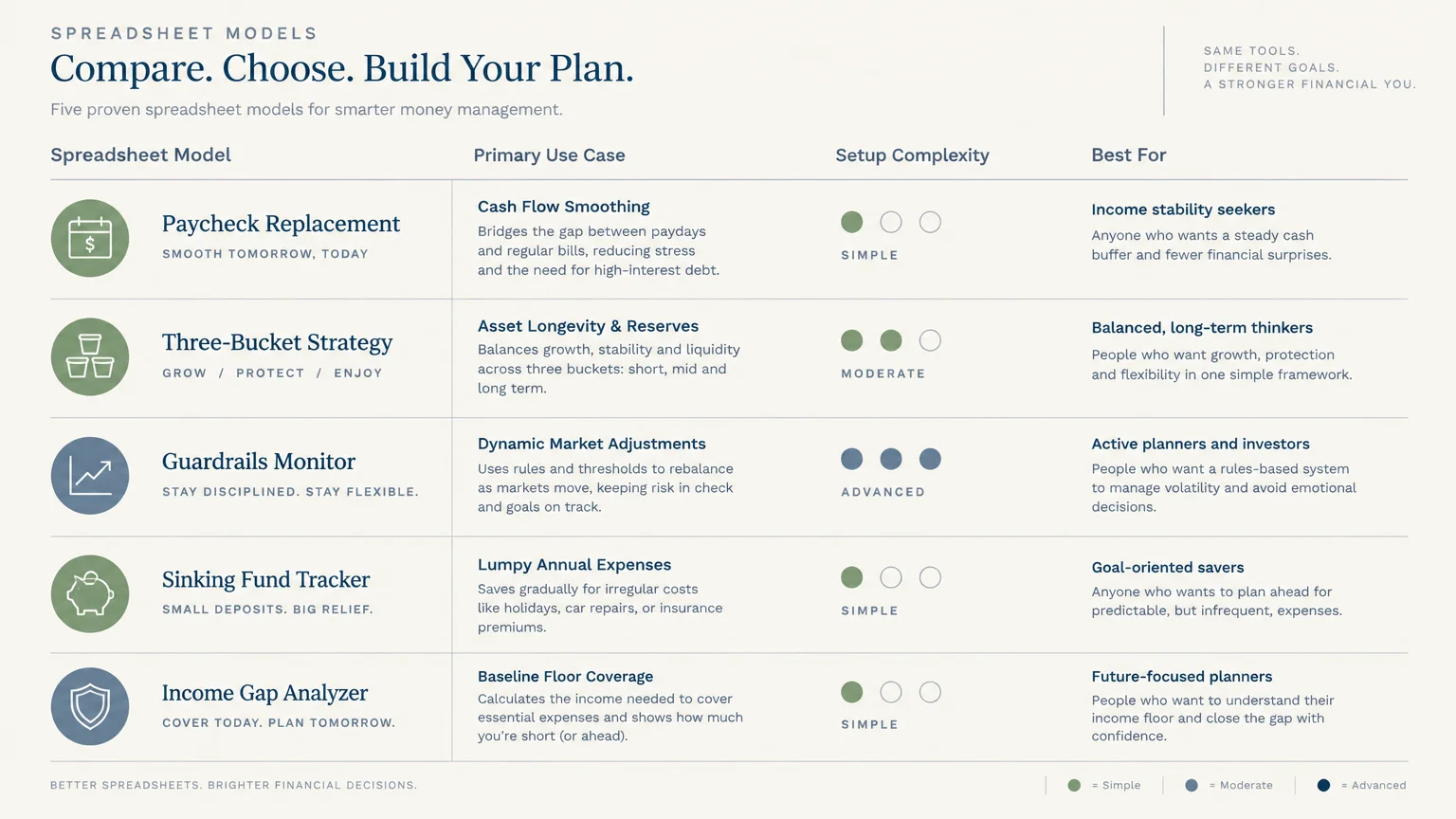
Selecting the right retirement budgeting tools depends entirely on your income complexity, asset structure, and record-keeping preferences. The comparison table below highlights how each model functions.
| Spreadsheet Model | Primary Focus | Key Metrics Tracked | Best Suited For |
|---|---|---|---|
| Paycheck Replacement | Income stabilization | Central clearing transfers, pay dates | Recent retirees transitioning from biweekly salaries |
| Essential vs. Discretionary | Spending flexibility | Survival costs vs. lifestyle wants | Retirees navigating fluctuating investment returns |
| Three-Bucket Management | Portfolio liquidity | Cash reserves, bond ladder balances | Investors managing self-directed retirement portfolios |
| RMD & Tax Planner | Compliance and tax drag | Mandatory distributions, quarterly withholdings | Retirees age 73 and older holding traditional IRAs |
| Healthcare Tracker | Medical cost containment | Medicare premiums, out-of-pocket copays | Seniors managing chronic conditions or dental care |
| Sinking Fund Model | Irregular bill planning | Monthly savings accruals, annual dues | Homeowners with fluctuating property taxes and insurance |
| Zero-Sum Template | Total dollar allocation | Category assignments, discretionary buffer | Budget-conscious households seeking strict discipline |
| Dynamic Guardrails | Adaptive portfolio spending | Withdrawal percentages, spending triggers | Retirees using variable distribution rules |
| Guaranteed Income Gap | Portfolio reliance | Fixed lifetime benefits, monthly shortfall | Early retirees assessing baseline portfolio demands |
| Safe Withdrawal Monitor | Capital preservation | Trailing distribution rate, asset total | Long-term planners monitoring multi-decade longevity |

Worth Keeping in Mind: Common Retirement Spreadsheet Traps
While spreadsheets offer unmatched flexibility, manual entry introduces distinct risks that every retiree should monitor. Overcomplicating your spreadsheet with dense visual macros or fragile nested formulas often leads to calculation errors.
Keep your template simple enough to update within fifteen minutes each month. Complex setups discourage consistent tracking and increase the risk of abandoned records.
Another common mistake is failing to account for inflation. A fixed grocery allocation that works well this year will inevitably fall short over a five-year horizon.
Review the following practical maintenance guidelines to keep your monthly cash flow models accurate and resilient:
- Update your investment account balances on the same day each month to ensure consistent data points.
- Separate gross distributions from net cash receipts to prevent underestimating your annual tax obligations.
- Revisit your discretionary spending allowances annually to reflect real-world cost-of-living adjustments.
- Save redundant offline backups of your workbook on an external drive to safeguard against digital corruption.

When to Get Professional Help
A retirement cash flow spreadsheet provides clear historical data, but it cannot replace strategic financial planning. Certain complex life transitions warrant professional guidance from a fee-only certified financial planner or tax specialist.
Consider consulting a credentialed advisor if you are planning substantial Roth conversions. Multi-year conversions require careful coordination to avoid triggering higher Medicare Part B and Part D premiums via IRMAA surcharges.
You should also seek professional counsel if your safe withdrawal rate consistently exceeds 5% during an extended market downturn. An advisor can model alternative distribution strategies to prevent permanent portfolio depletion.
Finally, unexpected life events—such as the loss of a spouse or managing long-term care needs—fundamentally reshape household cash flow. Professional support ensures your income plan adapts effectively to new tax brackets and survivor benefit rules.
Frequently Asked Questions
What is the best free software for retirement cash flow tracking?
Google Sheets and Microsoft Excel Online are excellent, zero-cost options. Both platforms deliver robust arithmetic modeling, automated charting, and effortless access across desktop computers and mobile devices.
How often should I balance my retirement cash flow spreadsheet?
Balancing your sheet once a month offers the ideal cadence. Monthly reviews provide actionable insights into current spending patterns without creating unnecessary administrative fatigue.
Should I track gross income or net income after taxes?
You should track both figures in dedicated columns. Recording gross distributions reveals your true portfolio burn rate, while tracking net cash ensures your checking account covers day-to-day bills.
How do I handle unpredictable home or auto repairs?
Use a dedicated sinking fund column within your spreadsheet. Allocating 1% of your home value annually into a reserve ensures unexpected repair invoices do not derail your core living budget.
Building Your Cash Flow System
Mastering your retirement cash flow does not require expensive software or complicated accounting algorithms. A well-designed, simple spreadsheet clarifies where your money originates, where it travels, and how long your assets will endure.
Start by selecting one model that addresses your most pressing concern—whether that involves smoothing income, tracking medical expenses, or taming irregular annual bills. Once you establish a comfortable tracking routine, you can customize your workbook to match your evolving lifestyle.
This is general informational content based on widely accepted guidance. Individual results vary. Verify current details—rules, prices, eligibility, regulations—with official sources before making important decisions.
Last updated: May 2026. Rules, prices, and details change—verify current information with official sources before acting on it.









Leave a Reply