

A comfortable retirement requires more than accumulating wealth; it demands an intentional distribution plan. Today’s retirees face persistent inflation and volatile financial markets that threaten portfolio longevity.
Running out of money remains a common concern, but outliving your assets is rarely inevitable. Small adjustments to your withdrawal timing and tax management can add a decade of solvency.
Instead of slashing your living standards, you can deploy smarter withdrawal mechanics. Here are nine practical, research-backed ways retirees stretch retirement savings and protect their financial independence.

Why People Are Talking About This
Traditional defined-benefit pensions have largely vanished from the private sector over the past three decades. Most Americans now fund their post-work years through individual accounts and Social Security.
At the same time, life expectancies have climbed steadily. A healthy 65-year-old couple today faces a 50% probability that at least one spouse reaches age 90.
Funding a thirty-year retirement requires active management rather than passive spending. Sustained inflation erodes purchasing power, while early market downturns can permanently impair a poorly managed nest egg.
Modern retirees are discarding outdated spending formulas. Instead, they embrace dynamic retirement withdrawal strategies that adapt to market cycles and shifting living expenses.
1. Swapping Rigid Formulas for Dynamic Guardrails
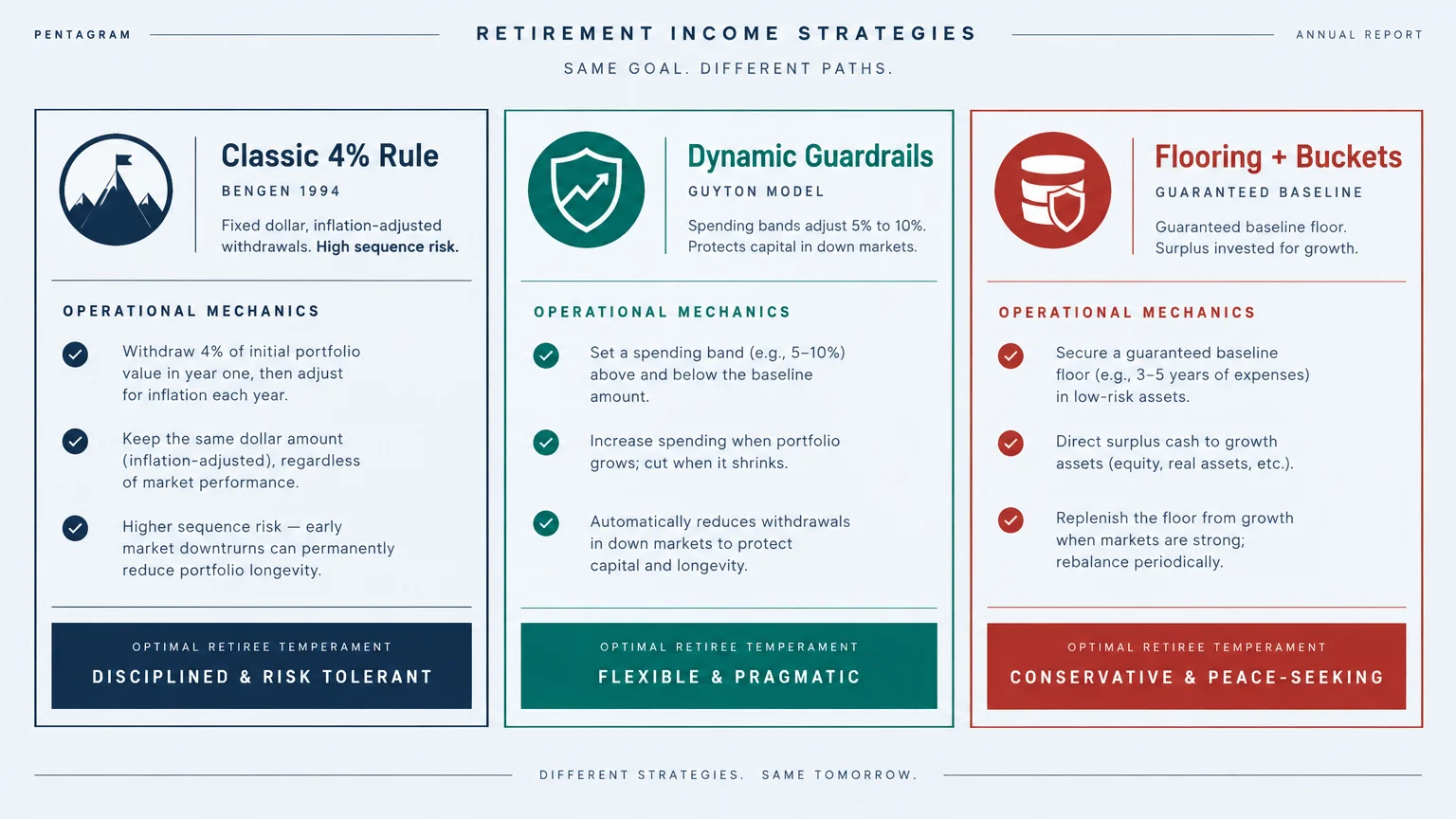
For decades, retirees relied on the classic 4 percent rule. Financial planner William Bengen established this benchmark in 1994 to prevent portfolio depletion over thirty years.
Under that model, you withdraw 4% of your starting balance during your first year of retirement. You then adjust that dollar amount annually to match cost-of-living inflation.
However, rigid formulas can force you to sell shares during severe market downturns. Liquidating depressed equities locks in painful losses and accelerates portfolio exhaustion.
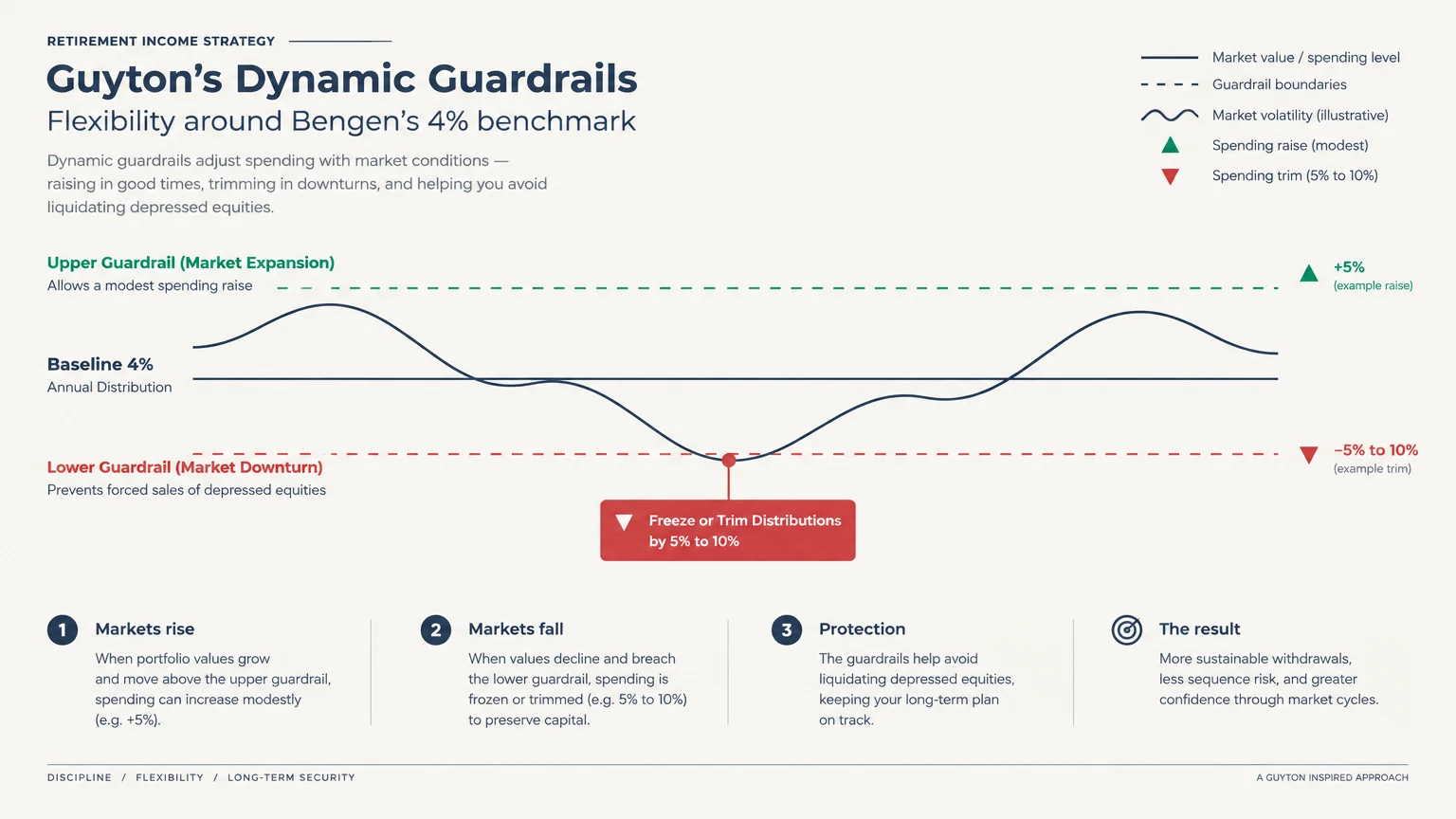
Many retirees now implement dynamic guardrails, popularized by financial planner Guy Guyton. This rules-based framework sets spending boundaries that automatically respond to market performance.
When your portfolio surges, you award yourself a modest percentage increase in annual spending. When investments tumble below an established threshold, you freeze or trim distributions by 5% to 10%.
This dynamic adjustment protects your underlying capital during bear markets while providing raises during expansions. It dramatically reduces your risk of running out of money over longer horizons.
2. Postponing Social Security Claims for Guaranteed Growth
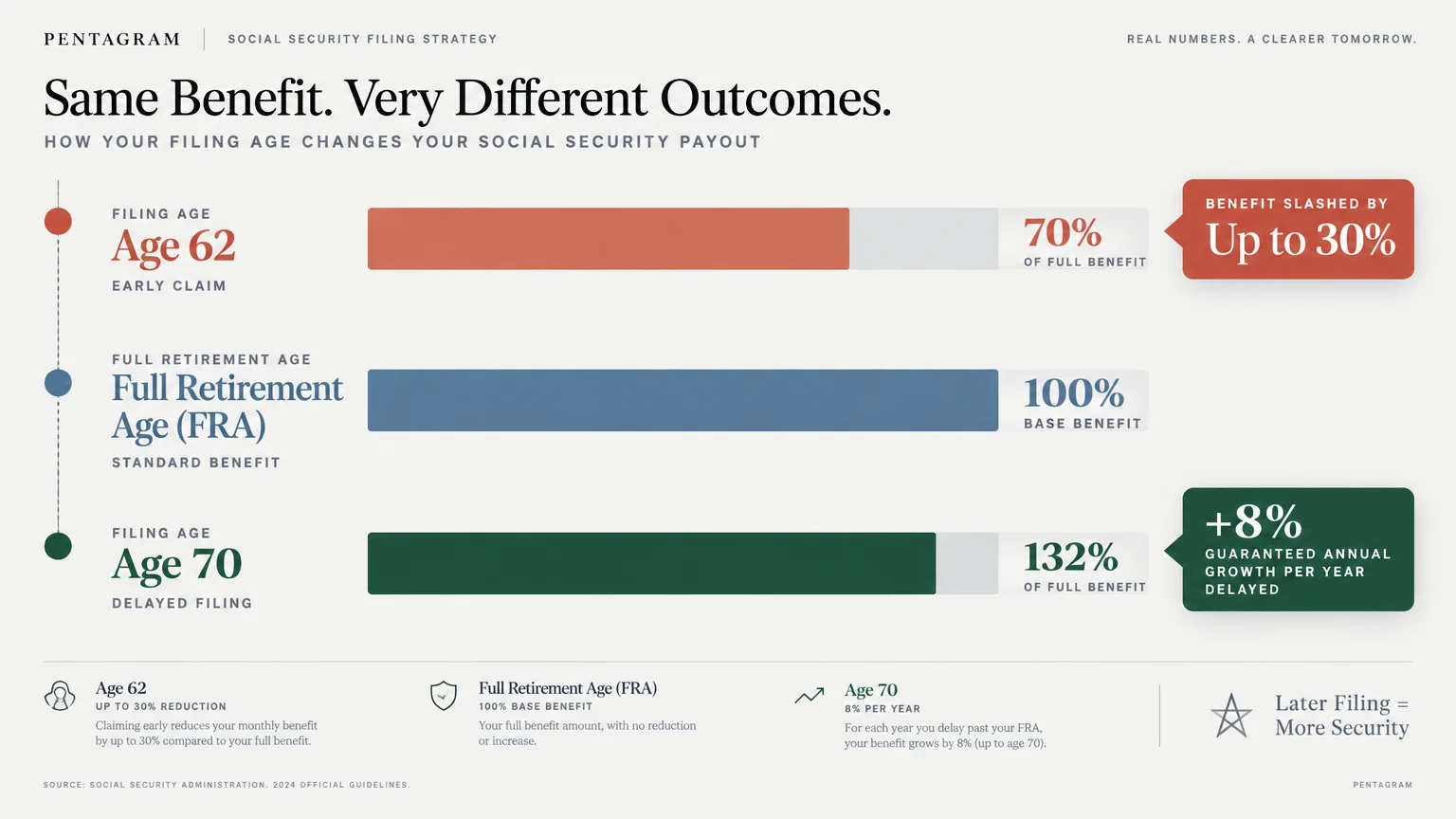
Claiming Social Security at age 62 permanently slashes your monthly benefit by up to 30%. In contrast, delaying your filing past full retirement age produces rapid, risk-free growth.
According to the Social Security Administration, your benefit increases by 8% per year for every year you delay past full retirement age until age 70.
No commercial annuity or fixed-income product offers an annual 8% return backed by the federal government. This guaranteed payout also receives annual cost-of-living adjustments to shield against inflation.
Retirees increasingly spend down taxable savings in their early sixties to bridge living expenses. This bridge strategy allows their eventual Social Security check to reach its legal maximum.
A larger monthly benefit establishes an enduring income floor against late-life healthcare expenses. It also leaves surviving spouses with a substantially higher monthly benefit for life.

3. Building a Multi-Year Cash Buffer to Beat Sequence Risk
Sequence-of-returns risk represents the greatest mathematical danger to a fresh retiree. Experiencing a severe market crash during your first five retirement years can permanently derail your portfolio.
If you liquidate declining equities to pay for groceries, your remaining shares cannot participate in the eventual market recovery. Savvy retirees prevent this destruction by organizing assets into distinct buckets.
A dedicated cash bucket holds two to three years of essential living costs in liquid instruments. High-yield savings accounts, short-term certificates of deposit, and Treasury bills serve this role well.
When stock markets drop into correction territory, you draw monthly income entirely from this cash buffer. You give your depressed equity positions ample time to rebound without interference.
When equity markets reach new highs, you harvest capital gains to replenish the cash bucket. This disciplined separation eliminates panic and keeps your long-term wealth engine functioning smoothly.
4. Executing Strategic Roth Conversions in the Gap Years
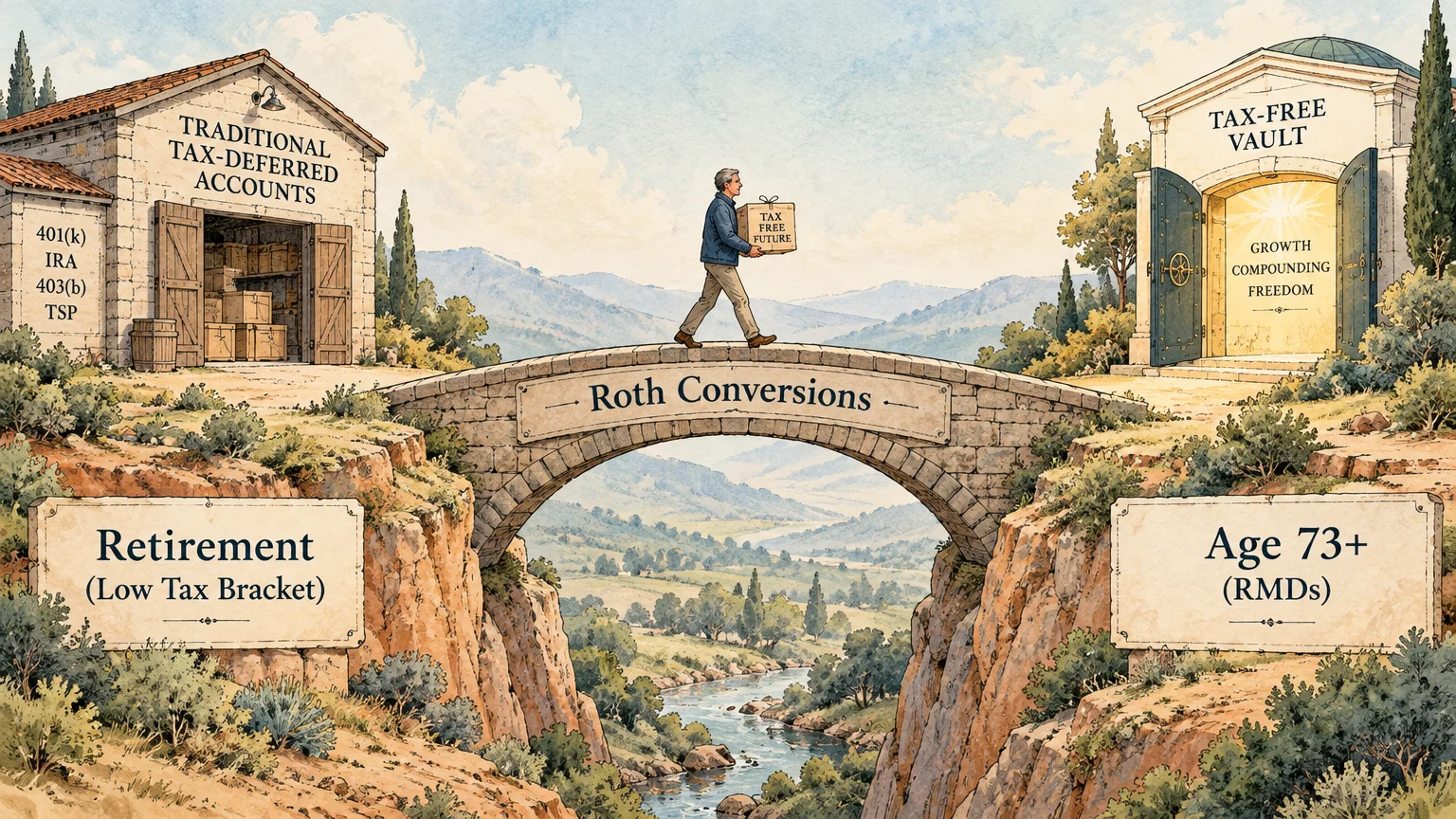
Many retirees experience an artificial tax valley between their final working day and the onset of required distributions. During these gap years, your taxable income often drops into lower tax brackets.
Forward-thinking retirees seize this window to execute partial Roth conversions. You transfer funds from a traditional tax-deferred IRA into a tax-free Roth IRA account.
You pay federal income taxes on the converted amount at today’s low marginal tax rates. Once inside the Roth account, all future growth and distributions remain completely tax-free.
This proactive maneuver shrinks your traditional IRA balances before mandatory required minimum distributions (RMDs) begin at age 73 or 75. Smaller account balances prevent forced RMDs from pushing you into punitive tax brackets later.
Strategic conversions also shield you from higher Medicare surcharge thresholds, saving thousands of dollars in lifetime premiums.
5. Coordinating Withdrawals Across Distinct Tax Silos
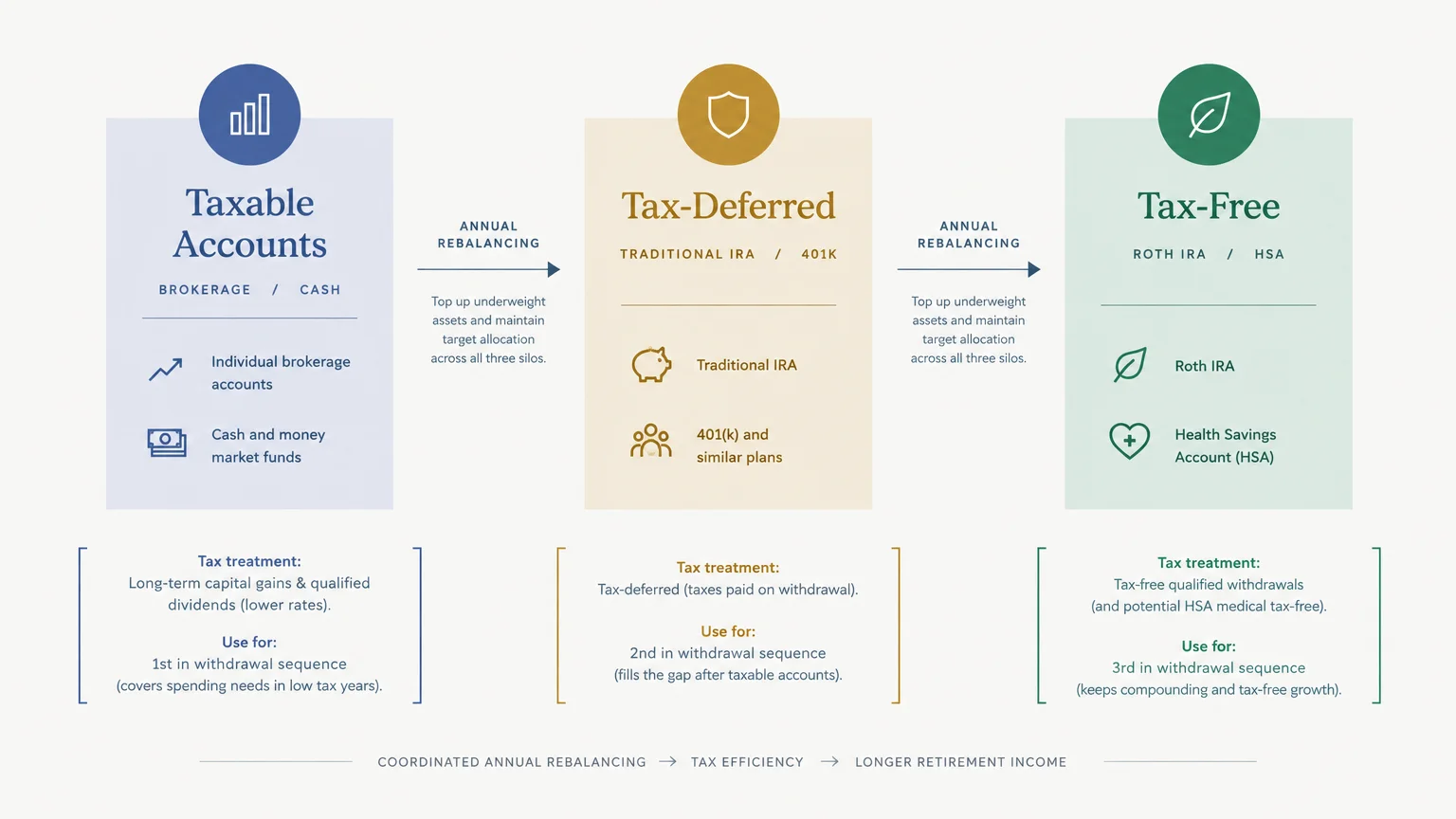
Retirees frequently hold savings across three buckets: taxable brokerage accounts, tax-deferred accounts, and tax-free Roth accounts. Tapping these accounts randomly triggers unnecessary tax penalties.
Conventional wisdom often suggests depleting taxable brokerage accounts first, followed by tax-deferred accounts, saving Roth assets for last. However, this sequential approach often causes massive tax spikes in later years.
Modern retirees utilize a blended withdrawal strategy. They withdraw enough from traditional accounts each year to fill the standard deduction and lowest tax brackets.
They then fund the remainder of their annual budget using tax-free Roth withdrawals or taxable capital gains. This proportional withdrawal method smooths your taxable income across multiple decades.
By keeping your reported adjusted gross income steady, you avoid triggering capital gains tax bumps and protect valuable healthcare subsidies.

6. Bypassing RMD Taxes Through Qualified Charitable Distributions
Federal law mandates that you withdraw minimum amounts annually from traditional retirement accounts once you reach age 73. These required distributions count directly as taxable ordinary income.
Retirees who support non-profit causes utilize Qualified Charitable Distributions (QCDs) to eliminate this tax burden. As outlined by the Internal Revenue Service, individuals age 70½ or older can transfer up to $105,000 annually directly from an IRA to a qualified charity.
A direct QCD satisfies your annual RMD requirement dollar-for-dollar without adding a single cent to your adjusted gross income. Because the funds bypass your tax return entirely, you owe zero income tax on the transfer.
This mechanism benefits standard deduction filers who cannot otherwise write off charitable donations. It lowers your overall tax exposure while directly funding organizations you care about.

7. Pruning Housing Costs and Relocating Strategically
Housing remains the largest recurring budget line item for most American households. Real estate taxes, property insurance premiums, utility bills, and home maintenance can consume 35% of retirement cash flow.
Retirees actively downsize into smaller residences or lower-cost regions to stretch retirement savings. Selling an oversized primary residence unlocks trapped home equity, providing fresh liquid capital for your portfolio.
Relocating across county or state lines can also generate substantial recurring savings. Moving away from areas with high property taxes or states with steep personal income tax brackets immediately lowers baseline expenses.
Shaving five hundred dollars off your monthly overhead reduces the amount you must pull from investments each year. That lowered withdrawal requirement keeps your principal compounding undisturbed.

8. Securing Essential Expenses with a Guaranteed Lifetime Floor
Market volatility causes immense anxiety for households living entirely on portfolio withdrawals. Retirees solve this emotional and financial pressure by implementing a floor-and-ceiling framework.
Start by calculating your non-negotiable monthly expenses, including housing, food, utilities, and healthcare. Next, subtract your guaranteed monthly Social Security and pension payments from that total.
If an income gap remains, you can allocate a portion of your portfolio to a Single Premium Immediate Annuity (SPIA). A basic SPIA converts a lump sum into guaranteed monthly income for life.
Because mortality credits subsidize annuity payouts, a SPIA generates higher cash flow per dollar than traditional Treasury bonds. It functions like a privately purchased pension.
With basic living costs permanently covered by guaranteed income streams, you can leave your remaining assets invested in equities. You will never feel compelled to liquidate stocks during a market panic.

9. Auditing Healthcare and Recurring Subscriptions Annually
Retirement expenses change over time, especially across medical categories. According to retirement research from the Consumer Financial Protection Bureau, managing variable healthcare expenses preserves long-term financial autonomy.
Many retirees waste substantial sums by allowing Medicare coverage to renew on autopilot. Insurance providers regularly modify drug formularies, co-pays, and preferred pharmacy networks each calendar year.
Comparing Medicare Part D prescription drug plans and Medicare Advantage options during the annual Open Enrollment period uncovers hundreds of dollars in savings. Aligning your current medications with the lowest-cost formulary reduces out-of-pocket costs.
Regularly auditing home insurance policies, mobile carriers, and streaming subscriptions also preserves significant cash. Eliminating minor financial leaks leaves more capital in your accounts to compound over time.
Comparing Popular Retirement Distribution Strategies
Choosing an appropriate withdrawal strategy depends on your portfolio size, risk tolerance, and spending priorities. Each framework strikes a distinct balance between predictable cash flow and portfolio survival.
Review the primary distribution strategies below to determine which methodology aligns with your long-term goals.
| Strategy | Starting Rate | Key Advantage | Primary Trade-Off |
|---|---|---|---|
| Fixed 4% Rule | 4.0% adjusted for inflation | Predictable, level annual income | Risk of depletion during early market crashes |
| Dynamic Guardrails | 4.5% to 5.2% dynamic | Maximizes spending; lowers ruin risk | Income fluctuates based on market performance |
| Three-Bucket Strategy | 3.5% to 4.5% blended | Prevents panic-selling in bear markets | Holding multi-year cash can create cash drag |
| Floor-and-Upside (SPIA) | Custom floor calculation | Guarantees baseline survival costs | Loss of liquidity on the annuitized capital |
Many retirees combine these frameworks to balance safety with growth. Pairing a cash reserve bucket with dynamic guardrails creates an adaptable, resilient distribution engine.
A rigid withdrawal rate ignores market realities; flexibility is the ultimate currency of retirement survival.
Retirees who succeed do not lock their spending into stone on day one. They monitor their portfolios regularly and adjust distributions whenever macroeconomic conditions dictate prudence.

Things to Watch Out For
Even carefully constructed retirement plans encounter friction when exposed to real-world tax and market complexities. Keep these four common pitfalls on your radar to protect your nest egg.
- Early-Retirement Sequence Risk: Withdrawing substantial fixed sums during a market downturn in your first five retirement years can permanently cripple portfolio longevity.
- The Medicare IRMAA Cliff: Realizing large capital gains or executing oversize Roth conversions can push your income above Income-Related Monthly Adjustment Amount tiers, triggering steep surcharges on Medicare Parts B and D.
- The Widow’s Tax Penalty: When one spouse passes away, the surviving spouse must file income taxes under single filing status, moving them into higher tax brackets on identical income levels.
- The Cash Drag Trap: Stashing five to ten years of living expenses in cash shields against short-term market swings, but persistent inflation quietly decimates your real purchasing power over three decades.
Balance remains essential. You need enough cash reserves to withstand market volatility without hoarding so much uninvested capital that inflation destroys your portfolio.

When DIY Isn’t Enough
Managing basic retirement distributions is achievable on your own, but complex financial cross-currents frequently require specialized analysis. Seek fiduciary guidance under the following scenarios.
- Multi-Account Tax Modeling: Coordinating annual Roth conversions alongside Social Security benefits and capital gain harvesting across seven-figure portfolios requires advanced algorithmic tax modeling.
- Medicaid Spend-Down and Long-Term Care: Navigating nursing home care costs while shielding assets for a healthy community spouse demands specialized elder law estate planning.
- State Domicile Transitions: Relocating your legal residence to avoid state income taxes requires strict adherence to statutory presence tests to withstand aggressive state tax audits.
- Blended Family Estate Distributions: Directing tax-deferred retirement accounts to children from previous marriages without disinheriting a surviving spouse requires custom trust architecture.
Working alongside a fee-only Certified Financial Planner or fiduciary tax professional prevents expensive structural errors. An objective professional verifies that your withdrawal plan can withstand unexpected economic shocks.
Frequently Asked Questions
What is the safest withdrawal rate to avoid outliving savings?
Most research suggests a starting withdrawal rate between 3.3% and 4.0% for a standard 30-year retirement. Adopting dynamic guardrails allows you to start closer to 4.5% safely.
How does the bucket strategy prevent selling at a loss?
The bucket strategy keeps two to three years of living expenses in cash and short-term Treasuries. When equities tumble, you spend from cash reserves, giving depressed stocks time to recover.
Can I make Qualified Charitable Distributions from a 401(k)?
No, IRS rules restrict Qualified Charitable Distributions strictly to traditional IRAs and inherited IRAs. You must roll your 401(k) assets into an IRA to utilize this tax strategy.
How does delaying Social Security stretch retirement savings?
Delaying your claim until age 70 boosts your monthly benefit by 8% per year past full retirement age. A larger guaranteed payout permanently lowers the withdrawals required from your portfolio.
Taking Control of Your Retirement Horizon
Securing a resilient retirement does not demand extreme austerity. By adopting flexible withdrawal guardrails, optimizing Social Security, and minimizing tax drag, you can make retirement savings last for life.
This article provides general information only. Every reader’s situation is different—what works for others may not be the right fit for you. For personalized guidance on health, legal, or financial matters, consult a qualified professional.
Last updated: May 2026. Rules, prices, and details change—verify current information with official sources before acting on it.









Leave a Reply