

You spent decades counting down to your final day on the job, but transitioning into retirement brings financial and emotional shifts that financial planners rarely discuss. While turning off your alarm clock feels liberating, the first year of retirement introduces unfamiliar challenges, from psychological adjustment to unexpected bills. Between navigating complex Medicare rules and managing a suddenly open daily schedule, your early months require strategic adaptation rather than passive relaxation. Understanding what retirement is really like before you step away from work allows you to protect your nest egg and enjoy your newfound freedom without unnecessary friction.
1. The Loss of Work Routine Triggers Unexpected Psychological Friction
Most workers assume that infinite free time will automatically bring relaxation; however, losing a structured forty-hour workweek often creates an unexpected psychological void. For decades, your job dictated your wake-up time, your daily movement, and a major portion of your social interaction. When that schedule disappears overnight, the initial honeymoon phase—typically lasting three to six months—can give way to restlessness and identity loss.
Psychologists note that retirement strips away five key core benefits that work naturally provides: regular activity, personal identity, social connection, a sense of purpose, and a predictable daily routine. When transitioning into retirement, you must build a intentional daily structure to replace what your career provided naturally.
- Establish morning anchors: Set a fixed wake-up time and commit to a non-negotiable morning activity, such as a daily walk, reading, or exercise.
- Schedule social touchpoints: Plan weekly lunch dates, community volunteering, or club meetings to maintain human connection.
- Divide your daily calendar: Split your waking hours into clear blocks for physical activity, household management, creative pursuits, and relaxing downtime.
2. Early Spending Often Spikes Before It Settles Down
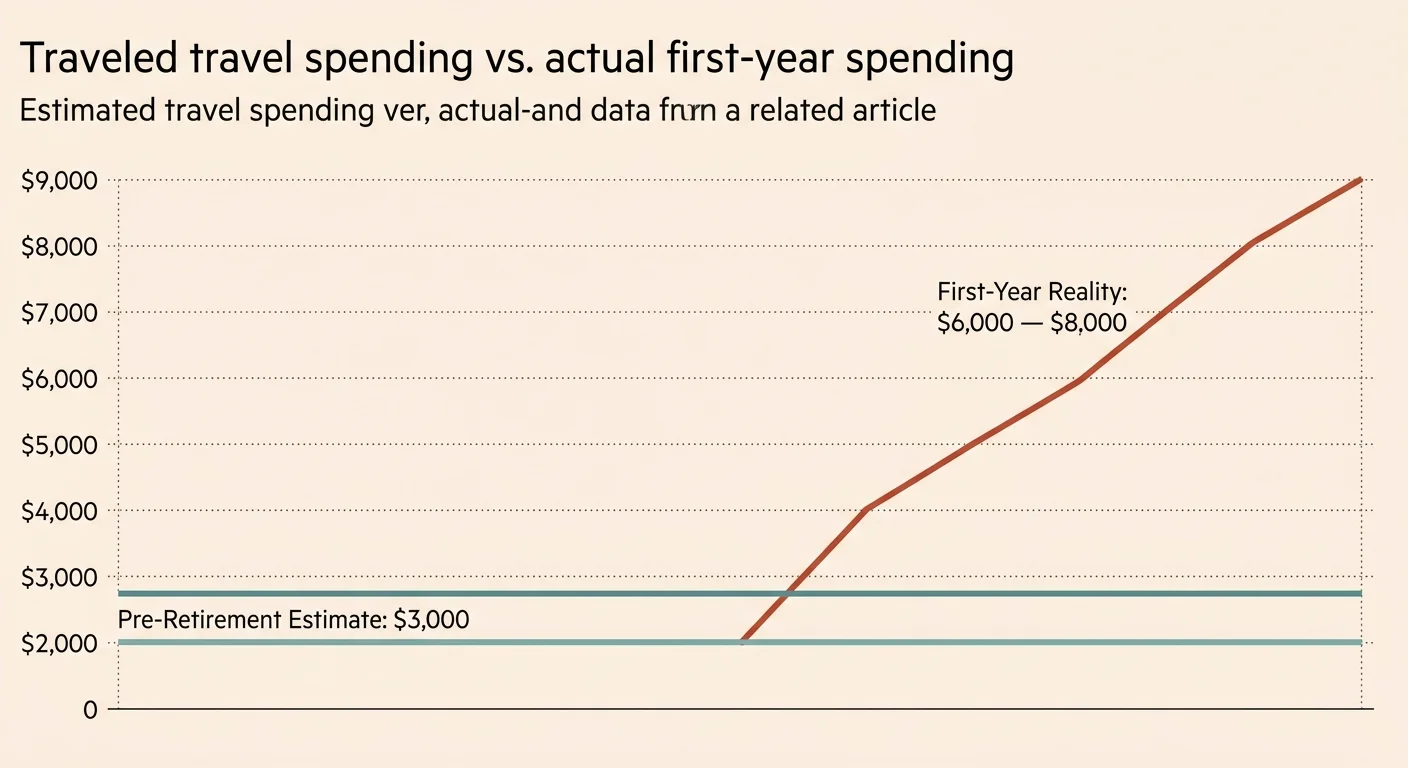
A common financial planning belief assumes that your personal spending drops immediately upon leaving the workforce. While research indicates that overall median household spending declines by roughly 5.5% over the first two years of retirement, roughly 27% to 31% of new retirees report severe budget shock because their spending actually increases during year one.
Financial planners frequently call this initial stage the “Go-Go Phase.” With 168 hours of open time every week, retirees spend significantly more money on long-delayed home improvements, travel, equipment for new hobbies, and frequent dining out with friends. Furthermore, fixed costs like home repairs and auto maintenance do not stop simply because your paycheck did.
| Expense Category | Pre-Retirement Estimate | First-Year Reality | Budget Fix |
|---|---|---|---|
| Travel & Leisure | $3,000 / year | $6,000 – $8,000 / year | Cap travel funds in a separate liquid sub-account before retiring. |
| Home Utilities & Food | Baseline spending | 10% – 15% increase | Account for staying home full-time (higher cooling, heating, and groceries). |
| Out-of-Pocket Medical | Covered by employer plan | Deductibles & copays apply | Budget for Medicare Part B premiums and Part A deductibles. |
| Vehicle Expenses | High commute cost | Lower fuel, same repair costs | Maintain a dedicated auto emergency fund for unexpected breakdowns. |
3. Healthcare Costs Arrive With Hidden Nuances and Rules
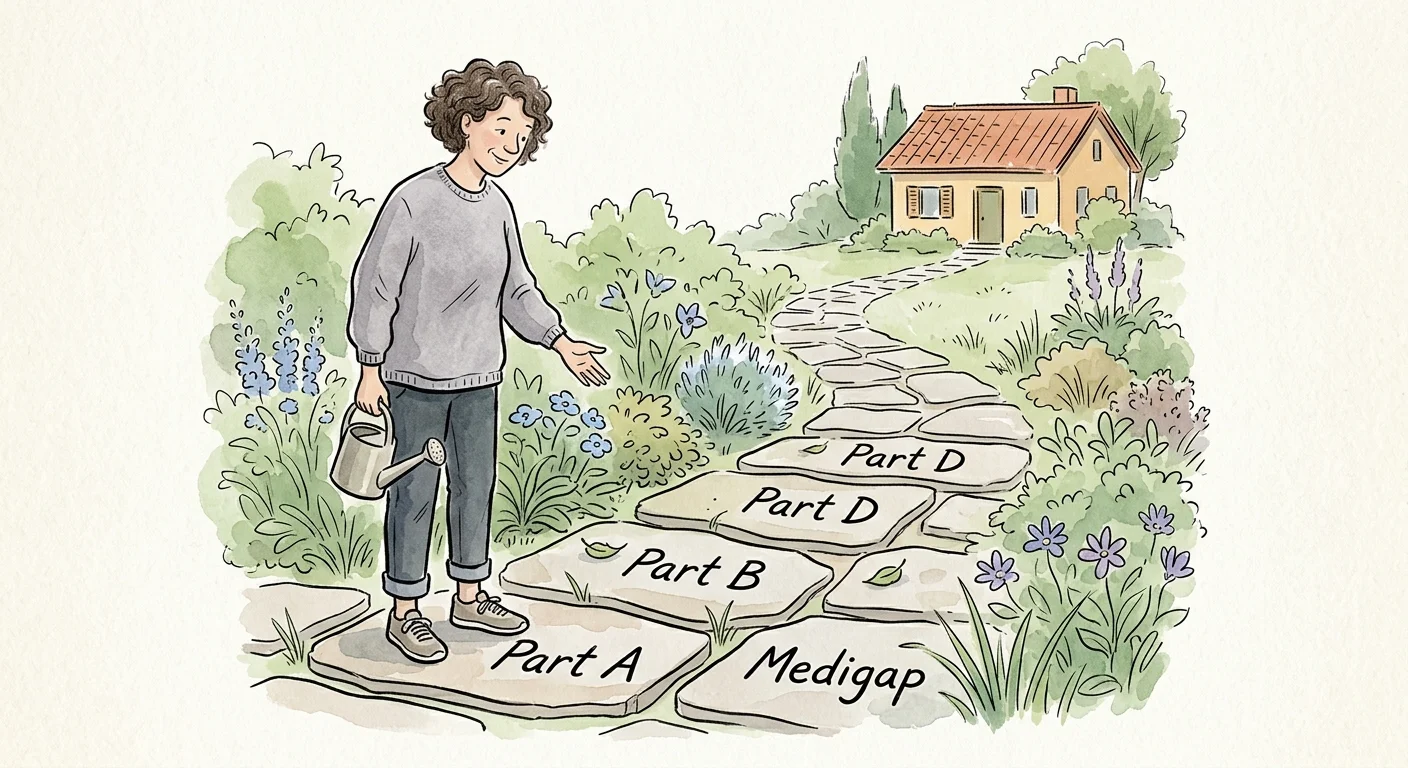
Transitioning from employer-sponsored health insurance to public coverage requires navigating rigid timelines and strict deductibles. Many retirees believe Medicare covers all medical expenses completely, but out-of-pocket spending remains substantial. According to healthcare cost studies by Fidelity, a 65-year-old individual needs approximately $172,000 (or around $330,000 for a retired couple) saved to cover lifetime medical expenses in retirement, excluding long-term nursing care.
In 2026, the standard Medicare Part B monthly premium is $202.90 per person, which the Social Security Administration typically deducts directly from your monthly benefit check. Additionally, Medicare Part A carries a $1,736 inpatient hospital deductible for each benefit period. Missing your initial enrollment window—a seven-month period surrounding your 65th birthday—can permanently raise your healthcare costs.
According to official policy guidelines at Medicare.gov, if you delay enrolling in Medicare Part B without qualified creditable coverage from an active employer, you face a mandatory lifetime late-enrollment penalty of 10% for every full 12-month period you were eligible but unenrolled.
4. Working Part-Time Can Temporarily Reduce Your Social Security Check
Taking on a part-time job or consulting gig represents one of the most effective retirement adjustment tips to maintain income and stay active. However, if you claim Social Security early while continuing to earn employment income, you may trigger the Social Security Retirement Earnings Test.
For individuals born in 1960 or later, Full Retirement Age (FRA) is officially age 67. If you claim Social Security prior to reaching your FRA, the government limits the amount of earned income you can generate before reducing your benefit payments.
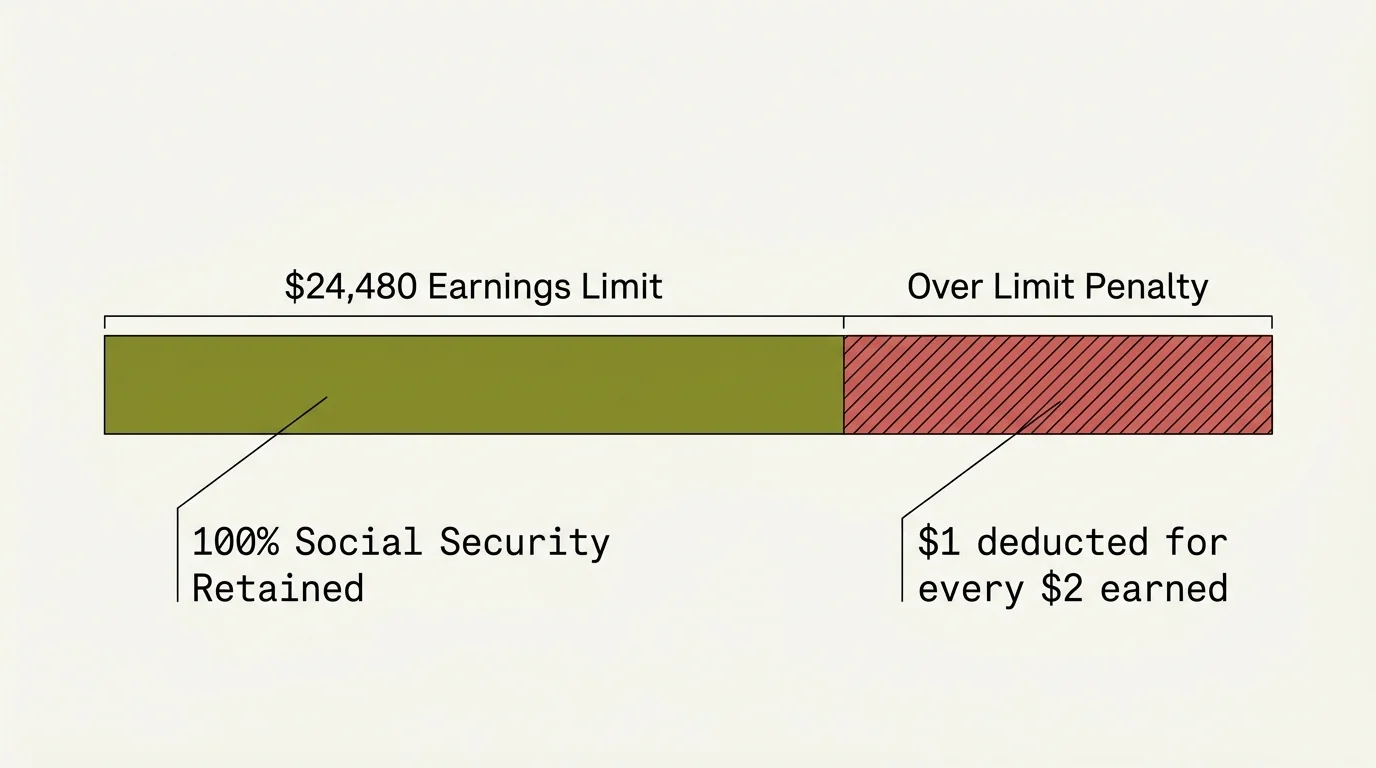
- 2026 Exempt Limit: In 2026, the annual earnings test limit is $24,480 ($2,040 per month).
- Benefit Reductions: If you earn more than $24,480, the Social Security Administration withhold $1 in benefits for every $2 you earn above that threshold.
- The Recovery Mechanism: Social Security recalculates your monthly payment once you reach your Full Retirement Age to credit back those withheld funds, but you lose immediate access to that liquidity during your first year.
You can verify earned income guidelines directly at the official Social Security Administration web portal before accepting work during your initial year of benefits.
5. Taxes Do Not Disappear When You Stop Working
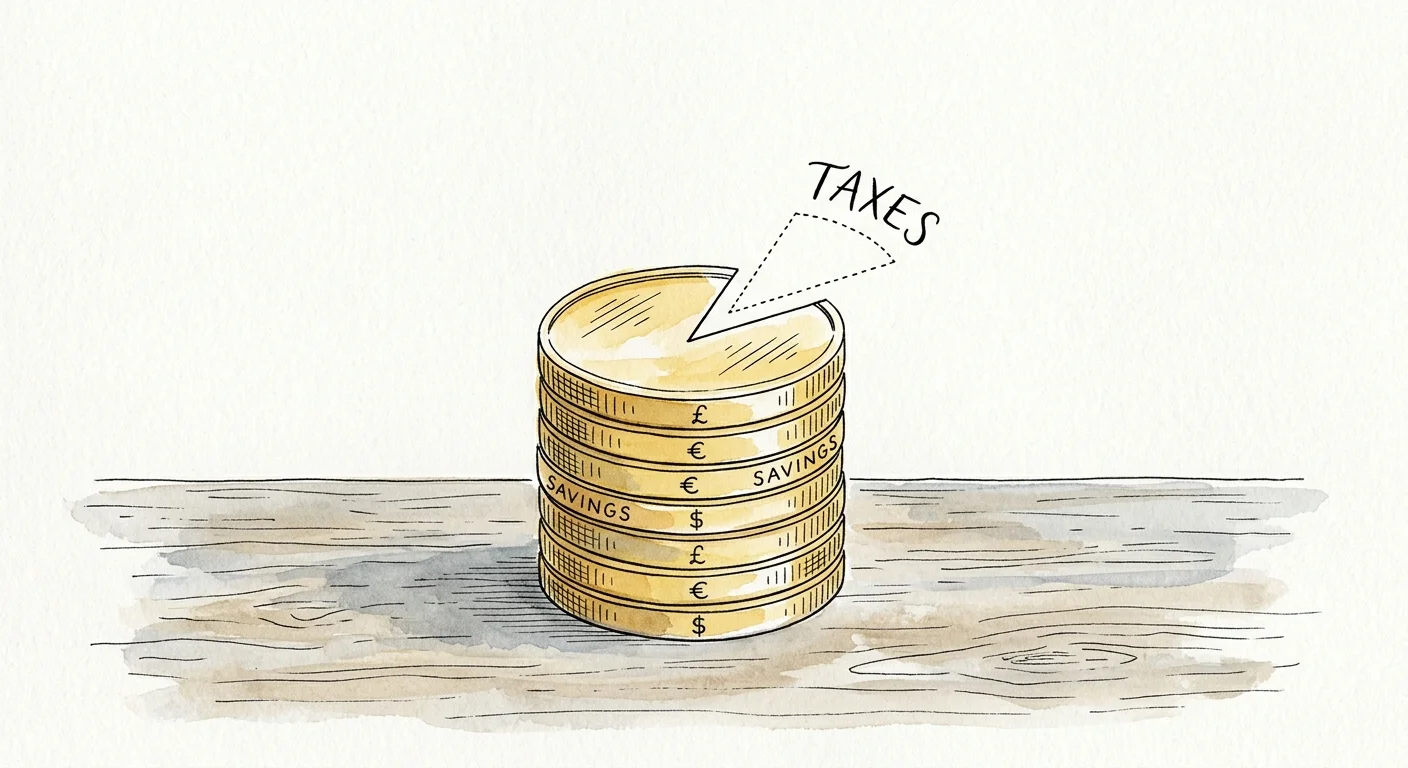
A widespread financial myth suggests that leaving the workforce automatically lowers your tax bracket to near zero. In reality, every dollar you withdraw from standard pre-tax retirement vehicles—such as traditional 401(k) accounts and traditional IRAs—is taxed as ordinary income at standard tax rates.
Furthermore, your Social Security benefit payments may suffer taxation depending on your “combined income” calculation (Adjusted Gross Income + Non-taxable Interest + 50% of your Social Security Benefit). If your combined income exceeds $25,000 for single filers or $32,000 for married couples filing jointly, up to 50% to 85% of your Social Security payments become subject to federal income tax.
Carefully managing your tax brackets during your first year involves coordinating where you draw income from—balancing taxable withdrawals with Roth IRA distributions or tax-efficient taxable brokerages. Reviewing current bracket parameters at the official Internal Revenue Service site helps prevent surprise tax bills at year-end.

6. Spousal Relationships Require a New Daily Strategy
While spending decades working toward a shared retirement goal, couples rarely practice spending 24 hours a day together in the same living space. Transitioning into retirement requires renegotiating personal space, household chores, and social expectations.
Marriage counselors highlight that friction often arises when one spouse retires earlier than the other, or when one partner expects the other to serve as their sole source of social interaction and entertainment. Creating independent activities, hobbies, and personal space within the home preserves relationship harmony.
Set clear expectations regarding daily household tasks early in your first year. Discuss individual schedules every Monday morning so both partners retain personal autonomy while planning enjoyable shared activities throughout the week.
7. Switching From Accumulation to Decumulation Triggers Anxiety
For over forty years, your financial habit involved depositing money into savings accounts, 401(k) plans, and investment portfolios. Shifting that habit in reverse—withdrawing cash from your nest egg to pay for groceries and electric bills—often triggers significant financial anxiety during year one.
This psychological friction leads many new retirees to overreact to normal market volatility. Experiencing a stock market decline during your first twelve months creates “sequence of returns risk,” where selling depressed assets early permanently reduces the overall longevity of your portfolio.
To reduce this anxiety, maintain a liquid cash buffer equal to 12 to 24 months of essential baseline living expenses in a high-yield savings account or short-term Treasury bills. When stock markets swing lower, draw living expenses from your cash buffer rather than liquidating equities at a discount.
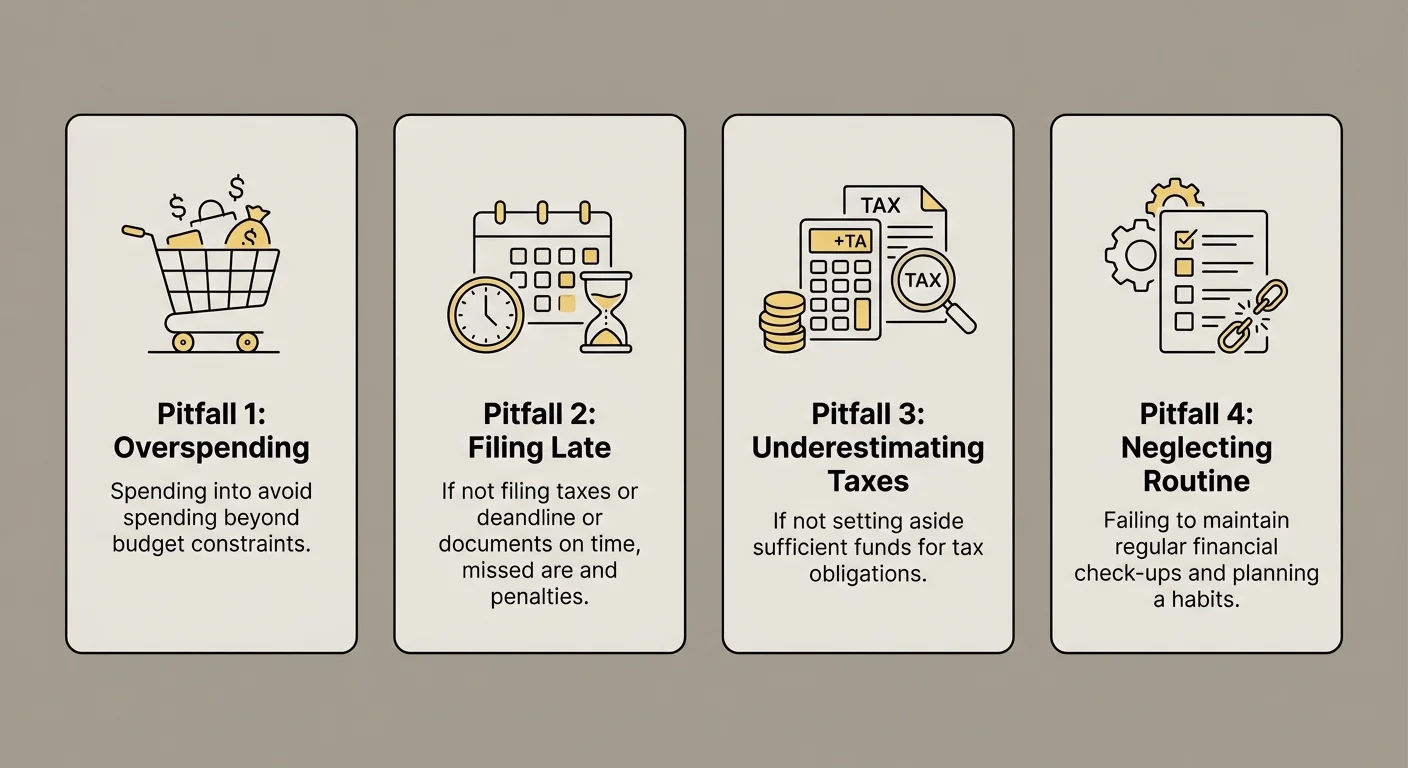
What Can Go Wrong: 4 First-Year Pitfalls
Navigating your initial months of retirement requires avoiding several frequent management errors that can derail long-term financial security:
- Overspending during month one: Spending heavily on luxury vehicles, expensive vacations, or unnecessary home additions early on depletes principal balances that need decades to generate yield.
- Ignoring Medicare Part B enrollment deadlines: Assuming retiree health coverage from a former job automatically overrides Medicare rules without checking if the employer coverage qualifies as official creditable coverage.
- Taking Social Security early while working full-time: Triggering the $24,480 earnings test threshold, causing the government to hold back significant portions of your benefit check.
- Failing to account for the 2.8% COLA reality: Relying on cost-of-living adjustments alone to keep pace with rapid local price increases in property taxes, auto insurance, and home maintenance. For 2026, the 2.8% Social Security COLA raised the average monthly benefit check from $2,015 to roughly $2,071—a modest increase that requires disciplined budgeting.

Where Outside Advice Pays Off
While self-managing routine monthly expenses works well for basic budgeting, specific financial and medical crossroads warrant professional guidance:
- Tax-Efficient Withdrawal Sequencing: Coordinating tax strategies between traditional IRA withdrawals, capital gains harvesting in taxable accounts, and Roth conversions benefits greatly from a certified public accountant (CPA) or fee-only financial planner.
- Medicare Advantage vs. Medigap Plan Selection: Choosing between Medicare Advantage (Part C) and Original Medicare with a Medicare Supplement (Medigap) policy requires analyzing pre-existing health conditions, local doctor networks, and medication formularies with a licensed state broker.
- Spousal Social Security Claiming Strategies: Deciding whether to claim earnings benefits early, delay until age 70 to maximize survivor benefits, or coordinate spousal claims benefits from personalized scenario modeling.
Frequently Asked Questions About the First Year of Retirement
How much cash buffer should I hold during my first year of retirement?
Financial planners generally recommend maintaining 12 to 24 months of total baseline living expenses in safe, liquid cash accounts (such as high-yield savings or cash management accounts). This liquidity ensures you do not have to sell stocks or mutual funds to cover mortgage payments or food during market downturns.
What is the Social Security Cost-of-Living Adjustment (COLA) for 2026?
The Social Security Administration set the 2026 COLA at 2.8%. This increase went into effect with January 2026 benefit payments, raising the national average retired worker check from $2,015 to approximately $2,071 per month.
Can I re-enter the workforce if I change my mind after retiring?
Yes. If you claim Social Security and decide to return to work within 12 months, you can file a one-time “withdrawal of application” with the Social Security Administration. You must repay all benefits received, but this resets your account status as though you never claimed, allowing your future payout to grow higher.
Managing Your New Life With Confidence
Understanding what retirement is really like enables you to prepare for hidden spending spikes, tax rules, and lifestyle shifts long before they occur. The key to a smooth first year lies in building deliberate daily routines, establishing a liquid cash safety net, and maintaining realistic expectations about your overall budget.
Focus on taking small, practical steps during your first twelve months. Treat your new routine as an ongoing experiment; adjust your calendar, review your monthly statements, and give yourself grace as you settle into this major lifestyle transition.
This is general informational content based on widely accepted guidance. Individual results vary. Verify current details—rules, prices, eligibility, regulations—with official sources before making important decisions.
Last updated: May 2026. Rules, prices, and details change—verify current information with official sources before acting on it.









Leave a Reply