

If you never filed tax returns, your future Social Security checks could completely disappear or remain surprisingly intact depending entirely on how you earned your living. The outcome hinges on whether your employers reported your wages or you worked off the books.
Millions of Americans work informal gig jobs, run small cash businesses, or assume low earnings exempt them from government oversight. Missing tax filings can silently erase your retirement safety net decades before you file a claim.
Understanding how the Social Security Administration tracks income helps you protect your retirement credits, access spousal benefits, and fix past mistakes before statutory deadlines lock you out.
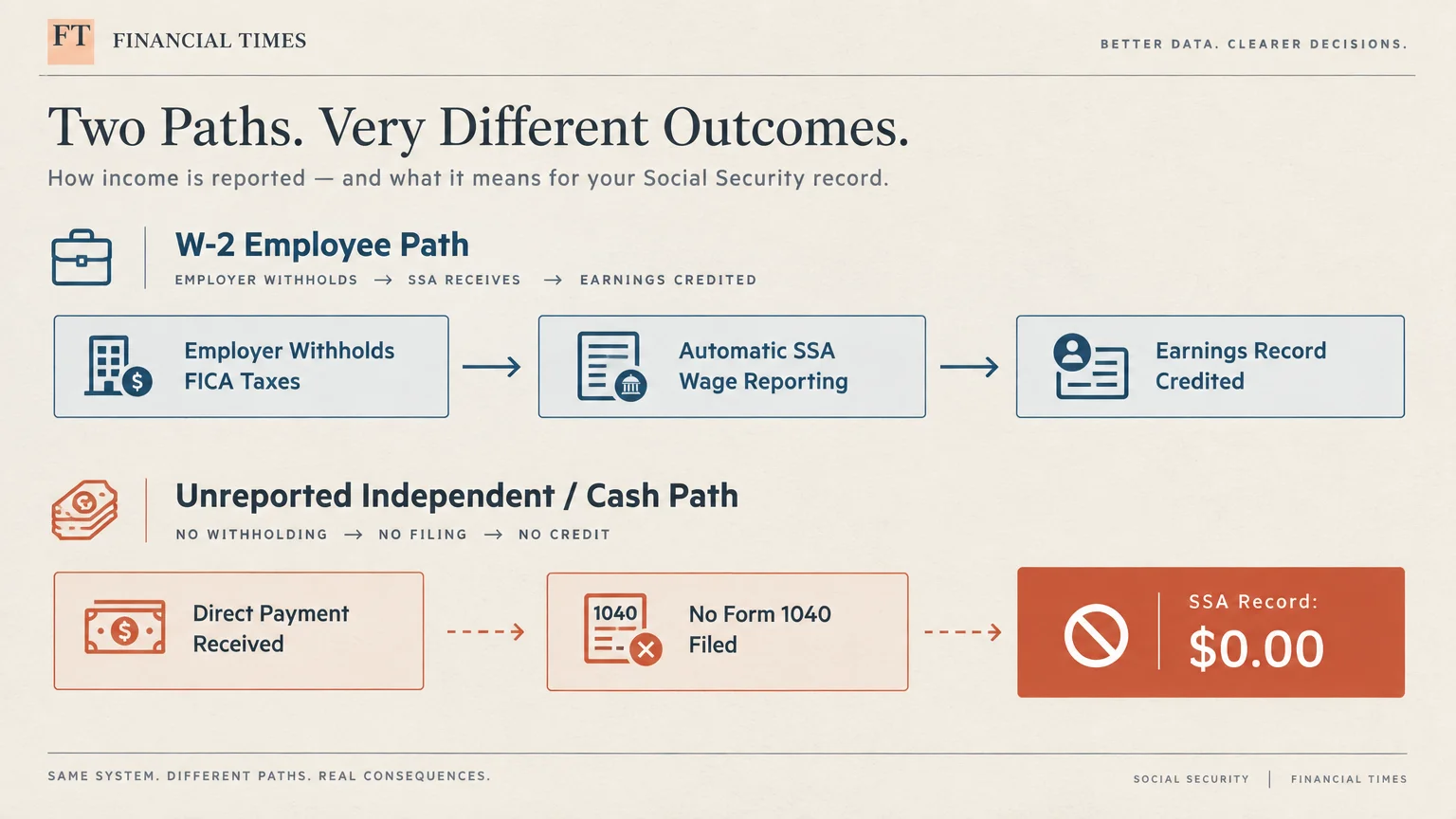
1. Your Social Security Earnings Record Shows Zero (Unless You Were a W-2 Employee)
Many people confuse filing an individual tax return with reporting income to the federal government. The distinction between an employee and an independent worker changes your entire retirement trajectory.
If you worked as a standard W-2 employee, your employer already withheld payroll taxes and reported your wages directly to the government. In this situation, the Social Security Administration recorded your earnings even if you never filed Form 1040.
Your retirement credits remain fully intact because your employer handled the legal reporting on your behalf. You can verify these wages at any time through a personal online account.
Severe problems emerge if you earned your living through freelance contracts, gig platforms, or informal cash arrangements. Independent workers bear the sole legal responsibility for reporting their own earnings to the government.
Without an individual tax return, the government possesses zero official knowledge of your labor. As far as the Social Security formula is concerned, you earned nothing during those unfiled years.
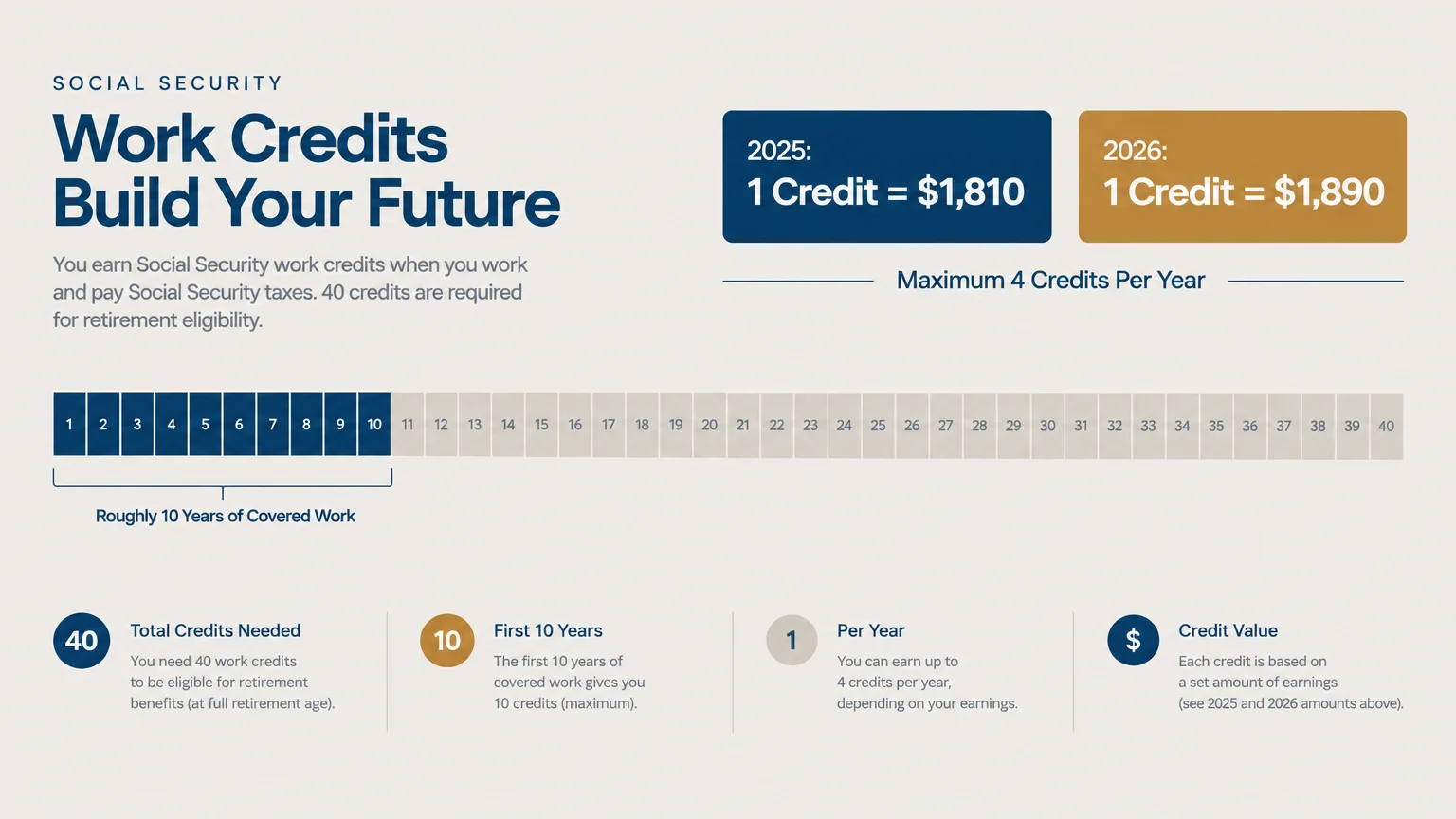
2. You Fail to Accumulate the Mandatory 40 Work Credits
You cannot qualify for Social Security retirement benefits simply by reaching a specific age. The system demands that you earn your way into coverage through accumulated work credits.
To receive monthly retirement checks on your own record, you must accumulate a minimum of 40 work credits. Most Americans achieve this baseline threshold after completing roughly 10 full years of covered employment.
According to the Social Security Administration, you earn one credit for every $1,810 of covered earnings in 2025; this threshold rises to $1,890 in 2026. You can earn a maximum of four credits each calendar year.
Workers paid in unreported cash or informal trade accumulate zero credits across their entire working lives. Arriving at age 62 or 67 with fewer than 40 credits leaves you completely ineligible for individual retirement benefits.
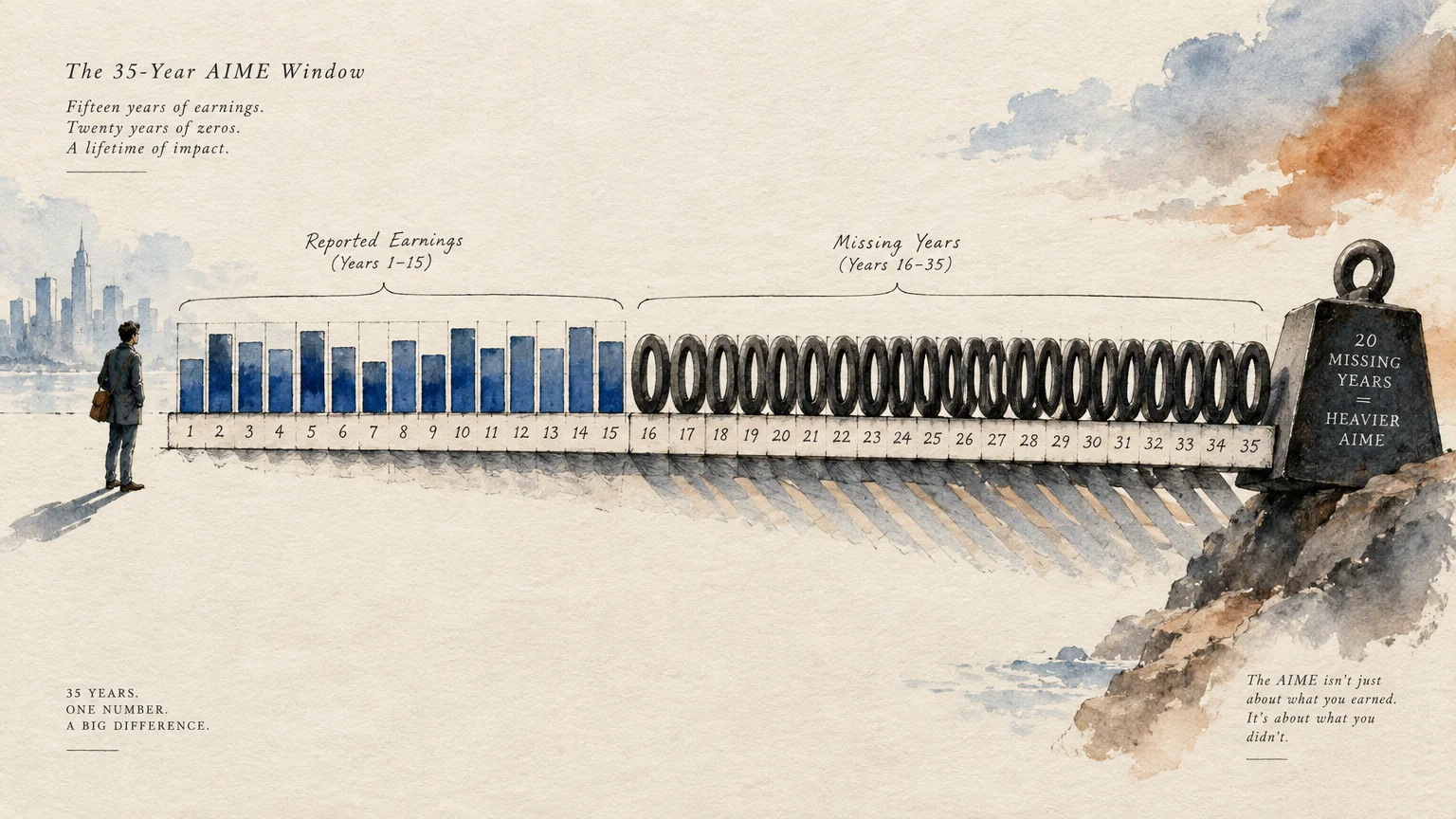
3. A 35-Year Calculation Window Fills With Zeroes
Even if you filed tax returns for a portion of your adult life, skipping years devastates your payout. The Social Security benefit formula does not look at your overall career average.
Instead, the agency indexes your lifetime wages for inflation and selects your highest 35 years of reported earnings. It averages these indexed figures together to calculate your Average Indexed Monthly Earnings (AIME).
If you only filed tax returns for 15 years, the agency inserts 20 years of solid zeroes into the calculation formula. Every single zero drags down your lifetime earnings average and reduces your final monthly benefit check.
A worker with solid earnings over a 25-year period might lose several hundred dollars per month due to 10 missing years. That financial penalty persists across every single retirement check you receive.

4. You Forfeit Social Security Disability Insurance (SSDI) Coverage
Retirement income is not the only crucial protection tethered to your tax filings. Social Security Disability Insurance provides critical income replacement if a severe medical condition destroys your ability to work before retirement.
Qualifying for SSDI requires passing a strict recent-work test alongside cumulative credit minimums. Workers aged 31 and older generally must have earned at least 20 credits within the 10 years immediately preceding their disability.
This standard is widely known across the financial industry as the 20/40 rule. If you worked off the books for years without filing taxes, your disability insurance coverage quietly lapses.
A catastrophic injury or degenerative illness could leave you physically unable to earn a living. If your tax records show no recent reported income, the agency will automatically reject your SSDI claim.

5. You Must Pay Costly Out-of-Pocket Premiums for Medicare Part A
Most Americans expect to receive premium-free Medicare Part A hospital coverage when they celebrate their 65th birthday. However, free hospital insurance requires the exact same 40 work credits as retirement benefits.
Workers who never paid payroll taxes or reported self-employment income must purchase Medicare Part A directly. Without credits, hospital insurance becomes a major monthly household expense.
As outlined by Medicare.gov, individuals with fewer than 30 work credits pay $518 per month for Part A in 2025, increasing to $565 per month in 2026. Those with 30 to 39 credits pay a reduced rate of $285 monthly in 2025 and $311 in 2026.
Paying more than $6,700 per year just for basic hospital coverage drains retirement savings quickly. Missing work credits effectively transforms an entitlement program into an expensive out-of-pocket obligation.

6. The Strict SSA Statute of Limitations Locks Your Record Forever
Many individuals assume they can ignore tax returns for decades and clean up the mess right before retirement. Unfortunately, federal law establishes an unforgiving statutory cutoff for self-employed workers.
Under federal regulations 20 CFR § 404.802 and § 404.822, you face a firm deadline to report self-employment earnings. You have precisely three years, three months, and 15 days following the close of the taxable year to correct your earnings record.
Once this statutory deadline passes, the Social Security Administration permanently locks your earnings record for that specific calendar year. The agency will not credit those earnings, even if you subsequently pay your back taxes.
Federal law is unequivocal: paying overdue self-employment taxes to the IRS after the statutory deadline satisfies your tax debt, but it will never restore your missing Social Security credits.
You could hand the IRS thousands of dollars in delinquent taxes, penalties, and interest for an unfiled year from a decade ago. While the tax collector cashes your check, your Social Security earnings record remains permanently set at zero.

7. You Might Still Qualify for Spousal or Survivor Benefits
Failing to file taxes does not necessarily lock you out of the Social Security system entirely. If you are legally married to an insured worker, federal law provides a vital financial lifeline.
A non-working or non-filing spouse can claim up to 50% of their working partner’s full retirement benefit. You can access this spousal benefit once you reach full retirement age, provided your spouse has already filed for benefits.
The system also offers robust survivor protections to help you manage the loss of a spouse. Surviving spouses can claim up to 100% of the deceased worker’s monthly benefit, including any delayed retirement credits earned.
These auxiliary protections extend to divorced spouses as well, provided the previous marriage lasted for at least 10 consecutive years. Your lack of personal tax filings will not reduce the auxiliary benefits you legally qualify to receive.

8. Supplemental Security Income (SSI) Becomes Your Primary Safety Net
If you lack 40 work credits and have no qualifying spouse, standard retirement benefits remain out of reach. In this challenging scenario, Supplemental Security Income functions as your final financial backstop.
Unlike standard Social Security, SSI receives funding through general Treasury revenues rather than dedicated payroll taxes. It delivers monthly cash assistance to low-income individuals aged 65 and older, as well as blind or disabled citizens.
The maximum federal monthly payout for SSI is $967 for an individual and $1,450 for an eligible couple in 2025. In 2026, those maximum federal benefit checks rise to $994 for individuals and $1,491 for couples.
However, qualifying for SSI requires you to pass strict financial asset tests. An individual cannot possess more than $2,000 in countable financial resources, while the asset limit for couples sits at $3,000.
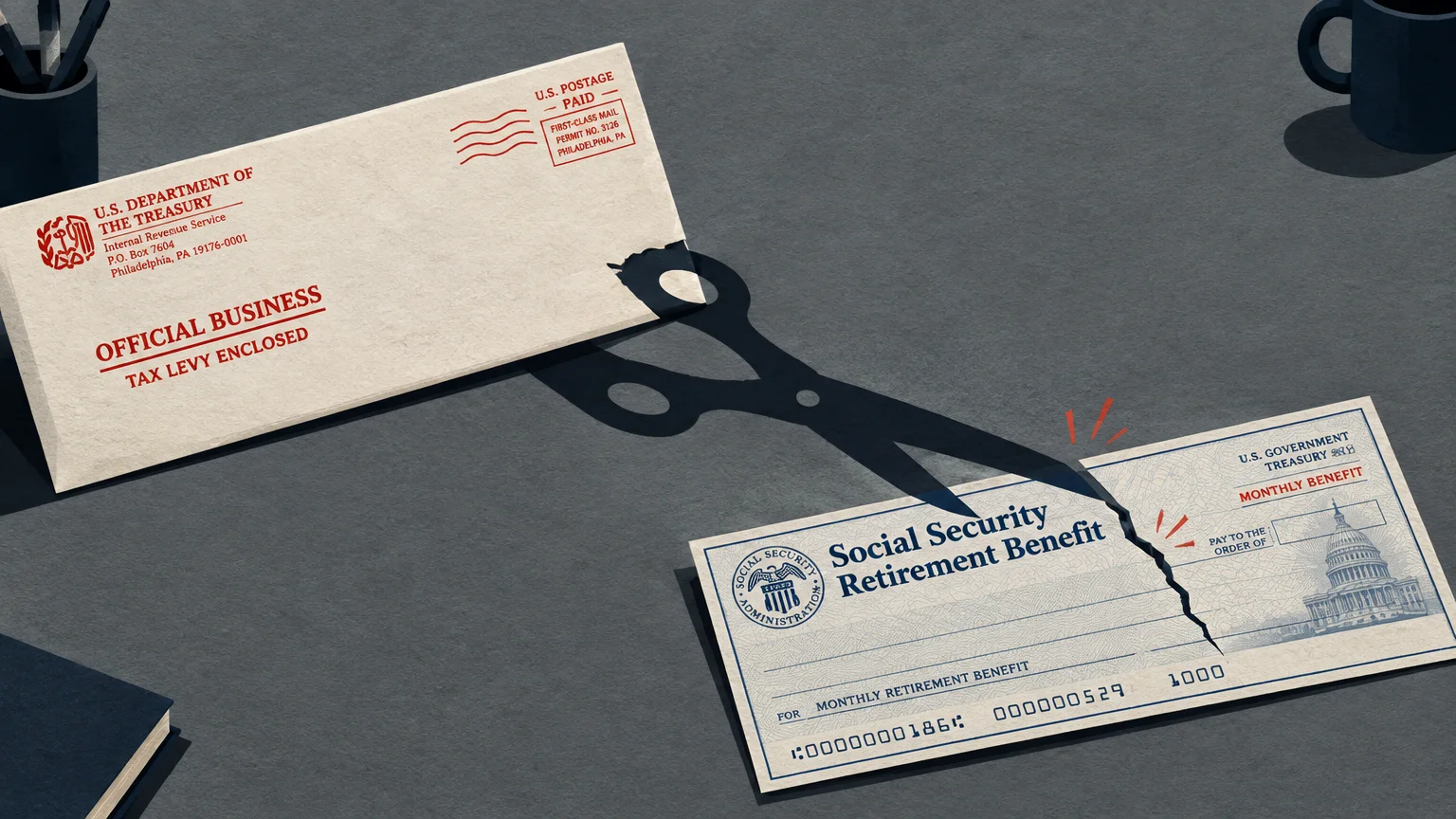
9. IRS Back Taxes and Penalties Threaten Future Benefit Levies
If you decide to file back tax returns to capture missing work credits, you must prepare for the tax consequences. The Internal Revenue Service mandates that independent workers netting $400 or more must file Schedule SE.
The standard self-employment tax rate is 15.3%, which finances Social Security (12.4%) and Medicare (2.9%). Unfiled returns trigger failure-to-file penalties, failure-to-pay penalties, and compound daily interest on the unpaid tax balance.
If you eventually qualify for Social Security through other means, an outstanding tax liability puts those checks at immediate risk. The Federal Payment Levy Program grants the IRS authority to seize up to 15% of your monthly benefit.
This automated garnishment continues every single month until you satisfy your outstanding balance or negotiate a formal resolution. Trying to fix missing credits without a clear tax strategy can trigger aggressive federal collection actions.

10. Dependent Children and Family Members Lose Auxiliary Protections
Operating entirely off the books deprives your immediate family of crucial safety nets. Social Security provides valuable insurance coverage to dependent children when an insured parent faces tragedy.
If an insured worker suffers a debilitating disability or passes away, their biological or adopted minor children receive monthly auxiliary benefits. These monthly payments help cover essential household housing, groceries, and educational costs.
When a parent fails to report income and accumulate work credits, their dependent children lose this financial protection. The government cannot distribute dependent or survivor benefits against an earnings record showing zero contributions.
A breadwinner who conceals earnings leaves surviving family members completely unprotected against sudden hardship. Reporting taxable income creates a financial barrier that protects your children if life takes an unexpected turn.
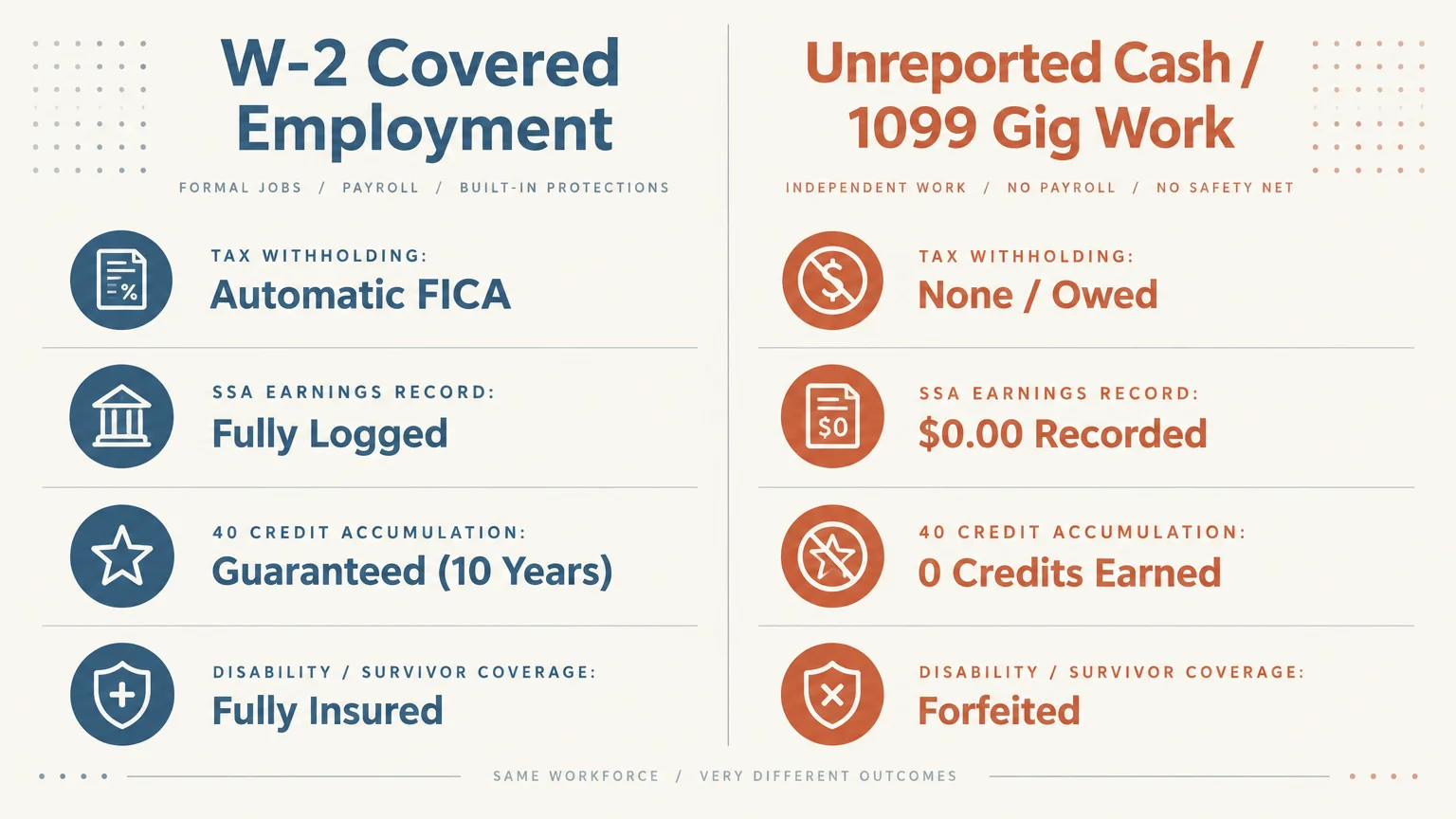
Comparing the Impact: W-2 Wages vs. Unreported Self-Employment
The financial consequences of skipping your tax returns vary sharply based on how you earned your income. The following comparison highlights how employment status changes your Social Security standing.
| Factor | W-2 Employee (Unfiled 1040) | Unreported Self-Employed / Cash |
|---|---|---|
| Work Credits Earned | Recorded automatically via employer W-2 filings. | Zero credits earned; agency has no record of work. |
| 35-Year Average Impact | Earnings are indexed and counted in your retirement formula. | Unfiled years enter the formula as zero dollars. |
| Disability Coverage (SSDI) | Maintained if wages meet the quarterly credit rules. | Coverage lapses completely under the 20/40 rule. |
| Medicare Part A Premium | Premium-free after reaching 40 accumulated credits. | Must pay out-of-pocket premiums up to $565 monthly. |
| Statute of Limitations | SSA updates records using IRS W-2 matches anytime. | Locked permanently after 3 years, 3 months, 15 days. |
| Audit and Penalty Risk | IRS pursues unpaid income taxes; payroll taxes already paid. | Faces 15.3% self-employment tax, penalties, and interest. |
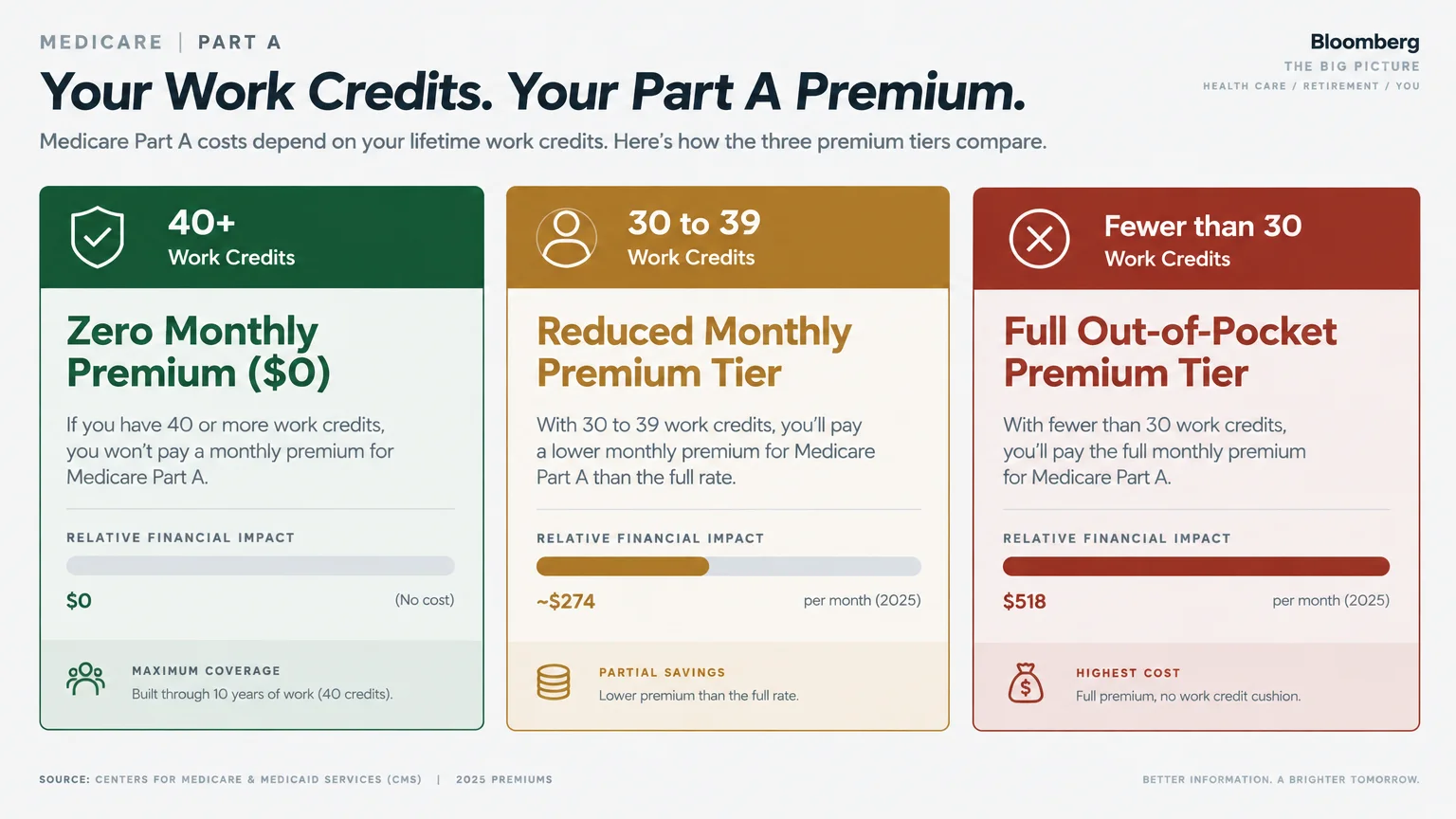
Medicare Part A Premium Costs by Work Credits
Understanding the link between your work credits and Medicare expenses is essential when planning for retirement. Those who fail to accumulate credits face heavy premiums for basic care.
| Work Credits Accumulated | 2025 Monthly Premium | 2026 Monthly Premium | Annual Cost (2026) |
|---|---|---|---|
| 40 or more credits | $0 (Premium-Free) | $0 (Premium-Free) | $0 |
| 30 to 39 credits | $285 | $311 | $3,732 |
| Fewer than 30 credits | $518 | $565 | $6,780 |
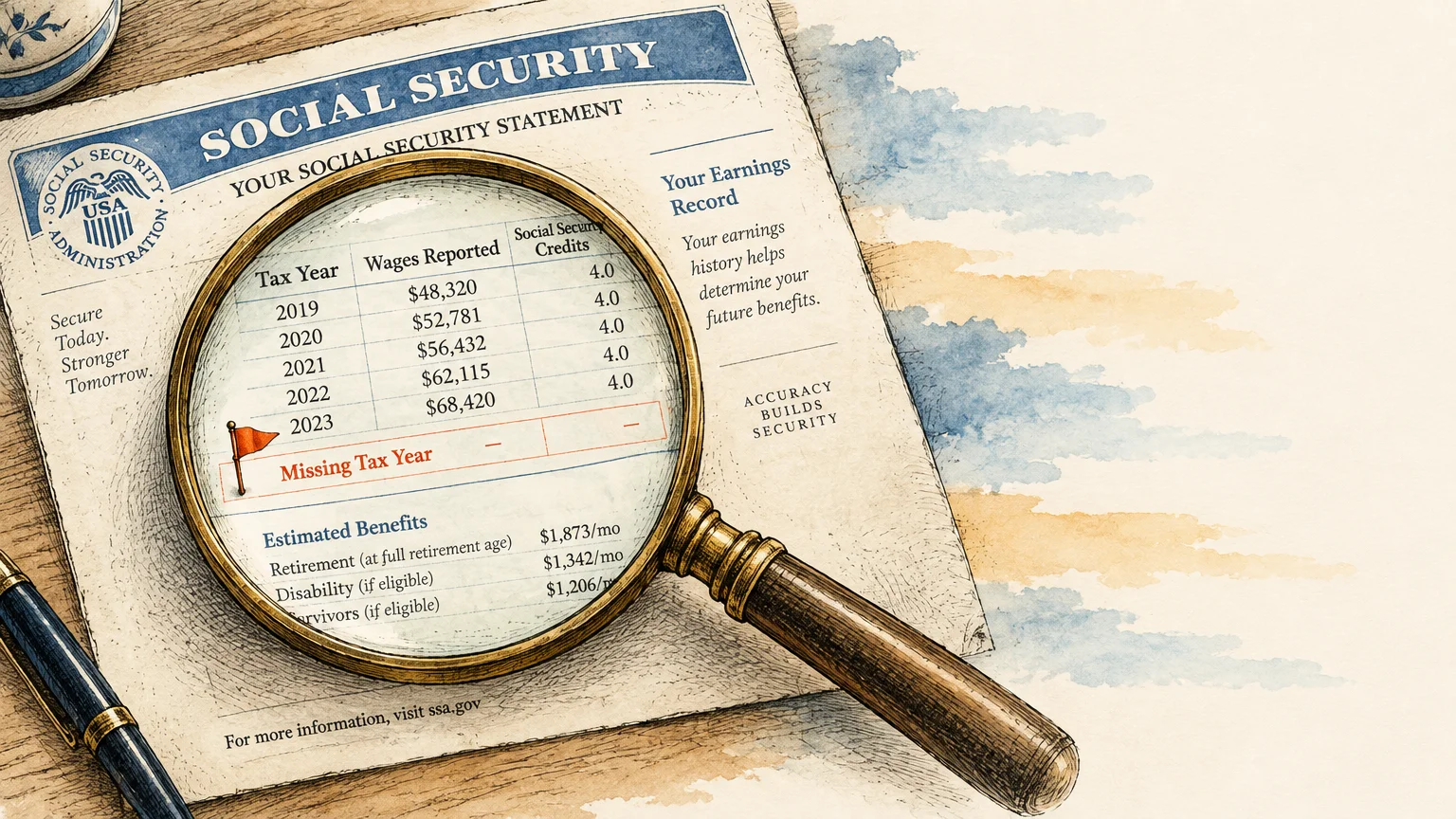
Things to Watch Out For
Navigating unfiled taxes and retirement benefits involves subtle legal and administrative traps. Watch out for these four common pitfalls that derail budget-conscious Americans:
- Assuming Form 1099-NEC Means Taxes Were Handled: Receiving a tax form from a client does not mean taxes were remitted. Clients report payments to the IRS, but you must file Schedule C and Schedule SE to pay payroll taxes and earn credits.
- Missing the Strict Three-Year Correction Window: You cannot wait until age 62 to file a decade of back tax returns. Any self-employment return filed past the three-year, three-month, 15-day statutory limit will not generate Social Security credits.
- Relying on Common-Law Marriage for Benefits: Spousal and survivor benefits require a legally recognized marriage. Cohabitating partners cannot claim Social Security benefits on their partner’s work record, regardless of how many decades they lived together.
- Accidentally Disqualifying Yourself from SSI: Supplemental Security Income imposes a strict $2,000 countable resource ceiling for individuals. Receiving a modest inheritance or holding excess cash in a savings account will instantly suspend your monthly payments.

When DIY Isn’t Enough
Resolving multi-year tax gaps and evaluating benefit eligibility often requires professional guidance. Consider working with an enrolled agent, certified public accountant, or legal professional in these specific scenarios:
- You Owe Multiple Years of Unfiled Self-Employment Taxes: A tax professional can prepare delinquent returns, calculate self-employment liabilities, and help you request first-time penalty abatements from the IRS.
- You Need to Correct Missing W-2 Records: If a past employer failed to send your wage reports to the government, a professional can reconstruct your earnings record using pay stubs, bank statements, and IRS Form 4852.
- You Are Approaching Age 65 With 30 to 39 Credits: A financial advisor can evaluate whether earning a few additional credits through part-time work will save you thousands of dollars on lifetime Medicare Part A premiums.
- You Face an Active Federal Payment Levy on Benefits: If the IRS is garnishing your Social Security checks, an experienced tax practitioner can negotiate an Offer in Compromise or establish Currently Not Collectible status.
Frequently Asked Questions
Can I get Social Security at age 62 if I never worked or filed taxes?
You cannot claim benefits on your own record without 40 work credits. However, you may qualify for spousal benefits if you are married to an insured worker who is at least 62 years old.
Does the IRS share my tax return data with the Social Security Administration?
Yes, the IRS automatically transmits your reported earnings and Schedule SE payroll tax figures directly to the agency. That electronic exchange updates your personal earnings ledger and adds your earned work credits.
Can stay-at-home spouses receive Social Security without an individual earnings record?
Yes, stay-at-home spouses can receive spousal benefits equal to 50% of the working spouse’s primary insurance amount. If the primary earner passes away, the surviving spouse can receive up to 100% of that monthly check.
What happens if I worked under an incorrect or stolen Social Security number?
Earnings reported under an invalid or mismatched number get moved into the agency’s Earnings Suspense File. You must provide original pay stubs and tax records to transfer those wages to your legitimate record.
Practical Steps to Protect Your Retirement Today
Taking control of your retirement security requires honest evaluation and proactive steps. Even if you missed filing tax returns in the past, taking action now preserves your future financial options.
- Create a My Social Security Account: Log into the official government portal to inspect your lifetime earnings history and check your current accumulated credit count.
- Identify Reporting Discrepancies: Compare your actual historical employment against your recorded earnings to identify missing years or missing employer W-2 reports.
- File Recent Delinquent Returns: If you earned self-employment income over the past three years, file those delinquent returns immediately before the statutory correction window closes forever.
- Plan for Healthcare Coverage: If you lack 40 credits, begin budgeting for out-of-pocket Medicare Part A premiums or explore part-time employment to earn your remaining required credits.
Every single reported dollar strengthens your financial foundation for the decades ahead. Take the time to audit your records, correct past reporting gaps, and claim the retirement security you deserve.
This is general informational content based on widely accepted guidance. Individual results vary. Verify current details—rules, prices, eligibility, regulations—with official sources before making important decisions.
Last updated: May 2026. Rules, prices, and details change—verify current information with official sources before acting on it.









Leave a Reply