

Your annual benefit statement provides the exact blueprint the government uses to calculate your future monthly retirement income. Reviewing it immediately ensures payroll errors do not permanently depress your Social Security checks.
While workers aged 60 and older receive paper statements, anyone age 18 and older can access these records online. Catching missing wages early preserves thousands of dollars over your retirement lifetime.
Taking nine structured steps turns this dense document into an actionable personal roadmap. Here is exactly how to audit your numbers, protect your benefits, and strengthen your financial plan.
1. Verify Your Personal Information and Qualifying Work Credits
Start by checking your name, date of birth, and Social Security number at the top of the statement. A simple clerical error or misspelled name can cause payroll contributions to route into an unassigned suspense file.
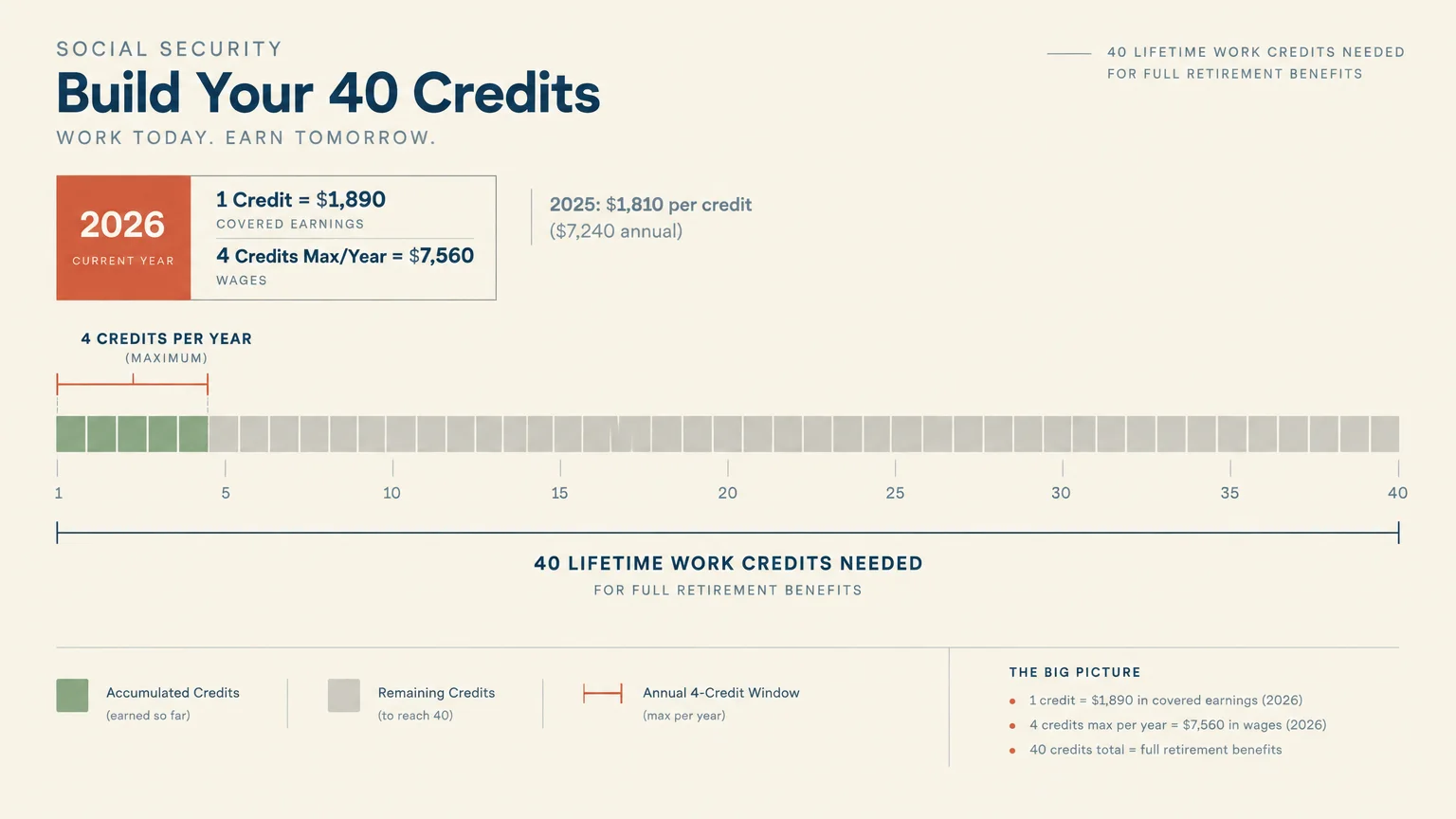
Next, confirm your total qualifying credits. You need 40 lifetime credits to qualify for Social Security retirement benefits, which equates to roughly ten years of covered employment.
The Social Security Administration awards up to four credits each year based on your covered earnings. In 2026, you earn one credit for every $1,890 of covered income, up from $1,810 in 2025.
Earning all four credits in 2026 requires $7,560 in annual wages, compared to $7,240 in 2025. If your statement lists fewer than 40 credits, monitor this metric annually until you secure full eligibility.
2. Audit Your Full Earnings History Line by Line
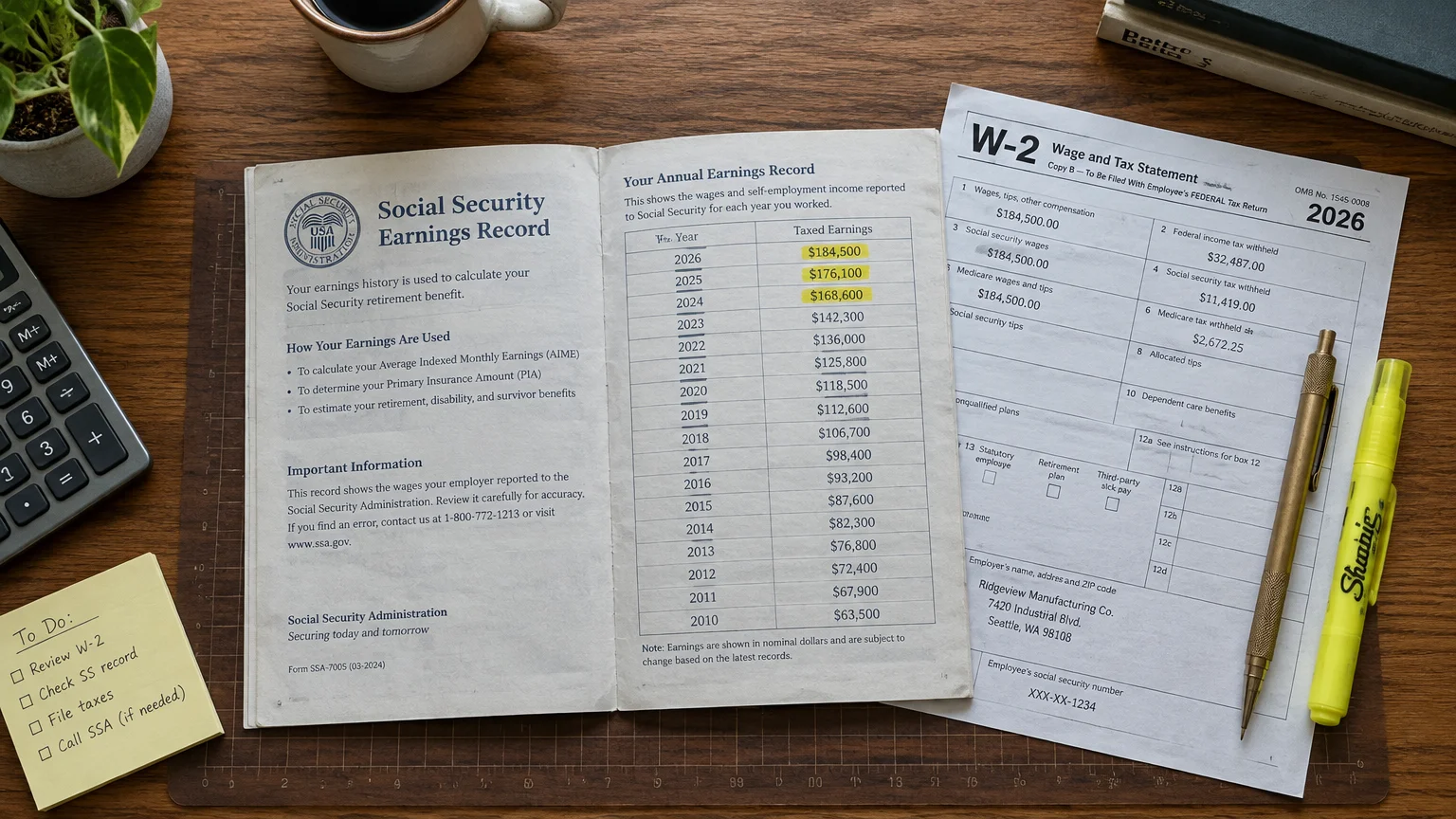
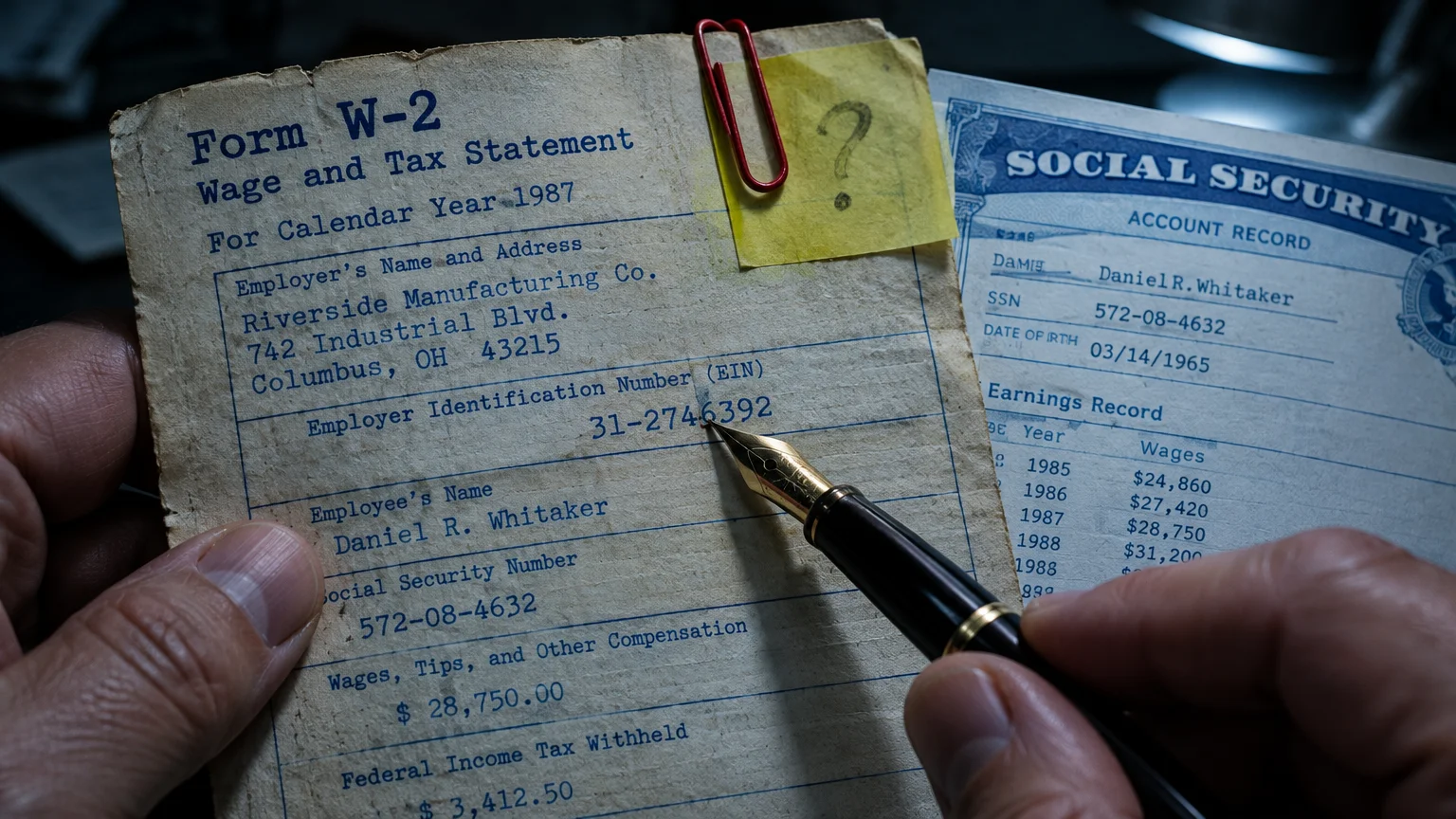
Flip to the page displaying your complete historical earnings record. You must review your social security earnings record against your past tax returns, W-2 forms, and 1099 filings.
Keep in mind that your statement only tracks earnings subject to Social Security taxes. Your reported wages will not exceed the statutory contribution and benefit base for any given year.
For example, the taxable maximum is $184,500 in 2026, up from $176,100 in 2025 and $168,600 in 2024. Any wages you earned above those annual thresholds will not appear on this record.
According to the Social Security Administration, employers occasionally transpose numbers or fail to report employee earnings under proper tax identifiers. Catching these wage reporting discrepancies early safeguards your lifetime benefit calculation.
3. Act Before the Earnings Correction Deadline Expires
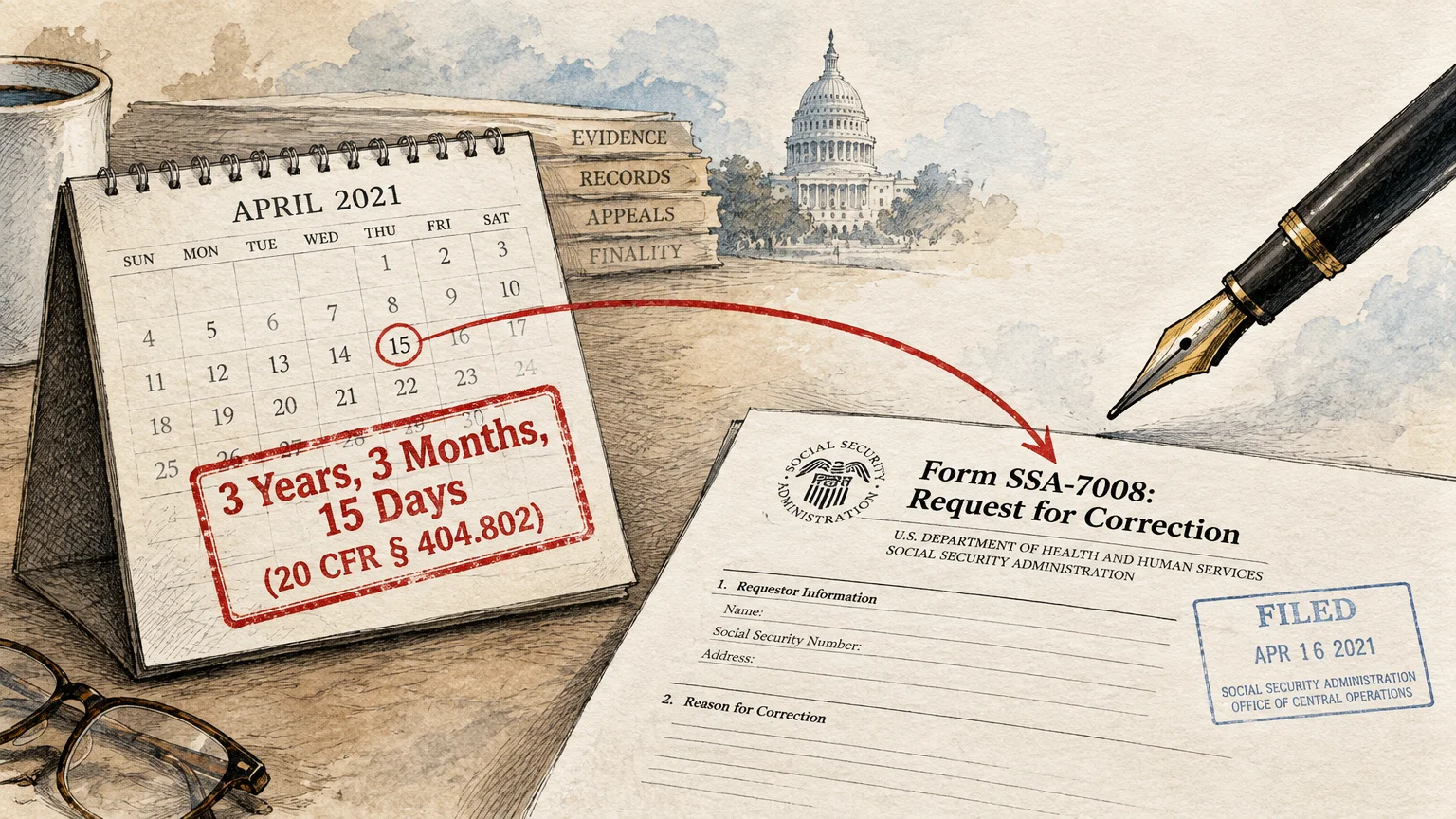
Federal law places a strict statute of limitations on correcting wage records. Under 20 CFR § 404.802, you generally have 3 years, 3 months, and 15 days from the end of the tax year to request a correction.
Once this statutory deadline passes, the federal government legally presumes your earnings record is accurate. Overturning an old entry requires exhaustive documentary evidence that can be difficult to locate.
If you uncover missing wages, submit Form SSA-7008 directly to the agency. Provide official W-2 forms, wage stubs, or signed tax transcripts to substantiate your claim.
While the agency allows exceptions for uncredited employer records, the dispute process grows far more challenging over time. Filing corrections promptly ensures every payroll dollar counts toward your future checks.
“A single uncorrected missing year of earnings can quietly reduce your monthly retirement benefit for the rest of your life. Verifying your earnings record annually is the simplest financial audit you will ever perform.” — AmericanPockets Editorial Team

4. Identify Zero-Earning Years in Your 35-Year Average
The government calculates your monthly retirement check using your 35 highest-earning years, adjusted for wage growth. If you work fewer than 35 years, the agency factors $0 into the formula for each missing year.
A single zero in that 35-year calculation noticeably drags down your average monthly wage. If you have only worked 30 years in covered employment, five zeros directly depress your baseline benefit.
You can systematically eliminate those zeros by continuing to work. Every additional year of covered wages replaces an earlier zero or replaces a low-earning year from your youth.
This dynamic offers strong incentive for late-career workers. Working just one or two extra years can significantly lift your lifetime monthly payout.
5. Compare Payouts Across Early, Full, and Delayed Claiming Ages
Your statement displays your retirement benefits estimate across several key claiming ages. Reviewing these figures helps you determine the ideal window to activate payments.
For everyone born in 1960 or later, Full Retirement Age (FRA) is 67. If you were born in 1959, your FRA is 66 years and 10 months.
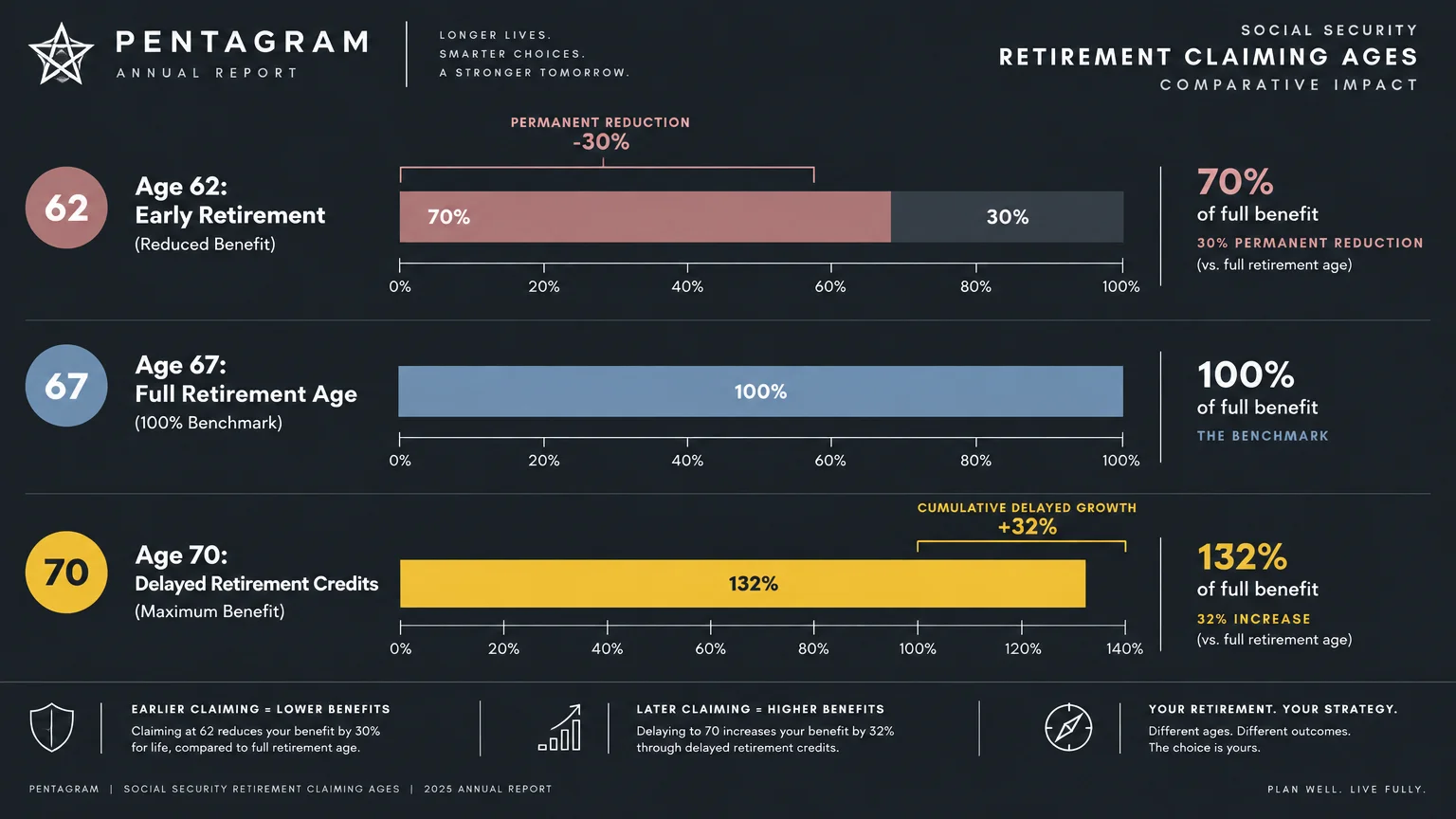
Claiming benefits early at age 62 locks in a permanent monthly reduction of up to 30%. Conversely, delaying benefits past your FRA earns delayed retirement credits of 8% per year until age 70.
Waiting until age 70 delivers a permanent benefit increase of up to 24% over your FRA baseline. The table below illustrates how claiming age alters a hypothetical $2,000 monthly benefit at age 67.
| Claiming Age | Percentage of Baseline Benefit | Estimated Monthly Payout | Strategic Impact |
|---|---|---|---|
| Age 62 | 70% | $1,400 | Permanent 30% reduction; maximizes years of payments. |
| Age 67 (FRA) | 100% | $2,000 | Full baseline benefit with zero penalty and no earnings limits. |
| Age 70 | 124% | $2,480 | Permanent 24% bonus; maximizes survivor protections. |
Annual cost-of-living adjustments compound on your base payout throughout retirement. Starting with a higher base benefit produces significantly larger annual dollar increases over time.
6. Calculate the Impact of the Retirement Earnings Test
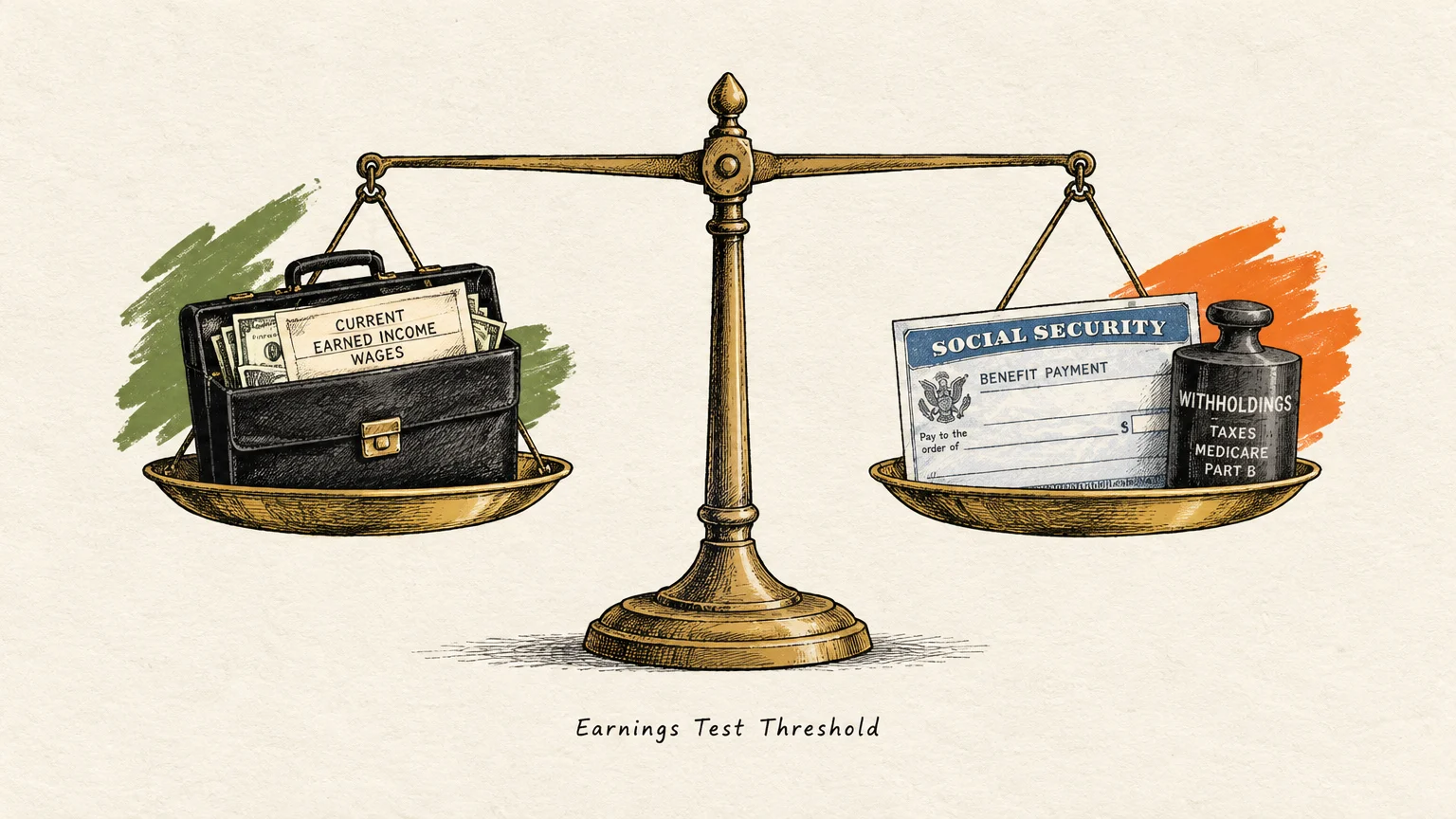
If you plan to claim benefits before Full Retirement Age while working, you must understand the Retirement Earnings Test. Earning above annual statutory limits triggers temporary benefit withholding.
In 2026, the SSA withholds $1 of benefits for every $2 you earn above $24,480 if you are under FRA all year. This ceiling increased from $23,400 in 2025.
During the calendar year you reach FRA, the earnings threshold rises substantially. In 2026, the limit is $65,160, up from $62,160 in 2025, with $1 withheld for every $3 earned above the limit.
Withheld payments are not lost forever. Once you reach Full Retirement Age, the SSA recalculates your monthly check upward to credit back those withheld funds over your remaining lifetime.

7. Review Your Disability and Survivor Benefit Estimates
Your benefit statement includes crucial protections beyond standard retirement payments. Examine the figures listed for Social Security Disability Insurance (SSDI) and Family Survivor Benefits.
The SSDI estimate reveals the monthly cash benefit you would receive if a severe medical condition prevents you from working. This coverage serves as an essential baseline for your disability insurance planning.
Survivor estimates outline the monthly income your spouse and dependent children would receive if you pass away. These payouts help support your family during critical developmental years.
Comparing these projections against your existing life and disability policies prevents expensive coverage overlaps. Factoring in Social Security survivor benefits allows you to size private term policies accurately.
8. Benchmark the Estimate Against Your Projected Budget
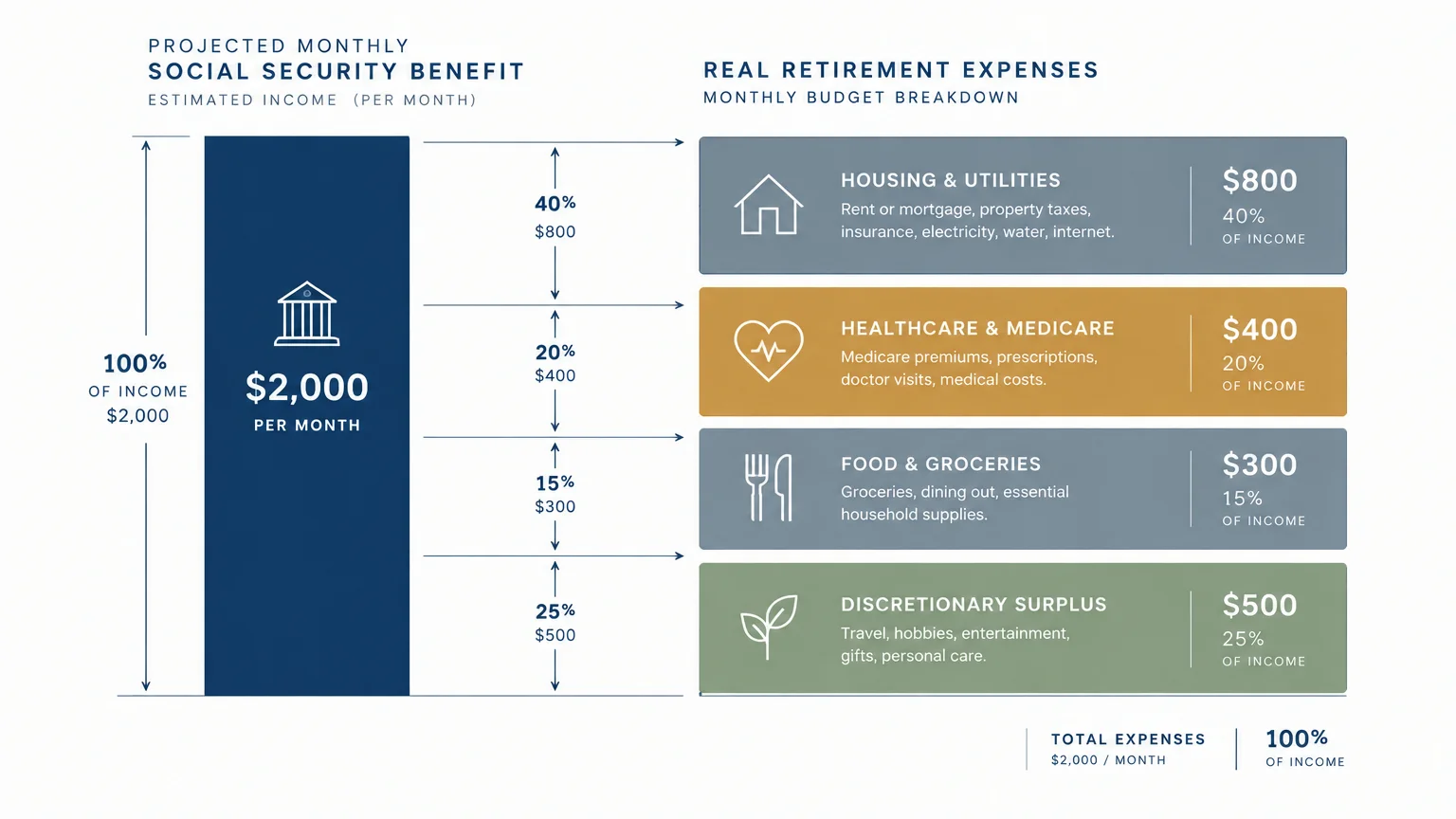
Social Security replaces only a portion of your pre-retirement income. On average, standard benefits replace roughly 40% of a typical worker’s past earnings.
Compare the monthly figures on your statement to your estimated post-retirement living costs. The gap between your projected benefit and your spending needs represents the income your investments must generate.
Educational resources from the Consumer Financial Protection Bureau can help you integrate Social Security into your household cash flow. Balancing guaranteed income against personal savings ensures sustainable withdrawals from your 401(k) and IRA accounts.
If your projected benefit leaves an uncomfortable shortfall, adjust your retirement timeline now. Boosting contributions or delaying your claiming age by two years can dramatically improve long-term solvency.

9. Lock Down Your Digital Account and Set an Annual Review
The SSA mails paper statements only to workers aged 60 and older who do not receive benefits and lack an online profile. These paper mailings arrive approximately three months before your birthday.
All other workers must log into a my Social Security account online to review their statement. Checking your digital account at SSA.gov ensures continuous visibility over your records.
Ensure your digital profile uses strong authentication through Login.gov or ID.me. Creating your online account prevents identity thieves from opening unauthorized profiles using your Social Security number.
Set a recurring annual reminder to download your statement every spring. Auditing your records annually keeps your retirement planning accurate and prevents unresolved payroll discrepancies.
What Can Go Wrong
Several common pitfalls can distort your benefit projections or permanently reduce your future income. Avoiding these four scenarios keeps your retirement plan secure.
- Unreported Name Changes: Failing to report legal name changes to the SSA after marriage or divorce can cause employers to report wages under mismatched records. Those uncredited earnings sit in a suspense file instead of building your benefit baseline.
- Aggressive Self-Employment Deductions: Sole proprietors who write off all taxable revenue reduce their net income and self-employment tax burden. However, reporting minimal net earnings results in low wage credits and permanently suppresses your retirement payout.
- Relying on Flat Projections: The statement estimates assume your current earnings will continue uninterrupted until retirement. Leaving the workforce early or taking a lower-paying job lowers your final monthly payment below the listed estimate.
- Ignoring Windfall Offset Rules: If you work for a state agency, school district, or municipality that does not pay into Social Security, statutory rules apply. The Windfall Elimination Provision (WEP) or Government Pension Offset (GPO) may reduce your final check significantly below the statement estimate.

Where Outside Advice Pays Off
While an annual statement provides clear baseline figures, personal circumstances often complicate claiming decisions. Seeking professional advice pays substantial dividends in the following situations.
- Coordinated Spousal Claiming: Dual-earning couples must time their claims strategically to maximize lifetime household income. A fee-only financial planner helps couples coordinate claiming dates to protect the surviving spouse against benefit reductions.
- Public Sector Pension Planning: Government employees eligible for non-covered pensions require specialized benefit modeling. An advisor familiar with public pensions can calculate the precise impact of WEP and GPO offsets on your household cash flow.
- Business Owner Compensation Structures: S-Corporation owners who balance W-2 salaries against dividend distributions directly manipulate their covered wage base. A certified public accountant can evaluate wage levels to balance current payroll taxes against future Social Security returns.
- Complex Earnings Record Corrections: If you need to correct wages beyond the three-year statutory deadline without original W-2s, the evidentiary requirements are severe. An elder law attorney or accredited representative can help locate historical state records to validate your claim.
Frequently Asked Questions
Why does my statement show $0 for my most recent working year?
Employers submit annual wage records to the IRS, which then transfers the processed data to the Social Security Administration. This reporting cycle causes a reporting lag of several months for the most recent tax year.
Check your account again later in the calendar year. If your wages fail to appear after twelve months, contact your employer or submit Form SSA-7008 with your W-2.
How often does the Social Security Administration mail paper statements?
The SSA automatically mails paper statements only to workers aged 60 and older who lack an online account and do not yet collect benefits. These mailings arrive roughly three months before your birthday.
Workers under age 60 must review their records online at SSA.gov. Alternatively, you can request a paper statement by mailing Form SSA-7004 to the agency.
Will working part-time in retirement permanently reduce my benefits?
Working part-time will never permanently reduce your primary retirement benefit. If you claim before Full Retirement Age, earnings above the annual threshold trigger temporary benefit withholding.
However, the SSA recalculates your monthly check once you attain Full Retirement Age. The agency raises your ongoing monthly benefit to credit back any previously withheld amounts.
Can I correct my earnings history if I lost my old W-2 forms?
You can still correct errors without your original W-2s by requesting certified wage transcripts from the IRS. The SSA also accepts employer letters, pay stubs, and state tax agency records as proof of earnings.
Your annual benefit statement is one of the most valuable financial planning documents you receive. Auditing your earnings records today ensures you receive every dollar you earned throughout your career.
This is general informational content based on widely accepted guidance. Individual results vary. Verify current details—rules, prices, eligibility, regulations—with official sources before making important decisions.
Last updated: May 2026. Rules, prices, and details change—verify current information with official sources before acting on it.









Leave a Reply