

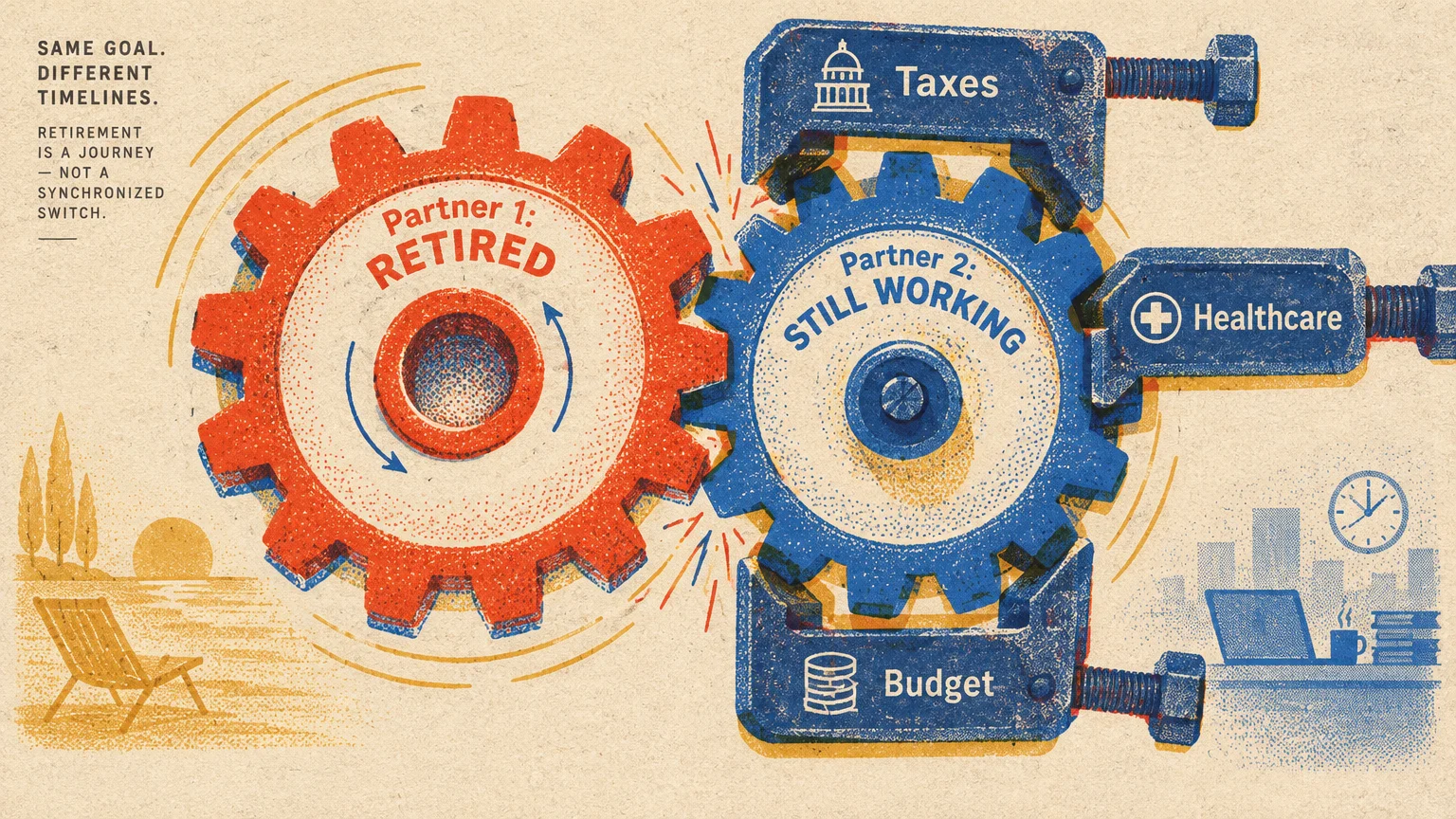
Staggering your retirement dates can preserve income and ease your lifestyle transition, but it also creates unexpected financial traps. When one partner stops working while the other stays on the job, your tax, healthcare, and budget plans change immediately.
According to an Ameriprise Financial survey, only 11% of retired couples leave the workforce simultaneously; nearly two-thirds stagger their departures by at least a full year.
Misjudging healthcare access, claiming dates, or household duties can cost your family tens of thousands of dollars. You can protect your wealth and your relationship by steering clear of nine costly missteps.
1. Leaving a Younger Spouse Without Affordable Health Insurance
Employer-sponsored health insurance frequently covers both partners under a single workplace policy. When the older spouse retires first, that family coverage often ends immediately.
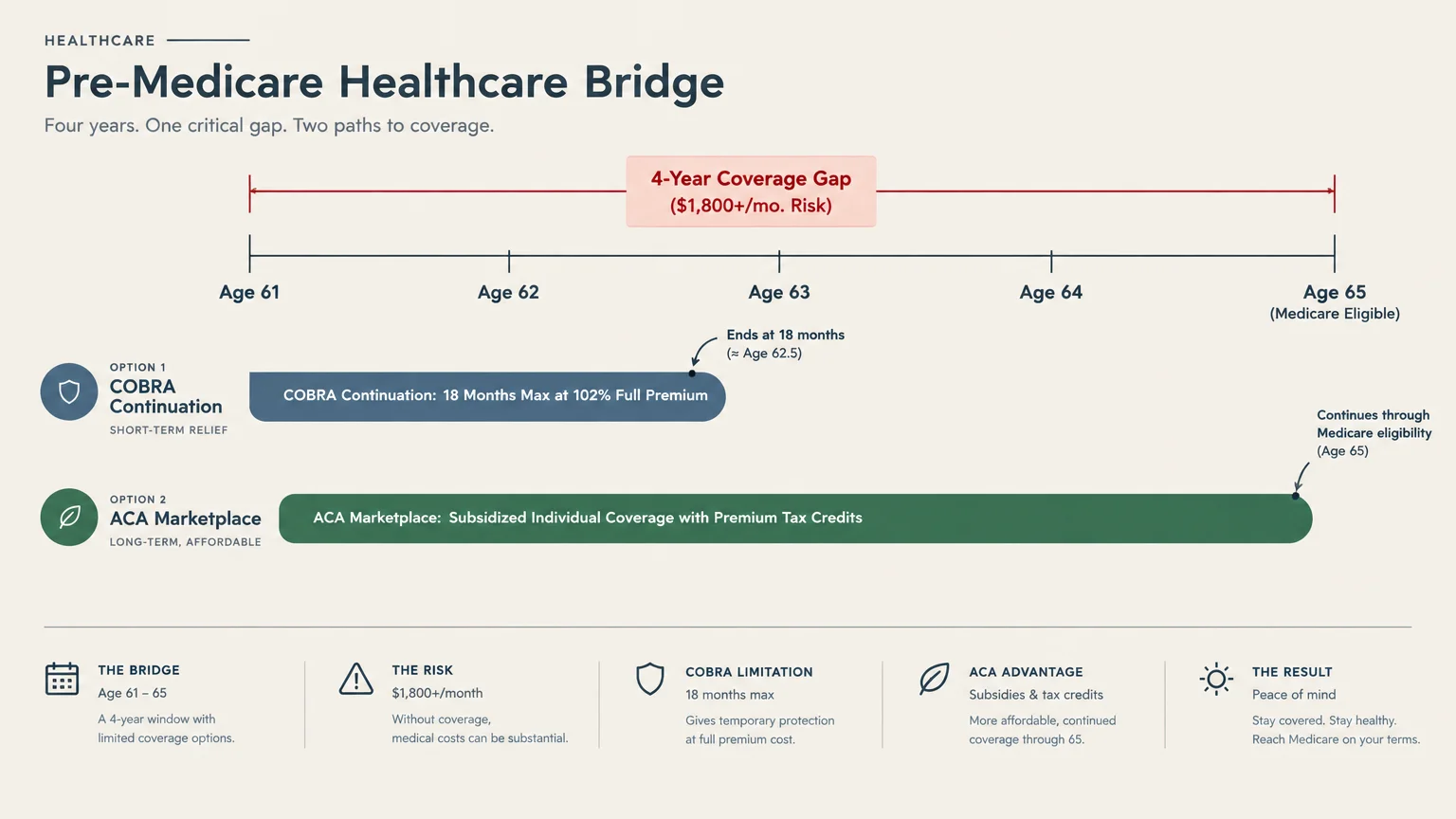
Medicare eligibility does not begin until age 65. If the younger spouse is 61, they face a four-year coverage gap that requires careful planning.
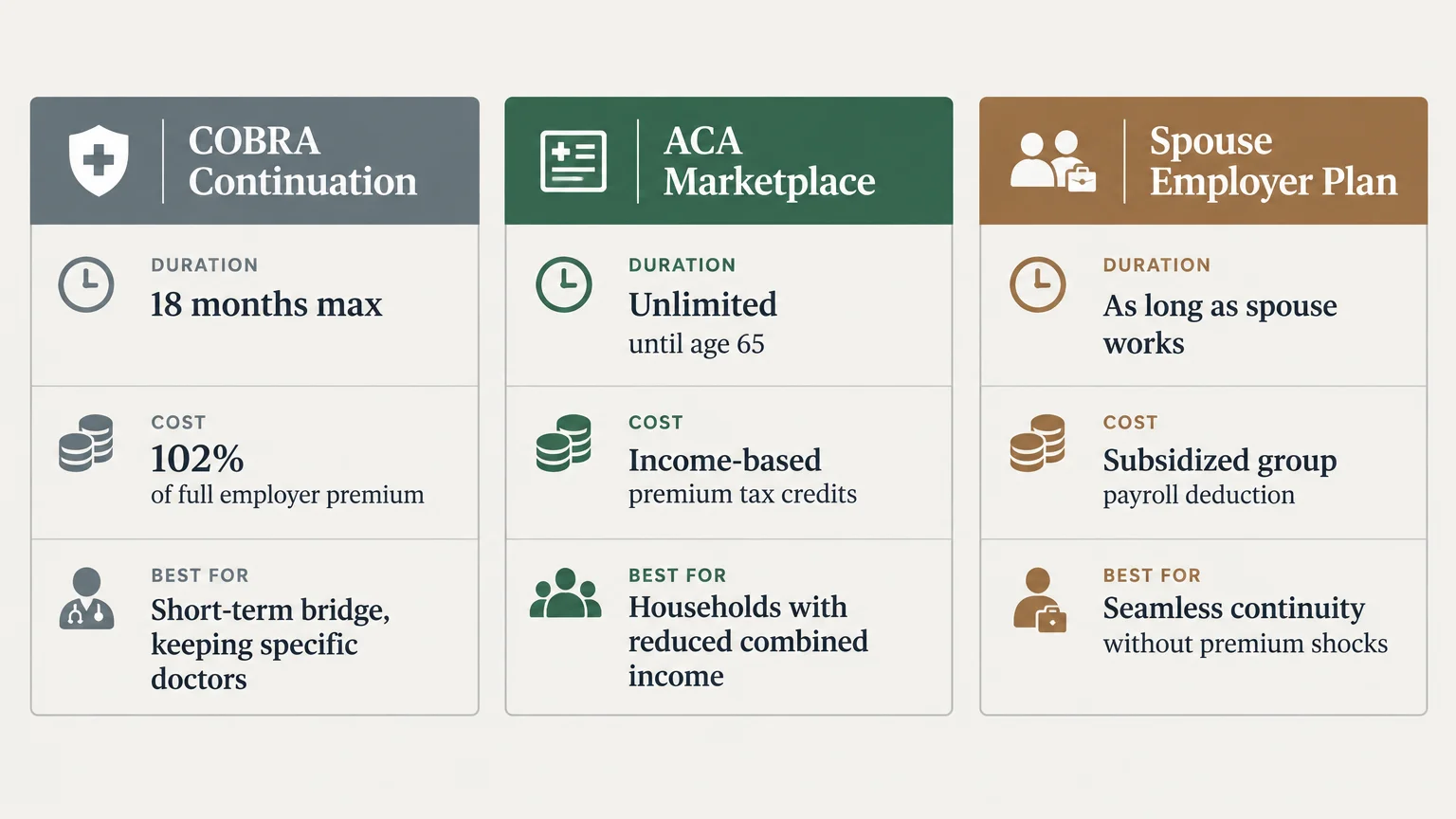
Many couples turn to COBRA continuation coverage as a quick fix. However, COBRA allows you to stay on an employer plan for only 18 months in most cases.
Under COBRA rules, you must pay up to 102% of the full premium, covering both your share and the employer contribution. That sudden jump can easily push health expenses past $1,800 every month.
You can purchase private coverage through the Affordable Care Act (ACA) marketplace instead. Because your household income drops when one partner stops working, you might qualify for substantial premium tax credits.
2. Claiming Social Security Too Early Without a Joint Strategy
Couples often treat Social Security as an individual milestone rather than a coordinated household asset. If you retire first, you might feel tempted to claim benefits immediately at age 62.
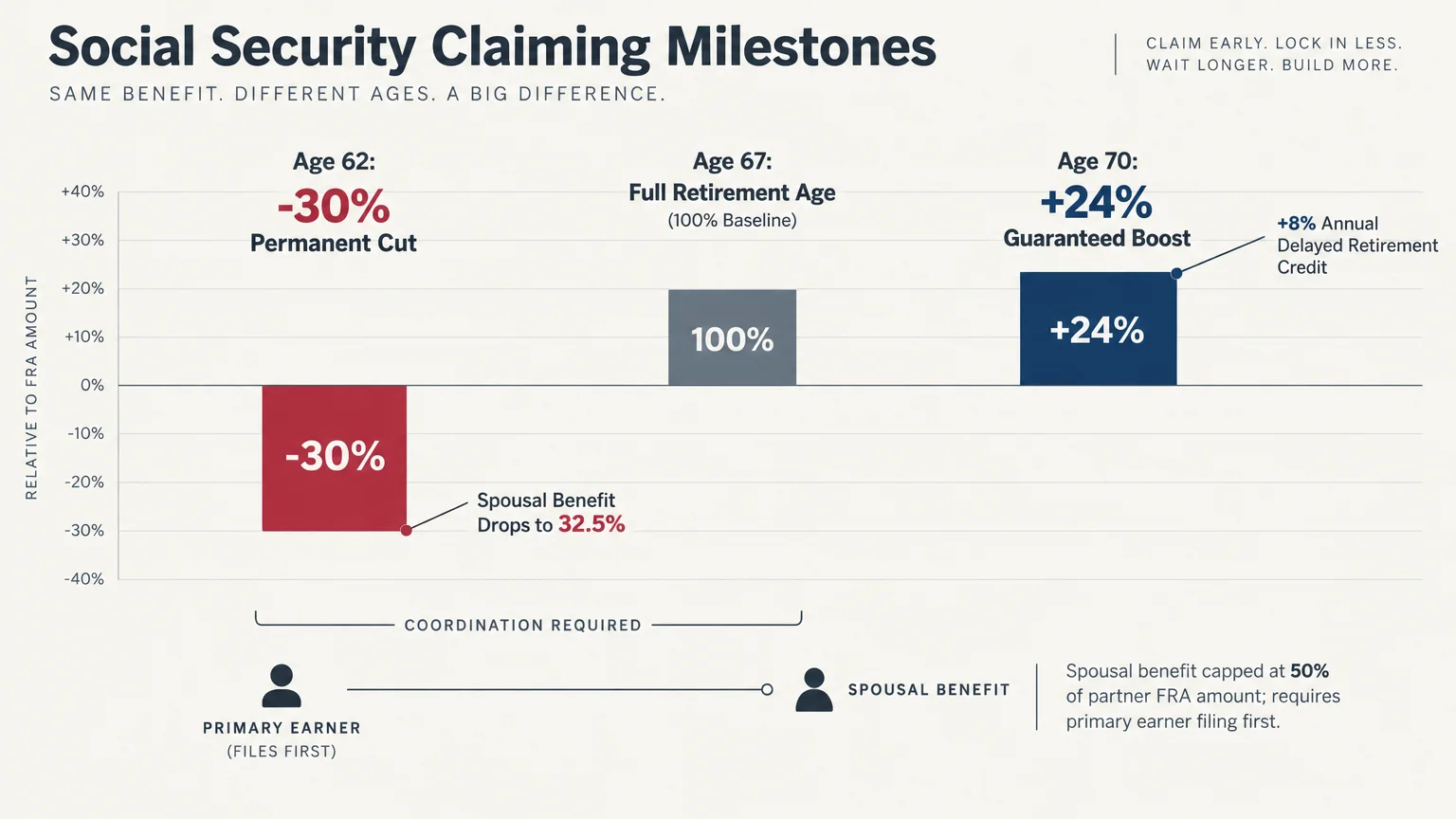
For anyone born in 1960 or later, Full Retirement Age (FRA) is 67. Claiming benefits at age 62 permanently slashes your monthly payout by 30%.
According to the Social Security Administration, every year you delay claiming past your FRA up to age 70 adds an 8% delayed retirement credit. That patience produces a guaranteed 24% boost for life.
Filing early also restricts your partner’s options. A lower-earning partner cannot claim a spousal benefit—which pays up to 50% of your FRA amount—until you file for your own primary benefit.
If your spouse files for a spousal benefit at age 62 before their own FRA of 67, their payout drops permanently to 32.5% of your primary benefit. You must coordinate filing dates so you do not lock in permanent cuts.
3. Overlooking Spousal IRA Contributions While One Partner Works
Many workers assume that retirement accounts close to new money the moment an individual leaves the workforce. In reality, the tax code rewards couples who maintain unequal employment status.
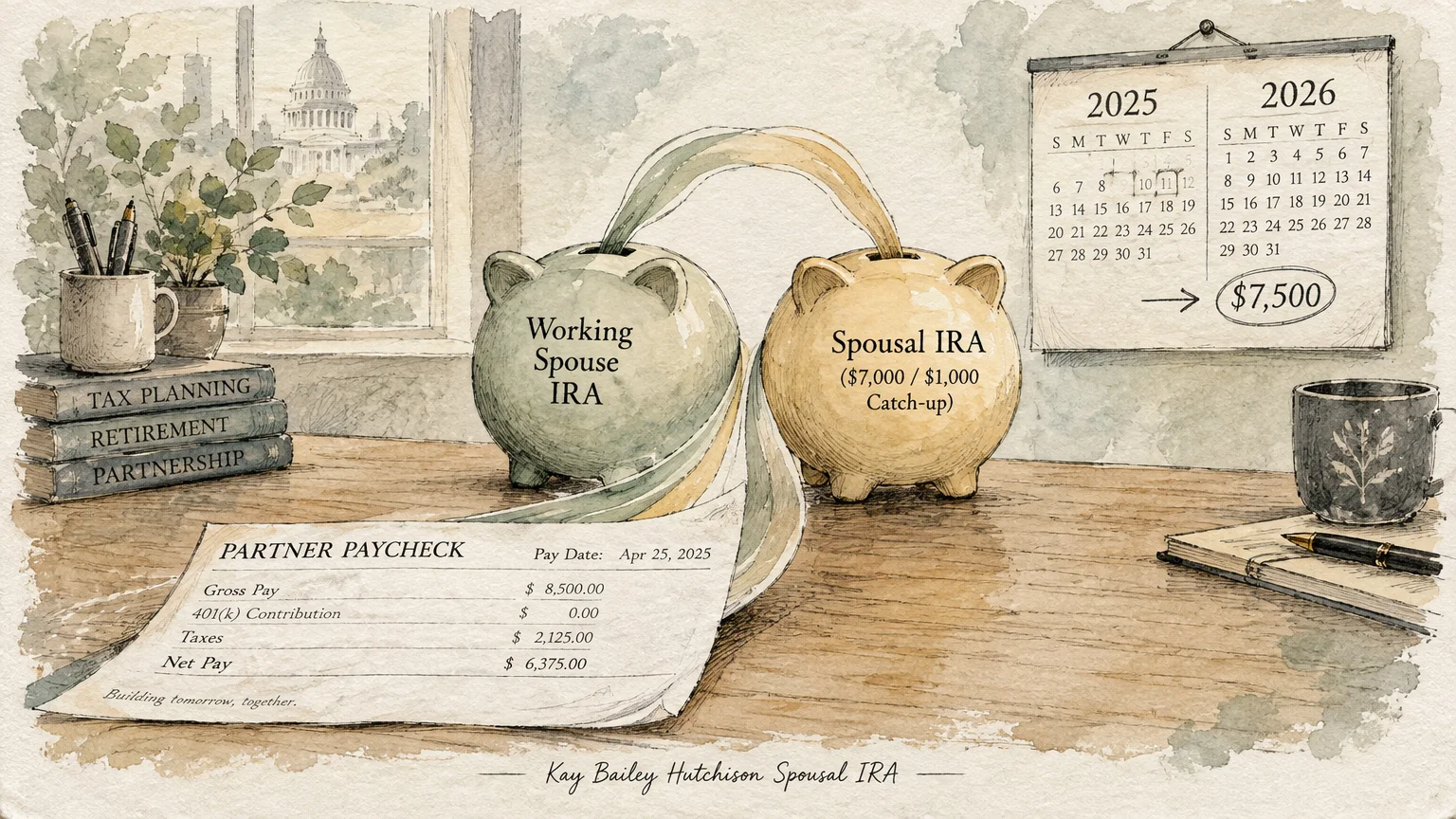
Under IRS rules governing the Kay Bailey Hutchison Spousal IRA, a non-working spouse can fund a Traditional or Roth IRA using the household’s joint earned income. You do not need personal wage income to contribute.
For 2025, eligible couples can contribute up to $7,000 to the non-working spouse’s IRA, plus a $1,000 catch-up contribution for individuals age 50 and older. In 2026, that limit rises to $7,500, with an increased catch-up limit of $1,100.
Guidelines from the Internal Revenue Service confirm that your total joint contributions cannot exceed your combined taxable compensation for the tax year.
Skipping this contribution leaves valuable tax breaks on the table. Funding a spousal IRA allows your household to tuck away thousands of dollars in tax-advantaged compounding while one spouse earns a paycheck.
4. Tripping Over the Social Security Earnings Test on Side Income
Retiring from a full-time corporate role does not always mean stopping work completely. Many early retirees take on consulting gigs, freelance projects, or part-time seasonal positions.
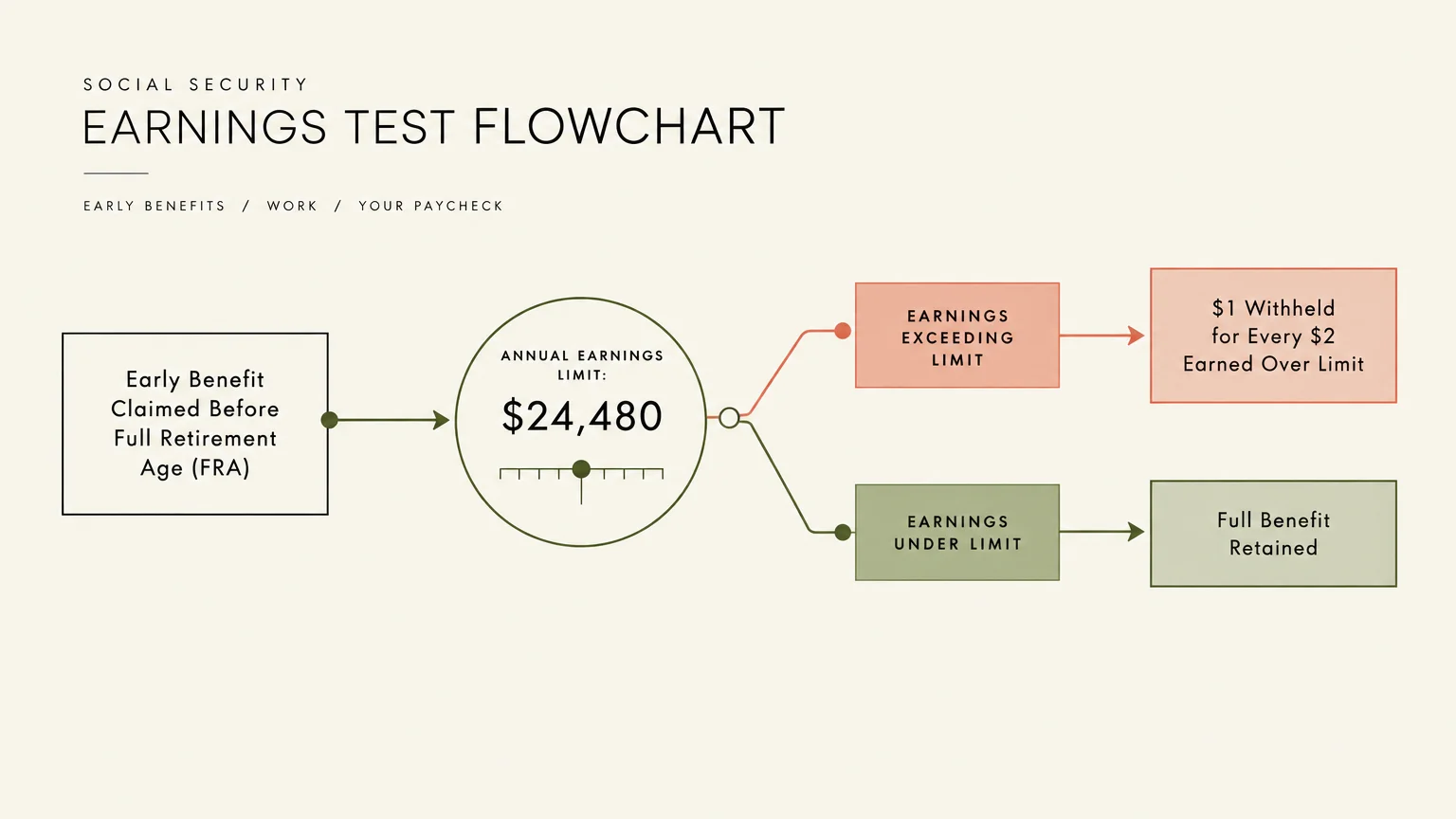
If you claim Social Security before reaching your Full Retirement Age and continue earning money, you must watch the annual retirement earnings test limits. Exceeding those thresholds triggers benefit clawbacks.
For 2025, the earnings cap is $23,400; the Social Security Administration withholds $1 in benefits for every $2 you earn above that threshold. In 2026, the baseline earnings cap increases to $24,480.
During the calendar year in which you reach Full Retirement Age, a much more generous limit applies. In 2026, that upper threshold is $65,160, and the agency withholds $1 for every $3 you earn above the limit.
While the agency eventually recalculates your benefit at your Full Retirement Age to credit withheld sums, early clawbacks cause immediate cash flow disruptions. You should track part-time earnings meticulously before filing early.

5. Missing the Window for Strategic Roth Conversions
When the higher earner leaves the workforce first, total household income usually drops into a significantly lower tax bracket. Many couples ignore this temporary dip, treating it as an uneventful plateau.
This phase represents an ideal bridge window for tax planning. You can convert portions of your pre-tax Traditional IRA or 401(k) accounts into a Roth IRA at historically low tax rates.
Under the SECURE 2.0 Act, Required Minimum Distributions (RMDs) do not begin until age 73, and they will rise to age 75 starting in 2033. If you leave tax-deferred balances alone, massive future RMDs could push you into high brackets later.
Converting funds during low-income gap years lets your savings grow tax-free for the rest of your life. It also shelters your surviving spouse from future single-filer tax brackets.
You should calculate your tax bracket thresholds every autumn with an accountant. Fill your lower tax brackets up to the boundary line without bumping into higher Medicare premium surcharges.
6. Misunderstanding Medicare Part B Rules for Small Employers
When an older spouse reaches age 65 while the younger spouse continues working, healthcare rules turn surprisingly strict. Many couples assume the 65-year-old can simply bypass Medicare Part B and remain on the working spouse’s plan.
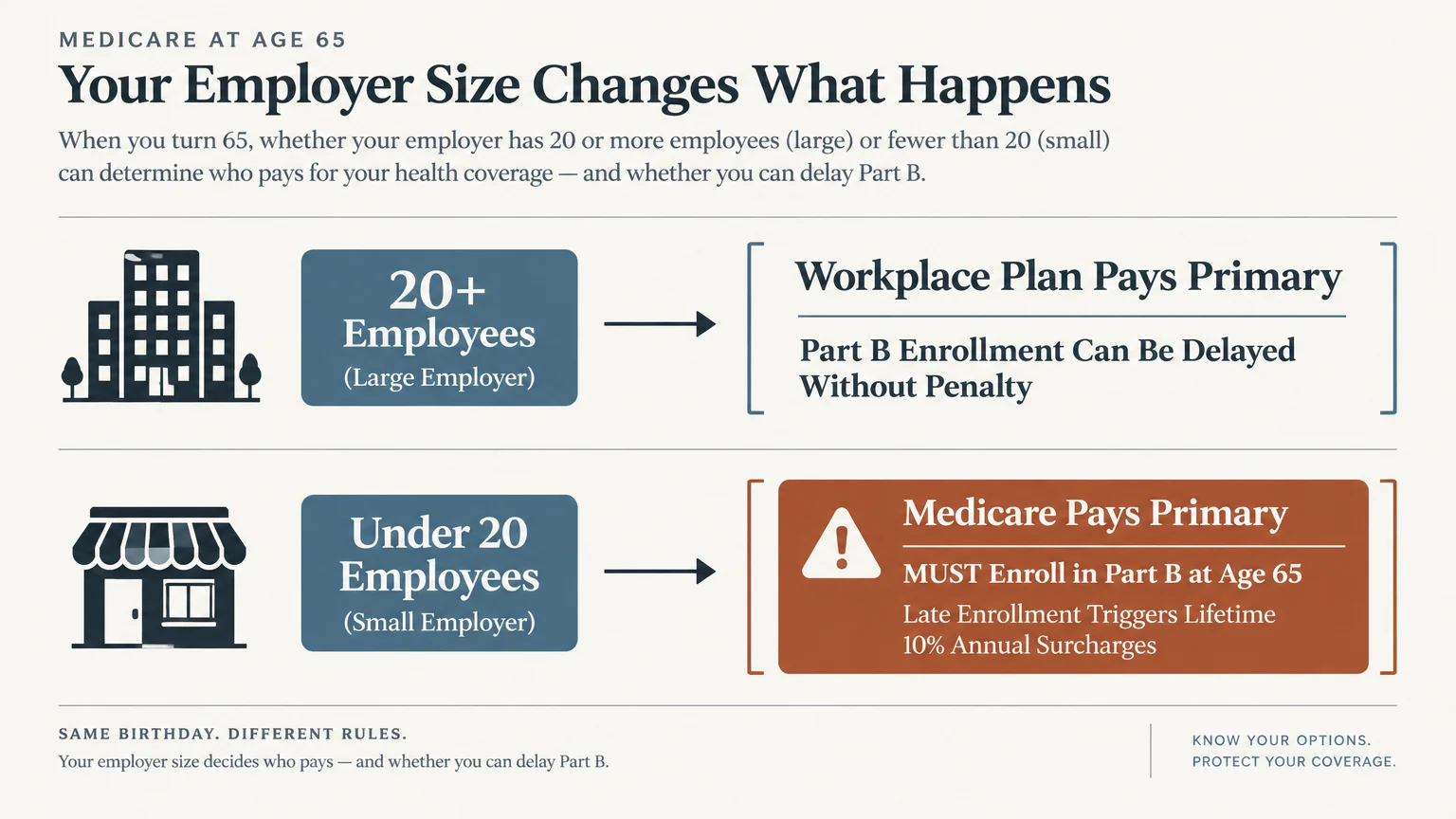
Your ability to delay Medicare Part B without a penalty depends entirely on the size of the employer. Employer rules hinge on a strict 20-worker threshold.
Guidance from Medicare.gov outlines that you can safely delay Part B only if the employer employs 20 or more workers. For companies of that size, group health insurance remains the primary payer.
If the working spouse’s company employs fewer than 20 workers, Medicare becomes the primary payer on your 65th birthday. The group plan serves merely as secondary coverage.
If you fail to enroll in Part B under a small-employer policy, your workplace insurance can deny claims for care that Medicare would have covered. Furthermore, you will face permanent 10% late-enrollment penalties for every 12 months you delayed.

7. Neglecting the Disparity in Daily Household Labor and Leisure
Retirement changes personal routines as dramatically as it changes bank balances. When one partner stays home while the other commutes to an office, resentment can build quickly.
The working partner often feels burdened by workplace stress and daily deadlines. Meanwhile, the retired partner may feel restless, bored, or micromanaged around the house.
According to research from Fidelity Investments, 43% of couples disagree on the age at which they plan to retire. When expectations clash, routine domestic chores can trigger marital conflict.
Working spouses frequently expect their newly retired partners to take over all cooking, cleaning, and home maintenance. Retired spouses, conversely, often view retirement as hard-earned free time rather than domestic employment.
Couples must establish explicit agreements regarding housework before the first partner stops working. Treating daily schedules with mutual respect prevents friction during uneven working years.
8. Maintaining an Unadjusted Joint Spending Plan
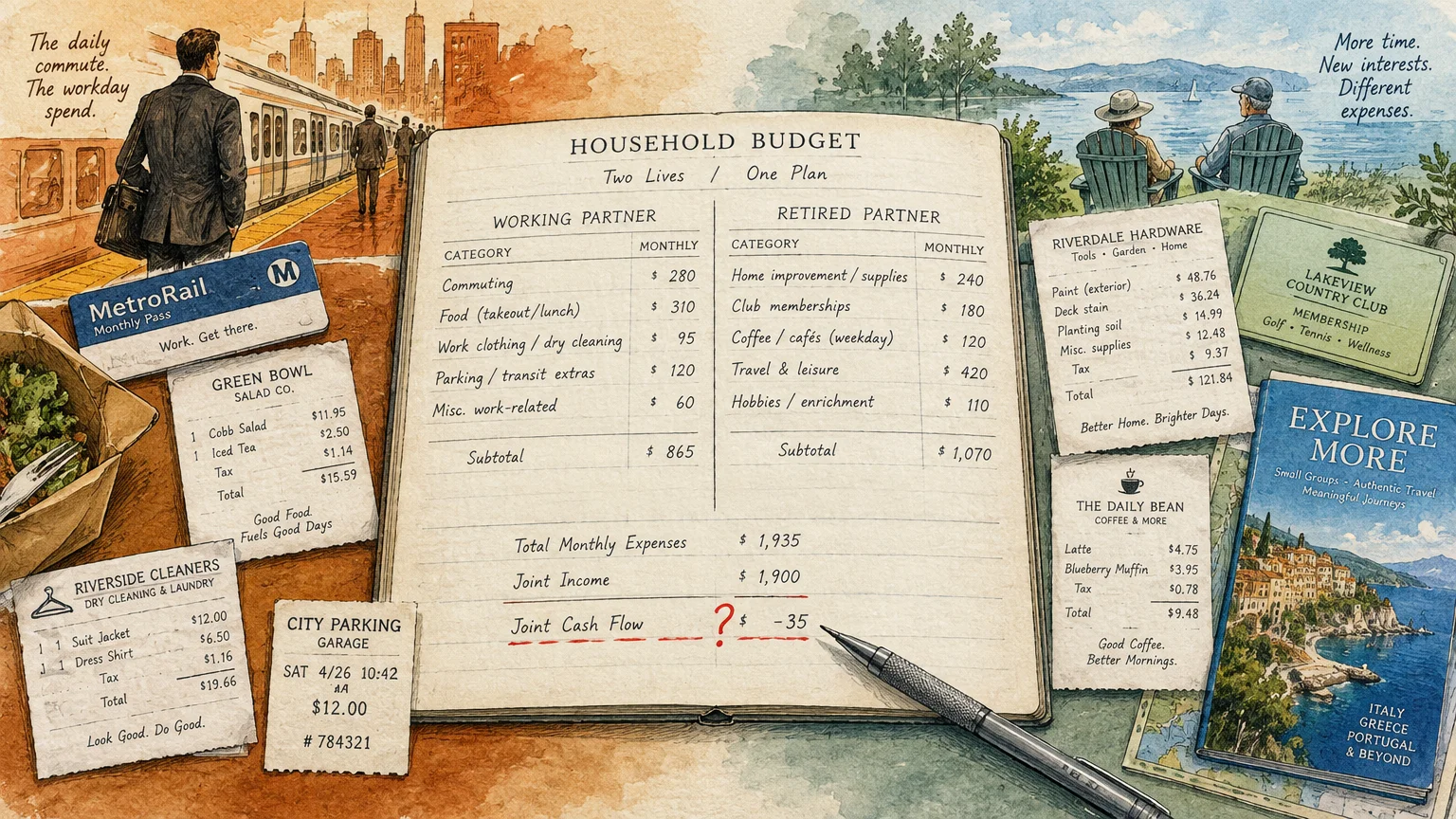
A newly retired partner suddenly gains 40 or more hours of leisure time each week. That extra free time often leads directly to increased discretionary spending on hobbies, home projects, and dining out.
At the same time, household earned income drops because only one spouse brings home a salary. If you do not revise your operating budget, your savings rate will deteriorate rapidly.
Couples frequently make the mistake of maintaining a shared, open-ended checking account without updated guardrails. The working spouse might feel frustrated seeing joint funds disappear on daytime activities they cannot share.
You can solve this tension by dividing your cash flow into clear categories. Establish dedicated pools for fixed household expenses, shared emergency reserves, and personal discretionary allowances.
Providing each partner with a monthly no-questions-asked spending allowance protects household capital. It gives the retired partner personal freedom without straining shared cash flow.

9. Jeopardizing the Surviving Spouse’s Long-Term Safety Net
When you stagger your retirement, the older spouse often dies first. Failing to plan for that eventual loss is one of the most devastating financial errors a couple can make.
When a beneficiary dies, the surviving spouse inherits the larger of the two monthly Social Security payments, while the smaller check disappears entirely. That loss can cut monthly household income by 30% to 50%.
If the primary earner files for benefits early at age 62, they permanently reduce the survivor benefit available to their partner. That reduced payment remains capped at that smaller rate for the survivor’s remaining lifetime.
If the higher-earning partner waits until age 70 to claim, they maximize the baseline benefit. This delayed filing provides the greatest possible financial cushion for whichever spouse outlives the other.
Delaying the higher earner’s claim acts as cost-effective life insurance. It guarantees maximum inflation-adjusted cash flow during the surviving spouse’s final decades.
Comparing Bridge Options for Pre-Medicare Healthcare Coverage
Finding affordable healthcare before age 65 requires weighing monthly premiums against out-of-pocket exposure. The table below details common options for couples staggering retirement dates.
| Coverage Option | Estimated Cost Level | Key Eligibility Rules | Best Fit Scenario |
|---|---|---|---|
| Working Spouse’s Employer Plan | Low to Moderate; shared employer premium | Younger spouse must remain employed with group health benefits | Ideal when the younger spouse intends to work several more years |
| COBRA Continuation | Very High; up to 102% of full policy cost | Available for up to 18 months following job termination | Best for short bridge gaps when you have met annual deductibles |
| ACA Marketplace Policy | Variable; eligible for income-based tax credits | Must enroll during Open Enrollment or a 60-day Special Enrollment Period | Best when lower retirement income qualifies you for generous subsidies |
| Part-Time Bridge Employment | Low premium; requires active part-time labor | Employer must offer group health benefits to part-time workers | Best for active retirees seeking social connection and stable insurance |
What Can Go Wrong
Navigating staggered retirement requires careful coordination across multiple legal and financial systems. Small oversights can quickly spiral into severe financial losses.
- The Small-Business Insurance Trap: An older spouse turns 65 and skips Medicare Part B while staying on a younger spouse’s plan at an eight-person firm. After an unexpected medical emergency, the private insurer denies coverage because Medicare was the primary payer, leaving the family responsible for massive medical bills.
- The Earnings Test Clawback: An executive retires at 62 and immediately claims Social Security, but later accepts a $60,000 corporate consulting contract. The Social Security Administration halts thousands of dollars in monthly payments because earnings exceeded the annual statutory cap.
- The Permanent Spousal Benefit Reduction: A non-working spouse claims spousal benefits at age 62 rather than waiting until age 67. The monthly payment is permanently reduced from 50% of the primary earner’s benefit down to 32.5%, locking in lower income for life.
- The Missed ACA Subsidy Window: A couple liquidates substantial pre-tax retirement assets in the same year the older spouse retires. The resulting spike in modified adjusted gross income eliminates their eligibility for ACA healthcare subsidies, driving insurance costs higher.

Where Outside Advice Pays Off
While many budget decisions are straightforward, staggered retirement involves complex tax, legal, and regulatory intersections. Professional guidance helps you avoid irreversible errors.
- Coordinating Social Security Filing Sequences: A certified financial planner can model break-even scenarios based on life expectancy, age gaps, and earnings histories. This analysis ensures the higher earner delays benefits long enough to maximize surviving spouse payouts.
- Multi-Year Roth Conversion Mapping: A qualified tax professional can help you optimize bracket-filling conversions during the low-income years between your first retirement date and age 73. This prevents future tax spikes and keeps Medicare Part B IRMAA surcharges low.
- Employer Group Health Evaluation: An independent health insurance broker can verify whether an employer’s group policy qualifies as creditable coverage under Medicare guidelines. This review guarantees you avoid permanent Part B late penalties.
- Survivor Income Stress-Testing: An estate planning attorney can review pension elections, beneficiary designations, and trust structures. This work confirms that the younger spouse retains adequate resources after the older partner passes away.
Frequently Asked Questions
Can my retired spouse collect Social Security based on my earnings while I continue working?
No, a non-working or lower-earning spouse cannot access spousal benefits until you file for your own primary retirement benefit. If you continue working and delay your own claim, your spouse must wait or claim benefits based solely on their personal work record.
How much can a non-working spouse contribute to an IRA in 2026?
In 2026, a non-working spouse can contribute up to $7,500 to a Traditional or Roth Spousal IRA using household income, provided the couple files a joint tax return. Spouses age 50 and older can add an extra $1,100 catch-up contribution, raising their personal limit to $8,600.
Can an older spouse stay on a younger spouse’s health plan after turning 65?
Yes, but only if the younger spouse works for an employer with 20 or more employees. If the business employs fewer than 20 workers, the 65-year-old must enroll in Medicare Part B to avoid late-enrollment penalties and denied claims.
How should couples handle discretionary spending when only one partner earns an income?
Couples should replace pooled discretionary funds with separate, equal monthly allowances for each partner. This arrangement provides the retired spouse with recreational freedom while ensuring the working spouse feels respected and protected from lifestyle creep.
Staggering your retirement dates offers great flexibility, but only when you actively coordinate health coverage, filing ages, and household roles. Review your numbers together regularly, communicate openly about expectations, and treat your benefits as a shared family asset.
This article provides general information only. Every reader’s situation is different—what works for others may not be the right fit for you. For personalized guidance on health, legal, or financial matters, consult a qualified professional.
Last updated: May 2026. Rules, prices, and details change—verify current information with official sources before acting on it.








Leave a Reply