
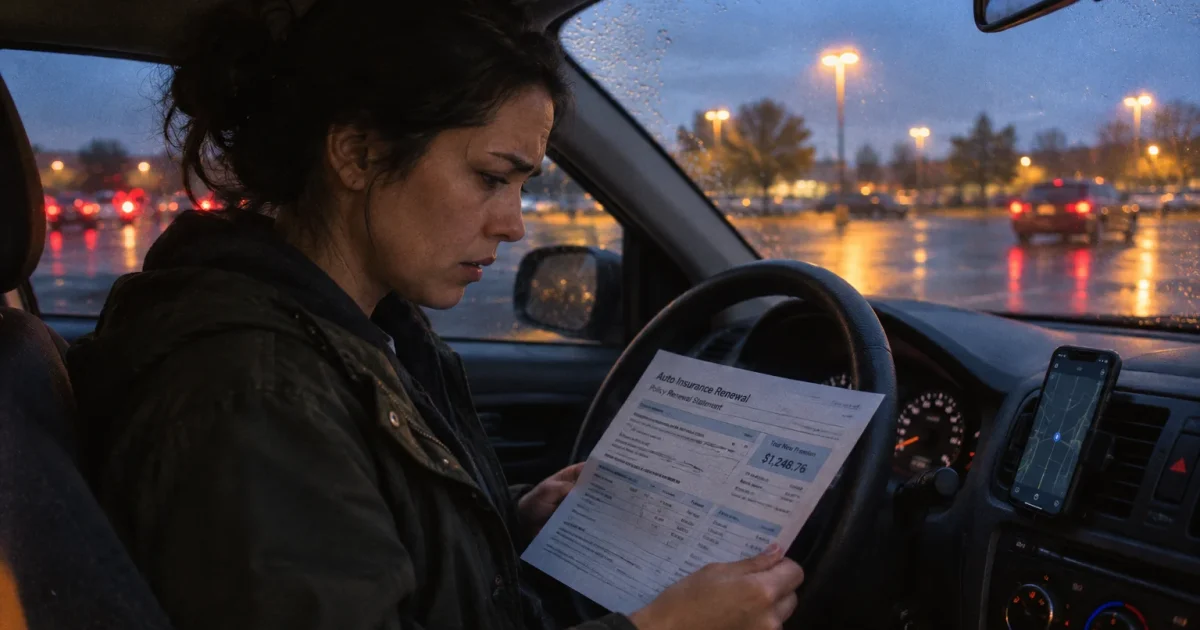
You opened your auto renewal notice expecting a loyalty discount for your spotless record, only to find a steep price increase. Insurers calculate your bill using massive regional risk pools rather than your driving habits alone.
When systemic costs rise across your zip code, insurance companies pass those shared expenses directly to policyholders. Understanding these underlying market pressures reveals exactly why your clean record could not shield you from this hike.
Here is why your premium jumped anyway—and the exact moves you can make right now to lower your bill.
The Baseline Shock: Average Rates in 2026
Seeing your premium climb feels unfair when you have not filed a single claim in years. Yet millions of safe American motorists face higher rates every renewal cycle.
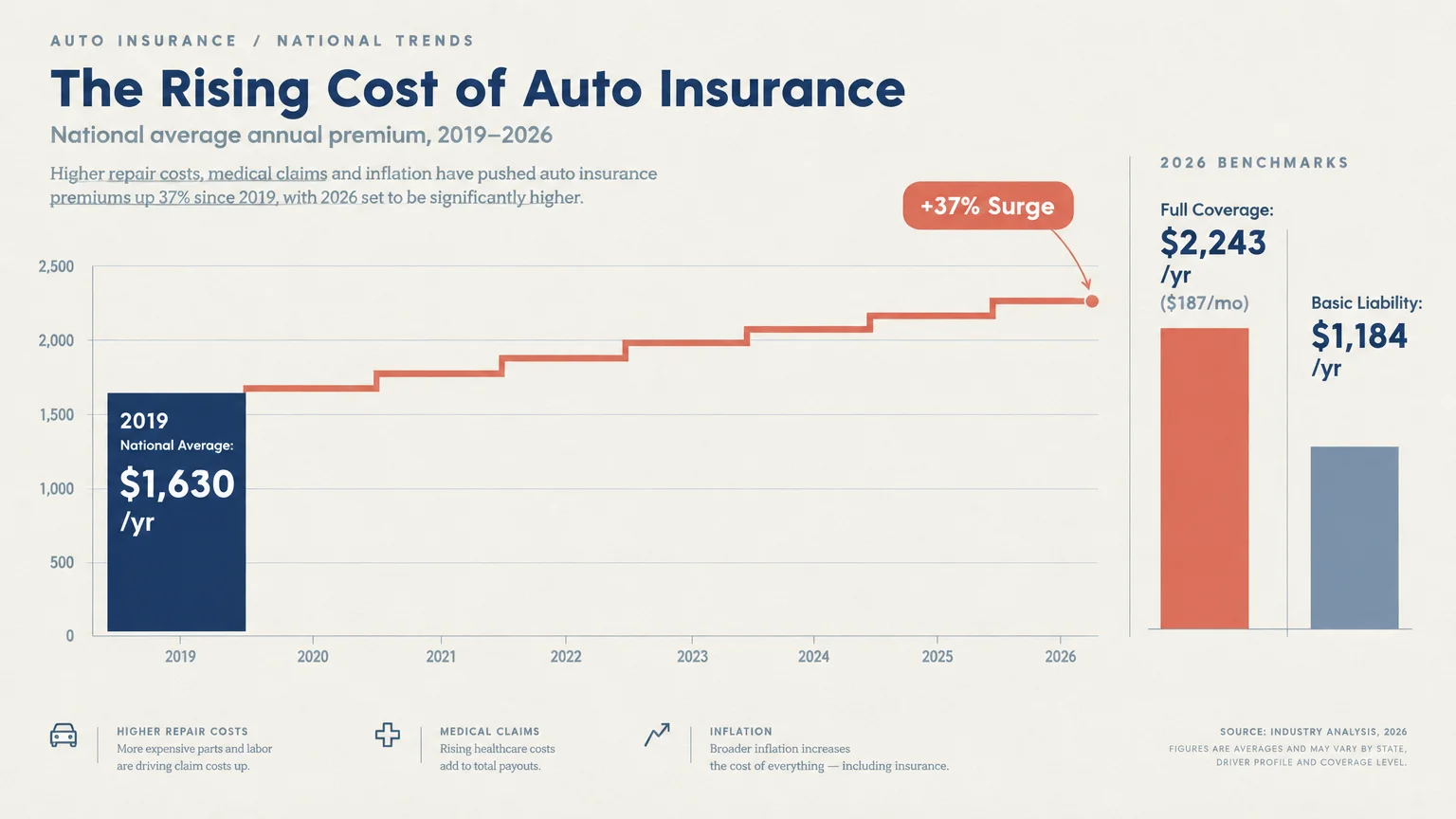
According to November 2026 data from Insurify, the average cost for full-coverage car insurance reached $2,243 per year, which equates to $187 per month. Basic liability coverage now averages $1,184 annually.
Other industry benchmarks from Forbes and The Zebra place national full-coverage averages between $2,324 and $2,434 per year. These figures reflect a permanent reset across the auto insurance market.
National full-coverage premiums surged roughly 37% between 2019 and 2026, climbing from $1,630 to $2,237 annually. Your policy operates on this higher baseline regardless of your safe driving habits.
While national rates dipped 6% in 2025, mid-year projections show rates climbing across 32 states through late 2026. A projected 1% overall national uptick wiped out earlier modest gains.
Data from the Bureau of Labor Statistics showed vehicle insurance inflation cooling year-over-year in July 2026. However, monthly premiums ticked upward again by 0.1% in September and October.
Insurance carriers submit rate filings to state regulators months before implementing adjustments. This regulatory lag means you often absorb past inflationary surges long after broader inflation figures appear to stabilize.
High-Tech Bumpers and Surging Vehicle Repair Costs
Modern vehicles deliver exceptional passenger safety, but modern technology makes even routine repairs extraordinarily expensive. When collision repair bills skyrocket, every driver in the risk pool shares the burden.
The Bureau of Labor Statistics reported that auto repair and maintenance costs rose 6.6% year-over-year in late 2026. Over the past five years, routine collision repair costs surged by 45% nationwide.
Vehicles now feature Advanced Driver-Assistance Systems with cameras, radar units, and proximity sensors embedded inside front grilles and bumpers. Even a low-speed parking scrape damages sensitive electronics.
Repairing a damaged bumper on a modern vehicle now averages between $8,000 and $15,000. In comparison, fixing a similar bumper on a 2015 vehicle cost between $3,000 and $5,000.
Replacing a damaged panel requires extensive digital recalibration to guarantee that safety systems trigger accurately. Certified body shops must invest in expensive diagnostic software and charge higher hourly labor rates.
Specialized collision technicians command premium wages due to nationwide technician shortages. These compounded labor and component costs force carriers to disburse larger checks for every property damage claim.
Insurance carriers do not absorb these ballooning collision repair costs out of pocket. They raise base rates across entire territories to restore their required capital reserves.
The Credit Score Penalty: How Financial Health Dictates Rates
You might assume your driving history carries the most weight in calculating your renewal rate. In reality, your credit history often determines your premium more than your clean driving record.
Insurance companies evaluate credit-based insurance scores to forecast the probability of policyholders filing claims. Actuaries correlate lower credit scores with higher claim frequency and claim severity.
A November 2026 report from NerdWallet revealed that safe drivers with poor credit suffered a 37.7% premium surge over three years. Their median annual rate jumped from $2,864 in 2023 to $3,944 in 2026.
That represents a staggering $1,081 annual penalty for safe motorists with imperfect credit. Meanwhile, clean drivers with excellent credit saw their rates rise by only $576 over the identical period.
Shockingly, poor credit penalizes drivers more severely than an at-fault collision or a DUI conviction with spotless credit. A slight dip in your credit profile can easily trigger a steep price hike.
While California, Hawaii, Massachusetts, and Michigan restrict credit-based insurance scoring, most states permit it. You can monitor your credit report using resources monitored by the Consumer Financial Protection Bureau.
Monitoring your credit report for inaccurate delinquencies or incorrect balances can protect your rating tier. Correcting reporting errors often yields immediate reductions on your next policy renewal.
Medical Inflation and Escalating Bodily Injury Claims
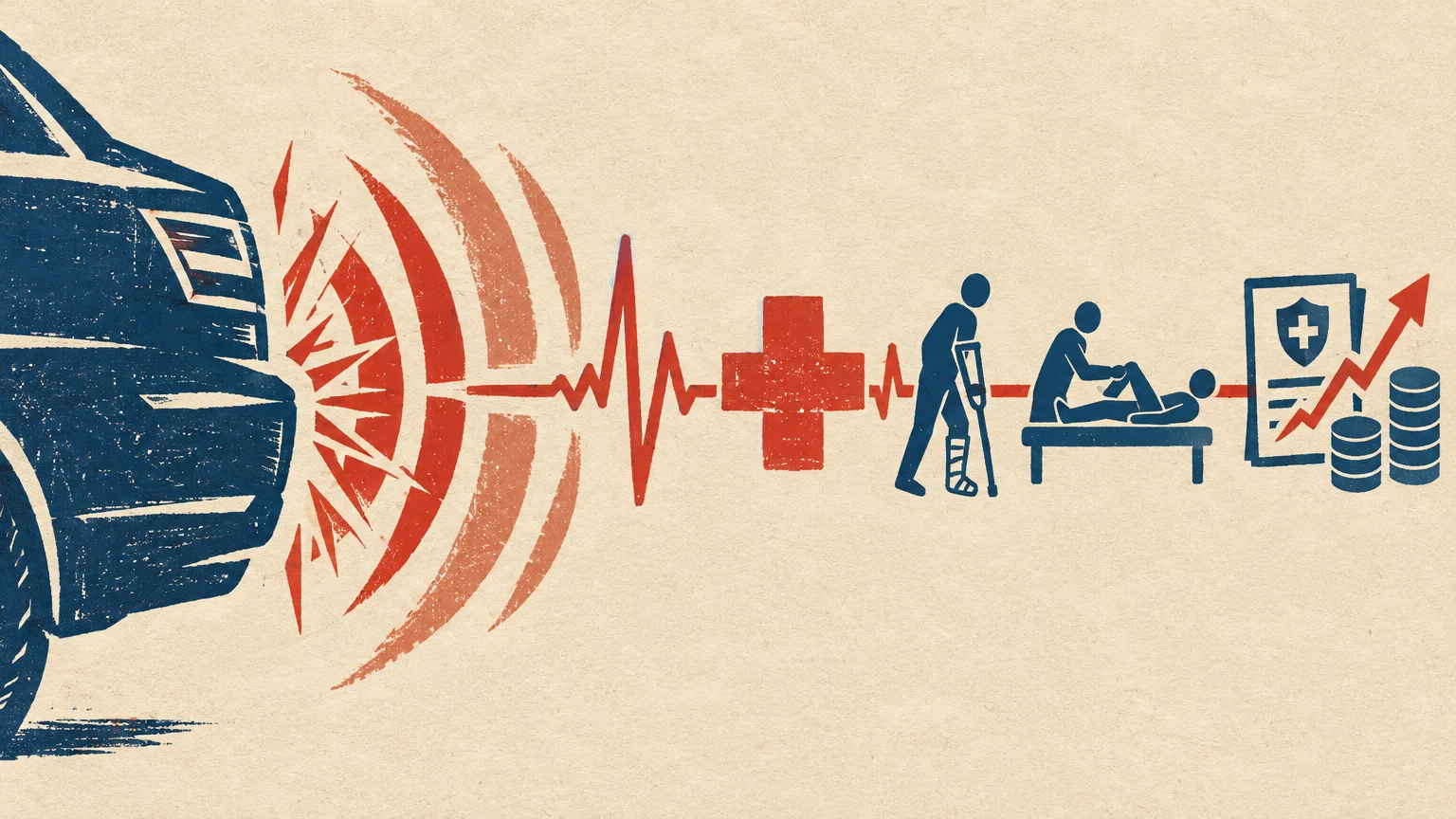
Property damage represents only half of an insurer’s financial liability during motor vehicle collisions. Bodily injury claims create even larger payouts due to relentless inflation across the American healthcare system.
Data from the Insurance Information Institute and the National Association of Insurance Commissioners reveals dramatic claim cost inflation. Between 2020 and 2024, collision claim costs rose 42% and bodily injury claims jumped 36%.
Emergency room visits, diagnostic imaging, and long-term physical therapy carry exorbitant price tags today. When an accident occurs in your area, personal injury claims quickly exhaust standard coverage limits.
Litigation costs have amplified this dynamic as aggressive legal representation pushes settlement numbers higher. Insurers spend substantial sums defending claims and negotiating high-dollar settlements in local courts.
State regulators require insurance carriers to maintain adequate cash reserves to cover catastrophic injury settlements. When overall bodily injury costs escalate regionally, carriers must raise baseline rates for all policyholders.
State Coverage Mandates: Legal Minimums Went Up
If you maintain state-minimum liability coverage to keep expenses low, your state government might have forced your price increase. Multiple state legislatures substantially raised mandatory liability limits throughout 2025 and 2026.
When lawmakers mandate higher liability thresholds, insurance providers must increase your coverage automatically at renewal. More coverage inevitably produces a higher monthly premium.
Effective January 1, 2026, New Jersey raised standard minimum liability requirements from $25,000/$50,000/$25,000 to $35,000/$70,000/$25,000. Garden State drivers holding minimum policies absorbed automatic rate increases immediately.
Hawaii doubled its statutory minimums on January 1, 2026, shifting bodily injury and property requirements from $20,000/$40,000/$10,000 to $40,000/$80,000/$20,000. That sudden doubling pushed premiums upward for budget policyholders.
North Carolina updated its coverage floor on July 1, 2025, elevating minimum limits to $50,000/$100,000/$50,000 while mandating underinsured motorist protection. That mandate produced substantial renewal jumps across the state.
California enacted its first liability limit increase since 1967 on January 1, 2025, raising requirements to $30,000/$60,000/$15,000. Virginia also raised limits to $50,000/$100,000/$25,000 while ending its uninsured motorist fee program.
Age Milestones: Why Safe Senior Drivers Pay More
Safe driving records cannot entirely override actuarial age brackets. Insurance pricing follows a distinct U-shaped curve over your lifetime, bottoming out during middle age before rising again.
Premiums drop steadily throughout your thirties and forties as you accumulate real-world driving experience. However, rates reverse course once policyholders reach senior milestones, regardless of personal driving history.
Industry data published by Forbes in 2026 illustrates how your age alters baseline rates even with zero driving infractions. Drivers enjoy their lowest average annual full-coverage rates around age 60, paying approximately $2,109.
Once you cross into your senior years, your rates begin to climb steadily upward. The national average rises to $2,302 per year at age 70 and hits $2,823 annually by age 80.
Actuaries track data showing that aging brings slower reaction times and reduced peripheral vision. In addition, older drivers sustain more severe injuries in minor collisions, leading to larger medical settlements.
If you recently celebrated a milestone birthday in your late sixties or seventies, that age bracket shift likely drove your rate hike. Your safe driving habits did not change, but your statistical category did.
Severe Weather Events and Regional Risk Re-rating
Auto insurance covers far more than moving collisions on the roadway. Comprehensive coverage protects against hail, storm flooding, falling trees, and wildfire damage.
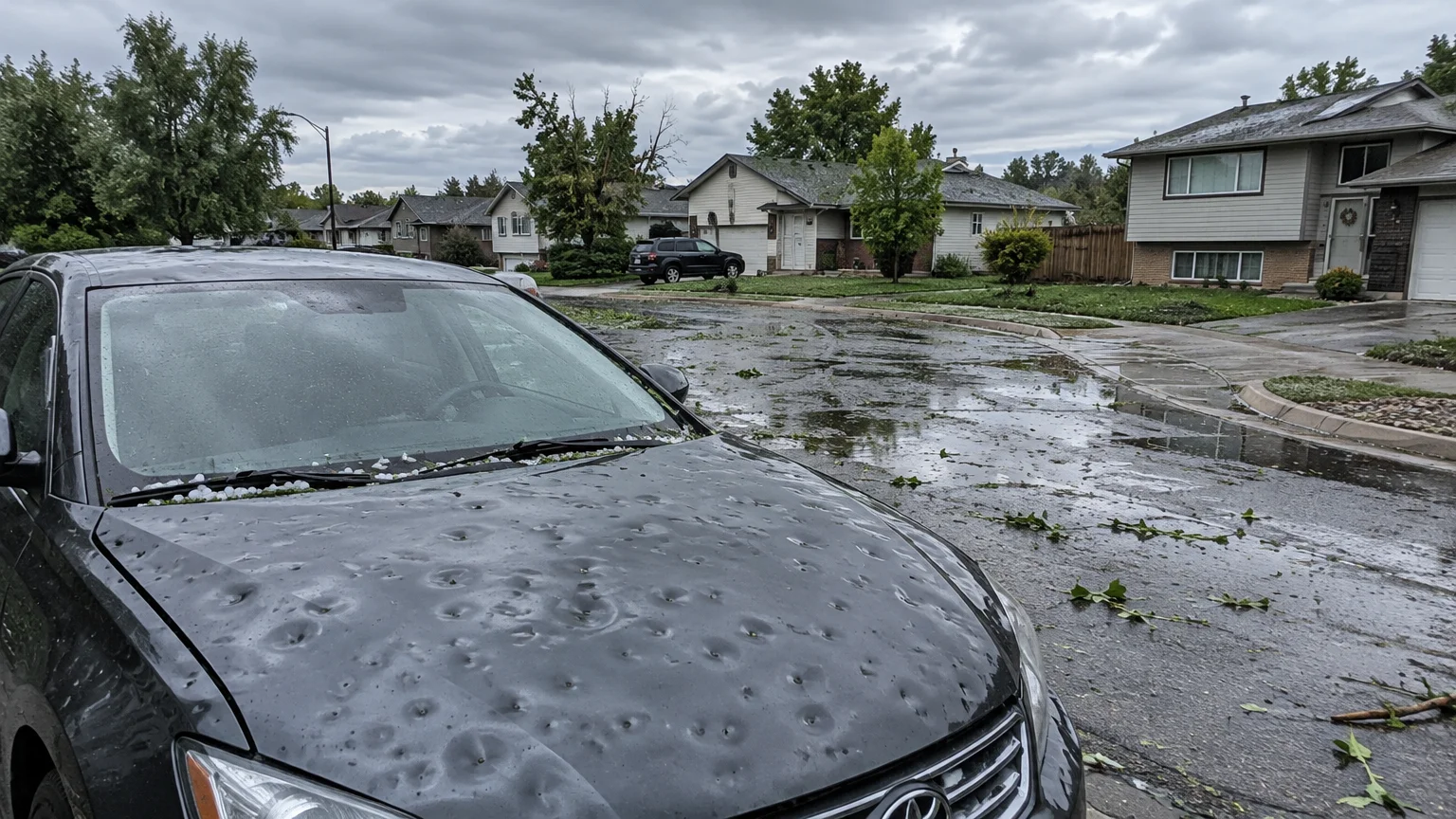
Severe weather events have multiplied across the United States, producing billions of dollars in catastrophic vehicle losses. Entire fleets of vehicles are regularly totaled in singular hailstorms and coastal flash floods.
Carriers treat comprehensive losses as geographic risks rather than individual driving failures. If catastrophic storms hit your surrounding county, insurers re-rate the entire geographic zone to absorb those payouts.
Your pristine driving habits cannot protect your vehicle from a flash flood while parked in your driveway. Because of that physical vulnerability, carriers charge higher comprehensive premiums across vulnerable zip codes.
Rising rates of uninsured drivers in your neighborhood create a similar collective burden. When uninsured motorists cause crashes, your carrier pays out under uninsured motorist coverage, driving up everyone’s baseline price.
Comparing Auto Insurance Cost Drivers
Understanding the difference between macroeconomic cost pressures and personal rating factors clarifies why rates surge. The comparison table below outlines key forces driving premiums upward and their direct financial impacts.
| Cost Driver | Recent Market Trend (2025–2026) | Direct Impact on Premium | Best Actionable Remedy |
|---|---|---|---|
| High-Tech Repair Inflation | Repair costs rose 6.6% year-over-year; ADAS bumper repairs now average $8,000 to $15,000. | Pushes up collision and property damage rates across all policies. | Raise your collision deductible to $1,000 if your emergency fund allows. |
| Credit Score Tiering | Clean drivers with poor credit experienced a 37.7% rate surge over three years ($1,081 hike). | Creates steep premium penalties regardless of a clean driving record. | Audit credit reports for reporting errors and lower revolving credit utilization. |
| State Coverage Mandates | States including CA, NJ, HI, NC, and VA enacted higher statutory minimum limits. | Forces automatic coverage upgrades and higher baseline rates at renewal. | Shop competing carriers to see which provider prices new mandatory tiers best. |
| Medical Cost Inflation | Bodily injury claim payouts surged 36% between 2020 and 2024. | Elevates bodily injury liability and personal injury protection premiums regionally. | Coordinate auto medical payments with your primary health insurance coverage. |
| Senior Demographic Shifts | Average annual rates climb from $2,109 at age 60 to $2,823 by age 80. | Triggers automatic actuarial bracket increases after milestone birthdays. | Complete certified defensive driving courses for guaranteed senior discounts. |
| Catastrophic Weather Events | Severe hailstorms and localized flash floods generate multi-billion-dollar losses. | Increases comprehensive coverage rates across entire geographic zip codes. | Park vehicles in covered garages and verify that comprehensive deductibles align with risk. |
This comparison illustrates that external cost pressures frequently outweigh individual driving habits. Taking direct control of your policy structure helps neutralize these broad macroeconomic increases.
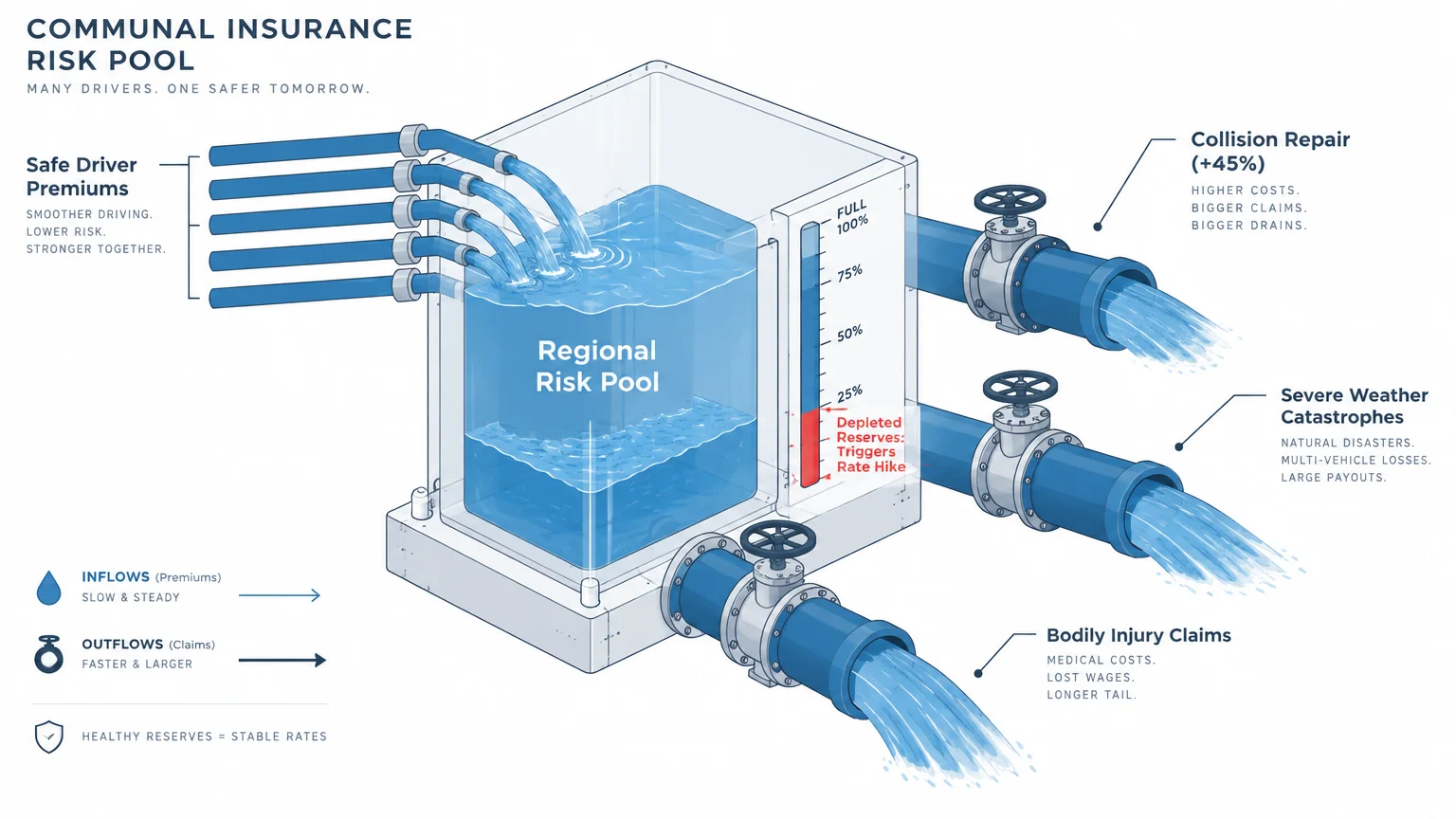
The Bigger Picture: How Insurance Risk Pools Actually Function
Many consumers mistakenly believe that auto insurance operates like a personal savings account where safe behavior guarantees static pricing. In reality, private insurance functions as a collective risk-sharing pool governed by state regulators.
Carriers gather premiums from thousands of drivers into a singular regional risk pool. They rely on complex mathematical models to ensure total pooled funds exceed anticipated regional claim obligations.
When individual repair costs, medical claims, and storm damage exceed historical averages, that regional pool runs at an underwriting loss. Regulators then approve rate revisions that elevate the baseline cost for every participating member.
Your clean driving record grants you a percentage discount off your assigned risk tier. However, if the carrier increases the baseline tier by 20%, your discounted premium still rises significantly.
You did nothing wrong behind the wheel to warrant that increase. You simply paid your proportionate share of the collective inflation hitting your geographic market.
Actionable Tactics to Lower Your Car Insurance Today
While you cannot control macroeconomic inflation or state statutory mandates, you retain substantial power over your policy terms. Strategic adjustments can claw back significant savings on your monthly renewal bill.
First, shop your policy across at least three independent insurance carriers every twelve to eighteen months. Different carriers weight risk factors like vehicle technology and geographic territory differently, resulting in wide pricing variations.
Second, evaluate your comprehensive and collision deductibles. Raising your collision deductible from $500 to $1,000 can lower your physical damage premiums by 15% to 25% immediately.
Third, ask your carrier about telematics or usage-based insurance programs. If you drive fewer than 8,000 miles annually or practice safe braking habits, plug-in monitors or mobile apps can yield substantial discounts.
Fourth, review coverage on older vehicles. If your car is over ten years old and its market value has dropped dramatically, dropping collision and comprehensive coverage could save hundreds each year.
Fifth, bundle your auto coverage with your homeowners or renters policy. Multi-policy bundling frequently generates discounts between 10% and 20% across both accounts.
Review these additional discount opportunities directly with your insurance representative:
- Defensive Driving Courses: Completing an approved safe driver course often provides a guaranteed three-year discount for mature drivers.
- Paperless Billing and Auto-Pay: Opting out of paper bills and enabling recurring electronic transfers typically yields an immediate administrative reduction.
- Low-Mileage Verifications: Submitting annual odometer readings proves low vehicle wear if you work remotely or commute via public transit.
- Affinity Group Reductions: Checking memberships across credit unions, alumni associations, or professional guilds can reveal negotiated corporate rate cuts.
Stacking several smaller discounts often offsets broad market rate increases. Confirm with your agent that your account reflects every qualification you meet.
Worth Keeping in Mind
When you modify your auto policy to counter rate increases, avoid common pitfalls that could jeopardize your financial security. Reducing premiums without proper planning can leave you dangerously exposed.
Raising your deductible lowers your monthly premium, but it increases your immediate out-of-pocket obligation. Never select a $1,000 or $2,000 deductible unless you already have that exact sum tucked away in an emergency fund.
Enrolling in telematics programs carries certain tracking risks. If you commute late at night or live in dense urban traffic requiring frequent sudden braking, monitoring apps could trigger rate surcharges instead of discounts.
Dropping coverage down to state statutory minimums creates severe liability exposure. A single multi-car collision can easily surpass statutory limits, leaving your home, savings, and future wages vulnerable to legal judgments.
Switching carriers right before an unresolved accident or glass claim closes complicates your coverage. Always confirm all prior claims are completely finalized before moving your policy to a competing insurer.

When to Get Professional Help
Automated online comparison tools handle basic insurance policies well, but complex financial situations require personalized professional insight. Certain scenarios demand guidance from licensed independent agents or financial advisors.
Consult an independent insurance broker if you own substantial personal assets like a home, real estate investments, or significant taxable savings. An independent agent can structure an umbrella policy that shields your net worth.
Seek professional assistance if your credit report contains major reporting inaccuracies that depress your insurance score. A consumer rights professional can guide you through disputing credit errors under federal guidelines.
Engage a commercial insurance advisor if you use your personal vehicle for gig work, deliveries, or rideshare driving. Personal auto policies strictly exclude commercial liability, requiring specific business endorsements to prevent denied claims.
Work with an agent when adding teenage drivers or senior family members to a multi-car policy. Professional agents understand how to assign drivers to specific vehicles to minimize aggregate household premiums.
Frequently Asked Questions
Can my car insurance go up if I have never filed a claim?
Yes. Car insurance rates depend on shared geographic loss pools, regional repair inflation, and medical costs. Insurers regularly increase baseline rates for entire regions regardless of individual claims history.
How much does a bad credit score affect car insurance?
Insurers heavily weight credit-based insurance scores in most states. Safe drivers with poor credit pay significantly higher rates than safe drivers with good credit, sometimes seeing premiums jump over 35%.
Why did my state minimum liability cost increase suddenly?
Several states, including New Jersey, Hawaii, North Carolina, and California, updated statutory liability minimums in 2025 and 2026. If your state raised its legal floor, your insurer automatically upgraded your coverage at renewal.
Does shopping around for car insurance hurt your credit score?
No. Car insurance companies perform soft credit inquiries when generating pricing quotes. Soft inquiries do not affect your credit score or appear on lending reports viewed by financial institutions.
Rate hikes are frustrating when you have maintained a clean record, but you are not powerless against rising premiums. Reviewing policy deductibles, improving credit health, and comparing quotes can restore balance to your budget.
This article provides general information only. Every reader’s situation is different—what works for others may not be the right fit for you. For personalized guidance on health, legal, or financial matters, consult a qualified professional.
Last updated: November 2026. Rules, prices, and details change—verify current information with official sources before acting on it.








Leave a Reply