
The 10 Supermarket Chains With the Steepest Markups
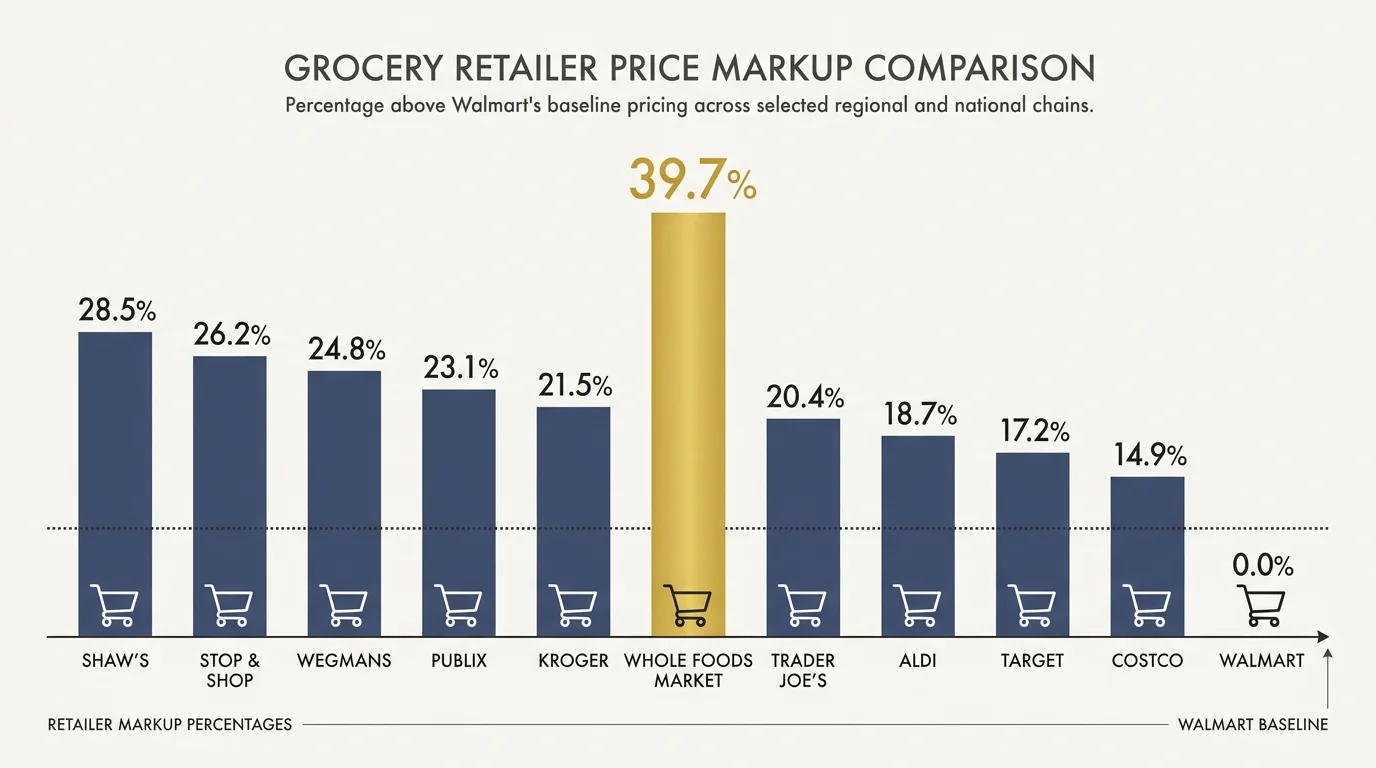
Not all grocery stores handle inflation equally. Some absorb costs through massive economies of scale, while others aggressively pass those expenses to you. A recent comprehensive pricing analysis by Consumer Reports measured the cost of identical market baskets across dozens of retailers, using Walmart as the baseline for national discount pricing. Their findings, combined with regional economic data, expose the supermarket chains driving the heaviest price hikes.
- Whole Foods Market
Whole Foods Market has long held a reputation for premium pricing—earning it the infamous nickname “Whole Paycheck”—and recent inflation has only widened the gap between it and its discount competitors. The pricing analysis revealed that Whole Foods averages an astonishing 39.7% higher cost than base-level discounters. Even with the financial backing of its parent company, Amazon, the chain’s strict sourcing standards for organic produce, artisanal cheeses, and specialty health foods mean that operational costs remain exceptionally high. When global supply chain shocks hit the agricultural sector, Whole Foods passes those premium ingredient costs directly to you. - Shaw’s
Operating primarily in New England, Shaw’s is a regional heavyweight owned by Albertsons. While convenient for Northeastern shoppers, that convenience comes at a steep premium. Pricing data shows that groceries at Shaw’s run nearly 32% above the national average baseline. The Northeast already faces higher logistical and energy costs to transport fresh produce and meat across long distances during harsh winters; unfortunately, Shaw’s has heavily passed these distribution expenses onto its customers, making it one of the most expensive traditional supermarkets in the country. - El Rancho Supermercado
You might not expect a regional chain known for its vibrant Hispanic product selection and excellent meat counters to rank among the nation’s most expensive grocers, but El Rancho Supermercado carries a significant markup. With stores heavily concentrated in Texas and the Midwest, recent pricing surveys measured its average basket cost at roughly 30.1% higher than national discounters. Sourcing highly specific, imported items and maintaining premium in-house butchery and bakery departments insulates the chain from price-matching the warehouse clubs, leaving shoppers to absorb the cost of specialized inventory. - Jewel-Osco
Dominating the grocery landscape in the greater Chicago area, Jewel-Osco is another Albertsons-owned banner that commands top-tier prices. Shoppers navigating its aisles pay roughly 29.7% more for standard household staples compared to national big-box retailers. Chicago’s high local taxes and stringent labor costs certainly play a role, but Jewel-Osco also relies on its deep market penetration and customer loyalty. Because it serves as the most accessible neighborhood grocer for millions of residents, the chain has successfully raised prices on everyday items without losing its core demographic. - Mariano’s
Also competing fiercely in the Midwestern market, Mariano’s—owned by grocery giant Kroger—built its brand on offering an upscale, experiential shopping environment complete with oyster bars, gelato counters, and live piano music. However, that premium atmosphere requires massive overhead. Consequently, shoppers face markups of 27.6% above baseline averages. As inflation squeezed profit margins over the last few years, Mariano’s opted to maintain its high-touch customer service and expansive specialty departments, funding those operational choices through higher register receipts. - Publix
As the dominant supermarket force in the Southeast, Publix is famous for its customer service and exceptional bakery items; however, it has also become synonymous with aggressive price hikes. Regional economic data has routinely highlighted Florida metro areas like Tampa Bay as hotspots for grocery inflation, largely driven by pricing at local Publix locations. While the chain heavily promotes its “Buy One, Get One” (BOGO) deals, the base prices of those items have been steadily inflated to protect the company’s profit margins. A standard shopping trip here is significantly more expensive than it was just a few years ago. - Safeway
As the flagship banner for Albertsons Companies, Safeway operates hundreds of locations, particularly along the West Coast and Mid-Atlantic. Facing headwinds from high fuel surcharges and rising labor costs, Safeway has consistently implemented price increases across its meat, dairy, and center-store grocery aisles. While the company points to inflationary pressures and the costs of expanding its digital fulfillment and delivery services, the reality for your wallet is that a routine basket of goods at Safeway now costs noticeably more than the exact same items at a regional discounter. - Albertsons
The namesake brand of the grocery conglomerate faces the same structural challenges as its subsidiaries, passing sweeping price increases down to the consumer level. In recent financial reports, Albertsons highlighted identical sales growth driven not by selling a higher volume of goods, but by charging more for the items sold. The company has aggressively leaned into its loyalty program, Albertsons for U, effectively requiring shoppers to navigate digital coupons and app-based deals just to bring their final bill down to what used to be considered a normal retail price. - Harris Teeter
A subsidiary of Kroger operating primarily in the South Atlantic states, Harris Teeter positions itself one tier above the standard supermarket experience. With a focus on high-quality fresh produce, premium meats, and extensive prepared foods, the chain naturally incurs higher shrink rates (unsold spoiled food) and labor costs. To compensate during periods of supply chain volatility, Harris Teeter has aggressively adjusted its pricing tiers upward. Unless you are meticulously shopping the weekly sales circular and relying heavily on the VIC loyalty card, purchasing your weekly staples here drains your grocery budget rapidly. - Wegmans
Beloved for its massive, European-style open markets and cult-favorite private label products, Wegmans commands fierce customer loyalty across the East Coast. However, running stores that often exceed 100,000 square feet requires extraordinary energy and staffing expenditures. As utility costs and wage expectations climbed, Wegmans quietly but consistently raised prices across its aisles. While shoppers are still willing to pay a premium for the superior store experience and exceptional prepared food sections, there is no denying that the chain ranks among the pricier options for a standard grocery haul.





Gelson’s of course, they are very expensive. They think people find money in the street or grows on trees.
There are no supply chain disruptions.
Weekly deals or whatever the deal is, is not a solution for the high grocery prices consumers have been enduring. Afterall, weekly deals offer by the major grocery stores, have existed as sales-promotions pitch for years and they only put temporary smiles on customers faces. The one solution that I think, may be helpful to consumers is for the administration to step up and find not a piece -meal solution to the high grocery prices problem, but a solution that would have a real impact (relief) to the consumer.
Trump’s fault.
Telling the government to find the answer isn’t a suggestion to fix the problem.