

Florida drivers insured through USAA are receiving significant financial relief on their auto insurance premiums. State regulators recently approved a new rate reduction averaging 7% across hundreds of thousands of active policies.
This decision follows months of stabilizing market conditions and marks another major wave of savings for military households. Depending on your location and coverage selections, your personal rate cut could reach double digits.
Here is what you need to know about who qualifies, when the discounts take effect, and how to optimize your household budget on your next renewal.
The Details of the October 2026 USAA Rate Reduction
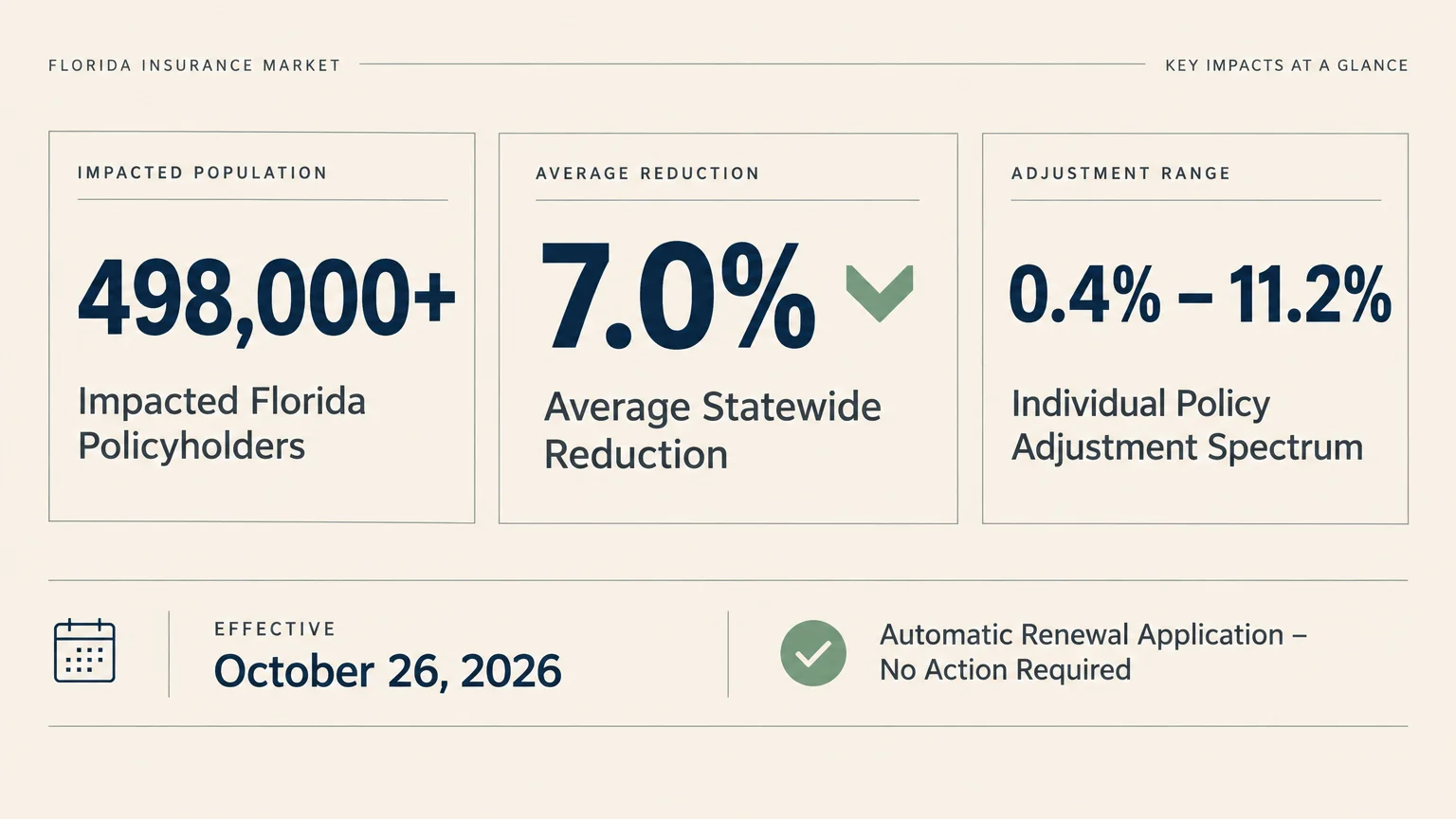
On October 26, 2026, Florida Insurance Commissioner Mike Yaworsky and Chief Financial Officer Blaise Ingoglia announced the official approval of new rate cuts. The regulatory decision applies directly to personal auto policies written through the USAA Group.
The approved rate filings lower premiums by a statewide average of 7%. More than 498,000 policyholders across Florida will benefit from these reduced charges.
Savings will not look identical on every billing statement. Depending on your individual policy structure and specific underwriting company, rate adjustments will range between 0.4% and 11.2%.
You do not need to submit an application or call customer support to claim this baseline adjustment. USAA applies the approved rate decrease automatically when your policy reaches its next regular renewal cycle.
These lower premiums reflect fundamental changes in underlying risk costs rather than short-term promotional discounts. Regulators approved the filings after reviewing comprehensive actuarial data submitted by the insurer earlier in the year.
County-by-County Reductions: Where Floridians Save the Most
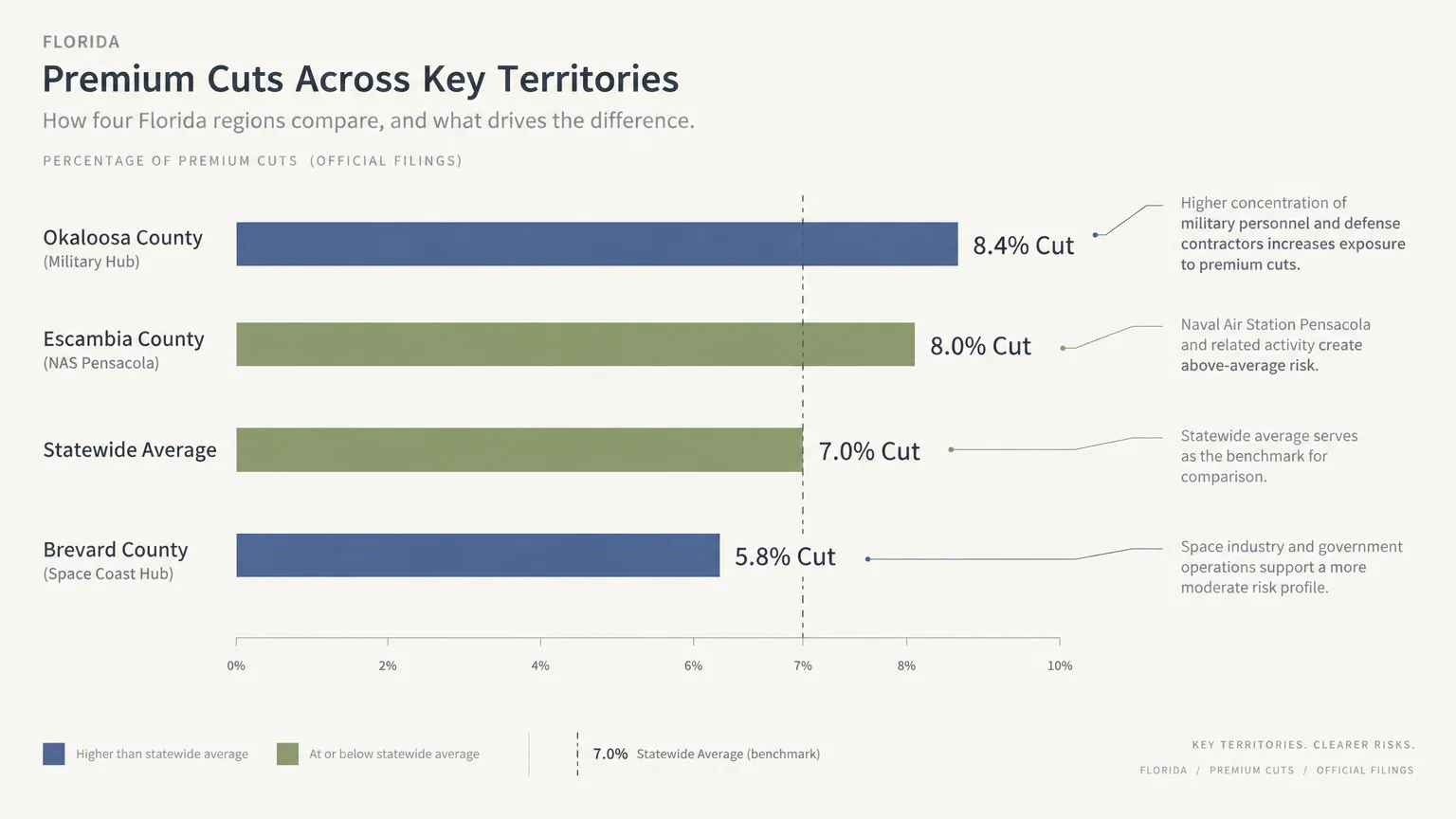
While the rate reduction applies across the entire state, savings vary substantially by region. Insurers set local territory pricing by evaluating traffic volume, collision frequency, litigation rates, and local repair expenses.
State regulators highlighted three specific counties where USAA maintains its largest concentrations of military service members and their families. Policyholders in each of these regions will see substantial cuts that often surpass the statewide benchmark.
In Okaloosa County, home to major defense installations like Eglin Air Force Base and Hurlburt Field, members will see an average rate decrease of 8.4%.
USAA drivers in Escambia County, centered around Naval Air Station Pensacola, will receive an average premium reduction of 8.0%.
Members in Brevard County, along Florida’s Space Coast, can anticipate an average rate reduction of 5.8% across active personal auto policies.
| Florida County | USAA Policy Concentration | Average Rate Decrease |
|---|---|---|
| Okaloosa County | High (Military Hub) | 8.4% |
| Escambia County | High (Military Hub) | 8.0% |
| Brevard County | High (Space Coast Hub) | 5.8% |
| Statewide Average | All Florida Policyholders | 7.0% |
Drivers living in dense urban centers like Miami-Dade, Broward, or Orange counties face distinct risk profiles. While those drivers still share in the rate reductions, their final adjustments reflect municipal traffic density and local claim histories.
Reviewing your renewal declaration page will reveal exactly how your specific county rating territory influences your final premium charge.

Tracking USAA’s $1 Billion Relief Initiative in Florida
The October rate cut represents the latest step in an aggressive campaign of financial returns for Florida military families. Between December 2025 and July 2026, USAA delivered nearly $1 billion in direct member returns and premium reductions.
In January 2026, USAA filed for an earlier 7% average rate decrease that took effect for Florida drivers in May 2026. State regulators approved that filing after USAA demonstrated falling operational losses.
That initial spring reduction lowered collective statewide expenses by more than $125 million annually. It produced an average annual savings of roughly $250 for each participating policyholder.
In June 2026, USAA expanded its financial relief by distributing an unprecedented $500 million cash dividend. The organization sent payouts directly to approximately 830,000 eligible Florida members who maintained coverage between 2023 and 2025.
The average dividend payout reached roughly $760 per household. Over a quarter of all qualifying recipients received dividend checks exceeding $1,000.
| Relief Action | Effective Date | Total Financial Impact | Average Member Benefit |
|---|---|---|---|
| Spring Rate Filing | May 2026 | $125+ Million Annually | ~$250 Annual Premium Savings |
| Special Dividend Distribution | June 2026 | $500 Million Direct Return | ~$760 Cash Payout (25% got >$1,000) |
| Fall Rate Filing | October 2026 | 7.0% Average Reduction | 0.4% to 11.2% Premium Decrease |
Unlike commercial stock insurers that answer to Wall Street shareholders, USAA operates as an association with member-owned reciprocals. When underwriting expenses and claims fall significantly below projections, the organization can return surplus capital to its policyholders.

Why People Are Talking About This: The Shift in Florida’s Insurance Landscape
For more than a decade, Florida drivers endured some of the steepest personal auto insurance premiums in the nation. Frequent weather catastrophes, runaway litigation expenses, and pervasive fraud routinely destabilized private insurance markets.
The sudden reversal in premiums stems directly from comprehensive legislative reforms passed to curb legal system abuse. State leaders restructured third-party litigation rules, tightened bad-faith claim frameworks, and repealed one-way attorney fee statutes.
“Recent legislative reforms targeting litigation abuse have created a far more stable operating environment, allowing us to return capital and lower rates for the military families we serve.”
USAA Property and Casualty Insurance President Randy Termeer and state regulators both credit these legal changes for the positive turn. With predatory lawsuits declining, insurers spend far less money defending contested insurance claims in court.
Public regulatory records confirm this dramatic financial turnaround across the insurance sector. According to the Florida Office of Insurance Regulation, Florida’s personal auto liability loss ratio dropped to 52.5% in 2025.
That 52.5% loss ratio marks the state’s healthiest operating performance in 15 years. Lower loss ratios indicate that insurers spend a much smaller share of each collected premium dollar on claim settlements and legal costs.
The physical damage loss ratio experienced an even sharper drop across the state. In 2022, physical damage loss ratios hit a punishing 112.0%, but plummeted to 49.5% by 2025.
USAA is not the only carrier lowering bills for local motorists. Florida’s five largest auto insurers—USAA, Progressive, GEICO, State Farm, and Allstate—cover approximately 81% of the private passenger auto market.
In October 2026, those top five insurer groups reported a combined indicated rate change of -12.6%. According to consumer advisories from the Florida Department of Financial Services, robust competition is returning as carriers fight for market share.
How Insurers Determine Your Specific Auto Premium
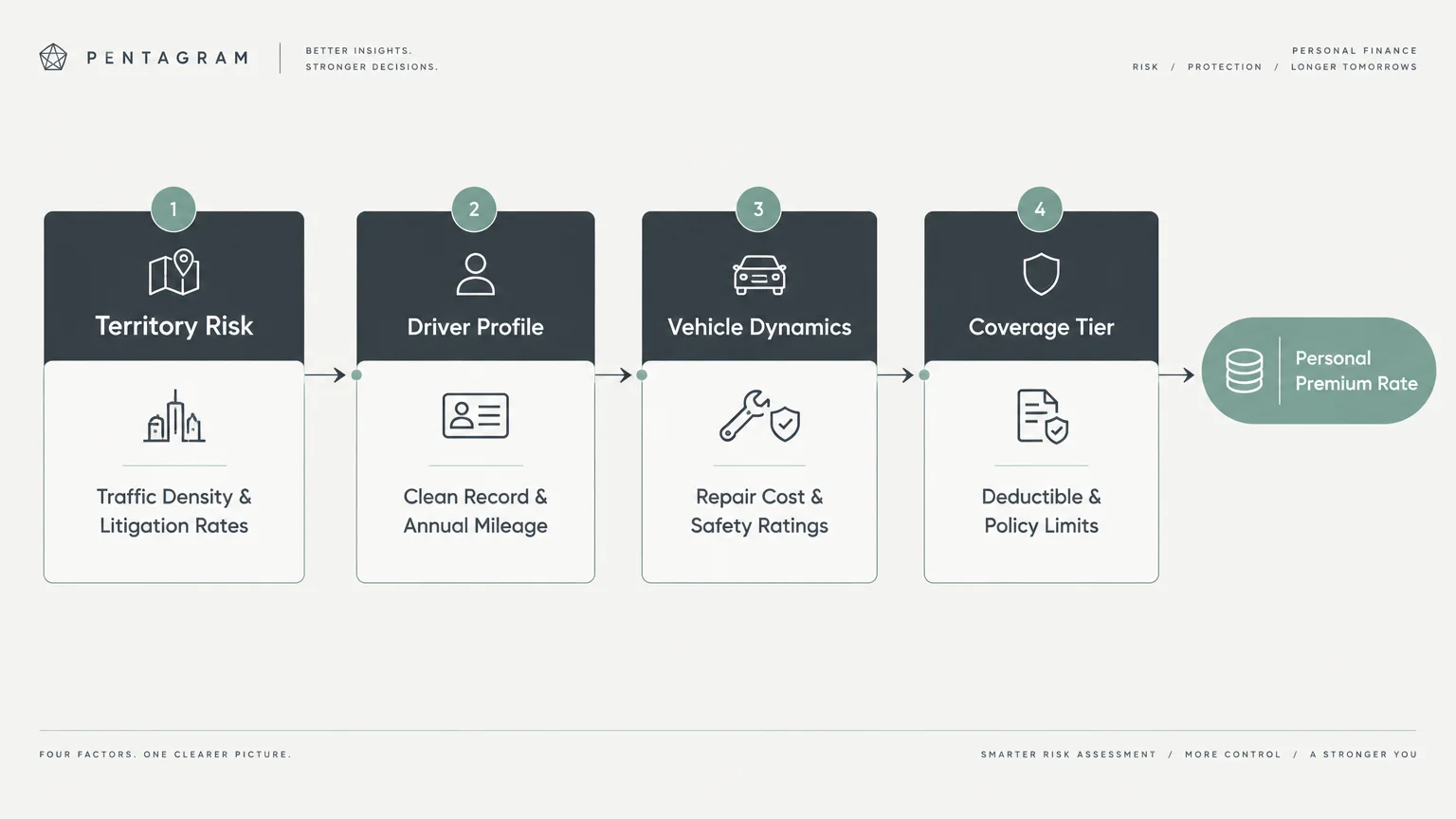
Statewide rate reductions establish the baseline pricing formula, but your final insurance bill depends on individual risk criteria. Understanding these rating factors helps you see why your specific reduction might land between 0.4% and 11.2%.
Insurers first evaluate your individual driving record over the past three to five years. Moving violations, at-fault collisions, and license suspensions significantly increase base underwriting charges.
Your primary garaging address also carries substantial weight during policy calculation. Zip codes with higher rates of auto theft, heavy commuter congestion, or severe storm flooding face higher base rates.
The make, model, and year of your insured vehicles directly dictate physical damage costs. Advanced driver-assistance cameras, specialized sensors, and luxury body panels cost significantly more to repair following an accident.
Insurers in Florida also evaluate credit-based insurance scores when calculating member premiums. Actuarial data demonstrates a close statistical relationship between credit management and insurance claim frequency.
Your reported annual mileage and daily commute patterns further alter your baseline rating tier. Drivers who log fewer annual miles present less exposure to potential highway crashes, qualifying for preferred pricing tiers.

Six Actionable Strategies to Maximize Your USAA Discounts
A 7% rate reduction offers welcome breathing room, but you can compound those savings through deliberate policy management. Taking proactive control of your coverage details can shave hundreds of additional dollars off your annual bill.
First, enroll in USAA SafePilot to earn performance discounts based on your real-world driving behavior. The mobile app monitors smooth braking, daytime driving, and phone usage, offering premium discounts up to 30%.
Second, bundle your personal auto policy with your homeowners, renters, or valuable personal property coverage. Carrying multiple insurance policies with USAA generates cross-product credits on both accounts.
Third, assess your collision and comprehensive deductibles to optimize your premium payments. Raising your deductible from $500 to $1,000 or $1,500 will immediately lower your recurring billing costs.
Fourth, take advantage of specialized military deployment and vehicle storage savings programs. USAA provides premium reductions of up to 60% when you store an insured vehicle securely during military deployment assignments.
Fifth, complete a state-approved defensive driving course to earn recurring insurance premium credits. Both young drivers and mature policyholders can complete accredited courses online to trigger permanent policy savings.
Sixth, review your coverage options directly through your USAA online account portal to eliminate redundant endorsements. Dropping roadside assistance or rental reimbursement on older, rarely driven backup vehicles reduces your overall premium.
Re-Evaluating Your Auto Coverage: Liability, Collision, and PIP
When insurance premiums drop, smart policyholders do not simply pocket the change. This environment gives you an affordable opportunity to rebalance protection limits without increasing your existing budget.
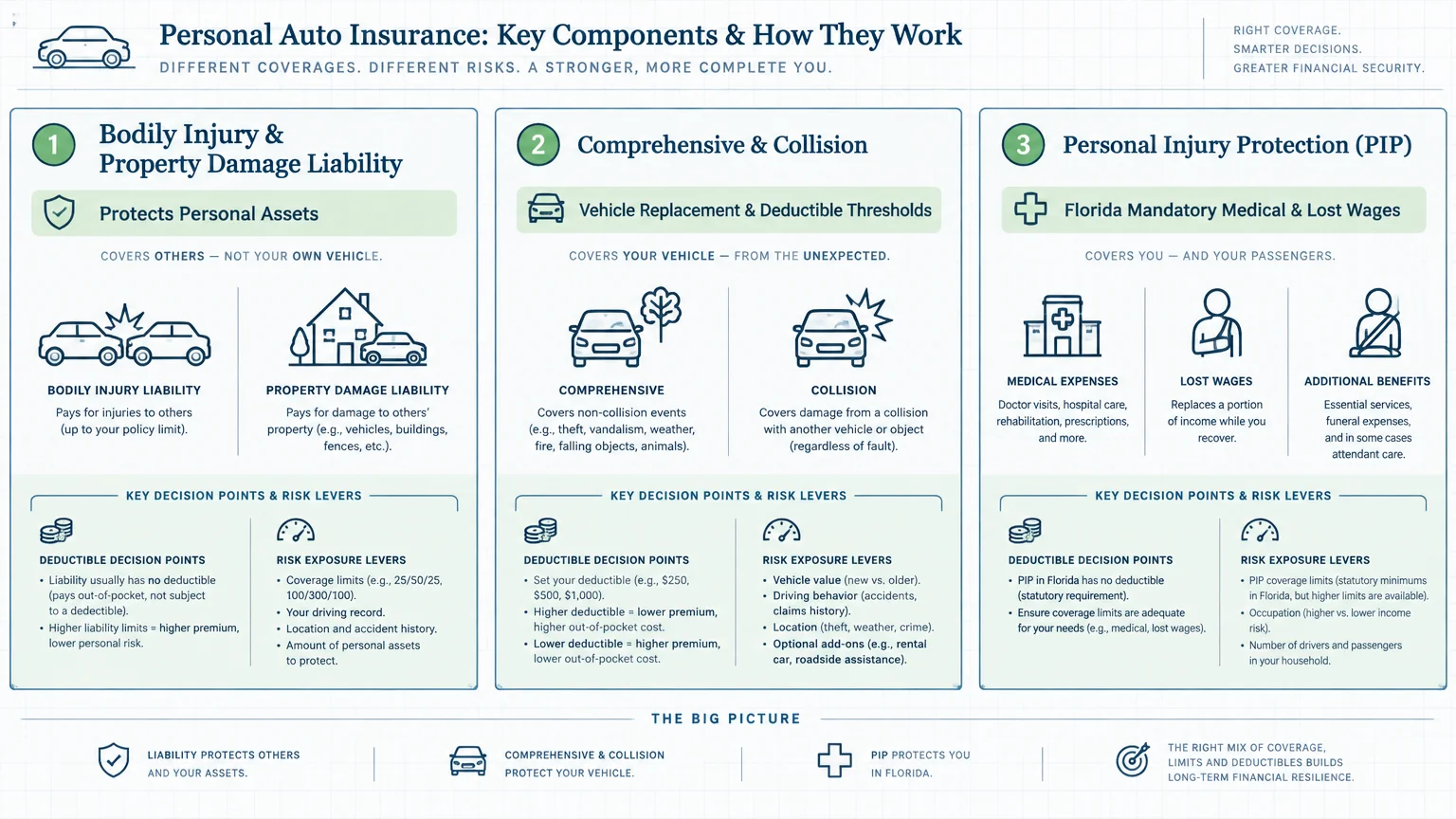
Florida law enforces surprisingly low mandatory auto insurance requirements compared to modern accident costs. Drivers need only carry $10,000 in Personal Injury Protection (PIP) and $10,000 in Property Damage Liability (PDL).
Relying solely on minimum statutory coverage leaves your household vulnerable to catastrophic financial liability. If you cause a multi-vehicle accident with modern luxury vehicles, $10,000 in property damage coverage will barely cover minor repairs.
Florida does not mandate Bodily Injury Liability (BIL) coverage for all private vehicle operators. However, driving without bodily injury protection exposes your personal income, savings accounts, and home equity to immediate litigation.
You should also evaluate Uninsured and Underinsured Motorist (UM/UIM) coverage. Despite recent market improvements, Florida retains a high percentage of underinsured drivers who carry only mandatory minimum coverage.
| Coverage Component | Florida Legal Minimum | Recommended Protection Tier | Primary Financial Role |
|---|---|---|---|
| Personal Injury Protection (PIP) | $10,000 Mandatory | $10,000 (Statutory Max) | Covers 80% of your medical bills regardless of fault |
| Property Damage Liability (PDL) | $10,000 Mandatory | $100,000 or Higher | Pays for damage you cause to other vehicles or structures |
| Bodily Injury Liability (BIL) | $0 (Not Required by Law) | $100,000 / $300,000 Minimum | Protects personal assets if you injure another person |
| Uninsured Motorist (UM) | $0 (Optional Rejection) | $100,000 / $300,000 (Stacked) | Covers your injuries if hit by an underinsured driver |
If your renewal rate drops by 7% or more, consider reallocating those savings toward higher liability limits. Expanding your bodily injury coverage from basic thresholds to $100,000/$300,000 costs surprisingly little while safeguarding your net worth.

Things to Watch Out For: Potential Pitfalls and Surprises
While the overall news is positive, individual policyholders should avoid making faulty assumptions about their upcoming statements. Several common financial and administrative factors can prevent your bill from dropping as expected.
- Billing Cycle Timing: Approved rate decreases take effect upon your next semi-annual policy renewal. Your current monthly billing installment will remain unchanged until your existing six-month policy contract finishes.
- Driving Violations and Claim Offsets: A recent moving violation, speeding ticket, or at-fault accident can erase your discount. Surcharges for traffic points will easily outweigh the approved 7% baseline rate reduction.
- Relocation Surcharges: If you recently moved from a rural county to a major metro area, your territorial rate will rise. Increased urban risk factors can easily cancel out your share of the state rate cut.
- Adding Household Drivers or New Vehicles: Adding a newly licensed teenager or replacing an older sedan with a new truck increases risk. Those policy changes will overshadow any underlying rate decrease approved by state regulators.
- Emergency Fund Gaps with High Deductibles: Raising deductibles to lower monthly premiums is effective only if you hold liquid cash. Never raise deductibles beyond what you can comfortably cover from your emergency savings account.
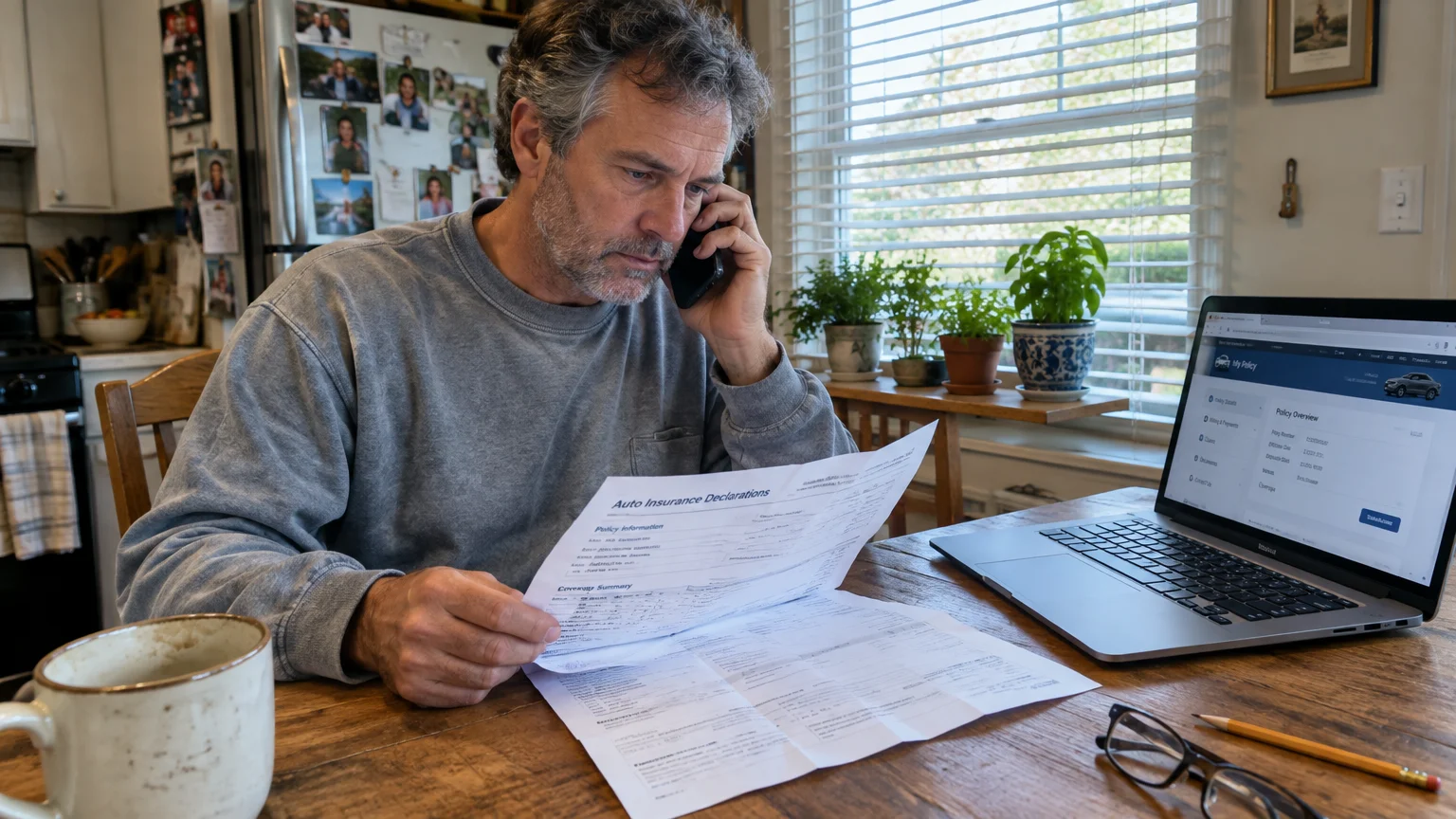
When DIY Isn’t Enough: Navigating Complex Insurance Scenarios
Managing standard car insurance online is straightforward for single-vehicle households with clean records. However, certain complex financial situations require personalized professional guidance from licensed insurance specialists.
If you operate a home-based business or drive for rideshare and delivery platforms, standard personal auto insurance excludes commercial accidents. You need professional guidance to add appropriate commercial endorsements without invalidating your primary coverage.
Households with significant accumulated assets, real estate holdings, or taxable brokerage balances should explore umbrella liability protection. An insurance professional can ensure your underlying auto liability limits match the strict threshold requirements of an umbrella policy.
Families with youthful drivers or mixed-ownership vehicle fleets benefit from structured insurance consultations. A licensed professional helps you structure primary and secondary vehicle assignments to prevent unnecessary rating penalties.
Active-duty military families navigating complex Permanent Change of Station (PCS) relocations face unique insurance challenges. Speaking directly with military-specialized advisors ensures your policy complies with both Florida statutes and your temporary duty station requirements.
Frequently Asked Questions About the Florida USAA Rate Cut
Do I need to contact USAA to receive the 7% rate cut?
No, you do not need to call customer service or file paperwork to get the rate reduction. USAA automatically applies approved rate changes to your policy upon your next scheduled six-month renewal.
When will I see the lower rate on my USAA car insurance bill?
You will see the adjusted rate reflected on your renewal declaration packet. Depending on when your current policy term expires, your adjustment will appear within the upcoming six months.
Why is my personal rate reduction different from the 7% average?
The 7% figure represents a statewide statistical average across all participating programs. Your individual rate change, which ranges from 0.4% to 11.2%, depends on your county, driving history, and vehicle types.
Does this rate cut affect my previous USAA dividend check?
No, the rate cut does not alter past financial distributions. The $500 million dividend distributed in June 2026 was a one-time cash return, whereas the 7% decrease permanently lowers future renewal bills.
Next Steps for Your Household Budget
The approved 7% average rate cut provides meaningful relief for hundreds of thousands of Florida military families. Combined with earlier rate cuts and direct dividend payouts, USAA continues to pass operational savings directly back to its members.
Take time this week to review your current policy declarations page online. Check your liability limits, confirm your vehicle mileage, and evaluate whether additional discounts can compound your savings even further.
This is general informational content based on widely accepted guidance. Individual results vary. Verify current details—rules, prices, eligibility, regulations—with official sources before making important decisions.
Last updated: October 2026. Rules, prices, and details change—verify current information with official sources before acting on it.








Leave a Reply