

Bill Gates qualifies for an estimated monthly Social Security check of $5,181 in 2026. Despite holding an estimated net worth of $106.5 billion, federal law does not deny him retirement benefits based on his personal wealth.
The Social Security Administration calculates your retirement payout from your lifetime covered earnings rather than your bank account balance. Because Gates paid the statutory maximum payroll tax for decades, he qualifies for the maximum social security benefit.
Understanding how social security billionaires interact with the system reveals the exact mechanics that govern your own benefits. Here is how much Bill Gates gets and how you can optimize your retirement strategy.
How Much Bill Gates Can Collect in 2026
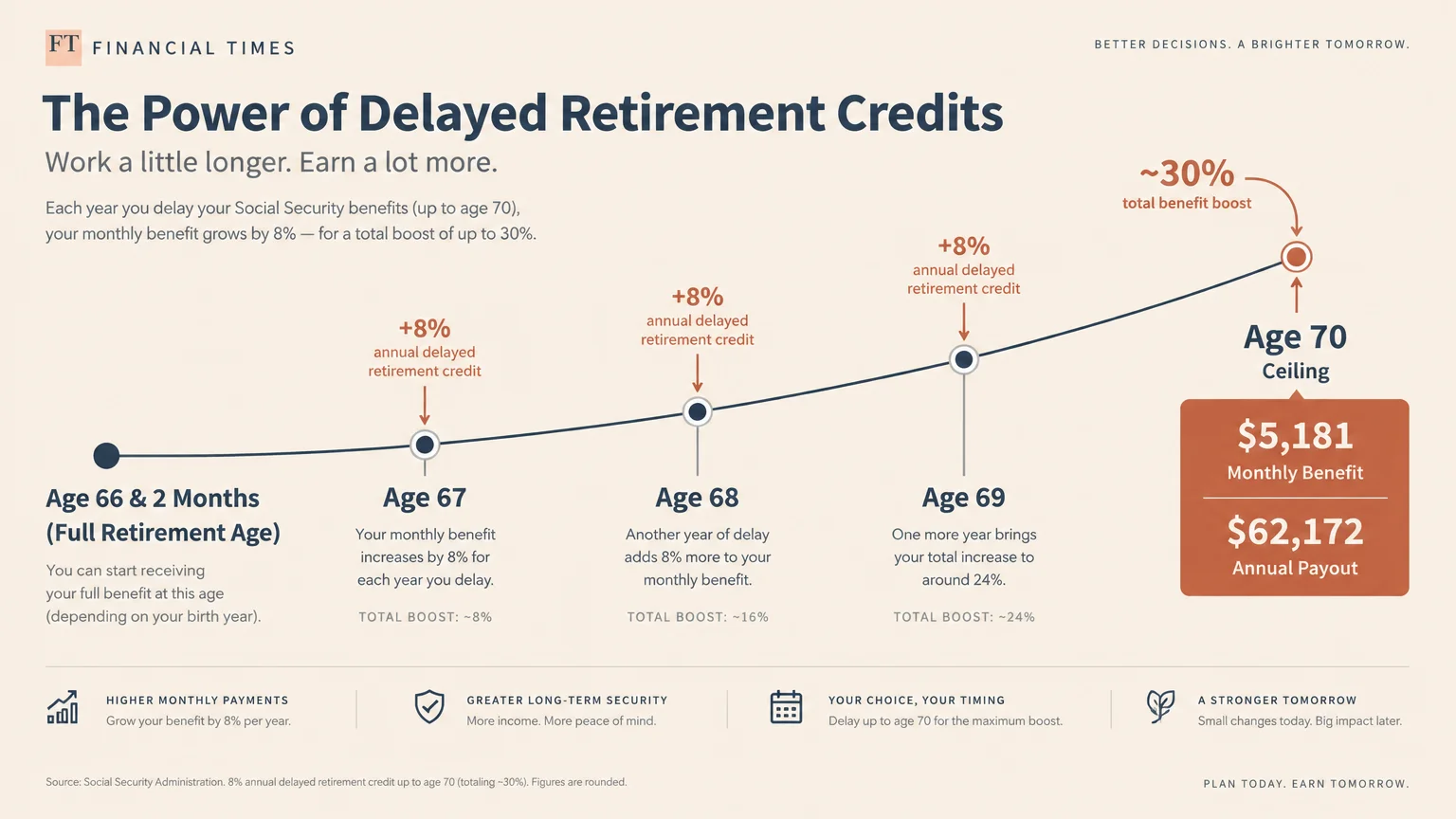
If Bill Gates claims his retirement benefits in 2026, his monthly check reaches $5,181. That monthly payment produces an annual benefit of $62,172.
This payout represents the highest possible benefit available to any American retiree in 2026. Gates qualifies for this absolute ceiling because of his age and earnings history.
Born on October 28, 1955, Gates celebrated his 70th birthday on October 28, 2025. He turns 71 in late 2026, placing him past the program’s final milestone for benefit increases.
Under federal guidelines, his Full Retirement Age was 66 and 2 months. Gates crossed that threshold in December 2021.
Instead of filing immediately upon reaching his Full Retirement Age, Gates reached age 70 before claiming. That delay activated the government’s delayed retirement credit system.
The program awards an 8% increase for every full year you postpone claiming past your Full Retirement Age. Those credits stop accumulating once you reach age 70.
Because he waited until age 70, Gates expanded his monthly payout by roughly 30% over his base amount. That patient timeline unlocked the top-tier $5,181 check.

Why Billionaires Qualify for Federal Retirement Checks
Many Americans assume that Social Security functions as a safety-net welfare program. In reality, the federal government structured the system as universal social insurance.
Program eligibility depends exclusively on your work history and tax contributions. The government does not evaluate your household wealth, stock holdings, or real estate assets.
According to Forbes, Bill Gates holds an estimated net worth of $106.5 billion in mid-2026. Yet federal law prevents the Social Security Administration from using that wealth against him.
The system requires workers to earn 40 lifetime work credits to secure retirement coverage. Anyone who meets that minimum requirement earns the legal right to collect benefits.
Gates accumulated hundreds of credits across his five decades at Microsoft and related corporate entities. His massive personal wealth does not negate the payroll taxes he remitted.
Welfare programs like Supplemental Security Income enforce strict asset and income ceilings. Social Security retirement insurance deliberately omits means testing of any kind.
This design protects the universal nature of the program for all working Americans. Every contributor receives a baseline return on their taxable payroll contributions.

The 35-Year Calculation and the Taxable Wage Base
To understand how much Bill Gates gets, you must look at how the government calculates retirement checks. The agency bases your check on your 35 highest-earning working years.
The agency adjusts your historical wages for national wage inflation before running the calculation. It then averages those 35 adjusted years to find your baseline earnings level.
However, the government does not tax or credit every dollar an executive earns. A strict statutory limit—the taxable wage base—caps annual participation.
In 2026, the taxable wage base limit stands at $184,500. Any earned income above that threshold incurs zero Social Security payroll tax.
Employees pay a 6.2% tax on wages up to that limit, which equals $11,439 in 2026. Employers contribute an identical $11,439 match on the worker’s behalf.
Self-employed professionals cover both halves under the self-employment tax rate of 12.4%. That creates a combined tax payment of $22,878 in 2026.
Gates earned far beyond the annual taxable maximum for more than 35 consecutive years. As a result, the agency credits him with the maximum allowable earnings for every single year.
Earning $50 million in a single calendar year provides no extra retirement benefit compared to earning $184,500. The system treats both workers identically once earnings surpass the cap.
Claiming Ages Compared: From Early Retirement to Age 70
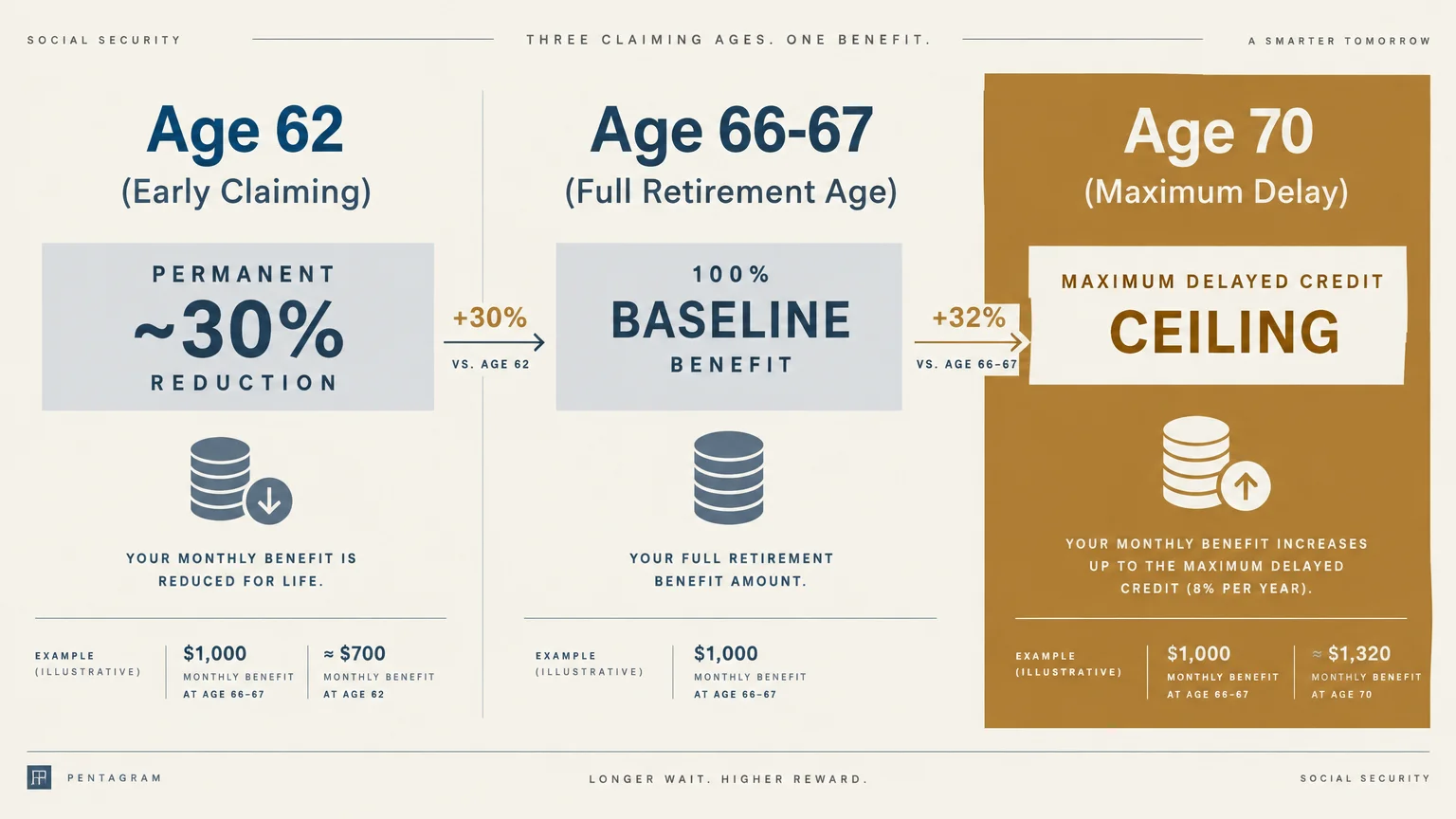
Your claiming age dramatically alters the size of your monthly Social Security check. Even top earners face substantial reductions if they claim before Full Retirement Age.
You can start collecting retirement benefits as early as age 62. However, claiming early permanently slashes your baseline monthly check by up to 30%.
A high earner who claimed early at age 62 in 2026 receives a maximum of $2,969 per month. That worker sacrifices thousands of dollars each year compared to waiting.
If that same high earner waited until Full Retirement Age in 2026, the check rises to $4,152 per month. Waiting until age 70 pushes that figure to $5,181.
Meanwhile, the average American retired worker collects $2,095 per month in late 2026. That nationwide average rose from $2,071 in January 2026 following a 2.8% cost-of-living adjustment.
| Claiming Status | Claiming Age | 2026 Monthly Maximum | 2026 Annual Maximum | Comparison to Average |
|---|---|---|---|---|
| Early Claiming | Age 62 | $2,969 | $35,628 | +$874 / month |
| Full Retirement Age | Age 66–67 | $4,152 | $49,824 | +$2,057 / month |
| Delayed Retirement (Gates) | Age 70 | $5,181 | $62,172 | +$3,086 / month |
| Average Retired Worker | Any Age | $2,095 | $25,140 | Baseline |
The spread between claiming at age 62 and age 70 equals $2,212 each month. Over a full year, that claiming gap amounts to a difference of $26,544.
Gates receives more than double the national average because he maximized both his earnings history and his claiming delay. That patient posture yields massive compounding benefits over time.

What the 2027 Social Security Changes Mean for Top Earners
Social Security rules adjust annually to keep pace with broader economic trends and wage growth. On October 14, 2026, the federal government officially announced the statutory numbers for 2027.
According to the Social Security Administration, recipients will receive a 3.6% cost-of-living adjustment beginning in January 2027. This adjustment directly boosts monthly checks across the board.
The average retired worker benefit will climb by approximately $75 per month in 2027. That increase raises the nationwide average payout to $2,170 per month.
For high earners retiring at Full Retirement Age in 2027, the maximum monthly check rises to $4,188. Current beneficiaries at the age-70 cap will see their $5,181 check increase by 3.6%.
Funding these benefit expansions requires higher payroll contributions from current workers. The taxable wage base limit climbs to $192,300 in 2027, marking a $7,800 increase from 2026.
An employee earning at or above the cap will pay up to $11,922.60 in Social Security taxes in 2027. Employers must match that $11,922.60 contribution dollar for dollar.
Self-employed workers will absorb both halves of the payroll obligation, paying up to $23,845.20 in 2027. These statutory increases ensure that higher earners fund their proportional share of future benefits.

Celebrity Social Security: Do the Ultra-Wealthy Actually Collect?
The debate surrounding celebrity social security often centers on whether ultra-wealthy executives actually claim their benefits. Federal law does not send retirement checks automatically.
To receive a single dollar, you must complete an official application with the government. If a wealthy individual never submits an application, the government keeps the funds in the trust reserves.
Many wealthy Americans choose to claim their checks regardless of their net worth. Some direct those monthly payments straight into private family foundations or donor-advised funds.
Other executives treat the monthly check as an earned return on decades of mandatory payroll deductions. From their perspective, walking away leaves earned personal compensation on the table.
For Gates, an annual payment of $62,172 represents pocket change compared to his multibillion-dollar fortune. His investment portfolio generates millions of dollars in capital returns every single week.
Yet claiming the benefit remains his legal right under federal law. The government makes zero distinction between an everyday factory worker and a tech pioneer at the claims desk.
How Federal Taxes Reclaim Most of a Billionaire’s Check
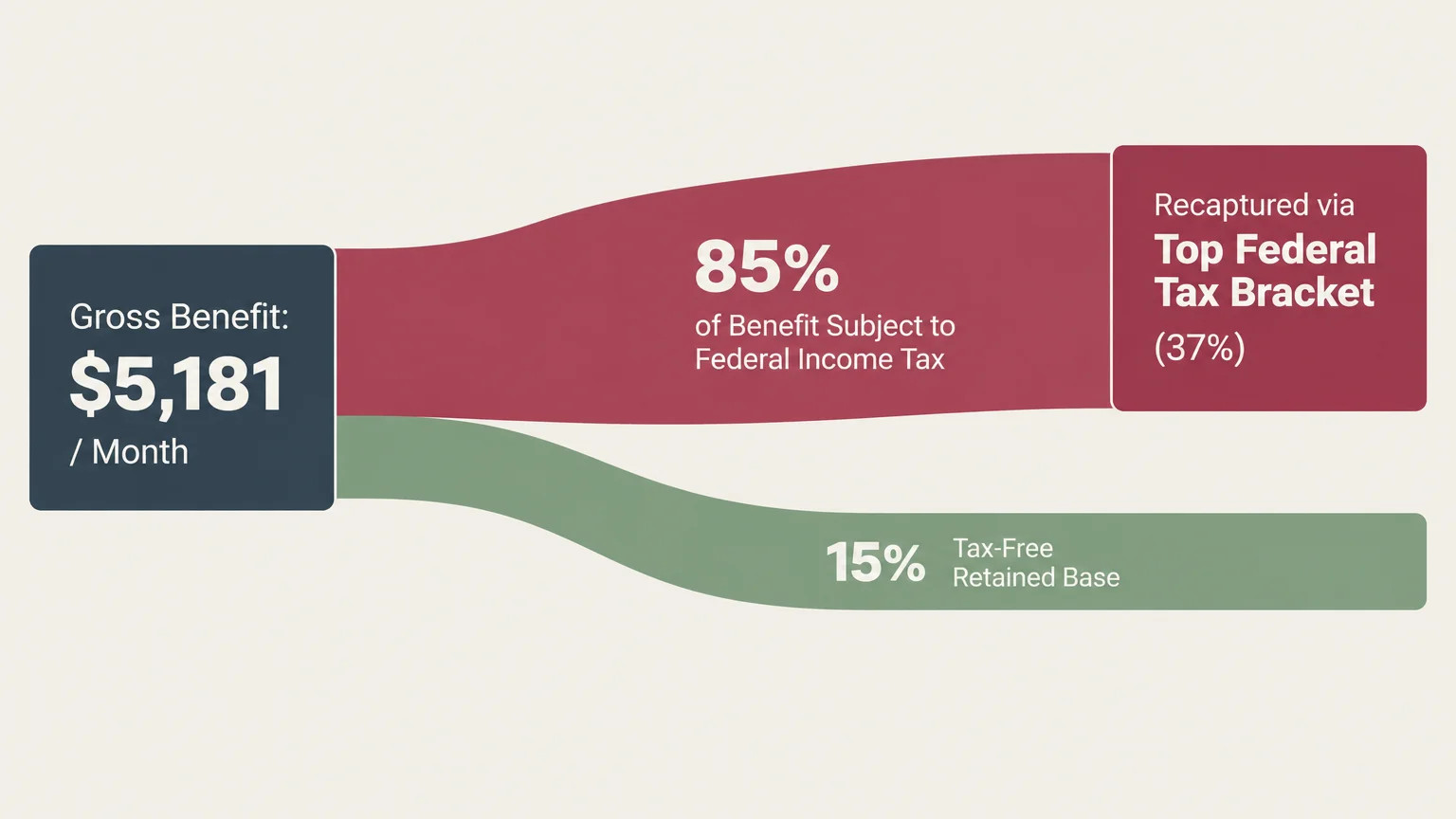
While Gates qualifies for the full $5,181 monthly check, he keeps only a fraction of it. The federal tax code recaptures a significant portion of benefits paid to high-income households.
According to the Internal Revenue Service, benefit taxation depends on your annual combined income. Combined income includes your adjusted gross income, nontaxable interest, and half of your annual Social Security benefits.
If you file taxes as a single individual and your combined income tops $34,000, up to 85% of your benefits face taxation. For married couples filing jointly, that 85% threshold starts at $44,000.
Congress established these thresholds decades ago without indexing them for inflation. Because Gates earns millions annually from investments and corporate distributions, he easily exceeds the $34,000 ceiling.
Consequently, the federal government taxes 85% of his $62,172 annual benefit at his highest marginal income tax rate. His top federal income bracket claims roughly 37% of that taxable portion.
State taxes can also reduce benefits depending on where a retiree resides. However, Washington State—where Gates maintains his primary residency—levies no personal state income tax.
Through federal income taxation alone, the Treasury claws back tens of thousands of dollars from his annual payout. High earners ultimately return much of their benefit straight back to the government.

Actionable Lessons to Increase Your Own Social Security Benefit
You do not need Bill Gates’ wealth to apply the principles that maximized his check. Everyday workers can use specific, deliberate steps to increase their future monthly payments.
- Eliminate zero-earning years: The government divides your total earnings by 35 years. Working 35 full years prevents zeroes from dragging down your average.
- Replace lower-earning early years: Working an extra year in your 50s or 60s at peak earnings replaces lower wages earned during your 20s.
- Delay claiming past Full Retirement Age: Every year you postpone claiming past your Full Retirement Age adds a guaranteed 8% annual boost until age 70.
- Monitor your official earnings record: Log into your personal portal periodically to confirm that employers properly reported every dollar you earned.
- Track your annual work credits: In 2026, you earn one credit for every $1,890 in covered wages, up to the annual maximum of four credits.
Delaying your claim remains the single most reliable way to generate a guaranteed return on retirement income. No commercial annuity matches the inflation-adjusted 8% annual credit offered by delayed claiming.
If your health and household cash flow permit waiting, delaying until age 70 permanently elevates your income floor. That higher baseline protects your buying power throughout your later retirement years.

Worth Keeping in Mind
Maximizing Social Security requires navigating rigid program rules that can easily derail an unprepared retiree. Keep these specific scenarios in mind before filing your application.
Claiming early at age 62 locks in a permanent lifetime reduction of up to 30%. That lower baseline persists for the rest of your life and directly lowers potential survivor benefits for your spouse.
If you claim benefits before Full Retirement Age while continuing to work, the retirement earnings test applies. The government temporarily withholds benefits if your earned wages surpass annual statutory limits.
Investment returns, rental property profits, and retirement account withdrawals do not count toward your 35-year work history. Only earned wages subject to FICA payroll taxes build your benefit record.
Because the federal income tax thresholds on benefits remain unindexed for inflation, modest retirement savers increasingly face benefit taxation. Withdrawing funds from traditional IRAs can inadvertently trigger taxes on your monthly check.

When to Get Professional Help
While the basic Social Security formula is straightforward, real-world retirement planning involves complex trade-offs. Consulting a fee-only financial planner or tax professional makes sense in several key scenarios.
Dual-earning married couples often benefit from coordinated claiming strategies. A professional can help identify which spouse should claim early and which should delay to maximize survivor protection.
Retirees planning large traditional 401(k) or IRA distributions must carefully model tax brackets. Strategic Roth conversions executed before claiming Social Security can reduce long-term taxes on your benefits.
Workers with pensions from federal, state, or municipal jobs not covered by Social Security require specialized guidance. The Windfall Elimination Provision and Government Pension Offset can drastically reduce expected checks.
Individuals confronting serious chronic medical diagnoses must evaluate breakeven life-expectancy timelines. A professional helps balance health realities against the mathematical benefits of delaying your claim.
Frequently Asked Questions
Can a billionaire legally collect Social Security?
Yes. Social Security is universal social insurance funded by payroll taxes rather than an asset-limited welfare program. Any citizen with 40 work credits qualifies for retirement benefits regardless of their personal net worth.
How much does Bill Gates get from Social Security each month?
In 2026, Bill Gates qualifies for the maximum monthly benefit of $5,181 if he files at age 70. This translates to an annual payout of $62,172 before federal taxes.
Does Bill Gates pay income taxes on his Social Security check?
Yes. Because his combined income far exceeds the $34,000 federal threshold, up to 85% of his Social Security benefits face federal income taxation at his top marginal tax rate.
Do delayed retirement credits keep building after age 70?
No. Delayed retirement credits stop accruing the month you turn 70. Waiting past age 70 yields zero additional financial benefit, so workers should always apply by their 70th birthday.
Building Your Own Retirement Floor
Examining Bill Gates’ Social Security check illustrates the core mechanics of the American retirement system. Wealth does not disqualify high earners from participating, nor does it grant them special advantages beyond statutory formulas.
Gates qualifies for the $5,181 monthly ceiling because he paid maximum payroll taxes for decades and postponed claiming until age 70. You can leverage those identical rules to maximize your personal retirement security.
Focus on eliminating zero-earning years from your work history, audit your earnings record on the official portal, and delay claiming if your circumstances permit. Those concrete decisions will build the strongest possible income foundation for your future.
The information here is meant for educational purposes. Specific circumstances—including health conditions, finances, location, and goals—may require different approaches. When in doubt, consult a licensed professional or check official sources directly.
Last updated: October 2026. Rules, prices, and details change—verify current information with official sources before acting on it.









Leave a Reply