
The New Money Cycle: Why Interest Rates Are Falling — But Not Going Back to Zero
For the past two years, money has felt unusually heavy.
Not just emotionally — mathematically.
The same life suddenly costs more to maintain. The same salary stretches less. People who once felt comfortable now feel cautious, and people who were cautious now feel stuck. Conversations quietly shifted from “Should we upgrade?” to “Can we still afford this?”
Mortgages doubled even if house prices barely moved.
Car payments climbed without the car improving.
Credit cards stopped being convenience tools and started behaving like long-term debt traps.
And now, just as people adjusted to that pressure, the headlines changed again.

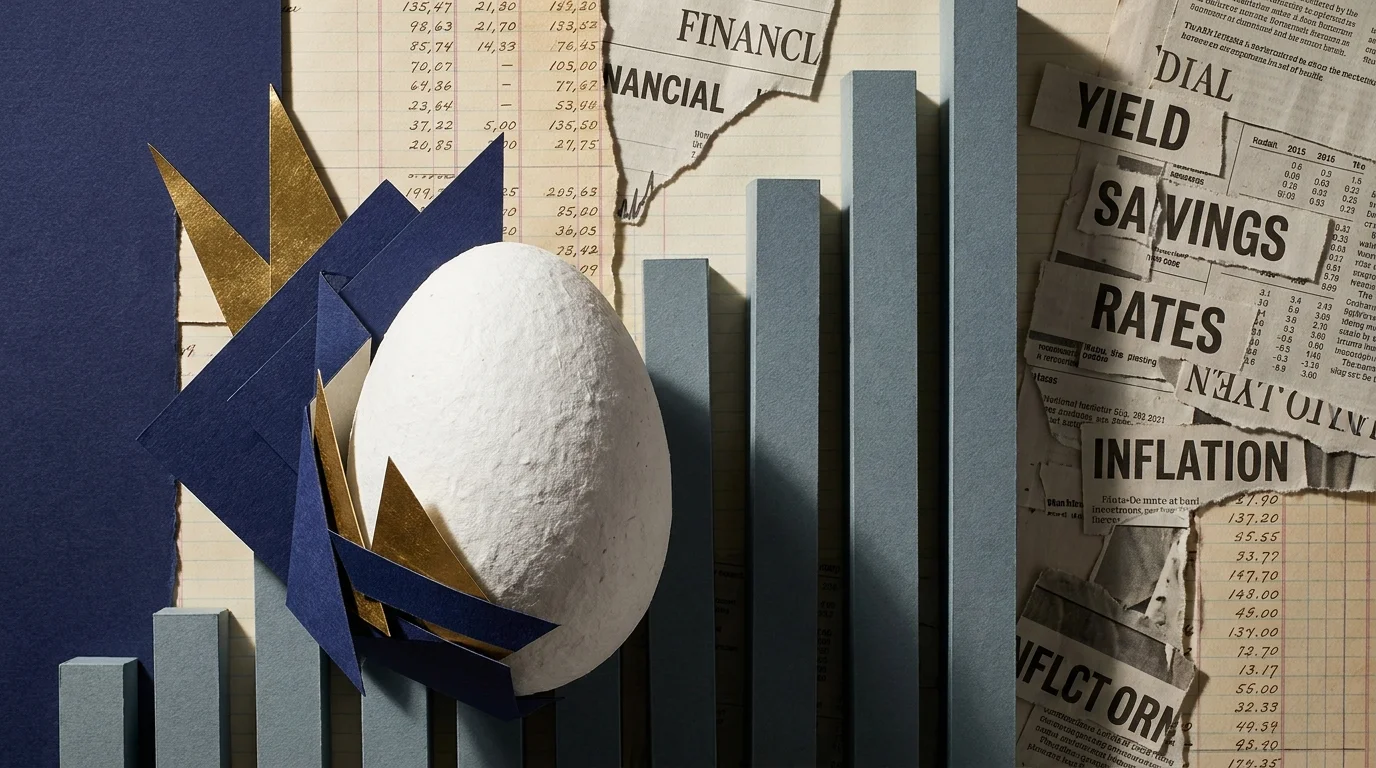
Interest rates are beginning to fall.
At first glance, this sounds like relief — a return to easier times. But the real story underneath is more important:
Rates are falling… but the cheap-money world is not coming back.
Understanding this difference matters more than most financial advice you’ll ever read. Because the next decade won’t reward the same behavior that worked in the last one.
We are not going back.
We are moving into a new money cycle.
The Era We Just Left (2010–2021): When Money Was Artificially Cheap
After the global financial crisis, the economy didn’t recover naturally. It was supported.
Central banks lowered interest rates to nearly zero and kept them there for years — not because growth was strong, but because growth needed help. Cheap borrowing was used like oxygen for the financial system. Businesses could refinance easily, governments could spend freely, and markets could keep rising without interruption.
Over time, this emergency policy became normal life.
Housing didn’t just rise — it accelerated, because monthly payments mattered more than price.
Startups didn’t need profits — funding was easy.
Subscriptions replaced ownership.
And financing replaced saving.
A quiet psychological shift happened: people stopped thinking about cost and started thinking about payments.
If the monthly amount felt manageable, the purchase felt justified.
For an entire generation, affordability became disconnected from price and attached to interest rates. Borrowing was no longer a decision — it was infrastructure.
But this environment only works when money itself has almost no cost.
Then inflation arrived, and the system had to reset.
2022–2024: The Shock — Money Suddenly Had a Price Again
When inflation surged globally, central banks faced a problem they could not ignore. Prices rising quickly damage trust in the currency itself, and once that trust weakens, the entire economy becomes unstable.
So they did the only thing proven to slow inflation: they raised interest rates — fast.
Not gradually enough for people to adjust.
Not slowly enough for markets to digest.
But fast enough to stop the momentum.
And overnight, reality changed.
The same home now required hundreds more each month.
The same lifestyle needed stricter decisions.
The same debt carried real consequences.
Nothing actually became more expensive as quickly as borrowing did.
This created the strange feeling people had: life didn’t change dramatically, yet affordability did. The difference was invisible — the cost of money itself.
For over a decade we lived in a financial climate that wasn’t typical. Historically, borrowing has always had weight. The sudden discomfort people felt wasn’t because the world broke — it was because it normalized.
The shock wasn’t new rules.
It was the return of old ones.

Why Rates Are Falling Now — But Not For the Reason People Think
Now the narrative is shifting again. Rates are slowly moving down, and many assume this signals a return to the previous era.
But central banks aren’t trying to recreate cheap money.
They are trying to stabilize expensive money.
Very high rates act like a hard brake on the economy — they stop inflation, but they also slow hiring, investment, and growth. Keeping them elevated for too long risks freezing activity entirely.
Zero rates, on the other hand, overstimulate and create bubbles.
So policymakers aim for a middle ground — a speed where the economy moves, but doesn’t overheat.
Think of it less like rescue mode and more like calibration.
We’re entering what economists call a neutral environment — where borrowing exists, but isn’t effortless, and saving matters, but doesn’t dominate.
Rates are falling not because we’re returning to the past, but because we’re settling into balance.
The Most Important Number Nobody Talks About: The Neutral Rate
There’s a concept that quietly governs everything from mortgages to markets: the natural or neutral interest rate.
It’s the level where the economy grows steadily without needing help or restriction. Borrowing is possible but intentional. Saving is rewarded but not excessive.
Historically, this range has usually lived somewhere between 3% and 6%.
The decade near zero wasn’t a long-term policy — it was a long emergency.
Now we are moving back toward the range economies operated in for generations. And that shift changes behavior more than people expect.
In this environment:
People think before borrowing.
Savings earn noticeable returns.
Investments must produce real results instead of future promises.
Money regains gravity.
What Changes in the New Money Cycle
Economic shifts rarely announce themselves dramatically. Instead, they quietly alter incentives — and incentives shape behavior.
The new cycle will feel subtle at first, but over time it rewrites how wealth is built.
Cash Stops Being Useless
For years, holding cash felt irresponsible. Inflation eroded it, and bank accounts returned almost nothing. The only way to “win” was to put money somewhere — anywhere — that might grow.
Now the situation changes.
Cash doesn’t dominate, but it matters again. Liquidity becomes valuable because opportunities appear when financing tightens. Those who have accessible funds gain choice: they can wait, negotiate, or move quickly when others cannot.
The psychological shift is powerful — patience becomes a financial advantage.
Monthly Payments Lose Their Illusion
The cheap-money era trained consumers to evaluate purchases by installments. A large total cost could be psychologically reduced into a small recurring number.
But when interest rates rise, payments multiply the real price dramatically.
Gradually, buyers begin asking a different question: not “Can I afford the payment?” but “Is the total cost worth it?”
This subtle change reshapes markets. Companies that relied purely on financing appeal struggle, while value-driven products gain importance.
Price awareness returns.
Asset Prices Grow Slower — But Healthier
During extremely low rates, capital searched desperately for returns. That pressure inflated nearly everything: stocks, housing, speculative investments.
In a neutral-rate environment, money becomes selective. Investments must justify themselves through earnings, usefulness, or income.
This doesn’t eliminate growth — it stabilizes it. Fewer dramatic booms, fewer sudden crashes, more gradual movement.
We shift from expansion driven by cheap capital to expansion driven by productivity.
Real Skills Regain Value
When capital is abundant, ideas attract funding easily. When capital has a cost, execution matters.
Businesses must operate efficiently. Side projects must generate real value. Careers that solve problems become more resilient than those built purely on trend momentum.
The labor market slowly rewards competence over positioning.
And over time, reliability becomes more powerful than hype.
Why Rates Probably Won’t Return to Zero — Even in a Future Crisis
Many people expect the next downturn to restart the same playbook: massive stimulus and ultra-low rates.
But policymakers learned something difficult during recent years.
Creating money quickly can prevent collapse — yet it can also create inflation that lasts longer than the crisis itself. And inflation affects everyone, which makes it politically and socially destabilizing.
Central banks now fear losing price stability more than temporary slowdowns.
So future responses will likely be measured rather than extreme. Instead of dramatic swings from free money to tight money, we’ll see smaller adjustments around a stable range.
The economic future becomes less explosive, but also less fragile.

What This Means for Personal Financial Strategy
This isn’t just a macroeconomic story. It changes individual outcomes.
The previous era rewarded boldness and leverage. The coming era rewards adaptability and resilience.
Flexibility Beats Maximum Expansion
For years, stretching finances made sense because rising asset values covered risk. Now flexibility matters more.
Lower fixed obligations provide room to react — to opportunities, to market changes, to uncertainty. The person who can move has advantage over the person fully committed.
Financial breathing room becomes a competitive edge.
Income Matters More Than Appreciation
Previously, many assets rewarded patience alone. You bought and waited.
Now sustainable returns increasingly come from cash flow — dividends, rentable skills, or income-producing investments.
Growth still exists, but relying on price increases alone becomes less predictable.
Money that produces money becomes the foundation again.
Liquidity Becomes Strategic
Holding accessible funds no longer means missing out — it means readiness.
When financing tightens, sellers compromise. Businesses discount. Markets misprice.
Opportunities increasingly go to whoever has resources available immediately, not whoever qualifies for the largest loan.
Preparedness replaces urgency.
Debt Requires Purpose
In a higher-rate world, poor debt compounds faster than wealth accumulates. The decision to finance shifts from casual to deliberate.
Borrowing tied to productivity remains useful. Borrowing tied only to consumption becomes costly.
This single distinction will define many financial outcomes in the coming decade.
The Quiet Opportunity in This Shift
Every economic environment favors certain behaviors. The last decade favored speed and scale.
The next favors discipline and timing.
Most people adapt slowly. They continue behaving according to past conditions even after the environment changes. And during that adjustment period, pricing mistakes happen everywhere — in markets, careers, and decisions.
Those who recognize the shift early don’t need extreme risk. They simply align with the new incentives sooner.
The Bottom Line
Falling interest rates do not signal a return to the past. They signal stabilization.
We are leaving an extraordinary period and entering a historically normal one — where money has a cost but not a burden, and growth exists without excess.
The next decade will likely feel calmer and less explosive. Gains may appear slower, but they may also be more durable.
The strategy changes from chasing momentum to managing structure.
The old era rewarded expansion.
The new era rewards balance.
And the people who understand the cycle won’t need to predict every move — they’ll already be positioned for it.
Read next: How to Build Extra Income With Zero Upfront Costs







Leave a Reply