

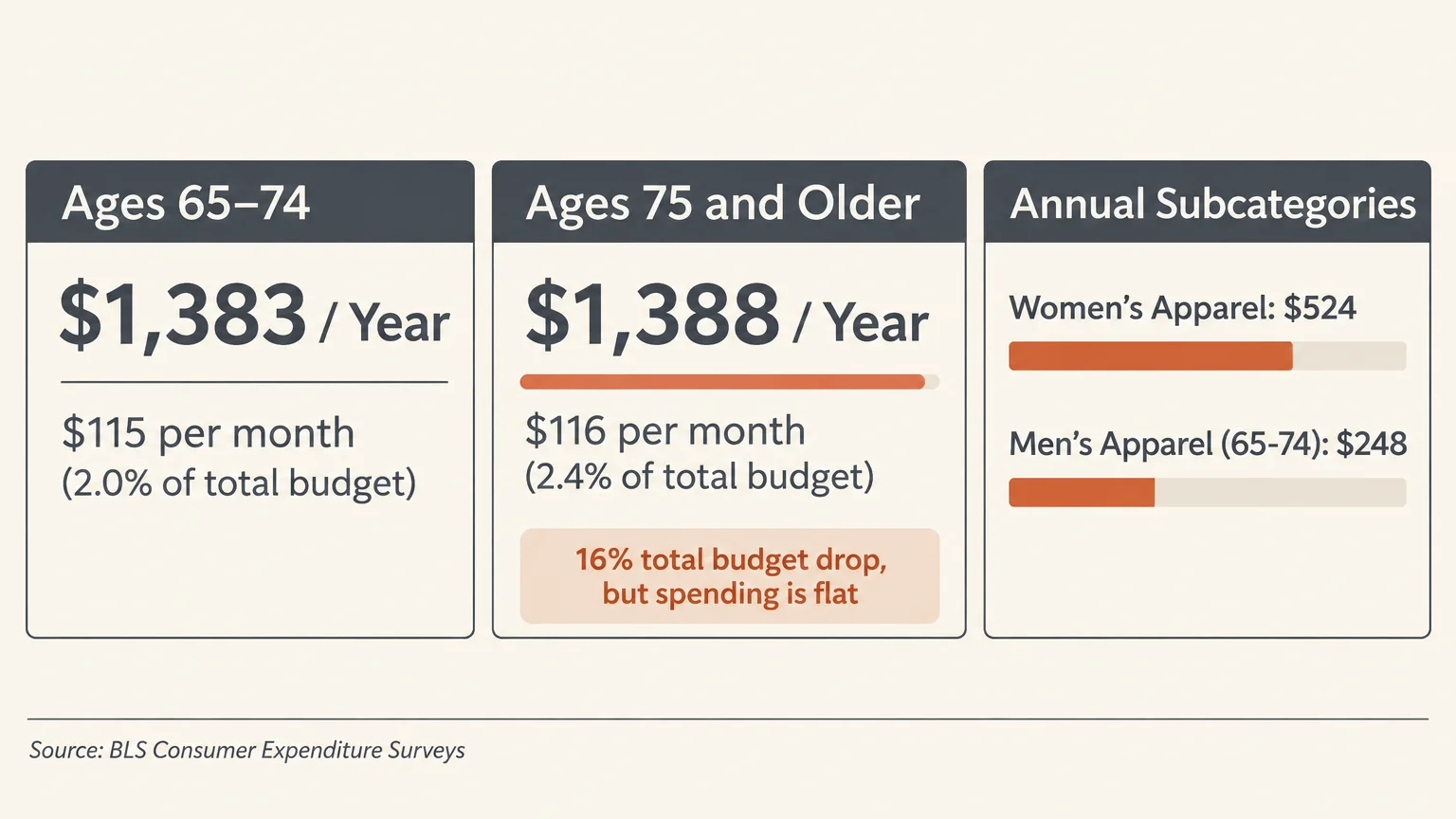
You might assume clothing expenses vanish once you trade daily commutes for retirement. Yet federal spending data show Americans age 65 and older still spend an average of $1,383 a year—about $115 every month—on apparel and related services.
That figure holds remarkably steady even after age 75, when total household spending drops by roughly 16%. Knowing how your wardrobe outlays compare to national benchmarks can help you spot hidden leaks in your monthly budget.
Here is what the latest federal data reveal about senior clothing budgets, why those costs persist, and how to keep them comfortable on a fixed income.
What Americans Over 65 Actually Spend on Clothes Each Month
Households headed by someone age 65 or older spent an average of $1,383 on apparel and services in 2025, according to the U.S. Bureau of Labor Statistics (BLS) Consumer Expenditure Surveys. Divided across 12 months, that comes to roughly $115 per month.
Out of $64,445 in average total annual household expenditures for this group, clothing represents 2.1% of the budget. That may sound modest on paper.
One of the biggest surprises in the 2025 data is how little dollar spending changes as retirees grow older. Households in the 65–74 age bracket spent $1,383 per year, or 2.0% of their $69,333 in total annual outlays.
Move into the 75-and-older bracket, and total household spending falls roughly 16% to $57,959 a year. Even so, annual clothing outlays barely budge—rising slightly to $1,388, or about $116 per month.
Because overall spending shrinks after age 75 while clothing dollars stay flat, wardrobe costs claim a bigger slice of the pie. The budget share climbs from 2.0% in early retirement to 2.4% for households 75 and older.
Looking closer at who wears what offers more clarity. In 2025, households ages 65–74 spent $320 on men’s and boys’ apparel—$248 for men 16 and older and $72 for boys ages 2 to 15.
On the women’s side, households 65 and older spent an average of $524 per year on women’s and girls’ apparel in 2024, the latest year available for that subcategory. Footwear, accessories, and clothing services like alterations and dry cleaning make up the rest.
Seniors clothing spending has also rebounded sharply from pandemic lows. In 2021, households 65 and older spent just $986 a year—about $82 a month—meaning nominal annual outlays rose roughly 40% by 2025.
How Senior Clothing Budgets Compare Across Age Groups
Across all U.S. households, average spending on apparel and services reached $2,010 in 2025, or about $168 per month. That means adults over 65 spend roughly 31% less on clothing than the typical American household.
A 31% drop makes sense when you consider peak-earning years and growing kids. Still, retirees spend virtually the same amount on clothing each month as young adults under age 25.
| Age Group | Average Annual Apparel Spend (2025) | Approximate Monthly Budget | Share of Total Spending |
|---|---|---|---|
| Under 25 | $1,375 | $115 | 2.5% |
| 25–34 | $1,702 | $142 | 2.2% |
| 35–44 | $2,273 | $189 | 2.4% |
| 45–54 (Peak) | $3,248 | $271 | 3.0% |
| 55–64 (Pre-Retirees) | $2,060 | $172 | 2.4% |
| 65–74 | $1,383 | $115 | 2.0% |
| 75 and Older | $1,388 | $116 | 2.4% |
| All U.S. Households | $2,010 | $168 | 2.5% |
Notice the sharp drop between pre-retirees and new retirees. Average spending falls from $2,060 a year in the 55–64 bracket to $1,383 after age 65—a savings of $677 annually, or about $56 a month.
Yet apparel outlays across the entire country barely grew between 2024 and 2025. While overall U.S. household spending increased 4.3% during that stretch, clothing spending crept up just 0.4%, from $2,001 to $2,010.
If your own retiree budget clothing line sits closer to $50 a month, you are outperforming the national average. If you spend $200 or more, you are closer to pre-retirement habits than typical retirement spending habits.
Why People Are Talking About This
Clothing prices used to fall or stay flat for years, making wardrobe mistakes cheap to ignore. Recently, inflation patterns and rising fixed costs have put every discretionary dollar under a microscope.
According to BLS Consumer Price Index (CPI) data, apparel prices rose 3.4% year-over-year in September 2026, nearly matching the 3.7% overall inflation rate. Men’s and boys’ clothing climbed slightly faster at 3.8% over that 12-month period.
Even with a slight dip in the apparel index level from 140.04 in September 2026 to 138.44 in October 2026, stickers at the checkout counter feel noticeably higher. Still, taking a five-year view offers helpful perspective.
Over the five years ending October 2026, overall U.S. consumer prices jumped 22%, while apparel prices increased about 11%. Clothing inflation ran at roughly half the pace of general inflation, though households still feel the pinch alongside groceries and utilities.
Shopping behavior has shifted enough that federal statisticians changed how they track prices. The BLS now incorporates used and secondhand apparel directly into the Consumer Price Index to reflect growing demand for thrift and resale options.
At the same time, rising medical costs leave less room for casual shopping sprees. Healthcare consumed 11.8% of total spending for ages 65–74 and jumped to 14.2% for ages 75 and older in 2024, crowding out other budget categories.

Why Your Closet Costs Shift After 65
Stopping a 9-to-5 job does not mean your wardrobe freezes in time. Several lifestyle and physical shifts explain why average spending over 65 stays above $1,300 a year.
First, many older Americans are still clocking in. Roughly 19.1% of adults age 65 and older remained in the labor force in 2025, up sharply from 12.9% in 2000 and just below the 2019 peak of 20.2%.
If you work part-time, consult, or volunteer in public-facing roles, you still need presentable shirts, slacks, and sturdy shoes. Even a couple of shifts a week creates ongoing wear and tear.
Second, daily routines shift dramatically toward home life and leisure. According to the 2025 BLS American Time Use Survey, adults 65 and older averaged 7.11 hours a day on leisure and sports—including 4.30 hours watching television—compared with 5.21 hours for ages 55–64.
That extra time at home changes what you buy, not necessarily how much you spend. Structured suits and dress heels give way to breathable knitwear, walking shoes, moisture-wicking athletic wear, and warm layers.
Third, aging bodies and changing climates force wardrobe resets. Weight fluctuations, joint changes, arthritis, and sensitivity to cold often require easier fasteners, wider footwear, and softer fabrics.
Finally, the BLS apparel category includes services, not just tags at a department store. Alterations, shoe repair, coin laundry, dry cleaning, and seasonal storage all count toward that $115 monthly average.
Averages blend two very different households: frugal retirees who mend clothes for a decade and active seniors updating wardrobes for travel, hobbies, and part-time work.
How Clothing Fits Into a Fixed Monthly Retirement Budget
To judge whether $115 a month makes sense for you, compare it against guaranteed monthly income rather than a vague national average. For most retirees, Social Security forms that baseline.
The average monthly Social Security retirement benefit for retired workers sits at $2,095 in late 2026, based on figures from the Social Security Administration (SSA). An average $115 monthly clothing outlay absorbs roughly 5.5% of that single check.
Following a 2.8% cost-of-living adjustment (COLA) in 2026, Social Security checks will increase by 3.6% in January 2027. That adds an average of $75 a month, bringing the typical retired-worker benefit to $2,170 and elderly couples’ combined benefits to $3,355.
Before earmarking that $75 raise for new sweaters or travel gear, look at what Medicare deducts first. According to the Centers for Medicare & Medicaid Services (CMS), standard monthly Medicare Part B premiums rise $6.50 in 2027, from $202.90 to $209.40.
Annual deductibles are climbing too. The Part B deductible edges up from $283 in 2026 to $292 in 2027, while the maximum Medicare Part D prescription deductible rises from $615 to $700.
Those mandatory healthcare increases eat into your COLA before a single dollar reaches your checking account. Treating clothing as a planned sinking fund—rather than an impulse purchase—protects your monthly budget seniors rely on for essentials.
Consider setting aside a fixed monthly transfer into a dedicated savings bucket for clothing and shoes. You may spend zero dollars in February and March, then use the accumulated balance for quality winter boots or spring outfits without touching grocery money.
Practical Ways to Trim Your Retiree Clothing Budget Without Sacrificing Comfort
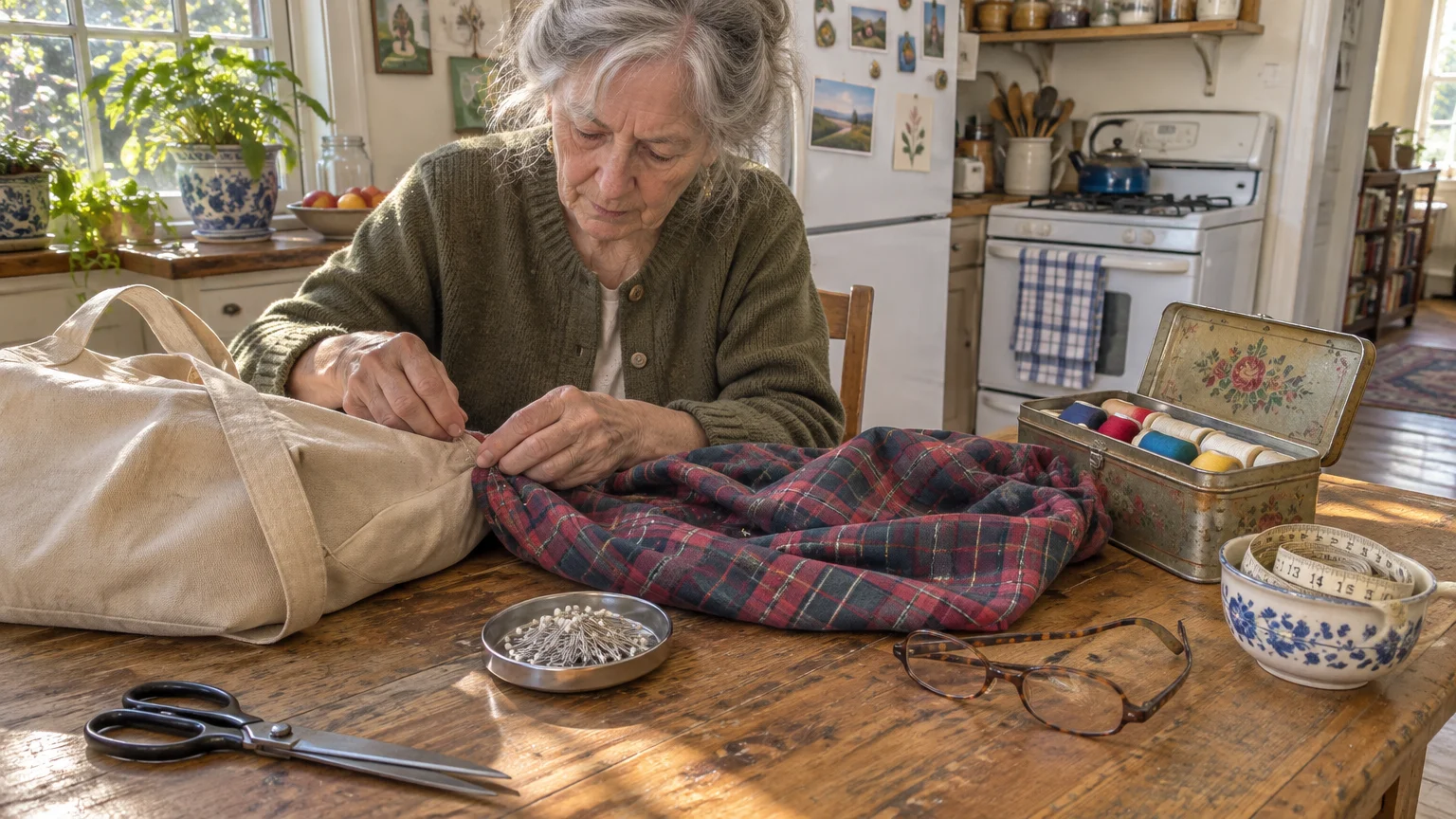
Cutting your clothing spend does not require wearing frayed collars or uncomfortable shoes. Smart adjustments let you keep comfort and durability high while freeing up cash for healthcare, travel, or savings.
- Run a 15-minute seasonal closet audit: Pull out every item you have not worn in the past 12 months before browsing any store. Seeing duplicates you already own—like five navy cardigans or three pairs of black walking shoes—prevents repeat purchases.
- Track cost per wear, not sticker price: A durable coat or supportive pair of walking shoes worn 150 times a year delivers far better value than a bargain-bin piece that pills after three washes. Prioritize sturdy seams, natural fibers, and replaceable soles on everyday staples.
- Shop high-quality resale and consignment: Secondhand markets carry gently worn coats, blazers, and occasion outfits at steep discounts off retail tags. Check local upscale consignment shops near affluent neighborhoods or vetted online resale platforms with clear return policies.
- Build a compact capsule for your current routine: Match your closet ratio to how you actually spend your week. If 80% of your days involve casual errands, walking, and home projects, keep dressy items to two reliable outfits and invest in versatile everyday layers.
- Time major purchases around end-of-season clearance: Retailers slash prices on winter coats, sweaters, and boots late in the season to clear warehouse space. Buying next year’s staples during clearance windows stretches a modest monthly allowance much further.
- Wash cold and air-dry delicate items: High dryer heat breaks down elastic waistbands, shrinks cotton, and fades dark fabrics quickly. Gentle washing and hang-drying extend garment life and reduce trips to the dry cleaner.
- Audit store credit cards and loyalty traps: Retail cards dangle single-day percentage discounts that often lead to high-interest balances if you carry debt. Stick to cash, debit, or a general rewards card you pay off in full each month.
Things to Watch Out For
Even disciplined savers run into blind spots when managing wardrobe costs in retirement. Watch for these common traps that quietly push spending above your target.
- Ignoring footwear replacement cycles: Skimping on worn-out walking shoes to save $115 today can trigger foot, knee, or back pain that costs far more in medical copays later. Inspect shoe treads and heel cushioning every six months.
- Overlooking clothing services in your budget: Tailoring hems, replacing broken zippers, resoling favorite boots, and dry cleaning formal coats add up over a year. Include maintenance and alterations in your monthly clothing line so repairs never feel like surprises.
- Buying for a past or idealized lifestyle: Keeping up a wardrobe for formal dinners, golf clubs, or office meetings you rarely attend drains closet space and cash. Donate or sell items tied to old routines instead of buying matching accessories for them.
- Falling for return-shipping fees and final-sale traps: Online clearance racks often prohibit returns or deduct return shipping from your refund. Check sizing charts and return rules before clicking buy, especially when ordering unfamiliar brands.
- Forgetting grandkids’ gifts in your tally: Remember that federal household averages include spending on children’s clothes living in or supported by the household—such as the $72 annual average for boys’ apparel in the 65–74 bracket. Track gift clothing separately so generosity does not distort your personal wardrobe budget.
When DIY Isn’t Enough
Most wardrobe decisions belong firmly in your own hands, yet certain retirement transitions overlap with tax, healthcare, and cash-flow rules. Consider consulting a qualified professional in these specific situations.
- Medical necessity and tax-advantaged accounts: If a physician prescribes specialized orthopedic shoes, diabetic footwear, or medical-grade compression garments, ask a tax advisor or benefits specialist whether Health Savings Account (HSA) funds or itemized medical deductions apply.
- Rising healthcare costs squeezing your fixed income: When higher Part B premiums and Part D deductibles collide with everyday expenses, a fee-only financial planner or certified credit counselor can help rebalance your retirement withdrawals.
- High-value wardrobe downsizing and charitable deductions: Clearing out designer coats, vintage pieces, or extensive collections during a move may carry documentation rules if you itemize charitable gifts. A CPA can explain current valuation and receipt requirements before you donate.
- Managing Medicare IRMAA brackets before major purchases: If you plan to withdraw extra money from traditional retirement accounts for a major lifestyle reset or relocation wardrobe, check with a tax professional first so added taxable income does not trigger higher Medicare premiums two years later.
Frequently Asked Questions
What is the average monthly clothing budget for someone over 65?
Households headed by someone age 65 or older spend an average of $1,383 per year on apparel and services, which works out to roughly $115 per month. That figure covers clothing, footwear, accessories, alterations, and dry cleaning combined.
Do seniors spend less on clothes after age 75?
In raw dollars, spending barely changes. Households ages 65–74 average $1,383 per year ($115 per month), while households 75 and older average $1,388 per year ($116 per month)—even though total annual spending falls roughly 16% after age 75.
How much should a retiree budget for clothes each month?
Federal averages put apparel at 2.0% to 2.4% of total household spending for adults over 65, or roughly 5.5% of an average single Social Security check. Your ideal target depends on your climate, part-time work status, and existing closet.
Why do clothing budgets stay steady if retirees stay home more?
Retirees replace formal office wear with casual knitwear, comfortable walking shoes, and adaptive layers, while nearly 1 in 5 adults over 65 still works. Regular laundry, shoe replacement, and occasional alterations keep annual outlays steady.
Putting Your Numbers to Work
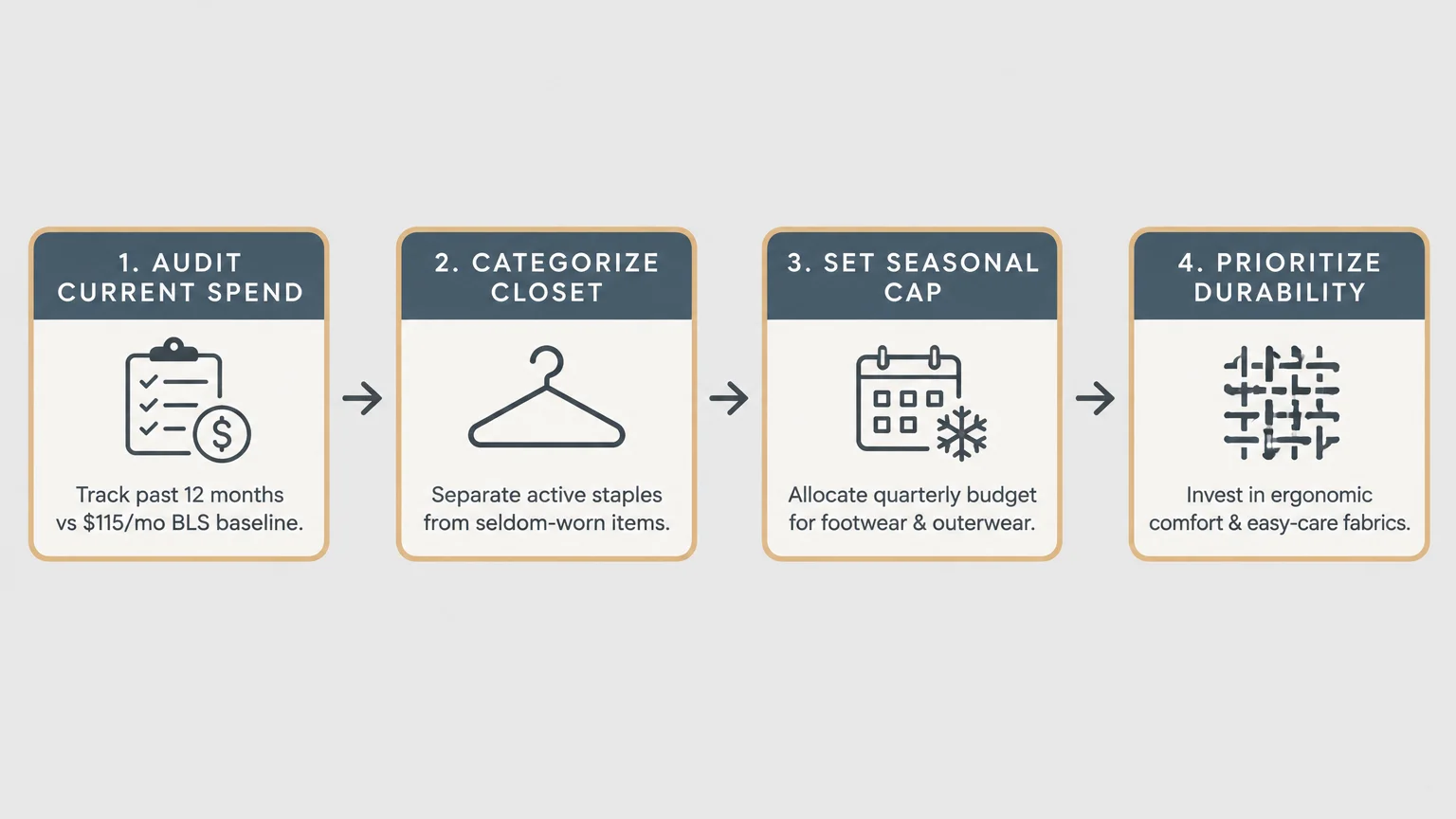
Seeing the national benchmark of $115 a month gives you a concrete yardstick for your own bank statements. Pull your last three months of debit and credit card charges, total every clothing, shoe, and alteration expense, and see where you stand.
If your spending runs below the benchmark and your closet meets your daily needs, you are already ahead of the curve. If it runs higher, redirecting even $30 or $40 a month toward savings or upcoming Medicare increases builds real breathing room.
This article provides general information only. Every reader’s situation is different—what works for others may not be the right fit for you. For personalized guidance on health, legal, or financial matters, consult a qualified professional.
Last updated: November 2026. Rules, prices, and details change—verify current information with official sources before acting on it.









Leave a Reply