
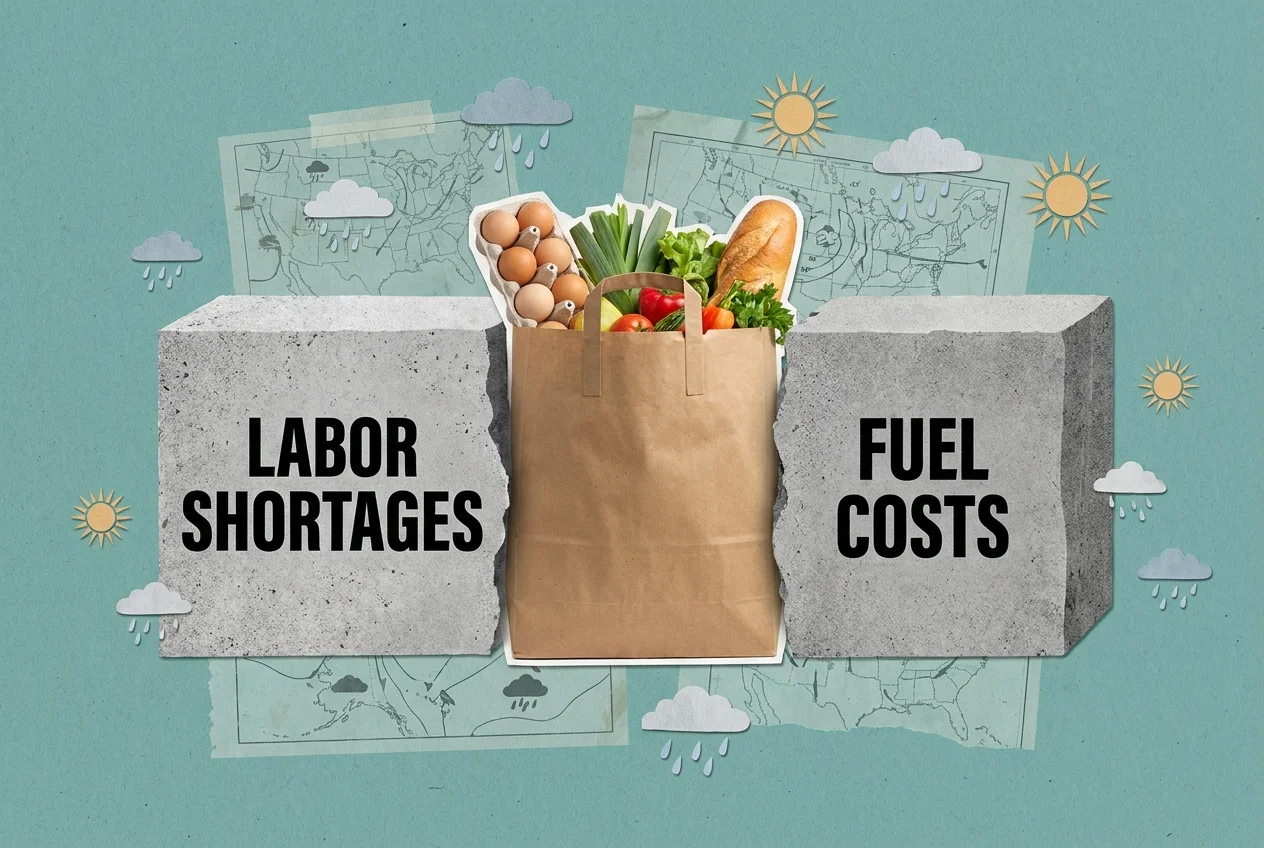
Why Supermarket Price Hikes Keep Squeezing Budgets
To understand why your receipt looks so radically different today, you have to look beyond the checkout lane. Supermarkets operate on famously thin profit margins—historically hovering around 1% to 3%. When macroeconomic pressures strike, grocers have very little room to absorb the blow. Instead, they push those costs onto the consumer.
According to the Bureau of Labor Statistics, the cost of food at home rose 29.4% between March 2020 and December 2025. While the pace of that inflation has returned to a more historically typical range of around 2% to 3% annually in 2026, those new percentage increases stack on top of the already inflated prices of the past few years. This phenomenon compounds the financial strain on households.
Several distinct factors keep these prices elevated. Unpredictable weather patterns, including severe droughts and unprecedented heatwaves, have disrupted crop yields, directly impacting the cost of fresh produce and grain-reliant products like beef and cereal.
Furthermore, elevated energy costs make it more expensive to manufacture packaging, run massive refrigeration units, and transport goods across the country. Combine these logistical hurdles with a tight labor market that forces retailers to raise hourly wages, and the result is a permanently higher baseline cost for your groceries.
While the pace of overall inflation has cooled, cumulative grocery price increases mean that shoppers are still paying nearly 30% more for household food staples today than they did in early 2020.









2 Responses
Gelson’s of course, they are very expensive. They think people find money in the street or grows on trees.
There are no supply chain disruptions.
Weekly deals or whatever the deal is, is not a solution for the high grocery prices consumers have been enduring. Afterall, weekly deals offer by the major grocery stores, have existed as sales-promotions pitch for years and they only put temporary smiles on customers faces. The one solution that I think, may be helpful to consumers is for the administration to step up and find not a piece -meal solution to the high grocery prices problem, but a solution that would have a real impact (relief) to the consumer.