

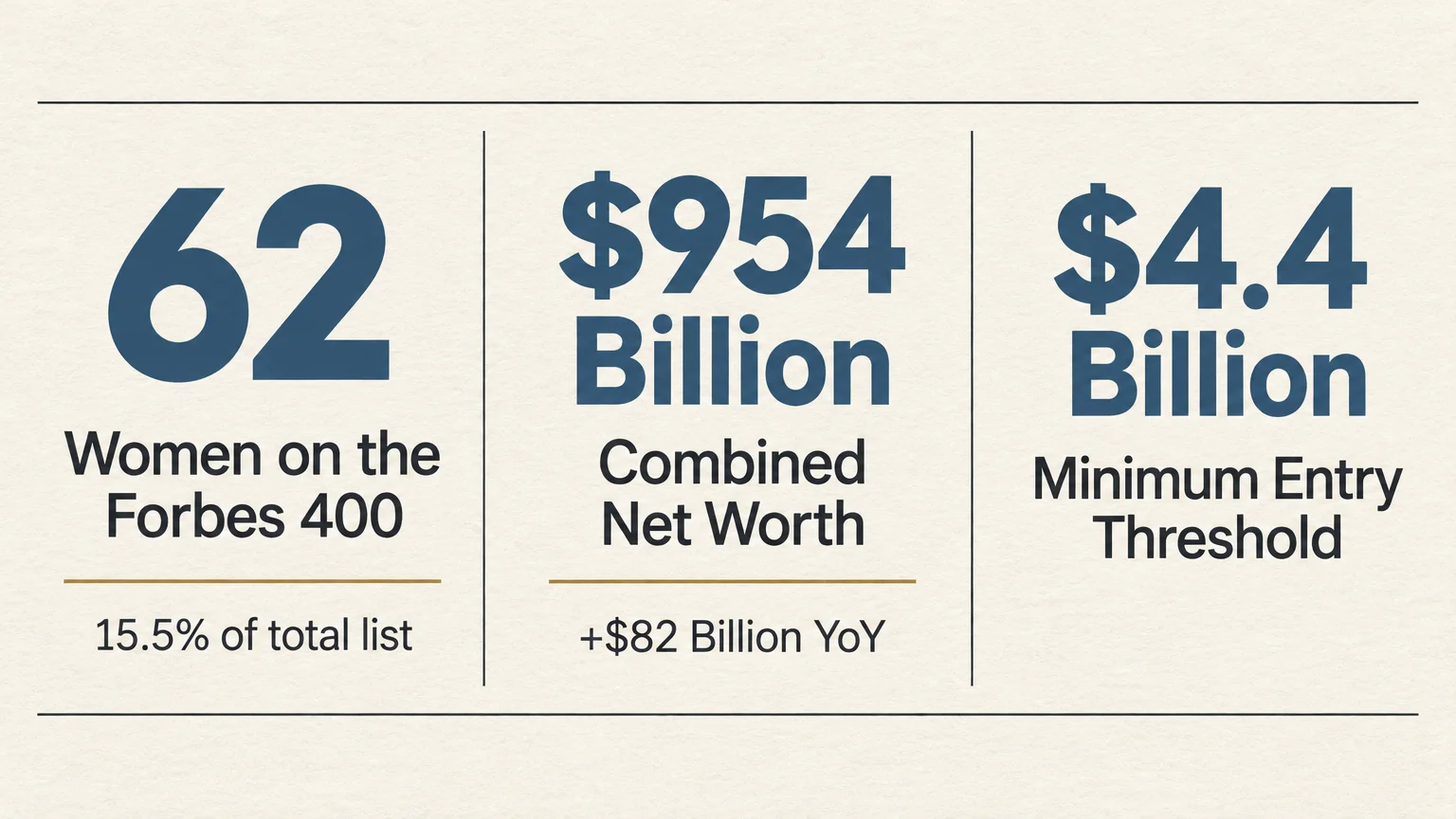
America’s wealthiest women hold more money in 2026 than ever before. Sixty-two women made the 2026 Forbes 400 list, controlling a combined $954 billion across retail, finance, technology, and manufacturing.
Yet those headline net worth figures only tell half the story. Roughly 80% of those women inherited at least part of their fortunes, while 43 self-made female billionaires cleared a separate $1 billion threshold in June 2026.
Examining how the richest women in America build, hold, and protect their assets reveals practical lessons for your own budget and investment plan.
The 2026 Landscape for Female Billionaires in America
Forbes released its 2026 Forbes 400 ranking on September 17, 2026, using stock valuations from September 4, 2026. Sixty-two women appeared on the list, matching 2025’s headcount and representing roughly 15.5% to 16% of America’s 400 richest individuals.
Their combined fortune reached $954 billion, jumping $82 billion from $872 billion in 2025. Seventy percent of the women returning from the 2025 ranking grew wealthier over the twelve-month period.
Entering the 2026 Forbes 400 required a record minimum net worth of $4.4 billion, up $600 million from 2025. Together, all 400 members held a record $8 trillion.
Most fortunes at the very top still trace back to family enterprises or inheritances. Nearly 80% of the 62 women inherited at least part of their wealth, while Forbes classifies 13 of them as self-made.
Global rankings show a similar concentration of wealth alongside gradual progress. On March 10, 2026, the Forbes World’s Billionaires list counted 481 women among 3,428 billionaires worldwide, or 14%, up from 406 women and 13.4% in 2025.
Worldwide, 122 female billionaires built self-made fortunes in March 2026, compared with 113 a year earlier. Only two women—America’s Alice Walton and France’s Françoise Bettencourt Meyers at $100 billion—sat inside the 20-member $100 Billion Club on that March list.
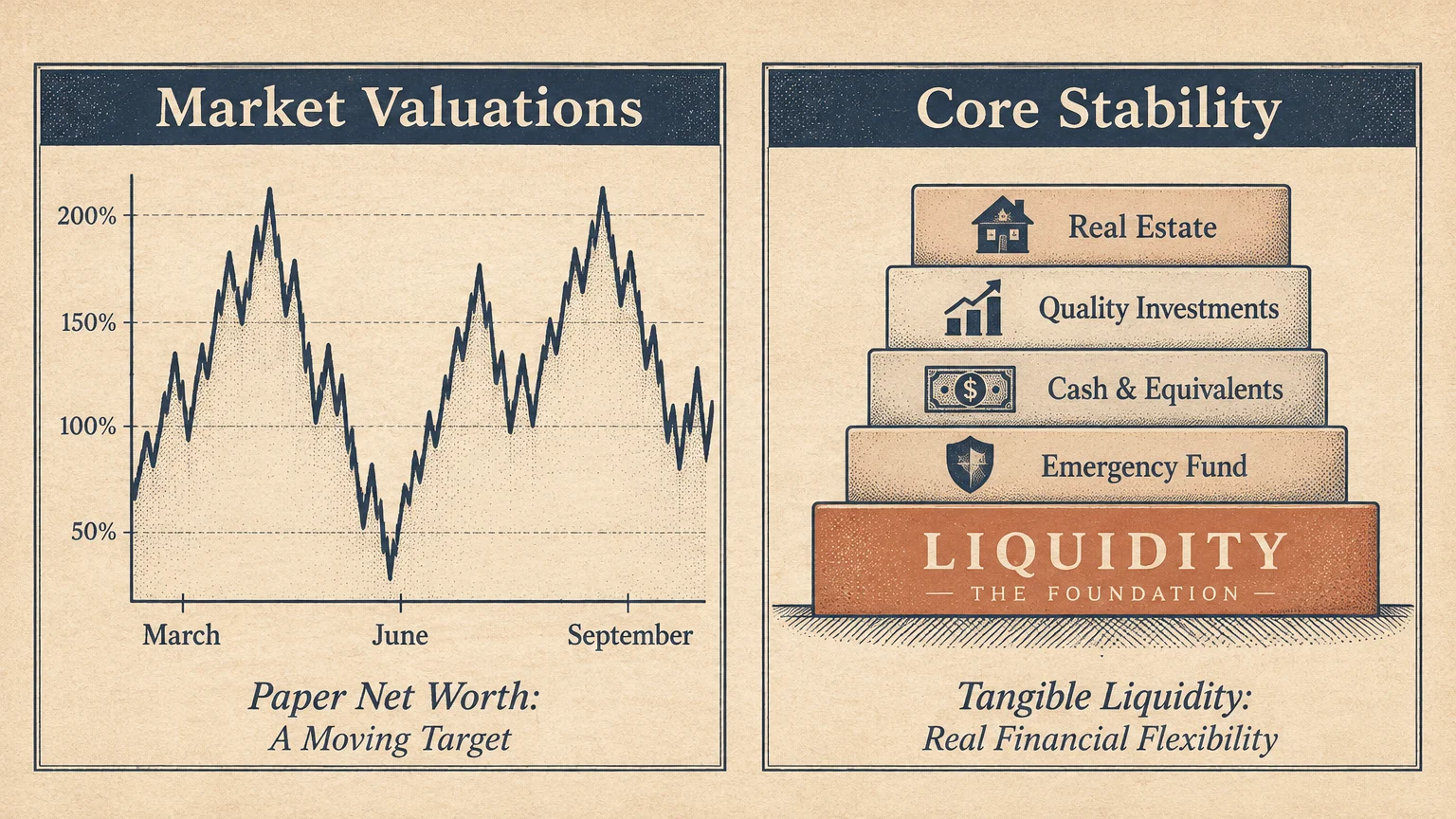
Remember that billionaire net worth changes every trading day. Valuation snapshots from March, June, September, and November 2026 differ because public share prices move constantly.
Top 10 Richest Women in America on the 2026 Forbes 400
The top 10 richest women in America represent legacy retail empires, industrial conglomerates, hedge funds, and tech fortunes. Their rankings below reflect Forbes’ September 4, 2026 valuation snapshot.
| Rank | Name (Age) | Net Worth (Sept. 2026) | Primary Wealth Source | Key 2026 Context |
|---|---|---|---|---|
| 1 | Alice Walton (76) | $118.0 billion | Walmart | Only U.S. woman above $100 billion on the Forbes 400 |
| 2 | Julia Koch & family (64) | $84.6 billion | Koch, Inc. | Added $3.4 billion year-over-year |
| 3 | Jacqueline Mars (86) | $50.3 billion | Mars, Inc. | Heir to the candy and pet food giant |
| 4 | Abigail Johnson (64) | $41.6 billion | Fidelity Investments | Chairs and leads the asset-management powerhouse |
| 5 | Marilyn Simons & family (75) | $36.6 billion | Renaissance Technologies | Holds family wealth from the quantitative hedge fund |
| 6 | Melinda French Gates (62) | $34.6 billion | Microsoft, investments | Directs capital toward philanthropy and women-focused funds |
| 7 | Miriam Adelson & family (80) | $33.5 billion | Las Vegas Sands | Controls majority stake in the global casino operator |
| 8 | Elaine Marshall & family (84) | $32.2 billion | Koch, Inc. | Holds an estimated 16% stake alongside her two sons |
| 9 | Lyndal Stephens Greth & family (51) | $30.0 billion | Oil & gas | Chaired Endeavor Energy Resources before its 2024 acquisition |
| 10 | MacKenzie Scott (56) | $27.9 billion | Amazon | Donated over $19 billion to more than 2,450 nonprofits |
Alice Walton claimed the top spot among American women for the fourth straight year and the eleventh time in twelve years. She ranked 13th overall on the 2026 Forbes 400.
Walton’s fortune jumped $12 billion from 2025 as Walmart shares climbed more than 10%. Forbes valued her even higher during other 2026 snapshots, placing her at $134 billion in March and between $137.6 billion and $138 billion in November real-time tracking.
Julia Koch and her family held second place at $84.6 billion through their stake in industrial giant Koch, Inc. Although her wealth rose about $3.4 billion, her gap behind Walton widened from $24.8 billion in 2025 to $33.4 billion in 2026.
Jacqueline Mars ($50.3 billion) and Abigail Johnson ($41.6 billion) highlight the durability of private family companies. Neither Mars, Inc. nor Fidelity Investments trades on public stock exchanges, insulating their valuations from daily retail investor swings.
Marilyn Simons ($36.6 billion) and Elaine Marshall ($32.2 billion) both oversee multi-generational stakes in privately held firms. Marshall controls roughly 16% of Koch, Inc. alongside her two sons.
Melinda French Gates ($34.6 billion) and Miriam Adelson ($33.5 billion) round out the sixth and seventh spots. French Gates manages investments stemming from Microsoft, while Adelson holds a controlling interest in Las Vegas Sands.
Lyndal Stephens Greth ($30.0 billion) ranks ninth after chairing Endeavor Energy Resources, which Diamondback Energy acquired in 2024. At age 51, she is the youngest member of the overall top 10.
MacKenzie Scott ($27.9 billion) rounds out the top 10 and stands apart for the pace of her giving. Since receiving a 4% Amazon stake in her 2019 divorce from Jeff Bezos, she has donated over $19 billion to more than 2,450 nonprofits.
Scott ranks among the very few Forbes 400 members who have given away more than 20% of their wealth. Her unrestricted grants flow straight to community colleges, food banks, and local housing groups.
Notable 2026 Forbes 400 Female Newcomers
Four prominent women joined the Forbes 400 in September 2026 through artificial intelligence growth, corporate inheritance, public listings, and divorce settlements. Their paths illustrate how fast modern valuations shift.
- Daniela Amodei ($15.5 billion): The Anthropic cofounder debuted at #75 overall as the richest female newcomer, riding surging private valuations in artificial intelligence.
- Catherine Commisso ($5.2 billion): She inherited cable company Mediacom following the 2026 passing of her husband, Rocco Commisso.
- Wendy Abrams ($4.7 billion): As a Medline heir, her net worth cleared the Forbes 400 bar after the medical supply firm went public in December 2025.
- Jennifer Gilbert ($4.7 billion): She joined the list holding assets from her divorce from Rocket Mortgage founder Dan Gilbert.

America’s Richest Self-Made Women in 2026
On June 3, 2026, Forbes published its eleventh annual ranking of America’s richest self-made women using June 1 stock prices. For the first time, Forbes restricted the list strictly to billionaires worth $1 billion or more.
That $1 billion floor removed past non-billionaire honorees such as Dolly Parton, Kylie Jenner, and Selena Gomez. Even with the higher cutoff, 43 self-made female billionaires qualified, up from 38 in 2025.
Those 43 women hold a record $166.3 billion combined. The top 10 self-made women alone control $96 billion, more than triple what the top 10 held on Forbes’ inaugural 2015 list.
Technology and artificial intelligence drove much of that surge, accounting for 20 of the 43 self-made women. Forbes also counts women who cofounded businesses alongside spouses—such as Diane Hendricks, Marian Ilitch, and Peggy Cherng—within its self-made category.
Still, a wide gender gap persists at the billionaire tier. Forbes counts 700 self-made male billionaires in the United States worth $6.7 trillion combined, leaving self-made women with just 2.4% of U.S. self-made billionaire wealth.
| Rank | Name | Net Worth (June 2026) | Company / Industry | Notable 2026 Milestone |
|---|---|---|---|---|
| 1 | Diane Hendricks | $21.7 billion | ABC Supply (building supplies) | Ranked #1 self-made woman for the 9th straight year |
| 2 | Daniela Amodei | $15.5 billion | Anthropic (artificial intelligence) | Surged from #28 ($1.2B) in 2025; youngest in top 10 |
| 3 | Judy Faulkner | $9.6 billion | Epic Systems (health software) | Pledged in 2015 to donate 99% of her fortune |
| 4 | Thai Lee | $8.0 billion | SHI International (IT services) | Built one of America’s largest woman-owned IT providers |
| 5 | Marian Ilitch & family | $7.6 billion | Little Caesars (pizza & hospitality) | Cofounded the pizza chain and owns Detroit sports/casino assets |
| 6 | Elizabeth Uihlein | $6.9 billion | Uline (shipping supplies) | Cofounded and leads the business-to-business distributor |
| 7 | Jayshree Ullal | $6.8 billion | Arista Networks (networking) | Climbed to $7.2 billion on the September 2026 Forbes 400 |
| 8 (tie) | Johnelle Hunt | $6.7 billion | J.B. Hunt (logistics) | At age 94, holds a major stake in the trucking leader |
| 8 (tie) | Eren Ozmen | $6.7 billion | Sierra Nevada Corp. (aerospace) | Leads defense and space systems contractor with her husband |
| 10 | Peggy Cherng | $6.5 billion | Panda Express (restaurants) | Rose to $8.3 billion on the September 2026 Forbes 400 |
Diane Hendricks held #1 among self-made women for the ninth consecutive year at $21.7 billion in June, rising to $22.3 billion by September 2026. Her roofing and siding distributor, ABC Supply, generated $20.2 billion in 2025 revenue despite a 2.3% dip.
Daniela Amodei, 38, delivered the year’s fastest climb, jumping from #28 and $1.2 billion in 2025 to #2 at $15.5 billion. Anthropic closed a $65 billion funding round at a $965 billion valuation, making her the youngest woman in the top 10.
Judy Faulkner ($9.6 billion) founded electronic health records giant Epic Systems and signed the Giving Pledge in 2015 to donate 99% of her wealth. Thai Lee ($8.0 billion) built SHI International into a corporate IT powerhouse.
Brick-and-mortar and logistics entrepreneurs fill the rest of the self-made top 10. Marian Ilitch ($7.6 billion), Elizabeth Uihlein ($6.9 billion), Johnelle Hunt ($6.7 billion), and Peggy Cherng ($6.5 billion in June; $8.3 billion by September) built enduring cash-flowing businesses.
Meanwhile, tech and aerospace executives Jayshree Ullal ($6.8 billion in June; $7.2 billion by September) and Eren Ozmen ($6.7 billion) demonstrate how specialized engineering leadership creates massive equity value.
Youngest Founders, Tech Executives, and Celebrity Entrepreneurs
Beyond the top 10, the June 2026 self-made list spotlighted younger startup founders, corporate executives, and entertainment entrepreneurs who turned brands into equity.
- Luana Lopes Lara ($2.6 billion): At age 30, the Kalshi cofounder became the youngest self-made female billionaire in the U.S., having first crossed $1 billion at age 29.
- Colette Kress and Caryn Seidman-Becker: Nvidia CFO Colette Kress became a billionaire in July 2025 through Nvidia equity and briefly served as interim CEO from November 12 to November 23, 2026; Clear Secure CEO Caryn Seidman-Becker also joined the list.
- Oprah Winfrey ($3.4 billion): Ranked #16 among self-made women, Winfrey also earned #1 on Forbes 250: The Greatest Living Self-Made Americans.
- Taylor Swift ($2.0 billion) and Kim Kardashian ($1.9 billion): Swift ranked #23 on touring and catalog value, while Kardashian held #25 through SKIMS and beauty stakes.
- Rihanna ($1.0 billion) and Beyoncé Knowles-Carter ($1.0 billion): Rihanna tied at #39, while Beyoncé debuted as a billionaire after her 2025 Cowboy Carter Tour grossed over $450 million in ticket and merchandise sales.
Forbes also noted the recent passings of two pioneering self-made founders. Gap cofounder Doris Fisher died in May 2026 at age 94, and Bio-Rad Laboratories cofounder Alice Schwartz died in September 2025 at age 99.
How Billionaire Fortunes Compare to Typical American Households
Reading about $100 billion fortunes can distort how you view your own progress. For an accurate benchmark, turn to the Federal Reserve’s 2025 Survey of Consumer Finances (SCF), released on October 9, 2026.
According to that Federal Reserve report, the median U.S. family net worth stood at $215,900 in 2025, up 2% from 2022 after adjusting for inflation. That median figure marks the true middle: half of American families hold more, and half hold less.
By contrast, the mean—or average—U.S. family net worth reached $1,241,500 ($1.24 million), rising 7% in real terms from 2022. Ultra-wealthy households pull the average up to nearly six times the median.
Income follows a similar pattern. Median U.S. family income reached $82,200 in 2025, up 7% in inflation-adjusted terms from 2022, while mean family income hit $145,200.
The gap between wealth tiers remains wide across the country. Households in the bottom 25% held a median net worth of just $1,690, compared with $4.927 million for families at or above the 90th percentile.
| Age of Reference Person | 2025 Median Family Net Worth | Change Since 2022 (Inflation-Adjusted) |
|---|---|---|
| Under 35 | $33,000 | Down 23% |
| 35–44 | $155,600 | Core accumulation stage |
| 45–54 | $253,700 | Mid-career asset growth |
| 55–64 | $411,900 | Pre-retirement peak saving |
| 65–74 | $431,300 | Early retirement stability |
| 75 or older | $504,900 | Peak median household wealth |
For most families, two everyday assets drive that steady climb across decades. In 2025, 66% of U.S. families owned a home with a median net home equity of $230,000, and roughly 65% participated in a retirement plan.

Five Practical Wealth Lessons You Can Use Today
You do not need a billion-dollar startup or a family conglomerate to apply the core mechanics behind these rankings. Several patterns from the 2026 lists translate directly into everyday personal finance decisions.
1. Prioritize Asset Ownership Over Paychecks Alone
Almost no one reaches high net worth strictly by trading hours for a salary. Even corporate executives like Nvidia CFO Colette Kress or Jayshree Ullal crossed into billionaire territory through long-term equity ownership.
In your own budget, every dollar you route into a 401(k), Roth IRA, or brokerage account shifts your income into appreciating assets. You can review foundational investing concepts and diversification principles on Investor.gov.
2. Give Compounding Decades to Work
Look at the ages across the 2026 lists and the Federal Reserve data. Many self-made founders—like Diane Hendricks, Johnelle Hunt, and Peggy Cherng—built their fortunes steadily across 30 to 50 years.
Your household balance sheet follows the same timeline, growing from a median $33,000 under age 35 to $504,900 at age 75 and older. Automating modest monthly contributions early gives compounding time to do the heavy lifting.
3. Respect Single-Stock Concentration Risk
Alice Walton gained $12 billion in a year because Walmart rose over 10%, while Daniela Amodei jumped $14.3 billion on one company’s valuation surge. Concentrated equity creates massive upside, yet it cuts just as sharply in a downturn.
For a retirement portfolio, holding all your savings in one employer stock puts your paycheck and nest egg in the same basket. Broad, low-cost index funds spread risk across hundreds of companies so one bad year never derails your retirement.
4. Value Boring, Cash-Flowing Businesses
While AI headlines dominate 2026 news, roofing materials, cardboard boxes, IT supply chains, and fast-casual restaurants created billions in durable wealth. ABC Supply, Uline, SHI International, Little Caesars, and Panda Express all solve everyday needs reliably.
That lesson applies both to career choices and side businesses. Steady demand and disciplined profit margins often outlast trend-chasing ventures.
5. Plan Charitable Giving and Taxes Intentionally
MacKenzie Scott and Judy Faulkner treat philanthropy as a core part of their financial plan rather than an afterthought. Even on a household budget, timing your donations and using tax-advantaged giving strategies keeps more money working toward causes you care about.
If you itemize deductions or donate appreciated shares instead of cash, you may lower your taxable income while supporting local charities. Always verify current charitable deduction rules and thresholds on IRS.gov.
Things to Watch Out For
Wealth rankings make compelling reading, yet misinterpreting the numbers can lead to poor financial choices. Watch out for these four common traps when comparing your own plan to billionaire profiles.
- Confusing paper net worth with spendable cash: Billionaire valuations rise and fall by billions in a single quarter—like Alice Walton moving from $118 billion in September to $138 billion in November—because most of their wealth sits in illiquid or concentrated shares. Never treat unrealized home equity or volatile stock gains like cash in your checking account.
- Measuring yourself against the mean instead of the median: Using the $1.24 million average U.S. net worth as your yardstick ignores how ultra-wealthy households skew that math. Compare your savings progress against the $215,900 national median and your own age bracket instead.
- Overestimating solo-founder narratives: Forbes’ self-made category includes women who cofounded empires alongside spouses or scaled existing family partnerships. Do not drain your personal emergency fund trying to imitate an idealized overnight success story.
- Skipping cash reserves to chase high-growth bets: Concentrating money in speculative startups or crypto without an emergency cushion leaves you vulnerable to layoffs or medical bills. Build three to six months of essential expenses first using practical budgeting tools from the Consumer Financial Protection Bureau.
When DIY Isn’t Enough
Managing a straightforward budget and index-fund 401(k) works well on your own for years. Certain milestones, however, introduce tax traps and legal rules where guessing costs far more than professional advice.
Consider hiring a fee-only Certified Financial Planner, CPA, or estate attorney if you face any of these four situations.
- Concentrated employer equity: If company stock options, RSUs, or ESPP shares represent more than 10% to 15% of your net worth, a planner can map out a tax-aware diversification schedule.
- An inheritance, divorce, or sudden windfall: Inherited retirement accounts carry strict withdrawal timelines, and divorce asset splits create capital-gains traps if handled without specialized tax guidance.
- Growing small-business income: Choosing between an S-Corp election, SEP IRA, or Solo 401(k) and planning a future business sale requires a CPA who knows current federal and state rules.
- Complex retirement and estate transitions: Coordinating Social Security claiming, required minimum distributions, Medicare income surcharges, and beneficiary trusts protects your family from avoidable taxes.
Frequently Asked Questions
Who is the richest woman in America in 2026?
Alice Walton is the richest woman in America in 2026, holding a $118 billion net worth on the September 2026 Forbes 400. Her Walmart stake kept her at #1 among U.S. women for the fourth straight year.
How many women made the 2026 Forbes 400?
Sixty-two women made the 2026 Forbes 400, matching 2025’s total and holding $954 billion combined. Qualifying for the list required at least $4.4 billion in net worth.
Who is the youngest self-made female billionaire in the U.S. in 2026?
Kalshi cofounder Luana Lopes Lara, age 30, is America’s youngest self-made female billionaire in 2026 with a $2.6 billion fortune. Anthropic cofounder Daniela Amodei, age 38, ranks #2 overall among self-made women at $15.5 billion.
How does typical U.S. household wealth compare to billionaire rankings?
According to the Federal Reserve’s 2025 Survey of Consumer Finances released in October 2026, median U.S. family net worth is $215,900. Even households at or above the 90th percentile hold a median of $4.927 million—far below the $4.4 billion Forbes 400 cutoff.

Putting the 2026 Wealth Numbers to Work for You
America’s wealthiest women show that lasting net worth comes from owning equity, holding profitable assets across decades, and protecting against concentration risk. You can apply those same habits today by automating retirement contributions, keeping fees low, and growing your emergency savings.
The information here is meant for educational purposes. Specific circumstances—including health conditions, finances, location, and goals—may require different approaches, so consult a licensed professional or check official sources directly when in doubt.
Last updated: November 2026. Rules, prices, and details change—verify current information with official sources before acting on it.









Leave a Reply