
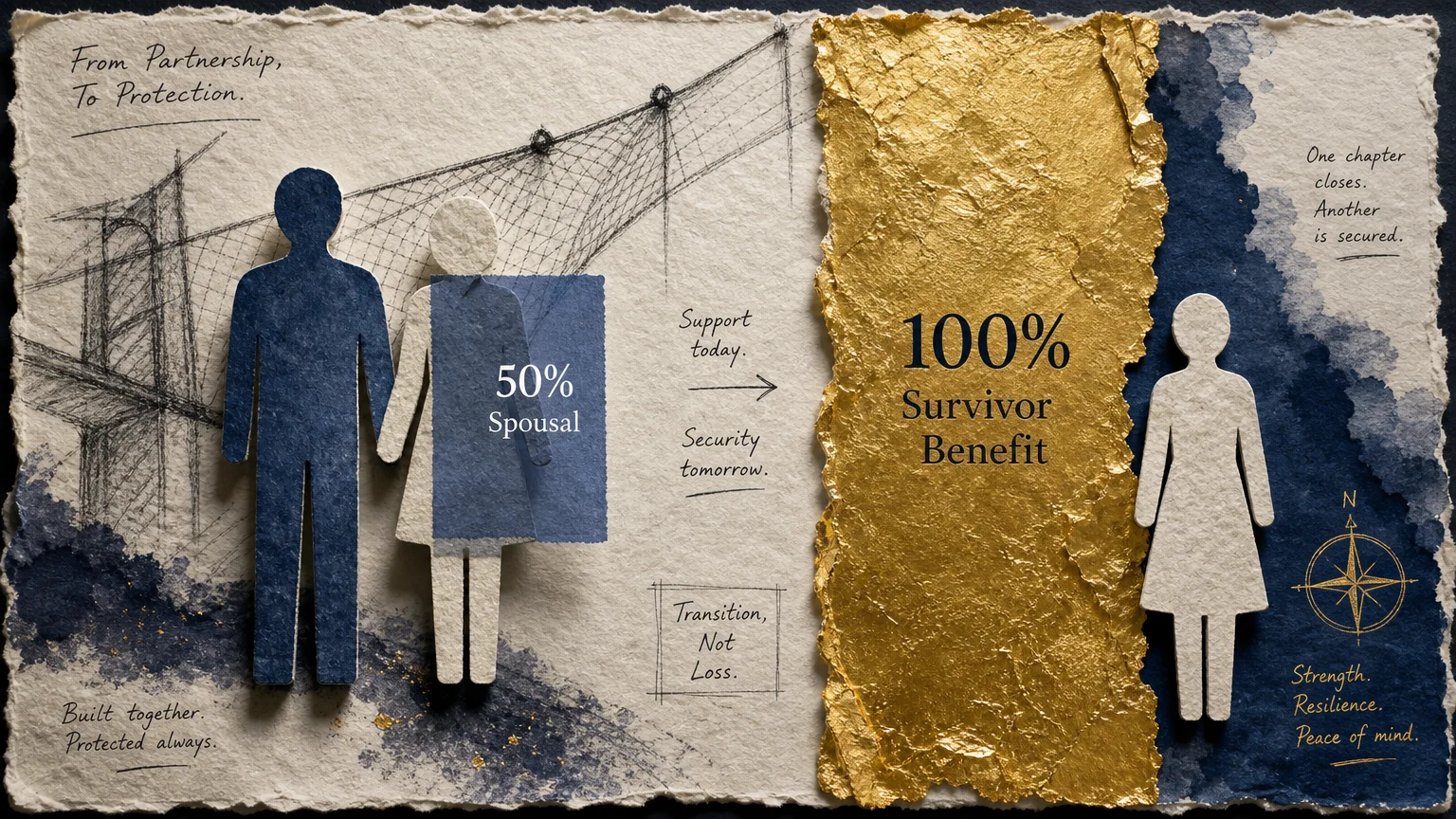
Rules for Surviving Spouses
5. Survivor benefits can replace 100% of the deceased spouse’s check
Unlike spousal benefits, which are capped at 50%, survivor benefits can pay up to 100% of the deceased worker’s benefit. This includes any delayed retirement credits the deceased spouse accumulated by waiting to file.
If the higher earner delayed their claim until age 70 and built a $3,500 monthly benefit, the surviving spouse can step into that exact $3,500 payment. However, when a spouse passes away, the household loses the smaller of the two Social Security checks; you receive the higher survivor benefit, but your own lower benefit stops.
6. You can claim a survivor benefit as early as age 60
While standard retirement and spousal benefits become available at age 62, surviving spouses can access survivor benefits starting at age 60 (or age 50 if the survivor has a qualifying disability). Claiming at age 60 permanently reduces the payment to 71.5% of the deceased spouse’s full amount. The monthly payout increases incrementally for every month you delay filing, reaching the full 100% replacement rate once you hit your survivor full retirement age.
7. You can switch between survivor benefits and your own retirement
Since 2015, new laws eliminated the ability to switch between spousal and individual benefits for most retirees. However, surviving spouses retain a powerful loophole: you can restrict your application to just one type of benefit and let the other grow.
For instance, a widow might claim a reduced survivor benefit at age 60, allowing her own individual retirement benefit to grow untouched until it maximizes at age 70. At 70, she can switch to her own benefit if it provides a higher monthly payout. This requires actively filing the separate claims; the Social Security Administration does not switch you automatically.
8. Remarrying before age 60 permanently forfeits your survivor benefits
Marriage timing strictly dictates survivor eligibility. If a widow or widower remarries before turning 60 (or 50 if disabled), they lose their eligibility to collect survivor benefits on their deceased spouse’s work record. The payments simply stop.
However, if the remarriage happens at age 60 or older, the survivor keeps full access to the deceased spouse’s benefits. The older couple can then decide whether the survivor should draw from the deceased spouse, the new spouse, or their own record, depending on which yields the highest check.









My wife passed away June of 2024…am I entitled to any of her Social security …?