
Common Mistakes to Avoid
Managing concurrent benefits requires sharp attention to detail. A small oversight can lead to benefit suspensions or frustrating overpayment letters from the SSA.
- Failing to claim early retirement: Because SSI is a program of last resort, you cannot choose to delay your Social Security retirement to age 70 to maximize the payout. The SSA requires you to apply for early retirement at age 62 if you are eligible. If you refuse, your SSI benefits will be suspended.
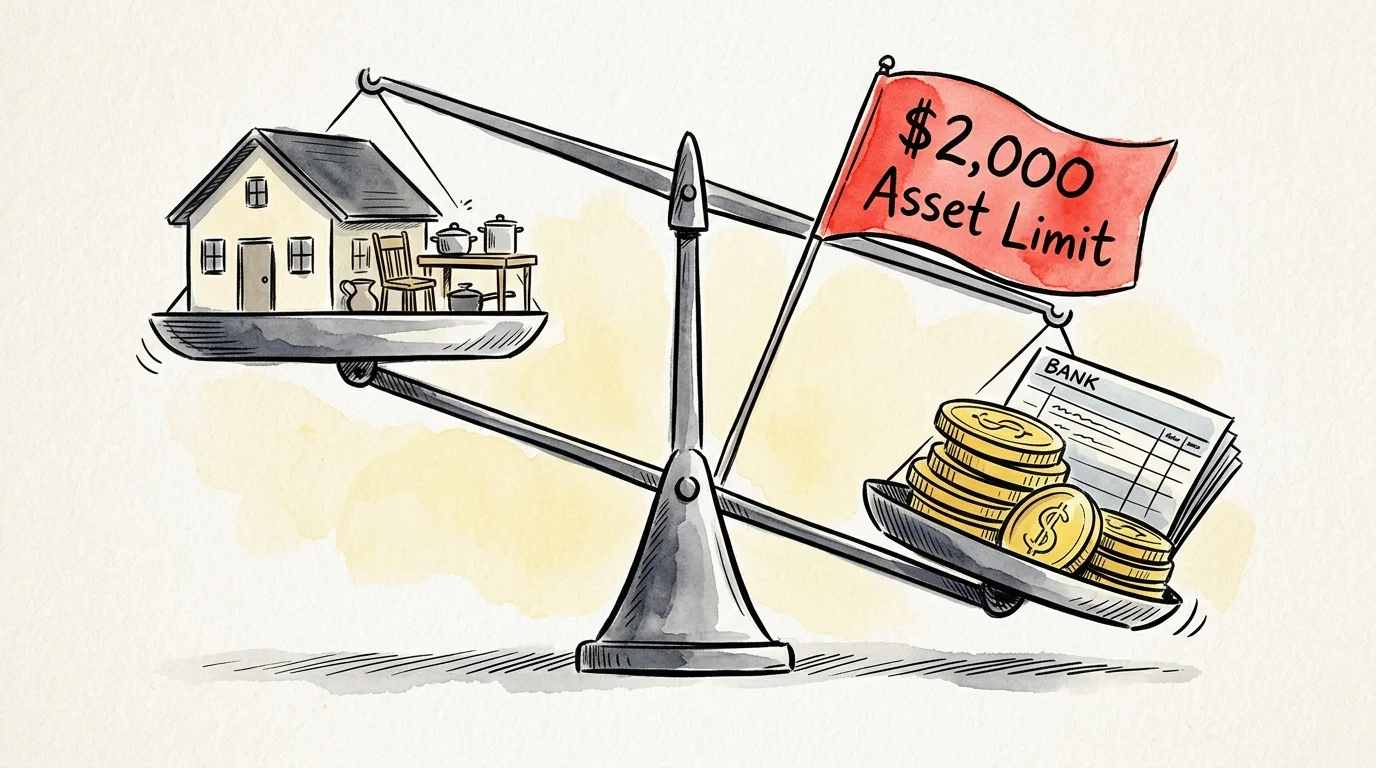
- Letting pension income pile up in your bank account: SSI has a strict resource limit. You cannot hold more than $2,000 in assets as an individual, or $3,000 as a couple. This includes cash in your checking account. If your pension and SSI deposits arrive, and you do not spend them down below the $2,000 threshold by the first day of the next month, you will lose your SSI eligibility for that month.
- Forgetting to report pension cost-of-living adjustments: Many pensions offer an annual inflation increase. If your private pension or VA benefit goes up by $50 a month, you must report this to the Social Security Administration immediately. If you do not, the SSA will eventually catch the discrepancy and demand you repay the extra SSI you received in error.
- Assuming your spouse’s pension is exempt: If you are married and living with your spouse, the SSA practices “deeming.” They deem a portion of your spouse’s pension as your income. Even if the pension is entirely in your spouse’s name, it can drastically reduce or eliminate your SSI payment.








Good to receive assistance to receive from SSI $900.00
Good to receive assistance to receive from SSI $900.00 every month