
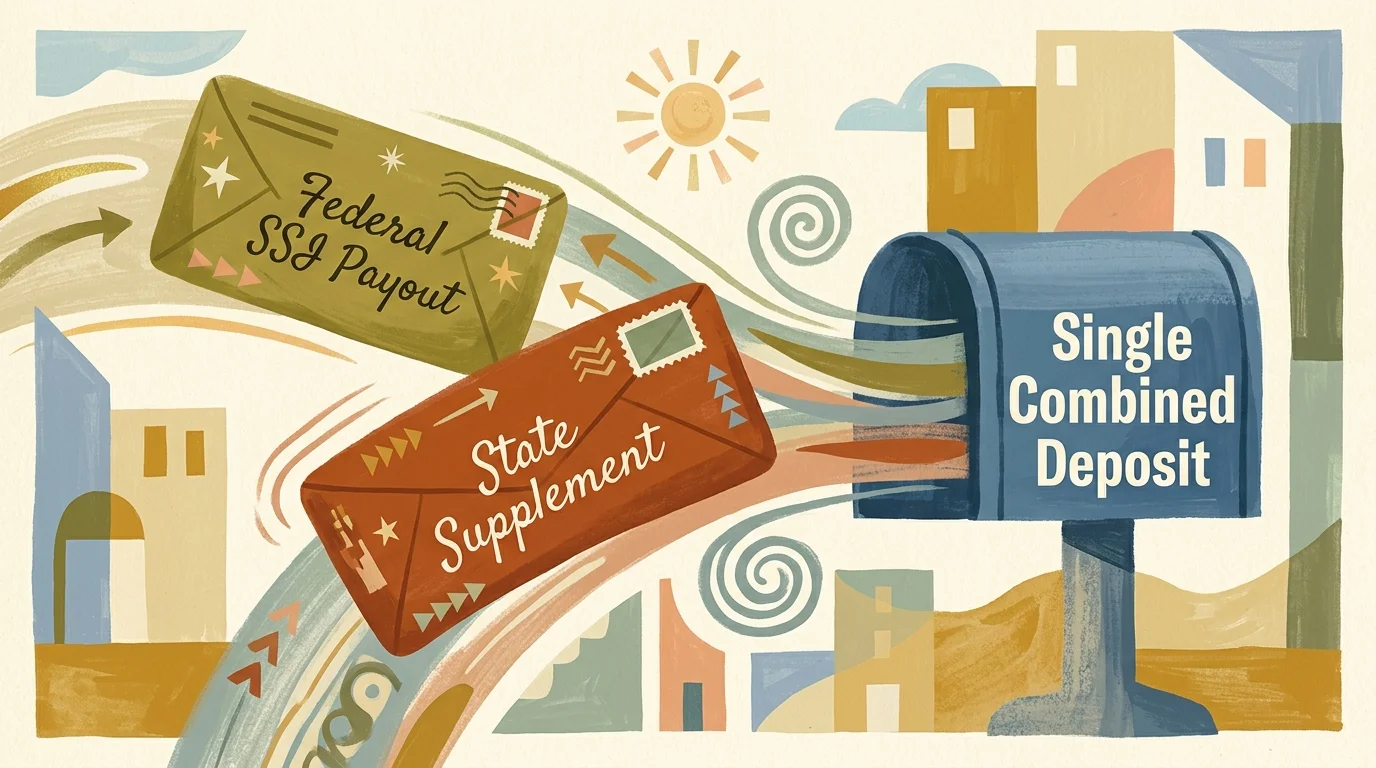
Federal vs. State Supplements: Where the “Combined” Check Gets Its Name
The term “combined check” is not entirely a myth. It accurately describes how certain states manage their supplemental SSI payments. Because the federal SSI rate is often not enough to cover the cost of living in high-priced areas, many states offer a state-funded supplement on top of the federal $994 base.
How you receive this state supplement depends entirely on where you live. In states like California, Hawaii, Michigan, Montana, Nevada, New Jersey, and Vermont, the state government pays the SSA to administer the supplement on their behalf. If you live in one of these federally administered states, the SSA literally combines your federal SSI amount and your state supplement into one single check or direct deposit.
If you live in a state-administered jurisdiction—such as New York or Massachusetts—the state manages its own supplement. In these locations, you receive your federal SSI from the U.S. Treasury and a completely separate payment from your state’s revenue department, meaning you have to manage multiple incoming deposits and separate agency applications.









Good to receive assistance to receive from SSI $900.00
Good to receive assistance to receive from SSI $900.00 every month