
The average American household will pay roughly 18.6 cents per kilowatt-hour for electricity in 2027, marking a continuous upward climb. Your utility bills are rising because the grid delivering that power requires massive, costly upgrades, not because generating electricity is drastically more expensive. Regional utilities are actively requesting billions in rate increases to harden infrastructure against extreme weather and support surging commercial demand from data centers. If you are balancing a household budget, assuming your utility costs will stay flat is a risky gamble. Understanding exactly why rates are shifting—and adjusting your home’s usage habits—is the smartest way to protect your finances against unavoidable inflation over the next eighteen months.
What This Means for You
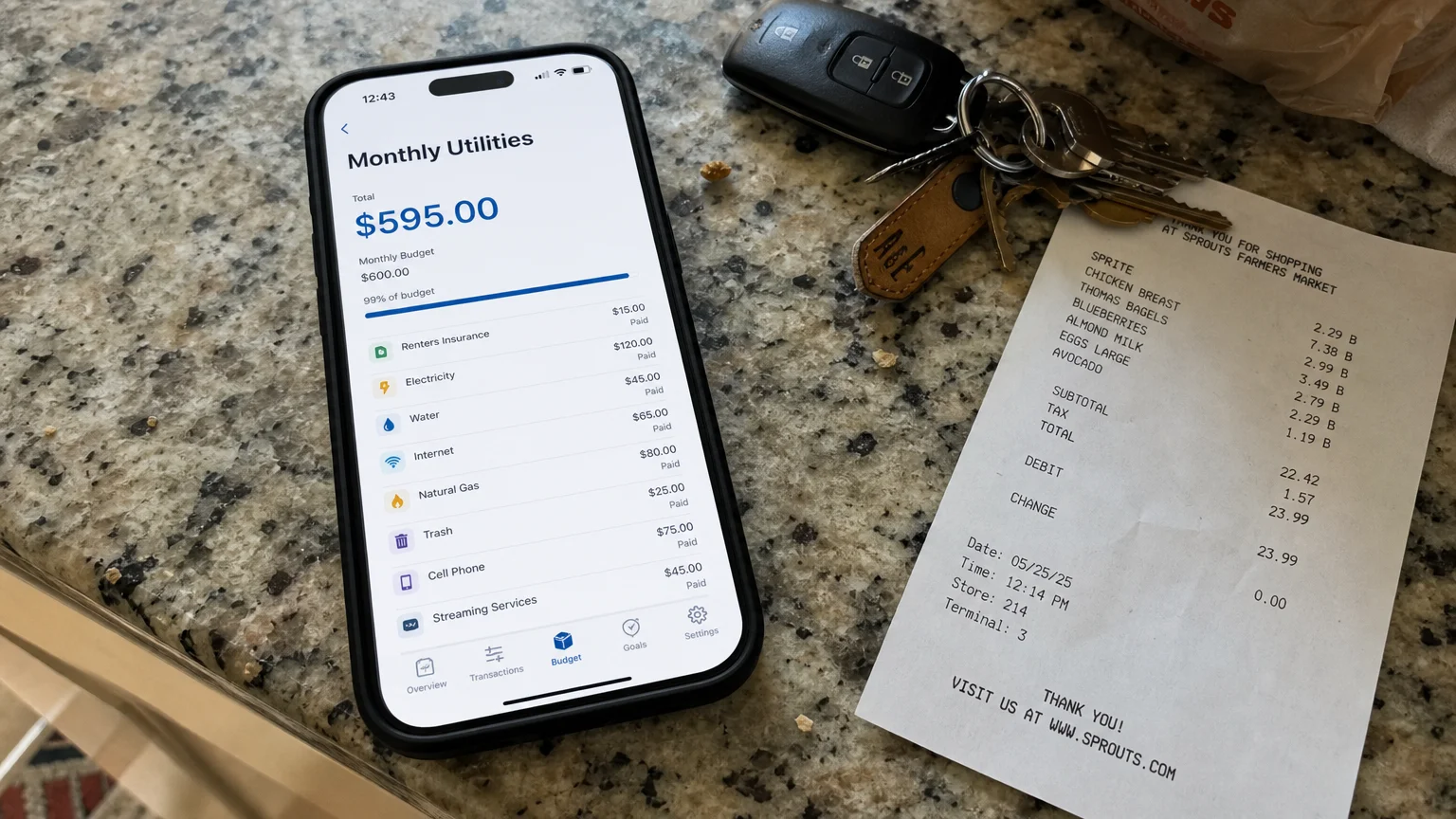
When you look at your household budget, utility costs have quietly evolved from a predictable background expense into a volatile line item. As of mid-2026, the average American household spends nearly $595 per month on combined utilities, encompassing electricity, natural gas, water, and internet services. While you might fixate on turning off lights or adjusting the thermostat to save a few dollars, the core issue driving your bills higher is completely out of your hands: grid delivery charges.
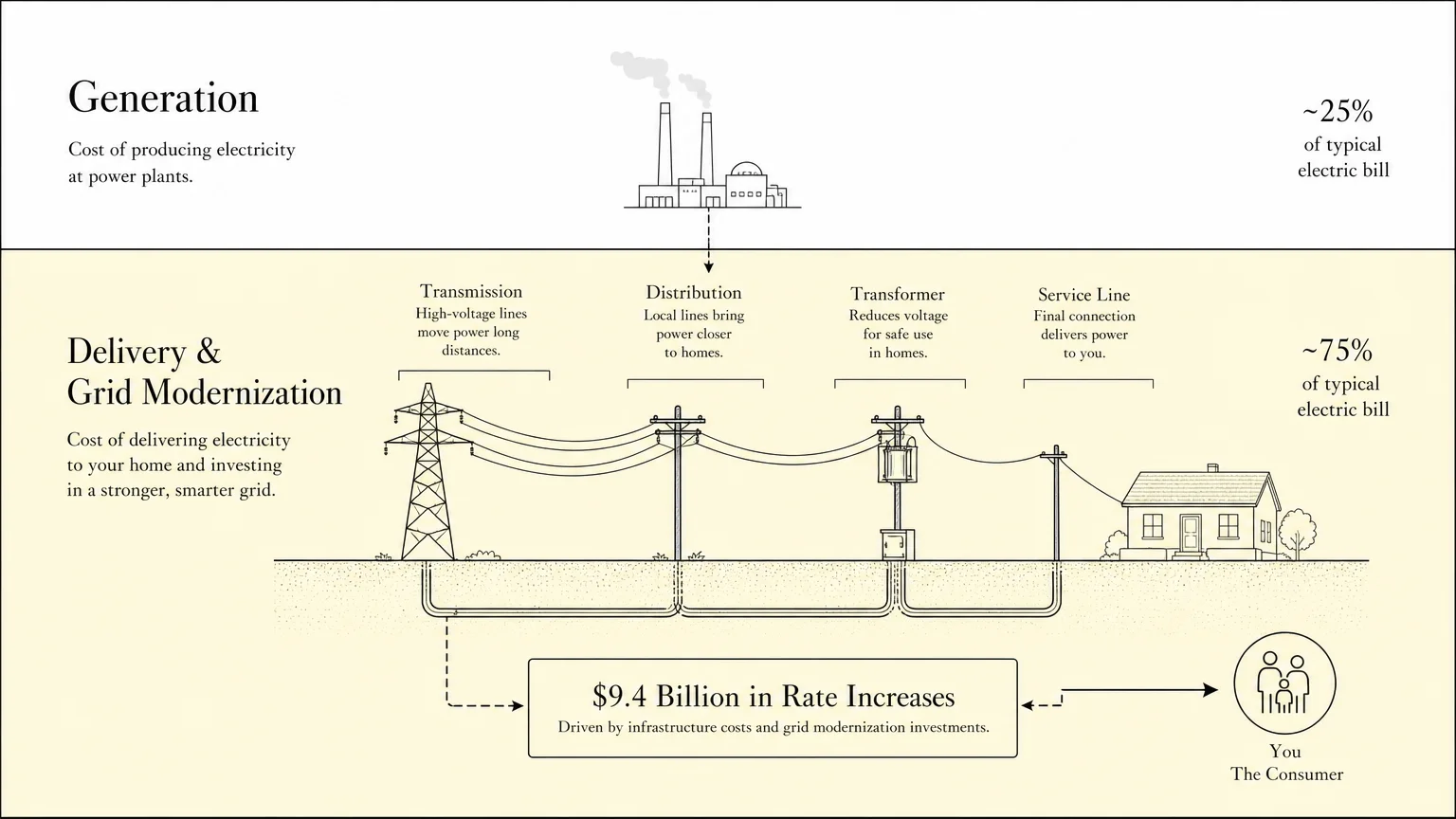
Your energy bill is split into two main components. The first is the cost of the actual energy generated, known as the supply or generation charge. The second is the delivery or transmission charge, which covers the physical infrastructure required to move that energy from a power plant to your living room. Wholesale energy costs—particularly natural gas used for generation—have remained relatively stable over the past two years. However, the delivery fees are surging. You are paying for the ongoing modernization of the American power grid.
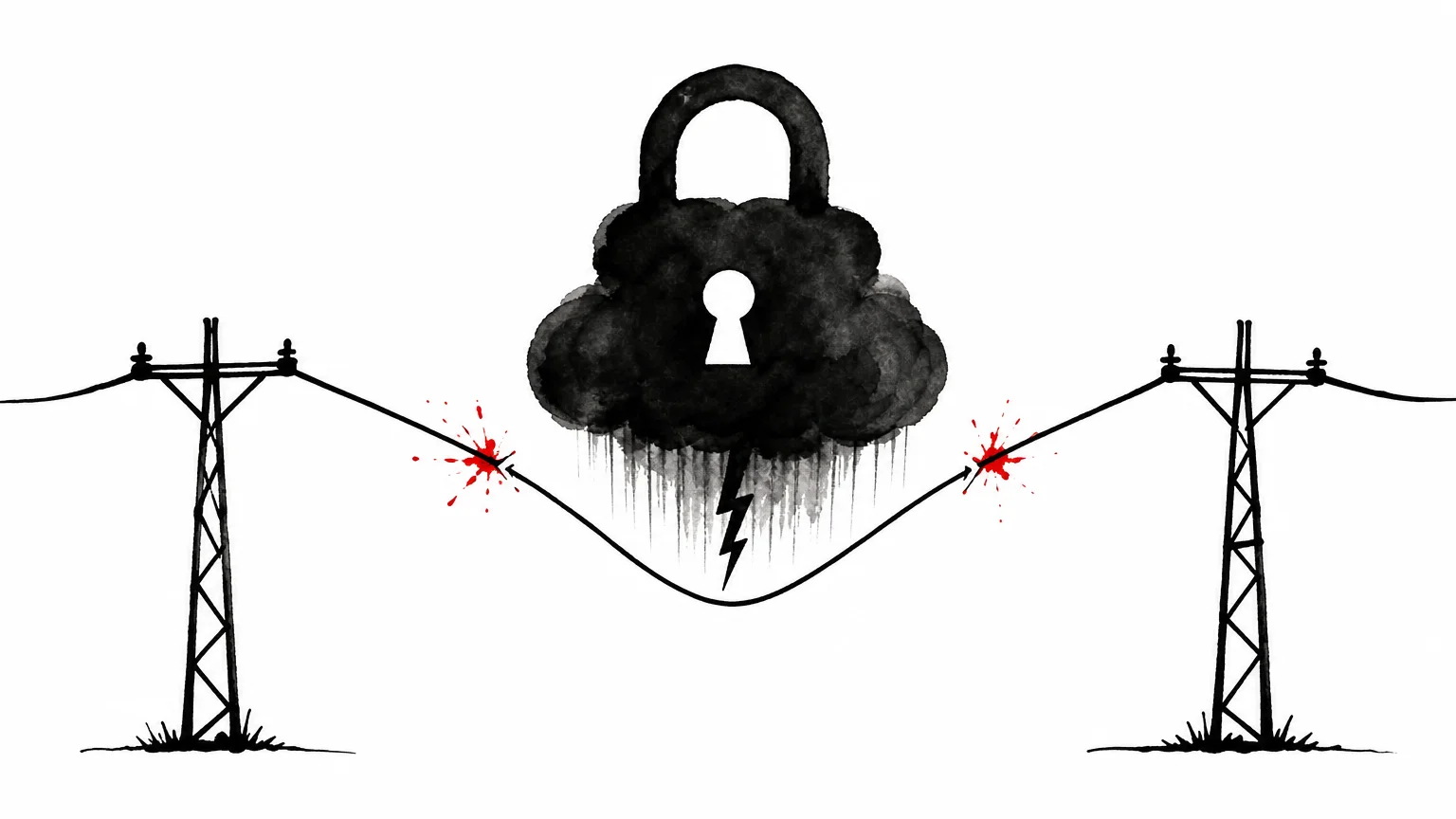
Electric utilities are deploying vast amounts of capital to bury power lines in fire-prone areas, upgrade transformers to handle two-way power flow from residential solar panels, and defend their networks against cybersecurity threats. In the first quarter of 2026 alone, utilities nationwide filed for more than $9.4 billion in rate increases to cover these exact capital expenditures. Because utilities are legally allowed to pass infrastructure costs on to ratepayers, you will absorb these expenses in the form of higher base charges, regardless of how aggressively you conserve energy at home.
The 2027 Electricity Price Forecast
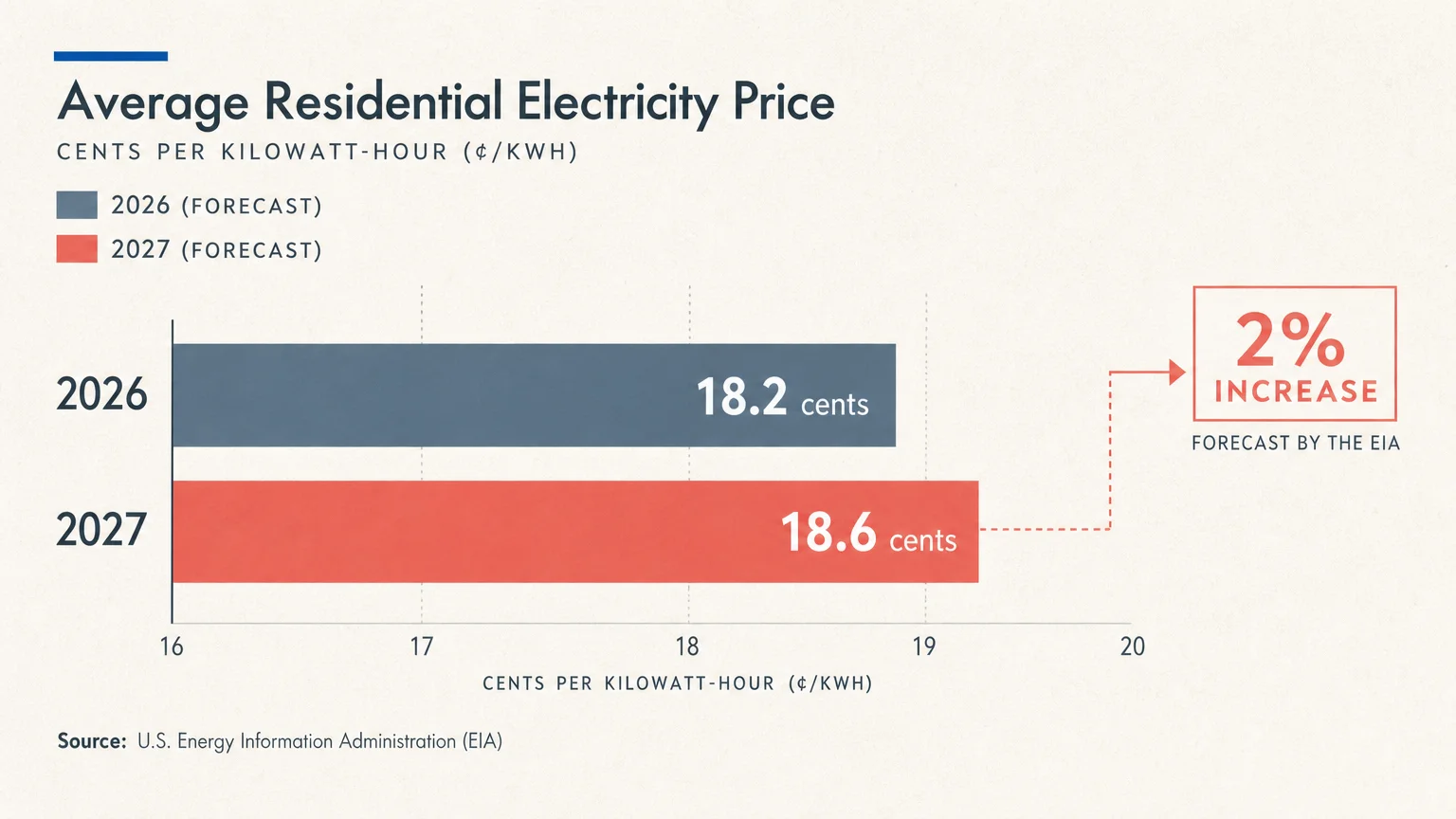
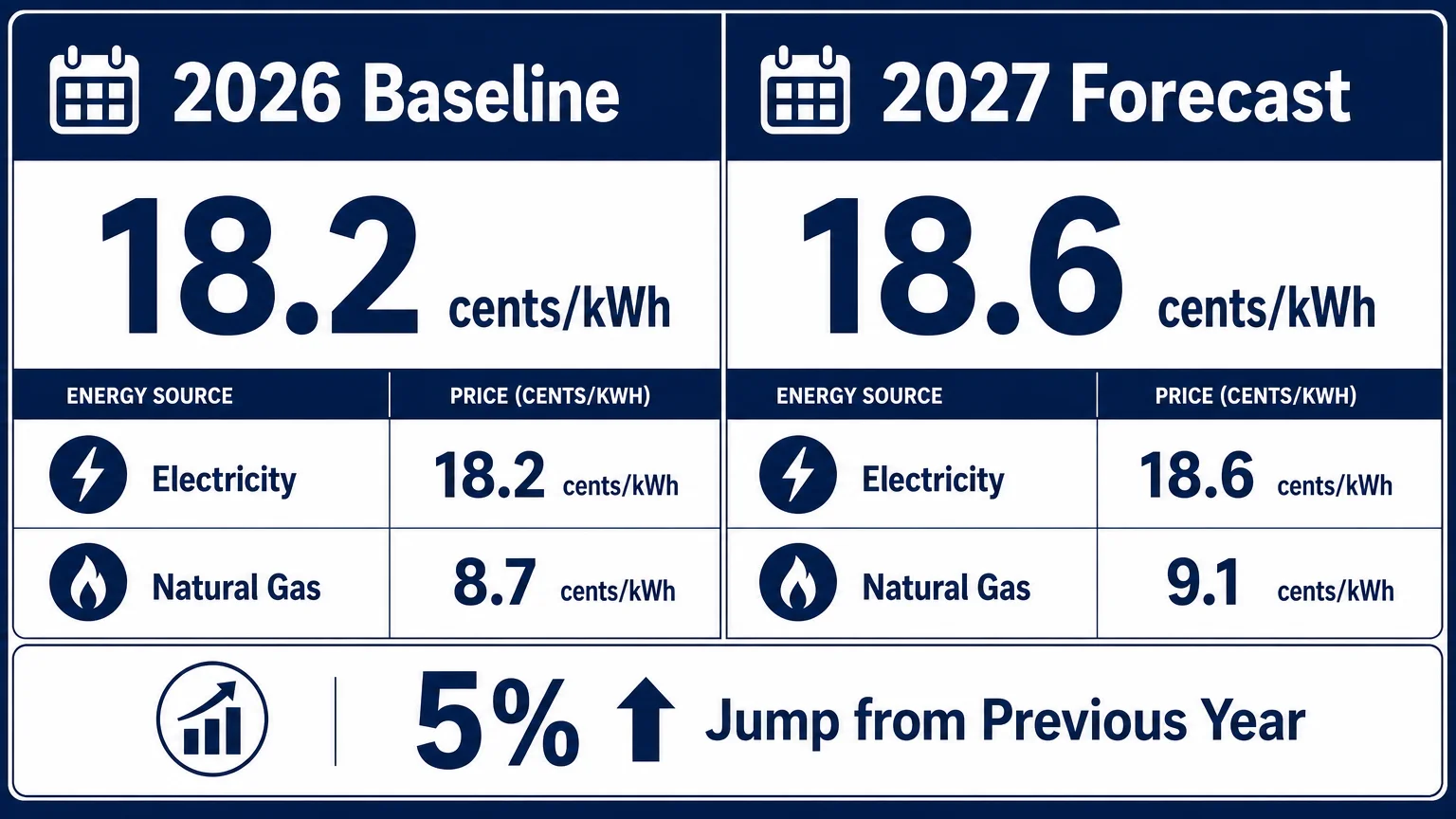
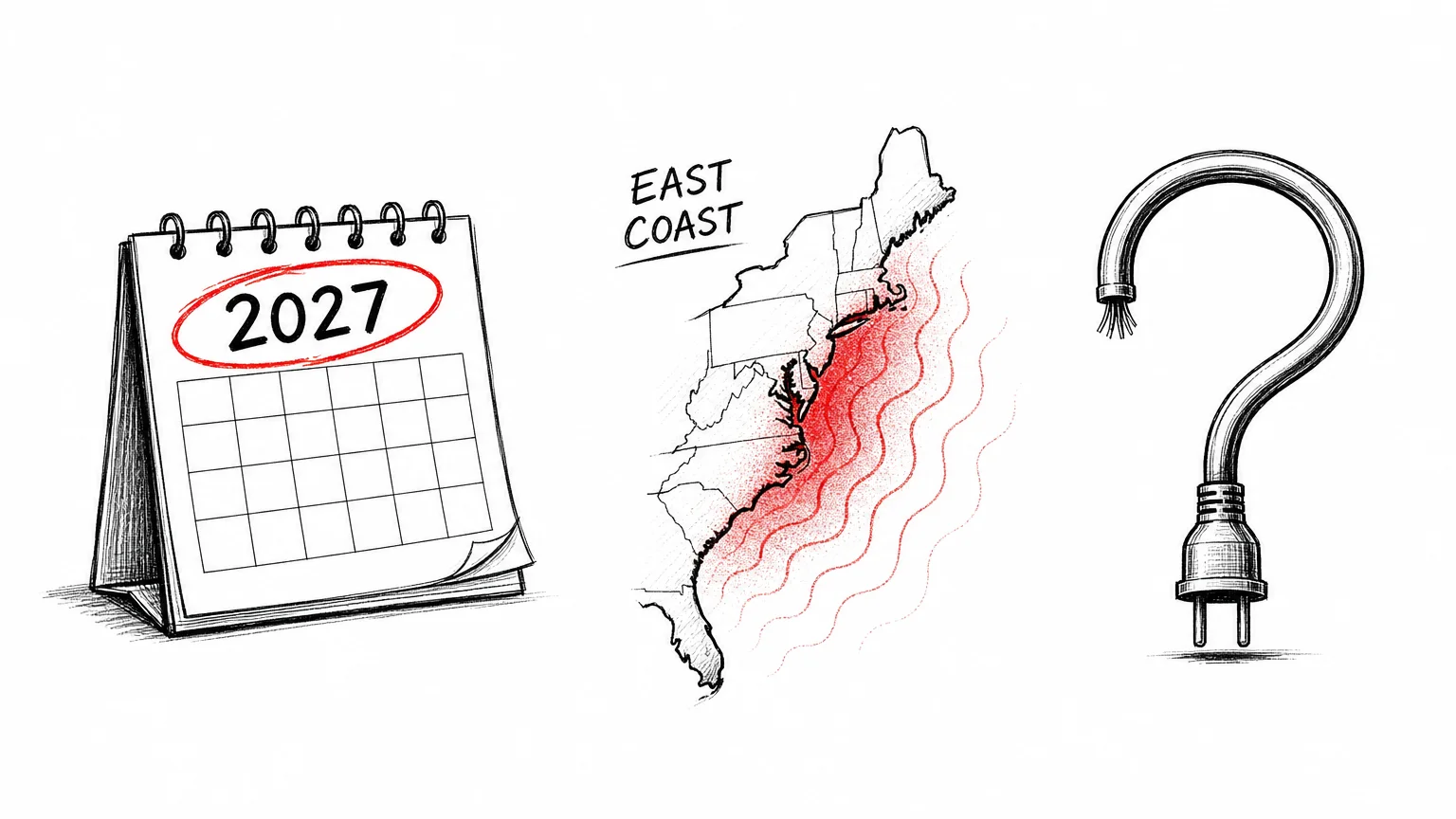
The U.S. Energy Information Administration (EIA) continually monitors the nation’s energy markets, and their projections for 2027 paint a clear picture of sustained cost increases. In 2026, residential electricity prices averaged 18.2 cents per kilowatt-hour (kWh), reflecting a nearly 5 percent jump from the previous year. Looking ahead to 2027, the EIA expects residential rates to continue their ascent, growing by another 2 percent to reach an average of 18.6 cents per kWh.
Location dictates exactly how heavily this trend will impact your wallet. If you live in the South or Midwest, your rate hikes might hover close to the national average. However, if you live along the East Coast—specifically the Mid-Atlantic, East North Central, or South Atlantic regions—you face a steeper climb. The EIA projects that East Coast residents will experience the most aggressive rate hikes in the country, with average annual growth ranging from 5 percent to 7 percent between 2024 and 2027.
Natural gas prices present a slightly different narrative. Wholesale natural gas remains abundant and relatively inexpensive compared to the massive price spikes seen during global supply chain crises earlier in the decade. Yet, homeowners relying on natural gas for heating and cooking will still see their bills inch upward. Just like electricity, the physical pipelines transporting natural gas require maintenance and replacement. Gas utilities are actively replacing aging cast-iron and bare-steel pipes to prevent leaks and comply with federal safety regulations. The cost of that steel, the labor to dig the trenches, and the administrative overhead are all passed down to your monthly statement.
Why Your Utility Bills Keep Climbing
Understanding the forces pushing your energy costs higher helps you anticipate future budget constraints. Several massive, structural shifts in the American economy are converging on the power grid simultaneously.
- The Commercial Data Center Boom: Artificial intelligence requires staggering amounts of electricity. Data centers and advanced computing facilities draw massive loads from the grid. In fact, the EIA projects that in 2027, commercial electricity demand will outpace residential demand for the first time on record. Grid operators must build new transmission lines and substations to accommodate these facilities. The cost of expanding the grid is typically socialized across all ratepayers, meaning your household bill subsidizes the infrastructure necessary for commercial technological growth.
- Extreme Weather Mitigation: Utilities are spending unprecedented sums to “harden” the grid. This involves replacing wooden poles with concrete or steel, burying distribution lines underground, and winterizing natural gas wellheads to prevent freeze-offs. While these investments improve reliability and prevent catastrophic blackouts, they require billions in upfront capital, which is recovered through your monthly delivery charges.
- The Green Energy Transition: Integrating renewable energy sources like wind and solar into the grid is complex. While sunlight and wind are free, the infrastructure required to capture, store, and transmit that power is incredibly expensive. Utilities must invest in battery storage facilities to maintain grid stability when the sun goes down or the wind stops blowing. These transition costs are currently peaking and are reflected directly in your rates.
- Persistent Material Inflation: The components required to maintain utility infrastructure—copper wire, steel transformers, and heavy machinery—have all experienced sharp price increases over the last five years. A utility transformer that cost a few thousand dollars a decade ago has doubled or tripled in price, and lead times for procurement have stretched from weeks to years. Those elevated operating costs trickle down to your statement.
Your utility bill is no longer just a reflection of the energy you consume; it is a subscription fee to fund the modernization, expansion, and defense of the American power grid.
At a Glance: Projected 2026 vs. 2027 Energy Benchmarks
To give you a concrete sense of how your budget will shift over the next year, review the national average projections for household energy metrics.
| Energy Metric | 2026 Projected Average | 2027 Projected Forecast | Primary Trend Driver |
|---|---|---|---|
| Residential Electricity Rate | 18.2 cents / kWh | 18.6 cents / kWh | Grid modernization and extreme weather hardening |
| Commercial Electricity Demand | +1.3% growth | +3.1% growth | Data center expansion and AI computing needs |
| East Coast Price Growth | Elevated (5-7% hike) | Continued high growth | Transmission bottlenecks and local infrastructure upgrades |
| Natural Gas Delivery Costs | Rising steadily | Moderate increases | Aging pipeline replacement and labor costs |
What Can Go Wrong
As utility costs rise, homeowners often rush to implement quick fixes or sign new contracts to secure lower rates. Unfortunately, navigating the energy market without a clear strategy can easily backfire. Here are the most common pitfalls to avoid as we head into 2027.
- Getting Trapped in Variable-Rate Contracts: If you live in a deregulated energy market like Texas, Pennsylvania, or Ohio, you have the power to choose your electricity supplier. Many third-party suppliers lure customers in with aggressive “teaser” rates that undercut the local utility. However, once the introductory period expires, the contract often flips to a variable rate tied to wholesale market fluctuations. If a heatwave hits in August 2027 and wholesale prices spike, your variable rate could double overnight, leaving you with a crippling bill.
- Misunderstanding Time-of-Use (TOU) Pricing: To manage peak demand, many utilities are transitioning customers to Time-of-Use pricing. Under a TOU plan, electricity is significantly more expensive during peak hours (usually 4:00 PM to 9:00 PM) and heavily discounted overnight. If you sign up for a TOU plan but continue doing laundry, running the dishwasher, and blasting the air conditioning at 6:00 PM, your bill will skyrocket. TOU plans only save you money if you strictly alter your household routines.
- Ignoring the True-Up on Budget Billing: Budget billing programs take your annual energy usage, average it out, and charge you a flat, predictable fee every month. This is an excellent tool for budget-conscious families. However, if your family consumes substantially more energy than the utility estimated, you will face a “true-up” bill at the end of the year. You could suddenly owe hundreds of dollars to cover the gap between what you paid and what you actually used.
- Assuming Solar Automatically Erases Your Bill: Installing residential solar panels is a powerful way to offset electricity costs, but it rarely eliminates your utility bill entirely. Most utilities charge grid-connection fees or fixed customer charges just to remain hooked up to the system. Furthermore, as utilities see their revenue drop due to solar adoption, many are successfully petitioning state regulators to increase these fixed connection fees. You must account for these unavoidable base charges when calculating the return on investment for a solar array.
Where Outside Advice Pays Off
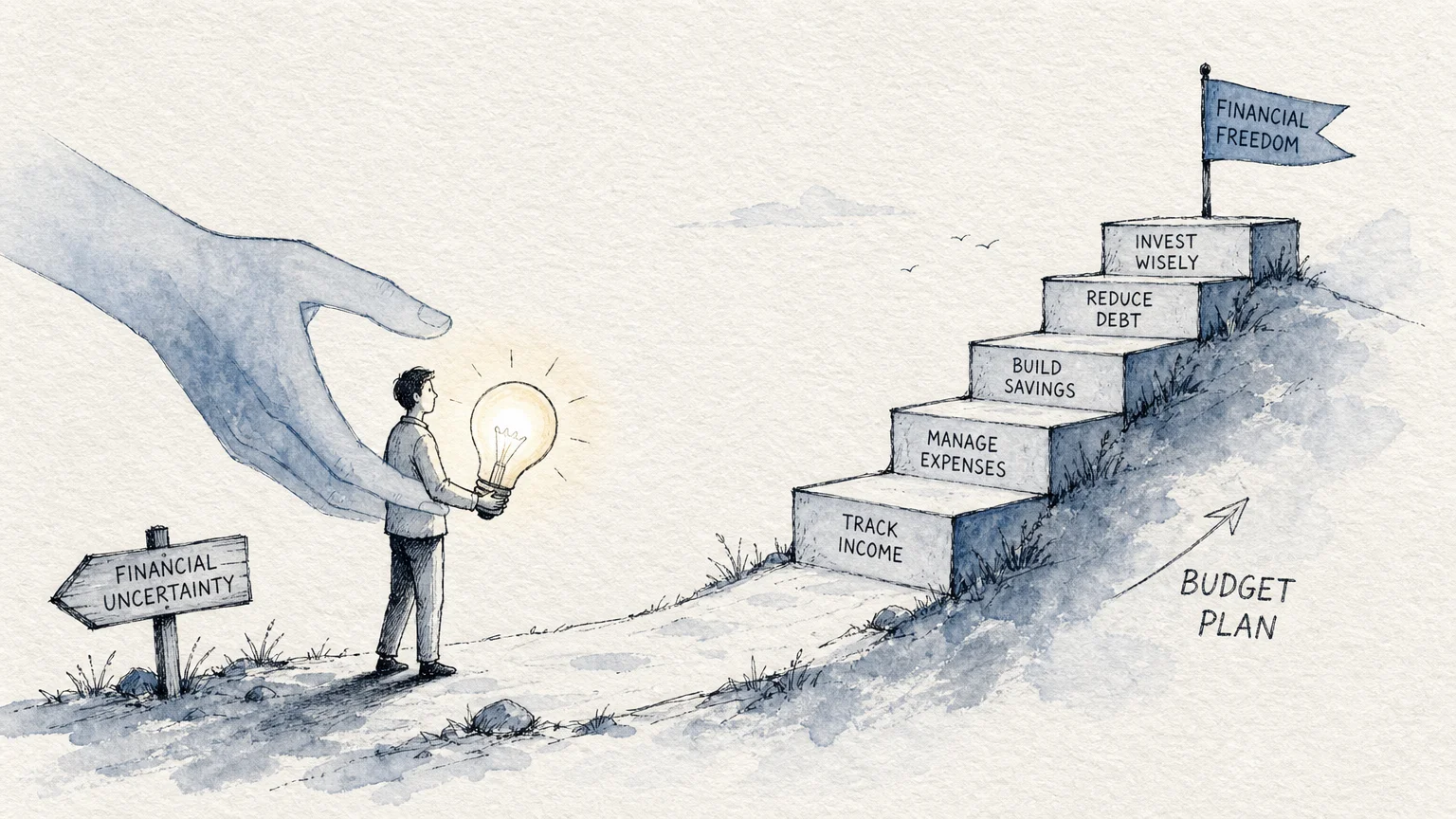
While flipping off light switches and lowering the thermostat are good daily habits, fighting back against systemic rate increases requires structural changes to your home. Because these upgrades are expensive, leaning on qualified professionals prevents you from wasting money on inefficient solutions.
- Certified Home Energy Audits: Before you spend thousands of dollars replacing windows or buying a new air conditioner, hire a certified energy auditor. A professional auditor uses tools like blower doors and thermal imaging cameras to pinpoint exactly where your home is losing conditioned air. Spending a few hundred dollars on an audit ensures that your eventual upgrade budget is deployed where it will have the maximum financial impact.
- Strategic HVAC Upgrades: Heating and cooling account for roughly half of a typical home’s energy consumption. If your system is over fifteen years old, it is operating inefficiently and driving your bills up. Consult a licensed HVAC specialist to discuss high-efficiency heat pumps. Furthermore, speak to a tax professional before making a purchase. The IRS Energy Efficient Home Improvement Credit offers up to a 30 percent tax credit for qualifying heat pumps, but the equipment must meet strict Consortium for Energy Efficiency (CEE) tier requirements to be eligible.
- Evaluating Solar Leases and PPAs: If you are considering residential solar, you will likely be pitched a Power Purchase Agreement (PPA) or a long-term lease. These are complex financial contracts that stretch for twenty to twenty-five years. Consulting a fee-only financial advisor to review the terms can save you tens of thousands of dollars. An advisor can help you crunch the numbers to determine if buying the system outright with a traditional loan yields a better long-term return than surrendering the tax credits to a leasing company.
Common Questions About the 2027 Energy Forecast
Are data centers really increasing my personal utility bill?
Yes, indirectly. Data centers require massive grid capacity and continuous power generation. Utilities must build new transmission lines and substations to service these massive commercial facilities. Because utility infrastructure costs are generally pooled and distributed among all ratepayers, residential customers end up subsidizing a portion of the grid expansion required by the commercial tech sector.
Will natural gas prices spike in 2027?
The EIA expects wholesale natural gas production to steadily meet demand through 2027, meaning the core cost of the fuel should remain relatively stable. However, you will still likely see your gas bill increase slightly due to higher delivery fees, pipeline maintenance, and labor costs associated with maintaining the physical gas infrastructure.
How can I avoid Time-of-Use peak charges?
If your utility places you on a Time-of-Use plan, the easiest way to avoid peak charges is to run heavy appliances during off-peak hours. Utilize the delay-start function on your dishwasher and washing machine so they run after 10:00 PM. Additionally, you can pre-cool your home by dropping the thermostat a few degrees before the peak window begins, then raising it slightly during the most expensive afternoon hours.
Is unplugging appliances actually worth the effort?
“Vampire draw”—the energy consumed by electronics when they are turned off but still plugged in—accounts for roughly 5 to 10 percent of residential electricity use. While unplugging your coffee maker every morning won’t offset a 5 percent utility rate hike, plugging your entertainment center or home office setup into a smart power strip that cuts power automatically can result in a noticeable reduction over twelve months.

Prepare Your Budget for the New Normal
The era of cheap, easily predictable utility bills is largely behind us. As the grid requires massive capital for modernization and commercial energy demand breaks historical records, those costs will inevitably flow down to the residential consumer. You cannot control the base rates set by your utility or the infrastructure charges approved by your state regulators. You can, however, aggressively control your home’s energy efficiency, dodge the pitfalls of variable-rate contracts, and utilize smart pricing schedules to your advantage. Treat your home’s energy consumption as a managed expense rather than a passive utility, and you will effectively shield your household budget from the harshest impacts of the 2027 forecast.
This is general informational content based on widely accepted guidance. Individual results vary. Verify current details—rules, prices, eligibility, regulations—with official sources before making important decisions.