
I can still feel the smooth, worn linoleum of the grocery store aisle under my sensible shoes. For decades, my shopping trips were a study in muscle memory. My hand would reach, without a single thought, for the familiar red and white can of Campbell’s Tomato Soup, the deep blue box of Kellogg’s Corn Flakes, the cheerful yellow bottle of Tide laundry detergent. These weren’t just products to me; they were constants. They were the background characters in the story of my life, the same brands my mother had trusted, the same ones I used to raise my own family.
I was, in the truest sense of the word, a brand loyalist. It wasn’t a conscious decision, not really. It was a habit steeped in tradition and, if I’m being honest, a bit of quiet pride. In my mind, choosing a name brand was a small signal that I was providing the best. It meant quality, reliability, and a certain standard. The commercials I’d grown up with in the 60s and 70s had done their job well. They’d woven these logos and jingles into the fabric of my American life. The thought of deliberately choosing the stark, plainly-packaged generic brands felt… well, it felt like settling for less.
The Wake-Up Call I Didn’t See Coming
Life, however, has a way of rewriting your habits whether you want it to or not. For my husband, John, and me, that moment came a few years after retirement. We had a plan. We’d been careful savers, we had our pensions, and we thought we had everything mapped out for a comfortable, if not extravagant, future. Our plan, however, didn’t account for a behemoth of an oak tree in our backyard deciding to split in half during a violent summer thunderstorm, sending one of its largest limbs crashing through our sunroom roof.
Suddenly, we were faced with an expense that our emergency fund winced at. Insurance covered a portion, but the deductible, the necessary upgrades to meet new building codes, and the cost of removing the rest of the precarious tree added up to a staggering figure. It was a gut punch. For the first time in our adult lives, we felt a tremor of financial fear. We looked at our monthly budget, which had always felt so stable, and saw that the comfortable buffer we once enjoyed had vanished. We had to make cuts. Serious cuts.
I remember sitting at our kitchen table, the budget spreadsheets spread out before us. We trimmed the easy things first: fewer dinners out, canceling a streaming service we barely used. But it wasn’t enough. John, ever the pragmatist, pointed a finger at our grocery receipts. “Martha,” he said gently, “this is where the money is going. We’re spending a fortune here.” He was right. And as I scanned the list of items, I saw them staring back at me: my beloved, familiar, and undeniably expensive brands.
My First Cautious Steps into the Generic Aisle
The following week, I walked into the grocery store with a new and deeply uncomfortable mission. My shopping list was in one hand, and a small, spiral-bound notebook was in the other. I had decided that if I was going to do this, I was going to do it methodically. I wasn’t just going to buy cheap stuff; I was going to become a scientist in my own home. My notebook had two columns: “Brand Name” and “Generic.” I planned to document the price difference and my honest assessment of the quality.
Standing in that first aisle, the cleaning supplies, I felt a genuine wave of anxiety. It sounds silly to say it now, but I felt like everyone could see what I was doing. I felt like I was advertising my financial troubles by reaching for the plain white bottle of bleach instead of the iconic Clorox jug. I took a deep breath and grabbed it. It’s just sodium hypochlorite, Martha, I told myself, a fact I’d confirmed with a quick internet search before leaving home. The generic bottle was $1.50 cheaper. I wrote it down in my notebook. Into the cart it went.
I started with what I deemed the “low-risk” categories. Paper towels, aluminum foil, and plastic wrap. How different could they be? The savings were significant, a dollar here, two dollars there. Then came the canned goods. This was a real test. I stood before the wall of canned vegetables, my hand hovering over the Green Giant. Right next to it was the store brand, with a simple, unadorned label. It was half the price. I put one of each in my cart, determined to see for myself.
That first trip was emotionally draining. I felt like a traitor to my own history. But when I got to the checkout and the cashier announced the total, I felt the first flicker of a different emotion: relief. The number was a full $45 lower than my typical weekly bill. Forty-five dollars. That wasn’t trivial. That was a tank of gas. That was a nice lunch out for John and me. It was real money.
The Kitchen Showdowns: Victories and Defeats
The experiments began that evening. My little notebook became my constant kitchen companion. Some of my discoveries were immediate and profound.
The first major victory came from those canned green beans. I cooked both, the Green Giant and the store brand, in separate pots, with just a little butter and salt. I served them to John without telling him which was which. He took a bite of one, then the other. “They taste the same,” he declared. “Exactly the same.” I had to agree. The texture was identical, the flavor indistinguishable. I felt a surge of triumph. The marketing, the friendly giant on the can, the higher price—it was all an illusion.
An even bigger revelation came from over-the-counter medications. I had always bought Advil for aches and pains. The store-brand ibuprofen seemed suspect to me. How could it be as good if it was so much cheaper? On our next trip to the pharmacy, I gathered my courage and asked the pharmacist. She smiled kindly, as if she’d heard this question a thousand times. She explained that the FDA requires generic drugs to have the exact same active ingredient, strength, and dosage form as the brand-name version. “You’re paying for the name and the advertising,” she said, “not for a better pill.” The savings were astronomical—sometimes 70-80% less. That day, generic brands earned a massive amount of my trust.
Baking a New Perspective
Feeling emboldened, I moved on to my sacred territory: the pantry staples I used for baking. I’ve been known for my chocolate chip cookies for over forty years. Could I really swap out my Domino sugar or my Gold Medal flour? I decided to put it to the ultimate test.
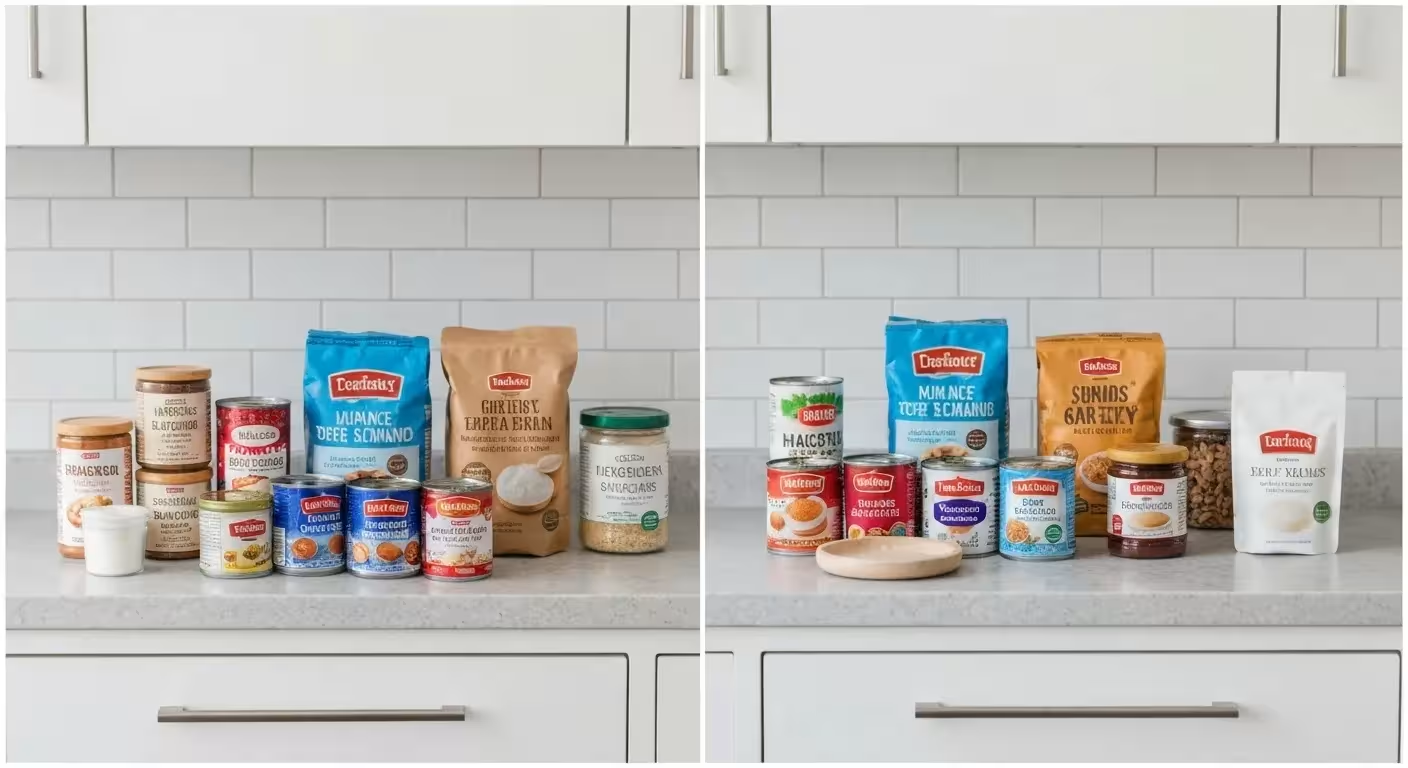
One Saturday afternoon, I set up two sets of ingredients on my counter. On the left, all my trusted brands. On the right, all generic: flour, sugar, baking soda, salt, even the chocolate chips. I made two separate batches of cookie dough, labeling the bowls ‘A’ and ‘B’. I baked them on separate sheets.
Visually, they were nearly identical. The aroma filling my house was the same warm, buttery, chocolatey scent I knew so well. When they had cooled, I called John in for the blind taste test. He tried one from Plate A. “Delicious,” he mumbled, mouth full. He tried one from Plate B. He chewed thoughtfully, took a sip of milk, and then tried another from Plate A, then B again.
“If you’re telling me one of these is from the cheap ingredients,” he finally said, “I honestly can’t tell you which one it is. They’re both fantastic.”
That was it. That was the moment the old Martha, the brand loyalist, truly faded away. I realized how much money I had spent over the years for a name on a bag of flour that made absolutely no difference to the final product. The savings on pantry staples alone were enough to cover our monthly internet bill.
Not All Generics Are Created Equal
But my journey wasn’t all sweet, cookie-filled victories. There were failures, and they taught me lessons that were just as important. These were the moments that helped me form the second half of my philosophy: the “and when I don’t” part.
The first disaster was coffee. John and I are serious about our morning coffee. It’s a ritual. We sit on the porch, we read the paper, and we savor that first cup of the day. Our go-to brand was a bit of a splurge, but it was smooth and rich. In a fit of cost-cutting zeal, I bought a large can of the store’s generic “Classic Roast.”
The next morning, the aroma from the coffeemaker was… off. It smelled thin, almost dusty. The first sip confirmed my fears. It was bitter, watery, and had a strange metallic aftertaste. John took one sip and pushed his mug away. “I think I’ll have tea,” he said, which was his polite way of saying it was undrinkable. I had saved four dollars on the can, but we ended up pouring the whole pot down the drain and I threw the rest of the grounds away. Lesson learned: some things are about more than just function. They are about experience and quality of life. The joy of our morning coffee ritual was worth the extra four dollars. Period.
My second setback was with dish soap. The generic version was a beautiful blue color, and the price was fantastic. But when I went to wash the dishes, I found myself using three or four times the amount to get a decent lather. The suds disappeared in seconds, and it did a poor job of cutting through grease. The bottle was empty in a week, completely negating the initial savings. Lesson learned: evaluate the cost-per-use, not just the sticker price. A more concentrated, effective product can be cheaper in the long run.
And then there was the Great Trash Bag Tragedy of 2019. I bought a box of generic tall kitchen bags, proud of the two dollars I’d saved. A few days later, I was hauling a particularly full bag out to the bin. As I lifted it from the can, the plastic, thin as a whisper, stretched… and then split right down the side. A cascade of coffee grounds, eggshells, and leftover spaghetti rained down onto my kitchen floor. The cleanup was unpleasant, to say the least. Lesson learned: for products where strength and performance are paramount, saving a couple of dollars is not worth the risk of catastrophic failure.
My Golden Rules: A New Philosophy for Smart Spending
Through these trials and errors, a new philosophy began to take shape. I was no longer a blind brand loyalist, but I hadn’t become a rigid generic-only shopper either. I had become something better: a conscious consumer. I had developed my own set of rules, my personal guide to navigating the grocery store with wisdom and confidence.
My system isn’t complicated. It’s based on my own experiences and what I’ve learned about what truly matters to me and my family. My shopping cart is now a hybrid, a carefully curated collection of smart savings and worthwhile splurges.
My “Always Generic” List
These are the items where, after extensive testing, I’ve found the generic brand to be just as good as the name brand, making the savings a no-brainer. This list is tacked to my refrigerator.
- Pantry Staples: Flour, granulated sugar, brown sugar, salt, baking soda, baking powder, cornstarch. My cookies are proof that these are a safe bet.
- Canned Goods: Beans, diced tomatoes, corn, peas. I just make sure to check the ingredients for any unwanted additives like excess sodium.
- Basic Dairy: Milk, butter, sour cream, block cheese. Milk is a highly regulated commodity, and the store brand often comes from the same regional dairies as the name brands.
- Over-the-Counter Medications: This is my biggest money-saver. Ibuprofen, acetaminophen, allergy pills, antacids. I always check the active ingredients list to ensure it’s an exact match.
- Simple Cleaning Supplies: Bleach, ammonia, vinegar, glass cleaner. The basic chemical compounds are the same.
- Frozen Fruits and Vegetables: Perfect for smoothies and side dishes. They are flash-frozen at peak ripeness, just like their more expensive counterparts.
- Pasta and Rice: For basic spaghetti or white rice, I have never been able to tell a difference in taste or texture.
My “Brand-Name Only” List (The Worthwhile Splurges)
This is my short, but important, list. These are the items where I’ve determined that the extra cost provides a tangible benefit in quality, performance, or sheer enjoyment. This is guilt-free spending because it’s a conscious choice.
- My Coffee: As I learned the hard way, this is non-negotiable for my morning happiness.
- A Specific Ice Cream: For a weekly treat, we love a particular premium brand. The creaminess and flavor are noticeably superior to the generic versions, which often contain more air and fewer high-quality ingredients. It’s a treat, and it should taste like one.
- Trash Bags: Never again. I will gladly pay more for the assurance that my trash will make it from my kitchen to the curb intact.
- My Laundry Detergent: I have sensitive skin, and after some trial and error, I found one specific brand that never causes irritation. The peace of mind is worth every penny.
- John’s Favorite Ketchup: He swears he can tell the difference. He doesn’t ask for much, so if Heinz ketchup makes his burger better, Heinz ketchup it is.
The Gray Area: How I Try New Things
For everything else that doesn’t fall on these two lists, my rule is simple: I will always try the generic brand once. If a new type of cracker or a different flavor of yogurt catches my eye, I’ll buy the store brand first. If it’s a hit, fantastic! I’ve found a new way to save. If it’s a miss, I don’t feel bad about buying the name brand next time. It’s a low-risk experiment that has paid off far more often than it has failed.
The Real Reward Is More Than Just Money
Looking back, that fallen oak tree felt like a disaster. But today, I see it as a blessing in disguise. It forced me to re-examine habits I had held for over fifty years. It pushed me out of my comfort zone and taught me a valuable lesson about money and life.
The financial impact has been significant. By my conservative estimate, this strategic approach to shopping saves us between $150 and $200 every single month. That’s over $2,000 a year. That’s money that rebuilt our emergency fund. It’s money that pays for a weekend trip to see our grandkids. It’s peace of mind in our bank account.
But the real reward, the deeper lesson, has been the shift in my own mindset. I broke free from a lifetime of passive consumerism and clever marketing. I stopped letting a logo on a package tell me what was good. Instead, I learned to trust my own judgment, my own taste buds, and my own research. There is an immense feeling of empowerment in that.
It taught me that being frugal isn’t about deprivation; it’s about making intelligent choices. It’s about directing your resources toward the things that truly matter to you. For me, that’s a joyful morning ritual, a reliable trash bag, and the ability to weather life’s unexpected storms without panic. By saving on flour and canned beans, I’m buying myself security and the freedom to spend on what brings me true value and happiness.
Now, when I walk down the grocery store aisle, my muscle memory is different. My hand moves with purpose, confidently choosing the plain label here, the familiar brand there. It’s not a journey of habit anymore; it’s a journey of wisdom. And I wouldn’t trade that for any brand in the world.






Leave a Reply