How to keep your daily treats without watching your bank account bleed
You don’t feel broke because you bought one latte.
You feel broke because you bought 300 lattes, 400 snack bars, and 200 impulse croissants without ever seeing the total.
Coffee and snacks are some of the most emotionally charged purchases we make. They aren’t “just food.” They are comfort, routine, identity, reward, survival fuel, and sometimes therapy in a cup.
But they are also one of the biggest invisible leaks in modern personal finance.
The good news?
You don’t have to give them up.
You just have to stop paying retail prices for dopamine.
This guide will show you how to keep your daily rituals while quietly saving $800–$1,500 per year — without deprivation, weird meal prep, or turning into someone who drinks sad office coffee.

Why Coffee & Snacks Are a Silent Budget Killer
Let’s look at what most people spend without realizing it.
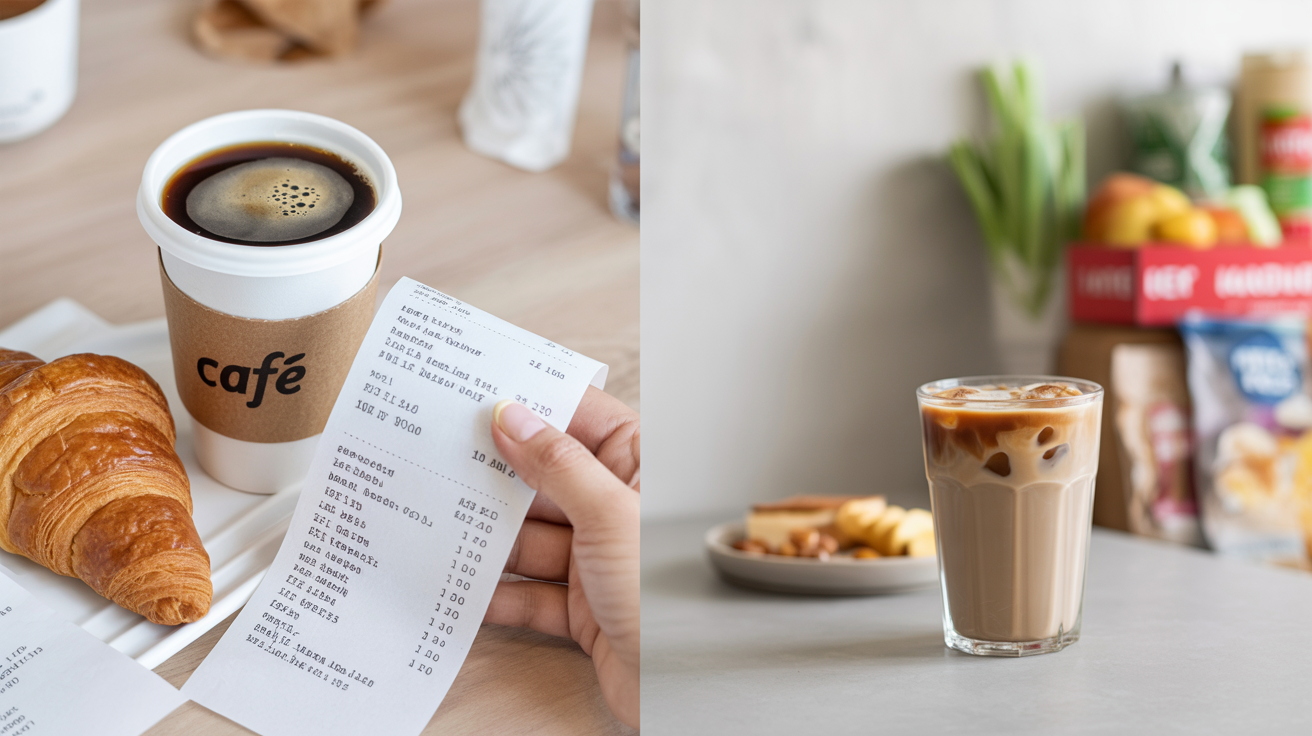
The Average Café Habit
-
Latte or iced coffee: $4.50–$7
-
Add a pastry or snack: $3–$6
-
Daily total: $7–$12
-
Monthly: $210–$360
-
Yearly: $2,500–$4,000
Even if you only do this 3–4 times per week, you’re still looking at $1,200–$2,000 per year.
But because it’s spread out in small amounts, it never triggers financial pain — just a slow leak.
The goal is not to eliminate the habit.
The goal is to buy the same pleasure at wholesale instead of luxury retail.
Part 1 – Turn Your Home Into a Café
You don’t need a $600 espresso machine. You need a smart $60 setup and a few upgrades.
The Power Trio
If you own these three things, you can make café-level drinks:
-
Good beans or ground coffee ($10–$15/month)
-
Milk frother ($15–$25 one-time)
-
Flavor system (syrups, spices, creamers)
That’s it.
Cost Comparison
-
Café latte: $5
-
Homemade latte: $0.60–$1.20
If you make one per day, you save:
-
$4 × 365 = $1,460
Even if you still go out on weekends, you easily keep $800+.
Make It Feel Luxurious (So You Actually Stick With It)
People fail at “home coffee” because it feels boring.
Make it feel like a ritual.
Here’s how:
Use Glassware
Buy a few café-style glasses:
-
Iced latte glasses
-
Tall clear mugs
-
Cute cups
Seeing the layers makes the drink feel premium.
Upgrade the Flavors
Keep 3–4 flavor options:
-
Vanilla
-
Caramel
-
Cinnamon
-
Chocolate
This gives you the “menu effect” — your brain feels like it’s choosing, not settling.
Froth Everything
Even cold milk. Even oat milk.
Texture = café dopamine.
Part 2 – The 80/20 Rule of Buying Coffee Out
You don’t need to quit coffee shops.
You need to stop using them for daily survival.
Use this rule:
80% at home, 20% outside.
That means:
-
Home coffee = weekdays, mornings, work fuel
-
Café coffee = social moments, walks, dates, creative days
This keeps the experience special instead of automatic.
If you currently buy 5 coffees per week:
-
Switch to 1–2
-
You save $600–$1,000 per year
Part 3 – Snack Spending Is Worse Than Coffee
Most people track coffee.
They ignore snacks.
But snacks are where money disappears the fastest.
Granola bars, smoothies, protein shakes, chips, pastries, trail mix, muffins — $2 here, $5 there — and suddenly $300/month is gone.
Let’s fix that.
The Snack Math Nobody Does
Example:
-
1 packaged snack per workday = $3
-
20 workdays = $60
-
12 months = $720
And that’s conservative.
Many people buy:
-
Morning snack
-
Afternoon snack
-
Sometimes evening snack
That’s easily $1,000+ per year.
Part 4 – Create a “Snack Shelf” at Home
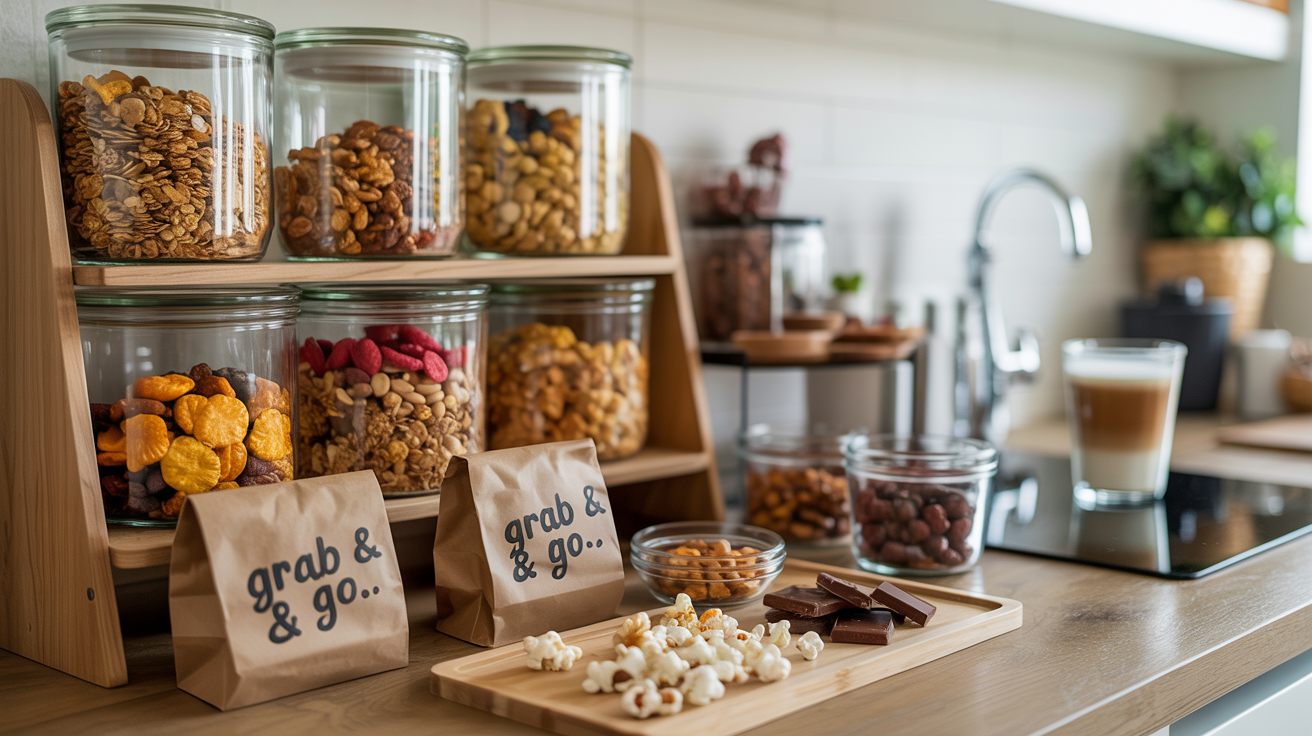
The biggest hack is simple:
If snacks are visible and ready at home, you won’t buy them outside.
You want a dedicated snack zone.
What Goes on It
Mix of:
-
Sweet
-
Salty
-
Protein
-
Crunchy
-
Comfort
Example:
-
Nuts
-
Popcorn
-
Dark chocolate
-
Crackers
-
Granola
-
Protein bars
-
Dried fruit
Buying these in bulk costs:
-
$20–$30/month
Instead of: -
$100+ on convenience snacks
The Grab-and-Go System
Once a week:
-
Put snacks into small bags or containers
-
Keep 5–10 ready to grab
This eliminates the “I forgot food, I’ll buy something” trap.
That alone can save $500–$800 per year.
Part 5 – DIY Versions of Your Favorite Treats
You don’t have to cook.
You just need copycat versions.
Here are some of the biggest money drains:
Café Muffins & Pastries
Instead:
-
Buy bakery muffins or croissants from the grocery store
-
Freeze them
-
Microwave or air fry when needed
Cost:
-
$1–$1.50 each
Instead of: -
$4–$6 each
Savings: $400–$600/year if you eat them often.
Smoothies & Protein Drinks
-
Pre-made smoothie: $5–$8
-
Homemade: $1–$2
Buy:
-
Frozen fruit
-
Yogurt
-
Milk
-
Protein powder
Even 3 per week saves:
-
$10 × 52 = $520
Fancy Snacks
Things like:
-
Energy balls
-
Protein bites
-
Trail mix cups
Buy:
-
Oats
-
Peanut butter
-
Honey
-
Chocolate chips
Roll into balls. Freeze.
You’ll have 20 snacks for the price of 4 store-bought ones.
Part 6 – Use Grocery Stores Like Wholesale Cafés
Here’s a mindset shift:
Grocery stores sell café items at wholesale prices.
Examples:
| Item | Café | Grocery |
|---|---|---|
| Iced latte | $6 | $1 |
| Muffin | $5 | $1.50 |
| Smoothie | $7 | $2 |
| Protein bar | $4 | $1 |
If you start buying café-style food from the grocery store instead of cafés, your lifestyle stays the same — your spending collapses.
Part 7 – Set Up a “Treat Budget”
You don’t need to cut joy.
You need to containerize it.
Give yourself:
-
$30–$50/month
just for: -
Coffee shops
-
Bakeries
-
Cute drinks
When it’s gone, it’s gone — but you won’t feel deprived because you have home versions waiting.
This alone can save $600+ per year.
Part 8 – The Psychology of Why This Works
You’re not addicted to coffee.
You’re addicted to:
-
Convenience
-
Novelty
-
Reward
When you:
-
Make drinks pretty
-
Have options
-
Keep snacks visible
Your brain still gets what it wants — just at 20–30% of the price.
What You Can Realistically Save
Let’s be conservative:
| Change | Annual Savings |
|---|---|
| Home coffee 4 days/week | $800 |
| Snack shelf instead of convenience snacks | $600 |
| Grocery pastries instead of cafés | $300 |
| Fewer smoothies & protein drinks | $400 |
Total: $2,100 per year
Even if you only do half of this, you easily hit $1,000.
This Is How Rich People Actually Live
Wealthy people don’t avoid lattes.
They avoid paying retail for habits.
They:
-
Buy in bulk
-
Prep in advance
-
Choose when to splurge
That’s what this is.
Not deprivation.
Optimization.
And once you stop bleeding money on snacks and coffee, your entire financial life starts to feel lighter.
You’ll have:
-
More cash
-
Less guilt
-
The same cozy rituals
Which is the real win!
Read next: 10 Easy Meal Prep Ideas That Save Money and Time Every Week