
Why Your Electric Bill Is So High — and 6 Easy Fixes That Work
Most people assume high electricity bills come from big things: old appliances, a large house, extreme weather, or bad luck.
But the reality is simpler — and honestly a little frustrating.
Your electric bill is usually inflated by dozens of tiny habits that quietly drain power all day long. Not dramatic mistakes. Just normal daily behavior nobody ever teaches you to optimize.
The good news?
You don’t need solar panels, expensive upgrades, or a strict “live in the dark” lifestyle.
Just a few adjustments can lower your bill every single month — permanently.
Below are six of the most effective ones.

1. Stop the Invisible Energy Leaks (Phantom Power)
Here’s something utility companies rarely emphasize:
A large portion of your electricity usage happens when you’re not even using anything.
Many devices never actually turn off.
They sit in standby mode 24/7, constantly pulling small amounts of power.
Individually it seems harmless — a few watts here and there.
But together?
It can account for 5–15% of your total electricity bill.
Typical culprits:
-
TVs
-
Gaming consoles
-
Coffee machines
-
Microwaves with clocks
-
Chargers left plugged in
-
Desktop computers
-
Routers and modems
-
Smart home devices
You don’t notice it because nothing looks “on,” yet your meter keeps moving.
The simple fix
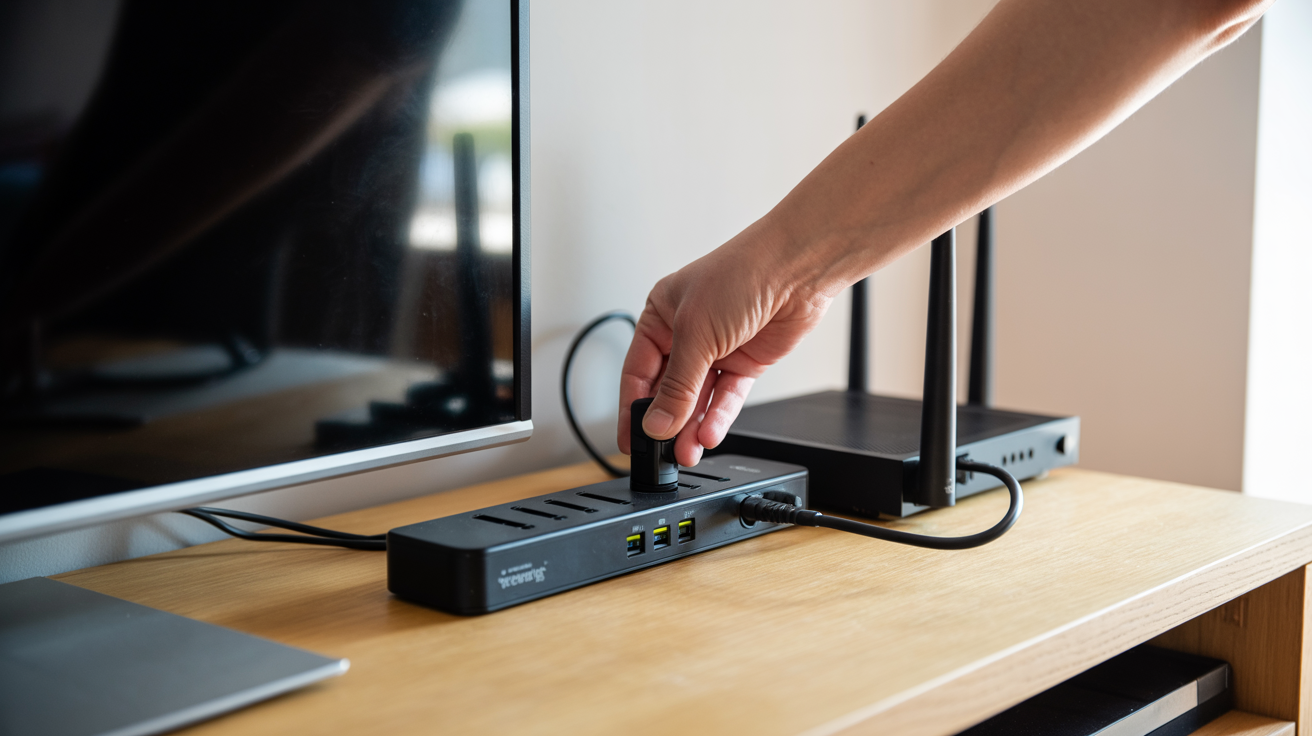
Use power strips for device clusters.
For example:
-
One strip for entertainment center
-
One for office desk
-
One for kitchen appliances
At night or when leaving home, flip one switch instead of unplugging ten cords.
No lifestyle change required — just a habit shift.
This alone often saves more electricity than replacing a perfectly good appliance.
2. Change How You Use the Thermostat (Not the Temperature)
People think saving electricity means living uncomfortably.
Not true.
The real cost comes from how often your system works, not the exact temperature number.
Heating and cooling are usually the biggest portion of an electric bill — often 40–60%.
Most homes waste energy because thermostats react to empty rooms.
The smarter approach
Instead of setting one constant temperature all day:
Create absence gaps.
Raise or lower the temperature when:
-
You sleep
-
You leave for work
-
You’re out for more than 2 hours
Even a 2–3°C difference for several hours reduces compressor cycles significantly.
And here’s the key detail:
The AC/heater doesn’t work harder to return to temperature — that’s a common myth.
It works longer only when maintaining temperature in an empty home.
The easiest way
Use:
-
Built-in scheduling (many thermostats already have it)
-
Or a simple timer plug for portable heaters
No suffering. Same comfort. Lower bill.
3. Laundry Timing Matters More Than You Think
Most people focus on temperature settings, but the bigger issue is frequency and drying.
Dryers are among the most electricity-hungry devices in a home.
One cycle can use as much energy as running your refrigerator for an entire day.
The mistake isn’t washing clothes — it’s how we batch them.
What increases your bill
-
Half loads
-
Over-washing clothes worn once
-
Using hot water by default
-
Using dryer for everything
What cuts costs instantly
Combine loads + air dry strategically
You don’t need to hang every item like a minimalist influencer.
Just air dry:
-
Towels
-
Jeans
-
Sportswear
-
Bedding
Dry only what actually needs softness or speed.
Also switch default wash to cold.
Modern detergents clean effectively in cold water, and water heating is a major electricity draw.
This change alone often lowers bills noticeably within the first month.
4. Your Refrigerator Placement Is Quietly Costing You Money
The fridge runs 24/7 — which means small inefficiencies become constant expenses.
Many homes unknowingly force their fridge to work harder than necessary.
Hidden energy traps
-
Fridge next to oven
-
Fridge next to radiator
-
Direct sunlight exposure
-
Packed air vents inside
-
Overfilled freezer blocking airflow
-
Worn door seals
When heat surrounds it, the compressor cycles far more often.
Quick fixes
Pull the fridge slightly away from the wall
(5–10 cm gap improves ventilation dramatically)
Check the rubber door seal:
Close the door on a sheet of paper — if it slides out easily, cold air escapes.
Also, avoid putting hot food directly inside.
Let it cool first — otherwise the fridge temporarily becomes an air conditioner.
No purchase required — just positioning.
5. Lighting: It’s Not Just About LED Bulbs
Yes, LEDs use less electricity.
But most households already switched and still see high bills.
Because the real issue is duration, not bulb type.
Lights stay on in rooms nobody occupies — often for hours daily.
The psychological trick
We leave lights on because turning them off feels pointless for short exits.
But small durations add up:
5 minutes × 20 times daily × 30 days = hours of unnecessary lighting.
The effective solution
Change the switching behavior, not the bulbs.
Create trigger habits:
-
Leaving a room = hand reaches switch automatically
-
Phone charging = lights off rule
-
TV on = overhead light off
Or install motion sensors in:
-
Hallways
-
Bathrooms
-
Storage rooms
They’re cheap and pay for themselves fast because these are high-forgetfulness areas.
This is one of the lowest-effort, highest-return changes.
6. Cook Smarter, Not Less
Cooking uses more electricity than people expect — especially ovens and stovetops.
But the savings don’t come from eating salads forever.
They come from heat management.
High-cost habits
-
Preheating too early
-
Opening oven repeatedly
-
Using large burner for small pan
-
Cooking multiple items separately
-
Long boil times without lids
Energy-efficient cooking habits
Use lids — water boils up to twice as fast
Match pan size to burner
Turn off oven a few minutes early (residual heat finishes cooking)
Batch cook meals together
The oven stays hot, using it once for multiple foods costs nearly the same as one dish.
Also, electric kettles are usually more efficient than stovetop boiling.
Small adjustments, big cumulative impact.

Why These Changes Actually Work
Most advice online focuses on expensive upgrades because they’re visible: new appliances, insulation, smart homes.
But electricity bills are behavioral.
They’re shaped by repetition.
Tiny energy drains repeated every day matter more than occasional heavy usage.
You don’t need extreme frugality — just awareness.
Each change above:
-
Requires no major purchase
-
Doesn’t reduce comfort
-
Works immediately
-
Keeps saving monthly
And when combined?
They often cut 15–30% off a typical electric bill.
The Real Secret: Make Savings Automatic
The easiest savings are the ones you don’t have to remember.
Use tools and habits that remove decision-making:
-
Power strips
-
Schedules
-
Motion sensors
-
Load batching
-
Cooling gaps
After a week, it stops feeling like effort — it becomes normal living.
And your next bill reflects it.
Lower electricity costs aren’t about discipline.
They’re about removing waste you never meant to pay for in the first place.
Start with just two of these today.
You’ll likely see the difference before next month ends.
Read next: 10 Everyday Items That Are Almost Always Cheaper Outside Amazon