You’re Saving More Than Ever, So Why Do You Still Feel Broke?
For generations, a savings account represented one of the simplest and most reassuring financial ideas in modern life: if you worked hard, lived within your means, and put money aside, time would reward you. Your savings would grow quietly in the background, compounding into something that felt solid, dependable, and safe. It wasn’t exciting, but it was comforting. A balance that went up each month felt like proof that you were moving forward.
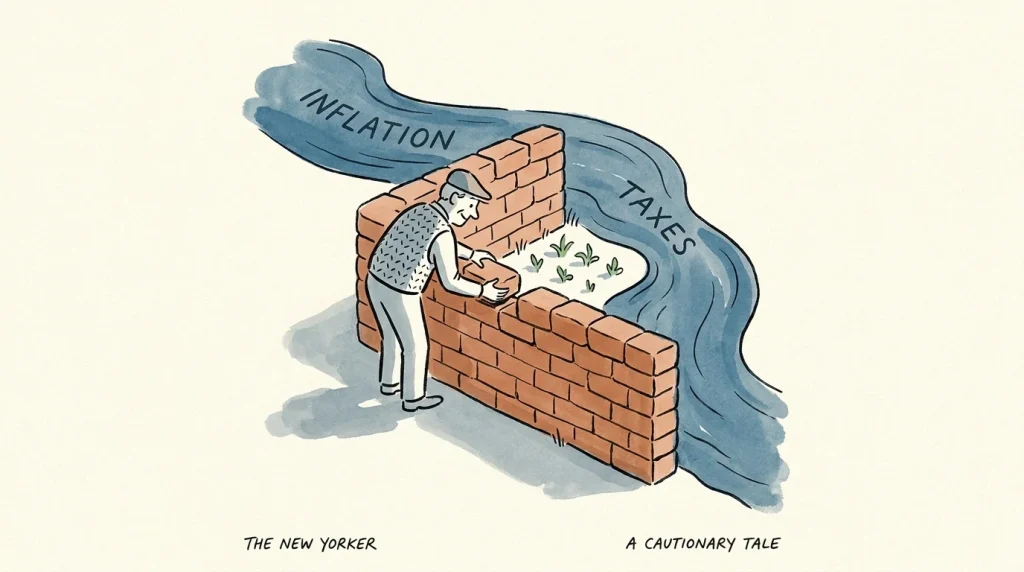
But in recent years, something has shifted. Even as interest rates rose and then began to fall again, many people noticed something deeply unsettling. Their balances were technically growing — yet emotionally, financially, and practically, that growth felt hollow. Saving no longer brought the same sense of momentum, security, or relief it once did. It felt like the numbers were increasing, but the power behind them was fading.
This strange disconnect is not the result of poor discipline or personal failure. It is the result of a financial system that has quietly changed in ways most people never agreed to, and were never told about.

The Illusion of Growth in a Fragmented Economy
On paper, a savings account still does what it always has. You deposit money. The bank pays you interest. Your balance increases. But what that balance can actually do for you has changed dramatically.
In previous decades, inflation moved slowly and relatively evenly. Prices rose, but they rose together. If your savings earned 3 percent and inflation ran at 2 percent, you were moving ahead. Your purchasing power increased. Your future felt more secure.
Today, inflation is no longer a single number. It is fractured.
Housing may rise 8 percent.
Insurance 15 percent.
Healthcare 12 percent.
Food 6 percent.
Utilities 10 percent.
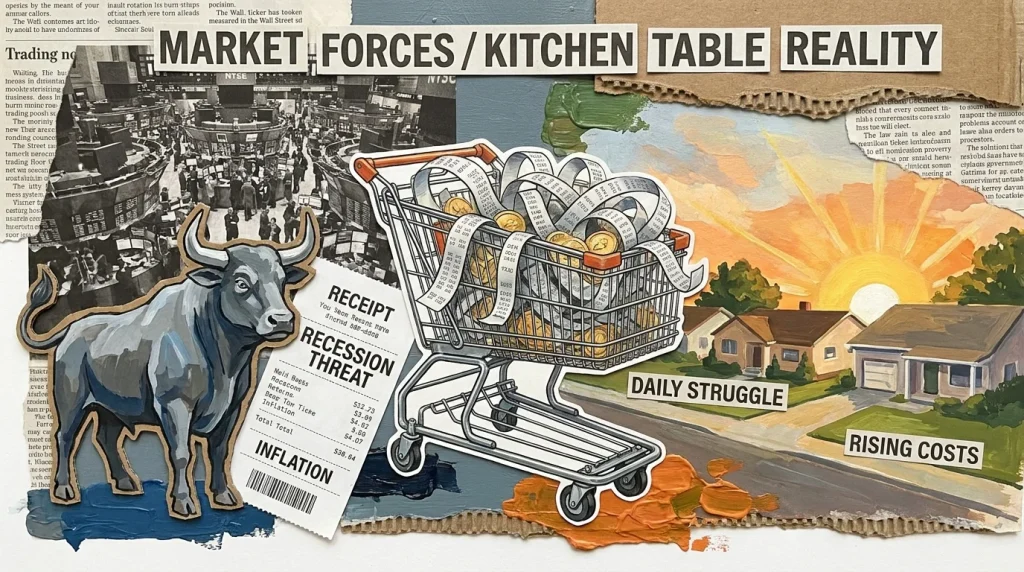
Meanwhile, your savings interest may move from 4 percent to 3 percent — or from 2 percent to 1.5 percent. On paper, your account still grows. In reality, the parts of life that matter most are racing ahead.
This creates the modern saver’s paradox: your money is technically earning, but it is losing the race that actually counts — the race against the cost of living.
That’s why saving no longer feels like winning. It feels like barely keeping up.
Why Lower Rates Are Not the True Culprit
It is tempting to blame falling interest rates for this feeling. When rates go down, savings accounts yield less, and it feels like something was taken from you. But even when rates were higher, many people still felt financially constrained.
The deeper issue is that savings accounts were designed for an economy where money had a predictable relationship to time. You could reasonably estimate what your savings would be worth in five or ten years because costs changed gradually. Today, costs change in bursts, jumps, and quiet leaks.
A medical bill can wipe out months of saving.
An insurance renewal can spike overnight.
A rent increase can erase an entire year of interest.
No interest rate can keep up with financial shocks that arrive suddenly and without warning. Your savings is no longer just growing — it is constantly being tested.
That is why the emotional power of saving has weakened. You don’t trust that what you save today will still protect you tomorrow.

Money No Longer Rests, It Leaks
In the past, money in a savings account could truly be described as idle. You placed it somewhere safe, and it stayed there until you needed it. It was untouched by the daily mechanics of life.
Today, that idea is largely gone.
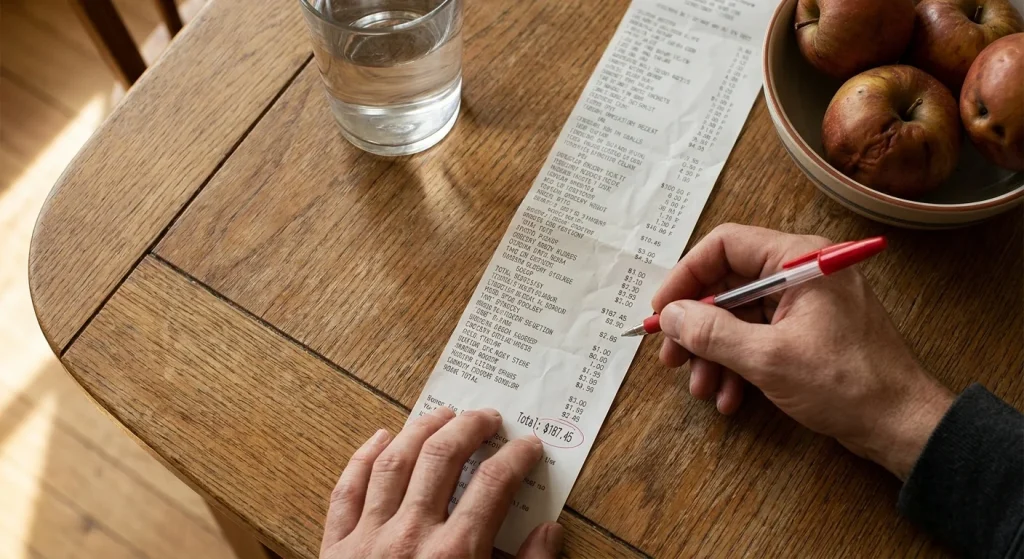
Modern life extracts money even when you are not actively spending it. Subscriptions renew automatically. Fees appear silently. Service costs increase without dramatic announcements. Product sizes shrink while prices stay the same. Insurance coverage decreases while premiums rise. Banks add account maintenance charges. Utilities tack on surcharges. Digital services layer in new pricing tiers.
These small drains don’t feel dramatic — but together they quietly eat into the value of your savings.
So while your balance may rise by a few dollars each month in interest, the world around it is finding dozens of subtle ways to take that value back.
This is why people feel like they are saving more but not getting ahead. Their money is no longer just sitting. It is constantly under pressure.
The Psychological Cost of Financial Volatility
Perhaps the most damaging shift is not financial, but psychological.
Savings used to feel like freedom. It represented choices. If you wanted to travel, take time off, move, or say no to something, you could. Your money gave you options.
Now, savings often feels like something you cannot touch.
People hoard money not because they feel wealthy, but because they feel exposed. They know that one unexpected event — a job loss, a medical issue, a family emergency — could undo years of careful planning.
This transforms saving from an empowering act into a defensive one. You are not building toward something — you are bracing against something.
Money that you are afraid to spend never feels powerful. It feels fragile.
Why the Old Financial Model No Longer Works
Savings accounts were built for a world where the primary financial risk was slow erosion — not sudden shock.
In that world, the goal was simple: earn more interest than inflation, and you would gradually become more secure. That made sense when most expenses were predictable and most careers were stable.
Today’s economy is different. It is faster, more volatile, and more fragmented. People change jobs more often. Freelancing and contract work are common. Healthcare is expensive and unpredictable. Housing markets swing sharply. Technology creates both opportunity and instability.
Money now needs to do more than simply sit and wait. It needs to be adaptable. It needs to be liquid. It needs to protect against sudden risk while still having the potential to grow.
A traditional savings account cannot do all of that at once.
So the frustration people feel is not because savings is useless, it is because it is being asked to do a job it was never designed to handle.

How the Meaning of “Safe” Has Changed
There was a time when safety meant preservation. You kept your money where it could not be lost, and that was enough.
Now, safety also means resilience.
Money must not only survive — it must be able to respond. It must be available quickly. It must not be eroded by inflation. It must be able to absorb shocks without collapsing your entire financial life.
A single savings account provides preservation, but very little resilience. It does not adjust to rising costs. It does not protect against inflation. It does not generate enough growth to rebuild after financial damage.
So while your money is technically safe, it is not strategically strong.
What Financially Stable People Are Really Doing
When people look at those who seem calm about money today, they often assume they simply earn more or spend less. But in many cases, the difference lies in how their money is structured.
They do not rely on a single savings account to do everything.
Instead, they divide their money into roles.
Some money is kept in high-yield savings for immediate access.
Some is placed in money market funds for slightly higher returns with low risk.
Some is invested in short-term government bonds for stability and yield.
Some is invested long-term for growth.
Each layer has a purpose.
This creates a financial system that can handle both everyday life and unexpected change. It allows people to spend without fear and save without paralysis.
That is why their money feels powerful again — because it is organized, not just stored.
Why Simply “Saving More” Is No Longer Enough
In the old model, discipline was the solution. Save more, and everything else would work out.
In the new model, strategy matters just as much as discipline.
You can save diligently and still feel stuck if all your money is placed in a single container that cannot keep up with the pace of the world. The problem is not effort — it is design.
Money that is not structured for modern reality will always feel weaker than it should.
The Real Purpose of a Savings Account Today
So what role does a savings account actually play now?
It is no longer the destination.
It is the foundation.
Savings provides liquidity. It provides a buffer. It provides breathing room. But it is not where wealth is built or preserved in the long term.
When you use it correctly — as part of a larger system — it regains its meaning. It becomes the place where money rests before moving to where it can do more.
Your savings account did not fail. It is simply doing what it was designed to do in a world that no longer exists.
Today’s economy requires money to be flexible, layered, and resilient. A single account cannot provide that on its own.
That is why, even with lower interest rates, saving feels less powerful. It is not that your money is broken, it is that the rules of the game have changed.
And once you understand that, you can stop blaming yourself and start building a system that actually works.
Read next: 7 Money Rules That Are Changing in 2026