For a long time, dollar stores occupied a very specific place in the American imagination. They were associated with financial stress, last-minute fixes, or moments when money simply ran out before the end of the month. Many people didn’t plan to shop there; they went only when circumstances forced them to. That perception shaped how dollar stores were viewed socially — not as smart choices, but as signs of struggle.
Today, that narrative no longer reflects reality.
Across the United States, dollar stores have quietly transformed from emergency options into intentional shopping destinations. Millions of Americans now include them in their regular routines, not because they have no alternatives, but because they want better control over their money. In an economy defined by rising prices, unpredictable bills, and financial uncertainty, dollar stores have become a practical budgeting tool — not a fallback.
This shift signals something bigger than a change in shopping habits. It reflects a broader rethinking of what “smart spending” actually looks like.

The Rapid Expansion of Dollar Stores Across America
Dollar stores didn’t rise by accident. Over the past two decades, chains such as Dollar Tree, Dollar General, and Family Dollar expanded aggressively, especially in areas underserved by traditional grocery stores. Small towns, rural communities, and outer suburbs became prime locations for growth.
In many regions, dollar stores are now more numerous than supermarkets. They are often located close to residential neighborhoods, require less travel time, and are easier to navigate than large retail chains. For seniors, parents with limited time, or workers juggling multiple jobs, this convenience matters just as much as price.
But convenience alone doesn’t explain their popularity. Dollar stores also evolved their product selection. They now carry a wide range of household essentials, making them suitable for routine shopping rather than one-off emergencies. As a result, shoppers began to see them differently — not as temporary solutions, but as reliable resources.
Inflation Changed How Americans Think About Spending
Inflation didn’t just make things more expensive. It changed the psychology of shopping.
When prices rise steadily but unpredictably, people stop focusing solely on “best deals” and start prioritizing control over spending. Traditional grocery shopping often involves fluctuating prices, complicated promotions, and loyalty programs that reward volume rather than restraint. For many households, this makes budgeting harder, not easier.
Dollar stores offer something different: stable, predictable pricing. Shoppers walk in knowing roughly how much they’ll spend before they reach the checkout. Even if the cost per unit is sometimes higher, the total out-of-pocket expense stays manageable.
For households living paycheck to paycheck — or even those simply trying to save — predictability becomes a form of financial security. Knowing you can restock essentials without blowing your budget is powerful.
Dollar Stores as a Deliberate Budgeting Strategy
Modern dollar store shoppers aren’t browsing aimlessly. They arrive with a clear plan.
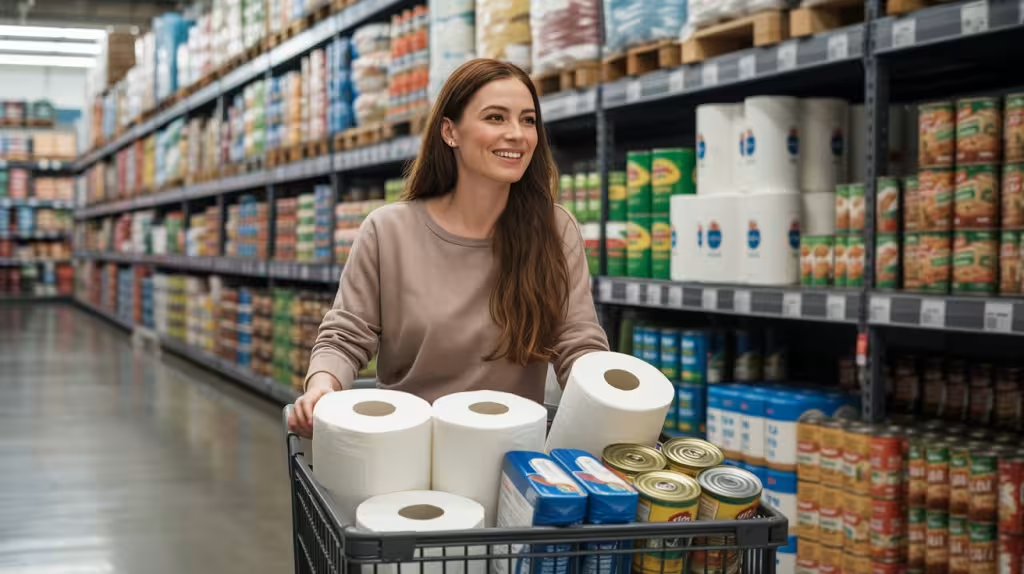
Many households use dollar stores specifically for recurring, unavoidable expenses: cleaning supplies, paper goods, toiletries, pantry fillers, kitchen tools, seasonal decorations, and school or office supplies. These are items that don’t need premium branding or high-end packaging to serve their purpose.
By sourcing these basics at lower price points, shoppers protect their budgets from “silent overspending” — the gradual creep of small costs adding up at traditional retailers. The money saved can then be redirected toward housing, utilities, medical costs, transportation, or higher-quality food where it truly matters.
This approach isn’t about deprivation. It’s about deciding where value actually lives.
The Psychological Relief of Simpler Shopping
There is a mental health component to dollar store shopping that often goes unnoticed.
Large stores overwhelm shoppers with choice. Multiple brands, endless variations, constant sales signage, and upselling tactics all demand attention. This cognitive overload leads to decision fatigue — and when people are tired or stressed, they spend more impulsively.
Dollar stores reduce this burden. Fewer options mean faster decisions. Smaller store layouts mean shorter trips. Clear pricing reduces second-guessing. For people already managing financial stress, this simplicity creates a calmer, more controlled experience.
When shopping becomes less emotionally draining, people are more likely to stick to budgets long term. Sustainability matters more than perfection.

Smaller Packages, Smarter Consumption
Critics often argue that dollar store products come in smaller sizes, suggesting they offer less value. While this can be true in some cases, it ignores how many households actually consume goods.
Smaller packages reduce waste. Food is less likely to spoil. Cleaning products get used up instead of forgotten under sinks. Personal care items are replaced more frequently, keeping spending aligned with real usage patterns.
For seniors, singles, and smaller households, buying large quantities often leads to inefficiency rather than savings. Dollar stores allow people to buy exactly what they need — no more, no less — without committing a large chunk of cash upfront.
In many cases, smaller sizes aren’t a drawback. They’re a better match for everyday life.
Who Benefits Most From Dollar Store Shopping
Dollar store strategies appeal to a wide range of Americans. Seniors on fixed incomes rely on price stability. Young adults use dollar stores to learn budgeting without overwhelm. Families managing rising grocery and utility costs use them to keep non-food spending under control.
Even higher-income households are increasingly using dollar stores intentionally. Frugality has become less about necessity and more about financial discipline. People who want to save, invest, or reduce debt understand that controlling everyday expenses creates long-term freedom.
In this sense, dollar stores serve anyone who values awareness over appearance.
Knowing the Limits: What Dollar Stores Aren’t For
Smart budgeting also means knowing where dollar stores fall short.
They are generally not ideal for fresh produce, high-quality meats, specialized dietary needs, or long-term bulk storage. These categories are better handled by grocery stores, farmers’ markets, or warehouse clubs.
Most successful shoppers don’t rely on a single store for everything. Instead, they combine dollar stores with other retailers, using each for what it does best. Dollar stores handle essentials efficiently, while other stores fill in the gaps.
Balance is what turns frugality into strategy.
From Social Stigma to Financial Intelligence
Perhaps the most important shift surrounding dollar stores is cultural.
What once felt embarrassing now feels practical. Frugal shopping is openly discussed. Dollar store finds are shared online. Budgeting is framed as empowerment, not limitation.
As financial literacy improves and people prioritize stability over appearances, the shame once associated with dollar stores fades. What replaces it is confidence — confidence in making choices that support long-term goals.
Redefining Wealth in a Modern Economy
In today’s economy, wealth isn’t defined by where you shop or how much you spend. It’s defined by flexibility, resilience, and peace of mind.
Dollar store strategies help people reduce unnecessary spending, avoid impulse purchases, and maintain control over their finances. They allow households to preserve energy and money for what truly matters.
That’s not living with less.
That’s living with intention.
Dollar stores are no longer emergency options for difficult times. They are deliberate tools in modern budgeting systems.
As prices fluctuate and financial uncertainty persists, dollar stores offer something rare: clarity. Used thoughtfully, they help households stay grounded, organized, and financially aware.
In today’s economy, shopping smarter isn’t about status.
It’s about strategy.
Read next: Why Americans Buy Household Items on Amazon Instead of in Store